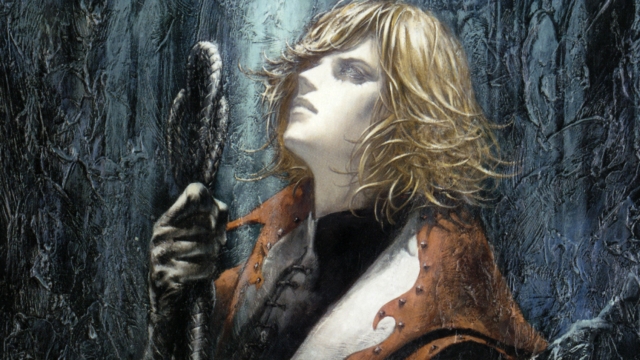
Castlevania: Lament of Innocence – PS2

Here Leon Belmont laments his boy band hair style.

Here Leon Belmont laments his boy band hair style.

A word of advice for any game developers in my reading audience: if you make a game with the potential to give the players a stroke from the sheer force of disappointment, don’t use the term “Lament” in the title. People use the word to express negative emotions. “I lament the fact that my girlfriend dumped me for a homeless transsexual,” or “I lament the fact that my foot fell off and I went blind because I didn’t manage my diabetes,” or in this case, “I lament that an extremely promising origin story from a beloved childhood game franchise turned out mildly less interesting than the stuff that comes out of my cat.” Released in 2003 for the PS2, Castlevania: Lament of Innocence, offers players a backstory on the Belmont clan and there eternal struggle against Count Dracula and his light fixtures, as well as showing us the birth of a vampire, a glimpse into the terror and horror of a story so sub-par that a 100% historically accurate account would have entertained me far more.

Only a Belmont dares to stare down a gorgon. Seriously...eye contact. You can't do it. Don't these people ever read?

Only a Belmont dares to stare down a gorgon. Seriously…eye contact. You can’t do it. Don’t these people ever read?

I had the misfortune of seeing Dracula Untold the day after I began playing Lament of Innocence. Even that pales in comparison with the real Vlad Tepes; seriously, did we really need the vampire angle to make him interesting? The guy’s friends nicknamed him “The Impaler.” In real life! Want to know what they call the primary antagonist throughout most of Lament of Innocence? Walter. And nothing gets me shaking in my boots more than the dread of a confrontation with the villainous Walter the Vampire. Bram Stoker’s novel works because it took a real life legend and added horrors on top of that. In fact, the early Castlevania games did the same thing. Can’t write a story for an 8-bit console? Why not use creatures that already have one. We didn’t need cut scenes or text because when we saw Dracula, we already know him and his reputation. We presume he has a pike waiting in the closet, just for us. But an origin story that goes in a completely different direction actually ruins that for us. Imagine getting to the Blair Witch’s house only to find a 17-year-old girl dancing naked at the solstice, or if the gun in Saw fired a nerf dart, and Jigsaw jumped up, smiled, and yelled, “Gotcha!” It takes the fangs out of biting horror, and a monster trying to gum you to death feels more annoying than terrifying.
Lament of Innocence opens with the protagonist, Leon, running. Apparently Konami attributed the success of Symphony of the Night to its opening scene, rather than clever RPG combat system and Metroid Style exploration. Nope. Players don’t want that. Get rid of them. We only need to see someone running. That’ll set up sufficient premise and conflict. Unlike Alucard’s mad dash for the castle gates, though, Leon comes to a halt when a man steps out of the woods. He introduces himself as Rinaldo Gandolfini, a name indicating his role in the story only slightly less than if Konami had called him “Merlin-wan Kenobi” or “Yoda Dumbledore.” Leon reveals that the vampire master of the castle has abducted his betrothed, Sara (*cringe* Really? Running to the castle to save a girl? Can’t we think of anything original anymore? Why not make him collect coins and jump on a flagpole at the end?). Rinaldo, in turn, explains that Walter the Vampire runs a most-dangerous-game sort of operation, and wants Gandolfini to sell equipment to potential victims. He gives Leon a whip. A whip made with alchemy–I know my high school chemistry teacher often wound up with Medieval weaponry as byproducts of chemical reactions.

I don't know about violence against women, but I feel the sudden need to abuse myself.

I don’t know about violence against women, but I feel the sudden need to abuse myself.

The game, feeling guilty for killing your interest with a painfully long cut scene, proceeds to make up for its sins by giving you a five hour interlude of gameplay before the next bit of story.  Keep in mind I use that term loosely. In one of her videos, Anita Sarkeesian specifically mentions this game as a cliched example of violence against women used as a poor replacement for male character development. Here, I have to disagree with her, not because I think anyone can justify the violence in any way, but because Konami had zero pretenses that they wanted to develop anything in this story, least of all character! Leon expresses the personality of a sack of flour. None of the bosses stick around long enough to say or do anything interesting. You don’t encounter Walter the Vampire until the end, at which point the real villain reveals himself as–spoilers!–some guy they mentioned once offhandedly! The girl amounts to nothing but a pretty face covering a sack of cliches. Rinaldo has a little bit of history that makes him mildly interesting, but honestly the whip had more charm and charisma than any of the animate characters in this game.

...and they'll probably find it. Every day. Between 4:30 and 10:00 depending on lattitude and time of year.

…and they’ll probably find it. Every day. Between 4:30 and 10:00 depending on lattitude and time of year.

While the original Castlevania told a rich story with no words at all, Lament of Innocence showed us that Konami should, indeed, not use words to tell stories. With one-liner gems such as “Carve their suffering onto your body!” or “The force of your grief can only make me stronger,” the game succeeds as an unintentional comedy, while simultaneously working to undermine any interesting, meaningful interaction between characters. Close to the end of the game, after Sara asks Leon to kill her and infuse her soul into the Vampire Killer whip, and Leon laments her death and his role in it, Rinaldo offers sage advice and motivation by saying, “Hang in there.”
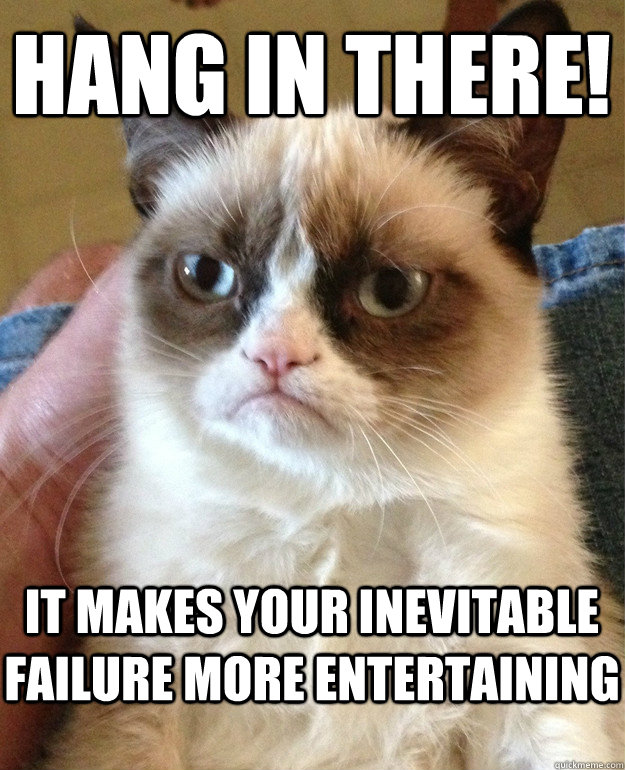
hang in thereBut I’ve lamented the story long enough. I should lament the game for a while. As I mentioned, the game departs from the RPG-style leveling up and the Metroid/Zelda style exploration and item hunting. Leon enters the castle and immediately begins to wage murderous war on torches and other light fixtures in what would soon become the traditional Belmont fashion. He can tackle five stages immediately in any order, each stage completely independent from the others (a few locked doors require keys located in other stages, but no level has more than one of these, and they only lead to optional relics with benefits on the same level as alternative medicine). Each level pretty much involves running a gauntlet of monsters, most of which you can just skip past by skirting the edges of the room, trying to avoid eye contact like an acquaintance you see in public but really don’t feel like talking to. Most levels require access to hidden areas, which poses the only true challenge, as the dearth of secret areas generally shuts off your brain to creative ways to access them. (How should I have known the game wanted me to jump on the plant monster to reach a ledge too high to see normally?)

Bad controls plague the game. The brief tutorial gives you profound advice such as “Do a double jump” or “latch on to stuff with your whip,” without really bothering to explain how any of this works. I mostly figured it out after a few hours of play, but still didn’t always know which ledges I could grab on to, or what fixtures I could whip. Games that involve 3D platforming usually execute moves with all the grace of a one-legged, drunk elephant with vertigo, but poor jump mechanics on top of that means that sometimes it took me six or seven attempts to jump onto a knee-high ledge right in front of me.

When a bad guy comes along, you must whip it. If his shield is very strong, you must whip it.

When a bad guy comes along, you must whip it. If his shield is very strong, you must whip it.

I can’t say I entirely hated the game. For a hack-and-slash, it kept my attention long enough, providing a decent amount of challenge as well as a recurring issue where bosses would kill me just as I reduced them to one hit point left–and one case when Walter and I both killed each other at the same time. The game doesn’t last too long, which helps prevent me from getting bored. I might even play it again, if I got into the right mood. However, I lament the fact that I got through the game without the threat of impalement, and I may refuse to accept the game as cannon, just so it doesn’t ruin the traditional horror atmosphere of the rest of the series.

Donkey Kong / Burger Time – Arcade, Atari 2600, etc

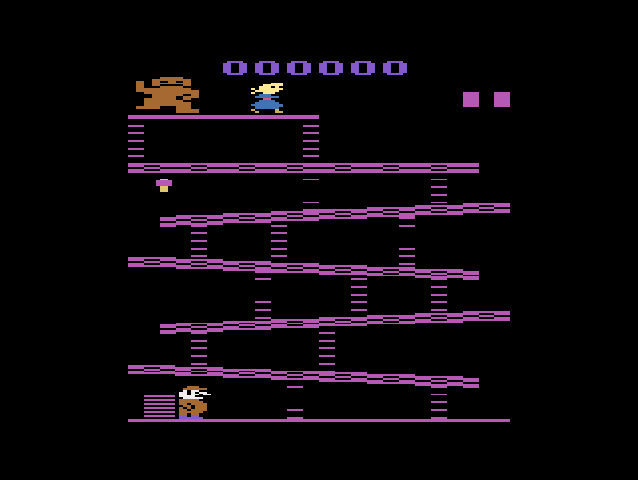
Do you really need a caption for Donkey Kong?

Do you really need a caption for Donkey Kong?

So things haven’t changed for me since last week’s entry. I admit, I wrote it about two hours ago. But that doesn’t change the fact that I’ve still had very little time to devote to games. But in order to swing that around to my advantage, I decided to look at some games I had wanted to write about since I began this blog, but never have for whatever reasons. I’ve mostly neglected arcade games due to their rarity, difficulty in completing them, and with the earlier games especially because I didn’t think I’d have much to say on the matter. But what the hell. Why not play a few rounds of some classic games and see what I could come up with?

First up, we all know people who have accused video games of some pretty horrendous things, warping our perspective on the world in such a way that we can no longer think in terms of reality and filter everything through video game terminology. Somehow, everyone born between 1980 and 2000 wound up with a craving for violence and the survival instinct of a lemming, as we clearly haven’t figured out that once you die, you don’t come back to life. Notice how Buddhists and Hindus kindly abstain from such criticisms. Besides, plenty of us have spent at least a little time looking out for lemmings, making sure they get safely to the exit. However, if one game has irreparably warped our minds so that we can’t change, the classic Donkey Kong wins that black mark for eternally damning us to play as characters who jump.

The premise of the game somewhat follows the end of King Kong, except instead of Adrian Brody climbing the Empire State Building to rescue a victim of Stockholm syndrome with absolutely no interest in him, we have a fat carpenter with the inexplicable ability to leap over Winnebagos. Unless, of course, he has a hammer with him. Then he plants himself firmly on the ground. In the background material, we learn that Mario kept Donkey Kong as a pet, but treated him cruelly. Nintendo never specified the nature of this mistreatment, but I can only assume he regularly punched Donkey Kong’s head to force-feed the ape live turtles. So you play as Jumpman–Mario–the psychotic dick of the story, trying to rescue your girlfriend from an Ape who probably only wanted to protect her from domestic violence.

Mario: So badass, he beats fire to death.

Mario: So badass, he beats fire to death.

In addition to the easily recognized first level, Mario jumps his way through three distinct obstacle courses as he chases down his questionably legal pet: one filled with conveyor belts moving pies, one with elevators and bouncing springs, and another, the top of the building, with precarious rivets that Mario must remove to collapse the building, thus knocking out the ape. Interesting fact, after Donkey Kong, Mario’s profession changes from carpenter to plumber. I can only assume that unleashing a giant, abused ape at the Acme Factory construction site and then demolishing all the progress made by the builders somehow motivated this career change.

As you can see, Atari managed a seamless port with absolutely no graphical reduction whatsoever.

As you can see, Atari managed a seamless port with absolutely no graphical reduction whatsoever.

While Mario probably won’t make it to the top without enough quarters to fund a minor war, the game actually shares a number of qualities with modern iPhone games that makes it fun to play–albeit much in the way that hardcore drugs provide a fun and exciting pass time until you realize you’ve pawned your car, house, grandmother, and both testicles in order to fund a habit that does nothing more than waste time. But it provides enough satisfying noises and flashing lights to get the endorphins flowing so hard that you’ll never realize how unimportant and inconsequential a goal your brain has set for you to accomplish. But you always have the option of aiming for a high score; if you do well enough, you get to enter your initials into the machine’s memory, providing just enough recognition to proclaim your skill while providing you with enough anonymity to avoid admitting that you’ve invested more money into the game than it would have cost to buy your own Donkey Kong cabinet.

But hey, you could always get a job, right? McDonald’s always needs fresh faces to assemble their disgusting food virtually void of any nutritional value beyond whatever it picks up on the floor, right? You might as well start training early. For that, I recommend Burger Time, developed by Data East and published by Midway. Not having branched off into a franchise, this once-popular game has faded into obscurity, but still represents the pinnacle of the ever-popular food-preparation genre. At least, I think more people like this than Sneak King.

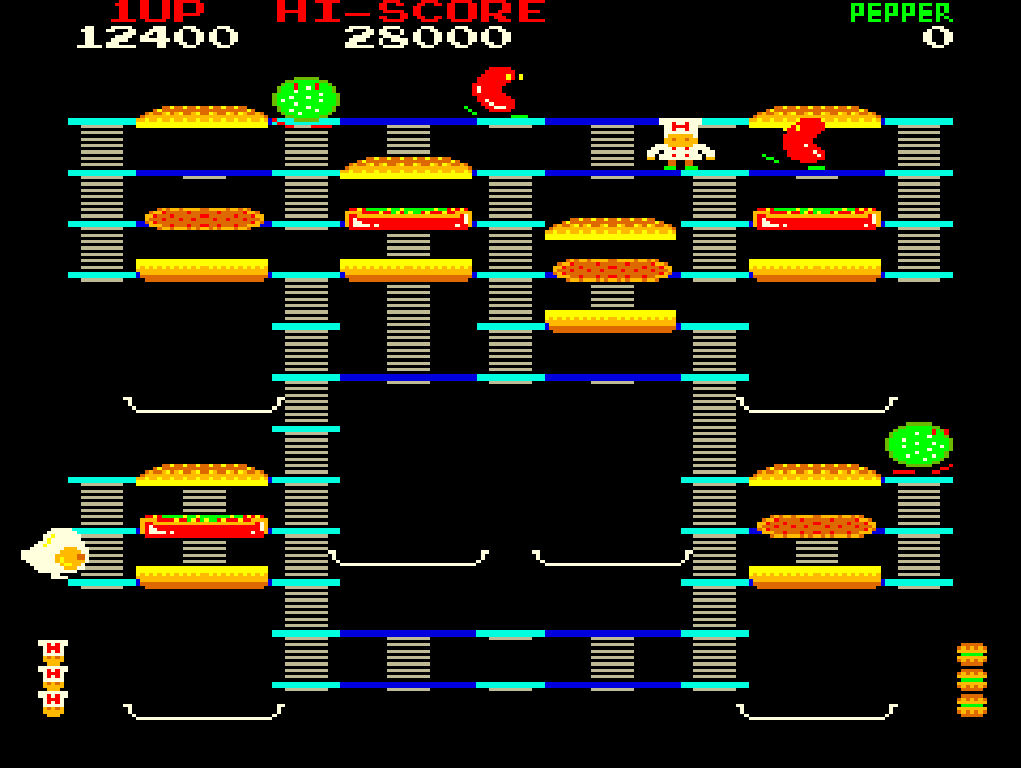
My mother used to point at the exposed air ducts in McDonald's and tell 5-year-old me that they used the tubes to transport hamburgers. Now I know better; real kitchens actually look like *this.*

My mother used to point at the exposed air ducts in McDonald’s and tell 5-year-old me that they used the tubes to transport hamburgers. Now I know better; real kitchens actually look like *this.*

Players take control of Peter Pepper, as he prepares burgers four times the size of himself by running across the ingredients, which someone has kindly stacked on multiple levels of some sort of building complex. The ingredients drop down to the next level, knocking any subsequent ingredients down one further level, and you continue burger-stomping until all ingredients have fallen onto the plates below the building. While making burgers with a technique often saved for making wine, Pepper must also avoid anthropomorphic food items, hunting him down to slap him with their sausage, rub him with their pickle, or otherwise leave egg on his face. No. I did not make this premise up, and honestly the fact that someone obviously did does worry me slightly, as much as I enjoy the game. In a culture where we often need to ask what goes into our food, I’d hope to avoid answers like, “The chef’s shoe and whatever crud he stepped in on the way to the diner.”

But while short-order cooks tap dancing across your lunch may not pass a health inspection, it definitely passes muster as a game. The food monsters take skill to avoid, and multiple play-throughs help in observing their behavior. Of course, you do have five blasts of pepper which, while they may add flavor, texture, and probably extraneous grit to the burgers, will stun the enemies briefly and allow you to pass by safely. But technique doesn’t stop there; burger ingredients function as much more than a dance floor or jogging track; you can also crush enemies by dropping ingredients on top of them, or with enough skill, you can trap them on top of a falling ingredient, which will cause that part of the burger to fall three levels instead of one. And be honest; you know you’d forgive any dirt on your bun as long as the cook surprised you with an egg in your meal, right?

As you can see...I can't beat the default score even with unlimited credits.

As you can see…I can’t beat the default score even with unlimited credits.

Honestly, they don’t think up games like this anymore. Well, they didn’t for a while. Again, Burger Time reminds me of an iPhone game or a flash game. Simple, yet difficult, and abstractly rewarding. Having spent the better part of the last five hours writing, I feel completely void of witticisms to close this entry with. Should you play these games because of 8-bit noises and high scores? (I think even among games like Angry Birds, we’ve lost the value in playing for a high score. Of course, that doesn’t mean I give a damn about your boring-as-hell quest for that high score. ) Yes. Do I expect that to make any sense? No. But games don’t have to make sense. They have that going for them. Finnegan’s Wake doesn’t have that luxury. Neither does most modern art. Show me a red square in a yellow rectangle and I’ll look at it briefly. As I move my head across the room. To see if I can find any interesting displays. While I look for the clock to figure out if I can leave yet. But give me a game with a sadistic animal abuser re-creating 1930s horror films, or an epic-yet-unsanitary battle against starvation in the kitchen of my local Perkins, I’d play that for hours.

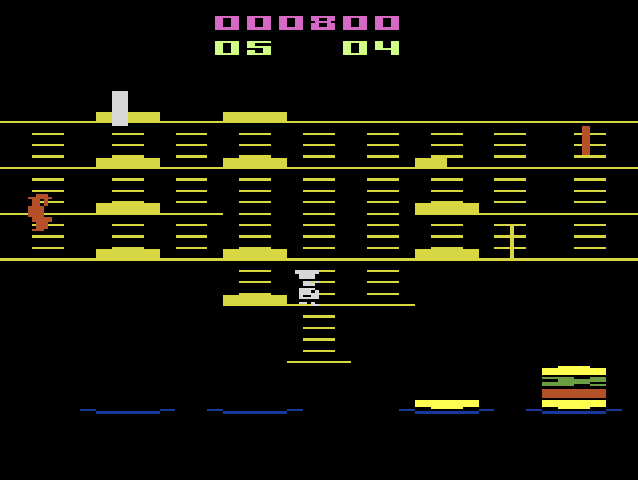
Yeah, it looks bland and unappetizing, but I hope the decreased resolution also dulls the flavor of ABC gum and spilled beer.

Yeah, it looks bland and unappetizing, but I hope the decreased resolution also dulls the flavor of ABC gum and spilled beer.

Please note, before I leave, that both of these games have their own slew of ports, remakes, remasters, and upgrades, but each one comes with their own nuances, sacrifices, additions, or shitty Atari graphics, so I’ve only categorized a few of them here. I’d like to add a disclaimer that if you pick up anything but the original arcade versions and experience an utter disappointment, I warned you that not all ports live up to the original.

Starting next week I should have more free time. I hope. I promise to think of something funnier to say by then.

Donkey Kong Country – SNES, Game Boy Color

Obligatory Ice Level Cliche.

Obligatory Ice Level Cliche.

Between applying for PhD programs, Evil Dead: The Musical performances, and preparing for next semester’s classes (while this post says “January,” I actually wrote it about the day my Evil Dead: Hail to the King entry posted), I’ve had just enough time to glance longingly at the pile of 20+ books that I may some day have a chance to read. Sorry to say, my to-do list requires a few sacrifices, but rather than ritualistically stabbing my Playstation until my hands run wet with sticky, electrical discharge, I opted to suck up my pride and whip out a platformer, under the assumption that the pain, at least, wouldn’t last long, and I could count on the popularity of Donkey Kong Country to garner a few more views per week than normal. Sadly, I think the entirety of this paragraph might tip my hand a little prematurely, but before you all start chucking barrels at me, I promise to remain as objective as I can. Even if game reviews inherently rely on subjective analysis.

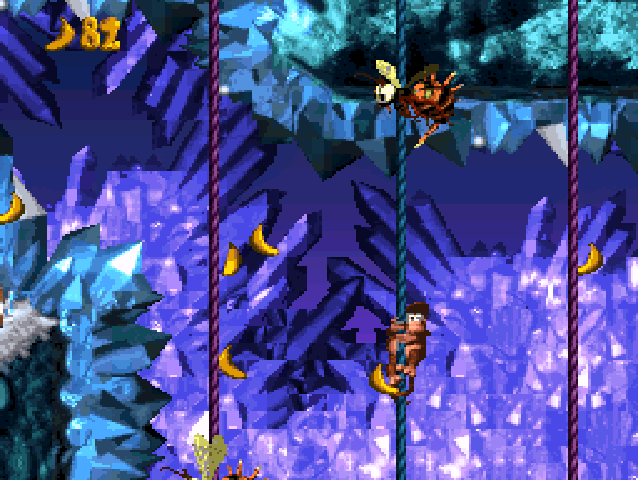
Congratulations. You'll have more use for them than the Kremlings. But 99% of them will still rot before you can eat them. An illustration of wealth distribution in Ape society.

Congratulations. You’ll have more use for them than the Kremlings. But 99% of them will still rot before you can eat them. An illustration of wealth distribution in Ape society.

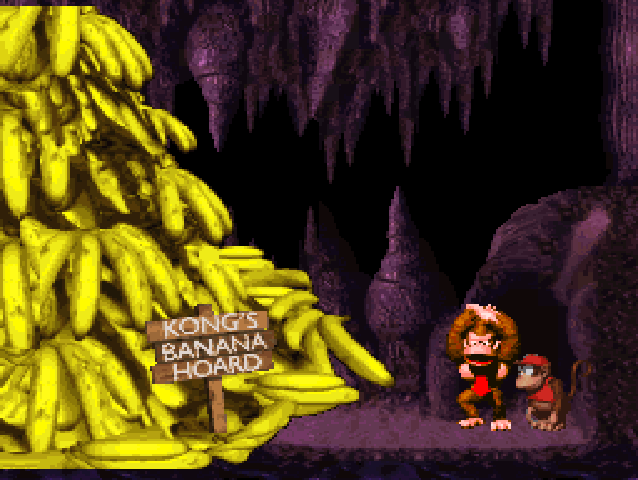
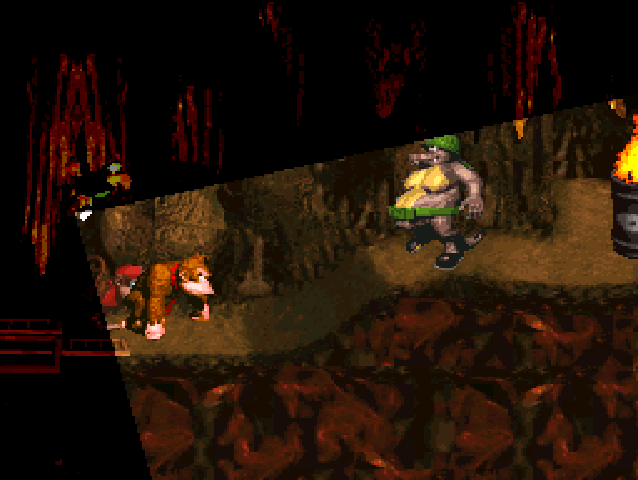
Anyway, Donkey Kong, after a ten-year hiatus in which he realized Mario had turned to completely lavish his attentions on Bowser, returns to his home island. However, Donkey Kong Country has its own reptilian antagonists, and they want bananas. Yes, for some reason, a crocodillian race of carnivores has need for a cavern full of bananas and will fight to retain their plunder from its rightful owners, a family of five apes who likely couldn’t eat that much fruit before it turned black and shriveled up anyway. So Donkey Kong and his nephew Diddy Kong–whom he finds stuffed into a barrel like he hadn’t paid his protection money to the crocodile mafia–set out on a banana-hunting quest, taking a path so roundabout that it would only make sense in an action platforming game.

Obligatory Underwater Level by character with infinite lung capacity cliche.

Obligatory Underwater Level by character with infinite lung capacity cliche.

Through my first impressions of the game, I reasoned that while Donkey Kong hadn’t participated in the Mario games since 1983, he at least spent a good deal of time playing them, and has learned much specifically from Super Mario World. I’ve established his cold-blooded baddies already. Much like Mario, DK takes out the majority of opponents via massive head trauma. When he can’t bring the full weight of a 300kg gorilla down on their skulls, he can throw barrels at them, a move clearly taken from the original game, but vaguely similar to Mario’s koopa shell kicking. Both Mario and DK travel from level to level through multiple zones of their respective islands. They can take up to two hits with appropriate power-ups–if we compare Diddy to an amanita mushroom–and collect either 100 of something, or a small number of level-specific items to get an extra life. They also ride animal pals–four of them–who each have unique abilities. They both shoot themselves out of cannons and find secret rooms with bonus games. Rare simply changed the characters, maps, and artwork from Super Mario World and called it a new game like an electronic Sword of Shannara, hoping we wouldn’t notice.

An illustration of Karma in Ape society.

An illustration of Karma in Ape society.

I don’t like platforming games and really can’t pretend to hide that. Years ago, before Final Fantasy VI introduced me to RPGs, I did play my fair share of Mario, and I’ll even admit that an afternoon playing Super Mario Bros. at Danielle Lehto’s house in first grade introduced me to a lifelong meth-style addiction to video games. But the idea of running through levels trying not to touch monsters except on their heads, all the while avoiding the plummet into bottomless holes appeals to me about as much as the thought of telephoning strangers at 11:00 pm to bring them the word of Lovecraft and convert them to the Cult of Cthulu. Simplicity, repetition, and pointlessness don’t make for great selling points, and much like religion, if you didn’t grow up with it, platformers just provide a tedious, time-consuming practice of learning thoughtless, reactive patterns with very limited returns.

I'll call him "Bright Eyes." Comment if you get the joke.

I’ll call him “Bright Eyes.” Comment if you get the joke.

Having said that, I recognize you may not agree with me. In fact, I know a lot of people out there think that nothing epitomizes enjoyable entertainment like trying not to fall into holes. If you like this, if you want to find a game with simple, bland gameplay that lacks all the cumbersome issues of a well-written story and the addictive, rewarding noises, flashes, and rewards of an iPhone game, then yes, Donkey Kong Country might deserve the 9/10 stars reviewers commonly give it. If you like Mario, you might want to try it. It does differ quite a bit, though. Rather than a hub design, DK Country lays out its world map like an air-travel montage from an Indiana Jones movie. Most levels run exclusively from left to right horizontally. They have multiple hidden bonus rooms, but no secret endings or branching paths. Some have stage-exclusive gimmicks like fueling up a moving platform, turning on lights, or traveling with a parrot holding a flashlight.

Donkey Kong and Diddy supposedly have different skills. Diddy can jump higher and farther–but still can’t quite make it to the hard-to-reach barrels and items. Donkey Kong supposedly has more strength, but has to jump on most enemies just as often as Diddy. Occasionally I stumbled across an item located deep down in a hole with absolutely no clear method of obtaining without winding up as donkey guts on a rock somewhere. For these, I took a few leaps of faith before converting to Donkey Atheism. I suspect the secret involves some of these character skills, but I didn’t have the patience to keep replaying levels just to figure out the puzzles. After a while I found an enemy that Donkey Kong could kill that Diddy couldn’t, but using this to proclaim uniqueness of character falls under the same category as trying to sell a new model NDS on the virtue of an upgraded picto-chat.

Uh...this just disturbs me.

Uh…this just disturbs me.

Due to Donkey Kong Country’s incredible simplicity, I can’t really find much to say about it. People love this game, but I don’t see it, and while I find alliteration light-hearted and cartoonish, whenever someone starts converting Cs into Ks for such a purpose, I generally eye them up with the astonishment I’d give to a banjo player performing minstrel tunes in blackface. Rare didn’t provide the easy access to save points that Mario has, but a skilled player could probably recover Donkey Kong’s entire banana hoard in two or three hours, coincidentally the same length of time a fresh banana in my possession usually takes to turn into a brown slimy pulp.

Super Mario RPG: The Legend of the Seven Stars – SNES

Here we see Smithy at his forge, creating the Republican Party platform.

Here we see Smithy at his forge, creating the Republican Party platform.

Square must have cornered the market on awesome with Final Fantasy. Yes, I can say “I love those games!” emphatically as though someone had offered a roomful of people a potion that would make orgasms last fifteen minutes each, and they will only give the potion to the loudest, most excited person in the room, but I still might understate the effect of those games. See, people keep going to Square and handing over the rights to their personal characters, requesting they scan them, digitize them, and build a game around them. And this doesn’t mean any yahoo on deviantart with a thrice-yearly web comic about a stick figure super hero who beats up all the people who called him names in high school. No, Square has people handing them Batman. And Disney (which means we’ll likely see Darth Vader team up with Sora in Kingdom Hearts 4). And, of course, Nintendo’s own Super Mario. Apparently, Shigeru Miyamoto felt his favorite character still wallowed in obscurity after his debut fifteen years ago, and thought that redesigning his game into an RPG might help Mario find his niche.

Obviously "Mushroom Retainer" doesn't refer to a feudal warrior bodyguard. Perhaps it means the Princess regularly pays Toad for legal council?

Obviously “Mushroom Retainer” doesn’t refer to a feudal warrior bodyguard. Perhaps it means the Princess regularly pays Toad for legal council?

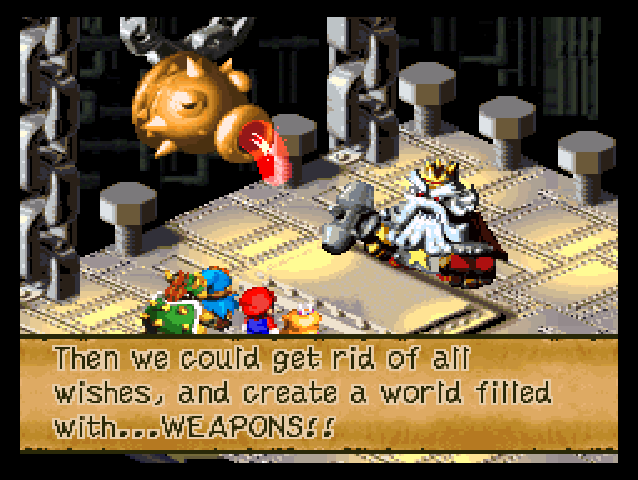
The game opens with the Super Mario Super Cliche. Bowser kidnapped Princess Toadstool. Mario goes to the castle to rescue her. Pretty standard stuff, and thankfully, Square only subjected us to that torturous redundancy for the first ten minutes of the game. In the middle of Mario’s duel with Bowser, a sword big enough to loosen even Crocodile Dundee’s bowels falls from the sky and embeds itself in Bowser’s keep, presumably until a titanic-sized King Arthur comes along to declare his rule over an entire solar system. But in absence of giant boy kings, the sword declares the glory of the Smithy Gang, and claims the Mushroom Kingdom in the name of Smithy. The force of the colossal impalement sends Bowser, Mario and Peach flying to various assorted parts of the game. Mario assumes a quest has begun, although no one ever really states whether he wants to rescue the princess or defeat Smithy, but both those points become irrelevant about five or six hours into the game when he meets up with Geno, a spirit from the Star Road, searching for seven star pieces destroyed in Smithy’s latest giant knife-throwing circus routine. Without the star pieces, the world will have no more wishes. And go.

You can't ignore fan theories as crazy anymore. Mario officially lives in a world with psychadelic amanita mushrooms.

You can’t ignore fan theories as crazy anymore. Mario officially lives in a world with psychadelic amanita mushrooms.

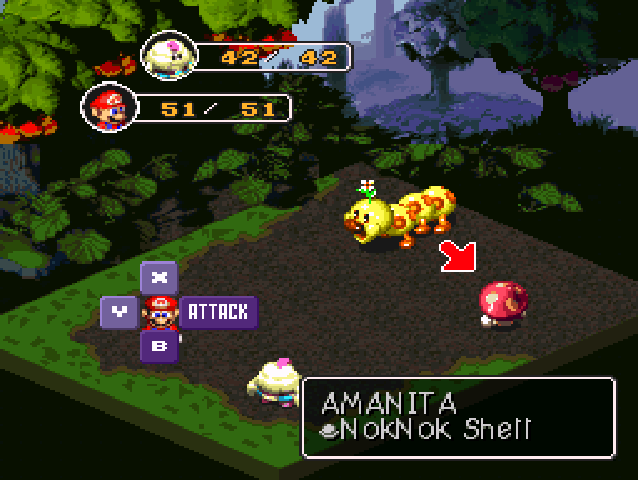
The design team attempted to create an RPG that still had the feel of a Mario game. As such, Mario retains his signature special abilities. Namely, he can jump, and subjects of the Mushroom Kingdom constantly request demonstrations and/or autographs from him. In fact, other than his basic attack, Mario can only either jump on or shoot fire at enemies in battle, and leveling-up only teaches him upgraded versions of those two attacks. Jumping in battle consumes three flower points, the game’s version of MP, except the party shares one communal total of FP rather than giving each character their own. So if Geno shoots off his beam too much, Mario simply won’t have the energy in him to jump, and will have to resort to blunt trauma instead. Until the battle ends. Then he can jump until his shins shatter without even stopping to catch his breath. While the game functions perfectly from a technical and mathematical standpoint, that inconsistency really marks the game as confusing, to say the least.

After jumping over these things since 1981, do you think you could help me out a bit, Princess?

After jumping over these things since 1981, do you think you could help me out a bit, Princess?

For instance, the first half of the game sees Mario hunting down Princess Toadstool and rescuing her from a bizarre man-child with the most severe case of Asperger’s syndrome I’ve ever seen. The game relegates her to the role of Damsel in Distress because, let’s face it, if she didn’t enjoy the thrill of a good kidnapping, she would probably have upgraded her security after SMB 3–if not after the original SMB. For contrast, the introduction to the title screen shows her sitting alone in the middle of a field staring at flowers when Bowser swoops in–on the same clown-duck thing he used to kidnap her in Super Mario World–and carries her off. After you rescue her, though, she joins your party and, despite fighting with stereotypical glove slaps and healing spells, actually shows a remarkable competency in battle. So, uh, Princess…how about rescuing yourself for once? Sound like an idea? Give Mario a day off and bust out of Bowser’s dungeon yourself.

Peach slaps the snake. Should we interpret that as a euphamism?

Peach slaps the snake. Should we interpret that as a euphamism?

Beyond that, Mario displays quite a few skills that would have come in handy in some of his other games. For example, touching monsters without throwing himself to the ground, screaming in pain. Maybe taking more than one hit, or having the ability to block? He apparently can shape shift, which he uses in lieu of language, but not for anything practical like a stealthy disguise or a hilarious mistaken-identity comedy-of-errors. Maybe, though, these abilities mean to offset his nasty habit of standing around in silence watching various major enemies escape. I mean, yeah, he catches up with them later, but why not make the game a little shorter and fight them now? At least the weapons he can equip show some consistency. Mario can use hammers, alluding to his days fighting Donkey Kong; a turtle shell, an obvious reference to his side-scrolling, koopa-stomping adventures; and uh…gloves, which hearken back to his ability to break blocks with his fist? Maybe? Or referencing his time as a referee in punch out? Super Mario RPG really excels at these nods to Mario’s history, which players of the older games may appreciate more than those just coming into the series in the last fifteen or twenty years (god, I feel old…they released this game eighteen years ago!). One room in the penultimate dungeon even requires you to leap over barrels thrown by an ape.

I don't know what bothers me more; that I only had a 10% success rate with three choices, or that they put "Yoshi" in quotation marks.

I don’t know what bothers me more; that I only had a 10% success rate with three choices, or that they put “Yoshi” in quotation marks.

So I’ve put this off long enough–I know everyone loves this game, but yes, I found issues with it. Three-dimensional platforming didn’t work well in Super Mario 64, which felt like playing skeeball blindfolded. The attempts at action-platforming on the Super Nintendo upgrades that analogy to…let’s say, playing piano blindfolded while wearing hockey gloves over numb hands. Also you can’t hear the piano. For most, but not all, attacks, special abilities and items, you can tap the command button at a certain time during the animation in order to receive an upgraded effect; however, counting for the difference in animations, the uncertainty of whether or not the attack has an upgrade, and the lack of a clear point to double-tap the button makes this…uh, let’s say like playing banjo in hockey gloves? (Hey, I don’t have a limitless supply of analogies and I just have to make them up based on what I see in the room!) Geno’s special “charge” attacks almost never worked for me, but honestly, regular attacks outclass special attacks by so much in this game that I rarely used flower points for anything but healing. Square included these elements in order to give the game a more action-oriented feel. Thank you, Square, for interpreting the challenge in turning Mario into an RPG as “How to make it feel less like an RPG.”

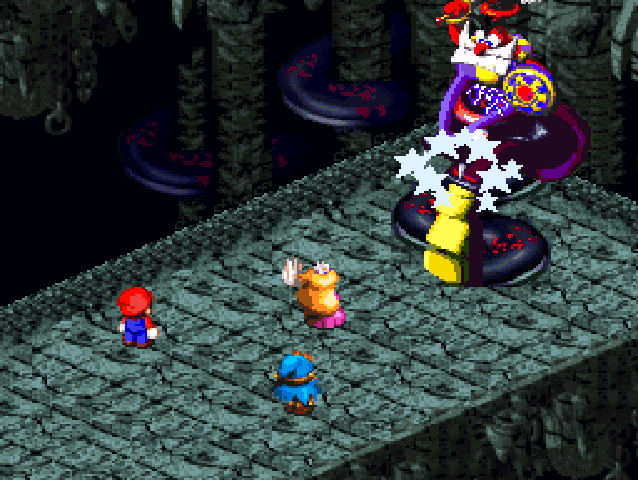
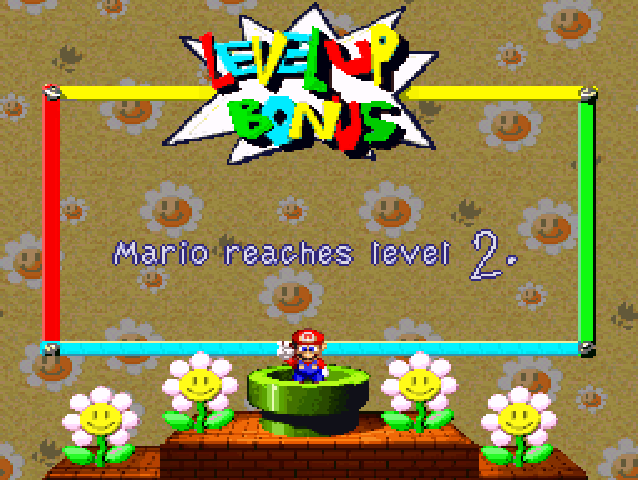
Yes! Level 2! Now to just finish off the final boss...

Yes! Level 2! Now to just finish off the final boss…

Also, Square populated the Mushroom Kingdom with enough enemies to rival a plague of locusts or an invasion of army worms. In a genre where people criticizes most games for repetitive, time-consuming battles, “adding more enemies” really doesn’t make up for a short game length. And no, the solution employed–handing out exp with the generosity of a Republican in a soup kitchen–doesn’t really fix the issue. In fact, if I spend twenty-some odd hours in battle alone, I’d appreciate it if I could finish the game a little higher than level 25. Character growth, for the most part, remains static, so no matter who you use in battle, they all level up at the same speed, and learn their predetermined skills at a predetermined time, allowing for no more customization than adding one or two points to your choice of stat at each new level. Because fighting Smithy with an attack power of 225 made a world of difference compared with 200. (And before you ask, I dumped all of Geno’s bonuses into his special attack, and even at level 25 his physical attack did more damage.)

...yo, is this racist?

…yo, is this racist?

I know everyone loves this game and it makes top-ten lists all the time. And in all fairness, I liked the cartoonish feel to it as well as traveling through a Mushroom Kingdom filled for the first time with people and villages and things other than jutting ends of pipes, piles of bricks and other mostly unfinished attempts at improving infrastructure. But the game feels more like a novelty than a masterpiece. Worth playing, maybe, but not often. Also, Mole Village gives off a vaguely racist vibe.

Star Fox 64 – N64, 3DS

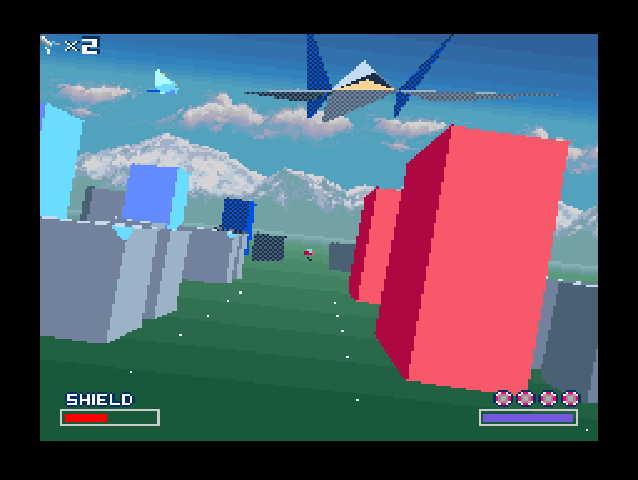
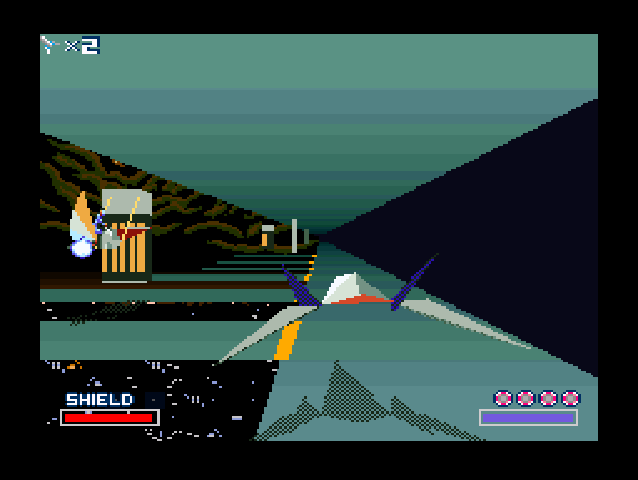
What worries me more; that someone built a plane with a mid-air brake, or that Fox accepted a deadly mission without knowing how to fly it?

What worries me more; that someone built a plane with a mid-air brake, or that Fox accepted a deadly mission without knowing how to fly it?

“Do a barrel roll!”

Now that I have the formalities out of the way, let’s talk about Star Fox. The SNES game reached an incredible zenith of popularity, earning it a permanent place in the hearts of its fans probably for life. Clearly, in order to top that record, Nintendo only had one option: get more than six people to play the game. So the original didn’t live up to the hype, and maybe people didn’t fully appreciate the technical implications of what looked like a kindergarten acid trip. And yes, maybe with a canceled SNES sequel, Star Fox didn’t show much promise as an up-and-coming game franchise. But now the series boasts…five whole games. And a remake. And the canceled project. And one slated for release next year. So that…raging…popularity must have come from something, right?

If you’ve kept with me for at least that last paragraph, you probably already know why: Star Fox 64. This game sold both the franchise’s name and the N64, even showing us the system’s potential for multiplayer games–at least until Rare released Goldeneye, which made Star Fox’s dogfighting look as bare bones as, well…the SNES game. It came bundled with the rumble pak, Nintendo’s most popular useless add-on since the oh-so-bad Power Glove flopped like a dead carp and R.O.B., unable to find anyone to play games with him, had to take a side job as Fox’s secretary. Uhh…okay. So in retrospect, maybe Nintendo bamboozled us all with a stealthy, ninja marketing attack. But clearly that didn’t work with the original, so obviously something must have gone right with the game, right?

...uhh, Falco, maybe we can cut back on the racism a bit?

…uhh, Falco, maybe we can cut back on the racism a bit?

More of a reboot than a true sequel, Star Fox 64 introduces a more refined story for the game. Evil Monkey Scientist Wizard Thing, Andross, has invaded Corneria from his charming, elegant gated community on planet Venom, a world known for its atmosphere of pure smog and oceans of corrosive acid. General Pepper of Corneria, convinced that he’ll suffer no negative consequences from banishing a telekinetic evil genius to an unpleasant and inhospitable world, shows the utmost faith in his men-in-uniform by hiring a team of mercenaries to assault Andross. James McCloud, Peppy Hare and Pigma Dengar fly to venom, where Pigma turns them in to Andross. James, not as gifted as his cousins Connor and Duncan, dies, and Peppy escapes to tell Fox about his father’s demise. General Pepper, certain that a new team consisting of a) James’ obviously less-experienced son, b) a Star Fox member who clearly failed the same mission on his first attempt and c) an obnoxious mechanic with with a high-pitched whine and zero combat aptitude will certainly save the day, sends them off to Venom to make as much headway as they can, then presumably to die so Pepper doesn’t have to pay the bill.

You mean 9 million, right? Please tell me you actually know how hot stars can get. Slippy...you dumbass.

You mean 9 million, right? Please tell me you actually know how hot stars can get. Slippy…you dumbass.

The game shows more refinement than the SNES installment, but I might as well say that the Golden Pavillion in Kyoto shows more refinement than a dead log. While still basically made from rendered polygons, the objects in the game make up shapes more complex than a box of tinker toys, and have textures that clearly took more effort than figuring out to work the “fill” tool in Microsoft Paint. High-quality sound recordings let the characters talk to each other and tell a story; a story about three pilots who constantly need their boss to rescue their inept asses without ever bothering to shoot down any enemy pilots themselves. That really sums up the game right there. Very minimal character development–none, if Peppy didn’t occasionally comment “You’re becoming more like your father,” who, I’ll remind you, died. Pretty steady conflict, with no escalation. Every so often you’ll run into an old friend or rival mercenaries, Star Wolf, but while that may affect events in subsequent levels, it doesn’t really add anything to any semblance of “plot.” No, as Fox, you fly straight through the levels, shooting down monsters and enemy pilots alike, while your three wing men kindly offer themselves as bait to lure occasional enemies into your line of fire, and then demand you immediately save their lives.

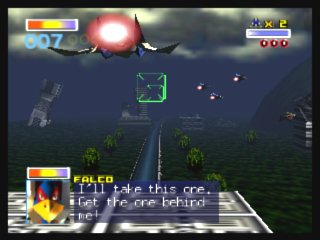
...I mean, get the three behind me. And also this one.

…I mean, get the three behind me. And also this one.

Also new to the game, Star Fox 64 introduces “all range mode” for certain boss battles and a few stages. In this mode, the tips of the arwing’s wings will extend slightly outward, which any physicist can tell you gives a plane the ability to fly in more than just one direction. Fox has a square field to engage in dog fights, sometimes literally as all your battles with Star Wolf occur in all range mode. Most of these battles involve trying desperately to brake, bank, roll, u-turn or somersault only to discover the enemy outmaneuvered you and still enjoys burning you with lasers from behind. Perhaps more descriptive than “all range mode,” they should have called this “always turning around mode.”

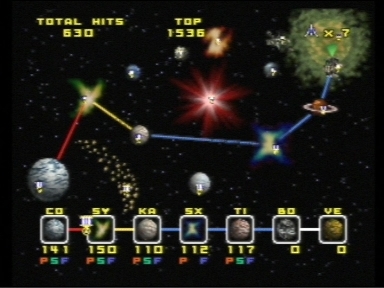
Star_Fox_64_MapWhile in the first game, the controls reacted on a timeline akin to plate tectonics, Star Fox 64 controls allow plenty of time to dodge, collect power-ups, and do however many barrel rolls you wish with a reasonable response. The game offers more power-ups and a reasonable amount of health-refills, even if Fox has the tendency to hoard them all to himself when Slippy might find better use for them. But the game really shines in its adaptive difficulty. While at the beginning of the original, you picked a hard, medium or easy path from Corneria to Venom, Star Fox 64 allows you to proceed to more difficult levels depending on certain events or your performance in the stage you just completed. Small tweaks to levels, such as guest characters showing up later if you play certain stages, and dozens of different possible paths to take introduce a surprising amount of replay value. Even the final boss changes depending on which direction you approach Venom from. And if you get through the difficult final stage, the game even graces you with a visit from Ghost Dad. Er, James McCloud, not Bill Cosby.

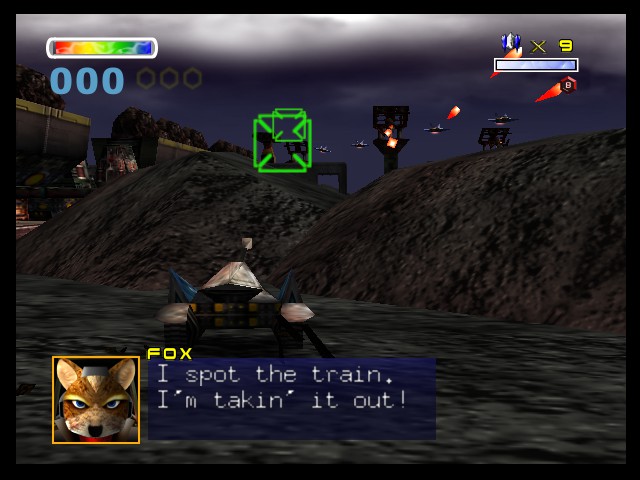
Because why would you attack a train with a vehicle that can travel at mach-3 and shoot lasers and bombs when you could follow it at 10 mph and fire bullets?

Because why would you attack a train with a vehicle that can travel at mach-3 and shoot lasers and bombs when you could follow it at 10 mph and fire bullets?

I really enjoyed this game, which shouldn’t surprise you. In fact, in high school, I’d often visit friends houses, and due to my ability to wake up completely alert at any hour of the day, I’d have to keep occupied while waiting for my friends to wake up…so I just might have the high score on three or four different cartridges out there. But that had nothing to do with the fact that I never got invited back again. I should say, though that most people enjoyed Star Fox 64. Nintendo really screwed up one thing, though; they didn’t try to replicate this game play at all. I’ve avoided Star Fox Adventures for years because it doesn’t look like a Star Fox game–which, considering the two previous releases in the franchise, only makes a small amount of sense. I enjoyed Star Fox Command, but only for a little while, and for some reason, Star Fox Assault didn’t even show up on my radar until recently. But if I ever get my student loans paid off, I have them on my list, and maybe I can say more about the newer games than I can about this one. I usually try to write two full pages on each game, but I can only find so many ways to point out how the SNES Star Fox felt like Star Fox 64 in beta.

Onimusha: Dawn of Dreams – PS2

onimusha-dawn-of-dreams

I’ve encountered a fair share of people in my time who scoff whenever I mention video games. “Well, I certainly would never consider that a worthwhile pursuit!” they say. Yeah. Fuck you, too. I don’t think the medium in question automatically elevates Desperate Housewives and Jersey Shore to a higher level of art than Xenogears or Final Fantasy. In fact, developers usually put enough care into each game that if you liked one, you can reasonably expect to enjoy the sequel. Film and book sequels usually have no value unless the weight of your wallet threatens to collapse your spine and you just feel like killing a little bit of time while waiting to die. But game sequels tend to grow and evolve out of their originals, building better ideas upon good ones, rather than slapping on lipstick and a wig in hopes of us shelling out the cash up front before taking them to a nice, private room somewhere, then turning them on only to realize we’ve already seen everything they have to offer. Also in this metaphor, let’s say you picked up a transvestite. Just for fun.

Thus cementing the already obvious comparison to Resident Evil 4.

Thus cementing the already obvious comparison to Resident Evil 4.

Still, that means game series change and evolve, sometimes into something significantly different than the original. Case in point, look at Resident Evil. The original sent you through an eerie, quiet, labyrinthine mansion, sending just enough monsters at you for your brain to send false alarms shooting through your nervous system every time you opened a door, turned a corner, or paused the game to pee. Resident Evil 4, on the other hand, gave you enough ammunition and ethnically Hispanic monsters to shoot that both Arizona and Texas nominated Leon Kennedy to run for governor. Likewise, the Onimusha series claims subtle origins. Samanosuke stumbles on a castle with all the quotidian feel of Hannibal Lecter’s kitchen, and on his own he must fight to keep his finger in the dike from hell. In Onimusha: Dawn of Dreams, both finger and dike have vanished out of existence, and the Genma demons roam through Japan with all the timid subtlety of an army of Jehova’s Witnesses (except, of course, for the fact that Toyotomi Hideyoshi, the Shogun during Dawn of Dreams’ time period and one of the primary antagonists of the game, sort of outlawed all forms of Christianity and executed practicing Christians. But hey, you gotta fill the void with something? Why not Genma demons?).

Nobody knows...the monsters I've seen. Nobody knows, but oni.

Nobody knows…the monsters I’ve seen. Nobody knows, but oni.

I should explain here that after the death of Oda Nobunaga in Onimusha 3…and, I guess, in real life…Toyotomi Hideyoshi rose to power in Japan. After making a deal with the Genma, who he believes will help him conquer the world, Hideyoshi perverts cherry trees with Genma insects so that they either turn people into trees or into more Genma or something. I don’t know. The trees kind of act like a MacGuffin, and for all their significance to the plot, the protagonist, Soki never so much as chops one with his sword, rips off a few leaves, or even takes a leak on them during the entire game. This part, by the way, not so much true in real history.

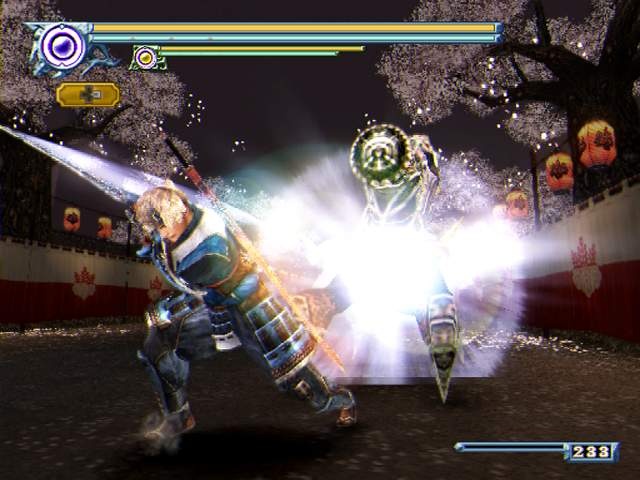
If I could take my own PS2 screenshots, you can bet I'd take a few that would show you something other than flashy lights.

If I could take my own PS2 screenshots, you can bet I’d take a few that would show you something other than flashy lights.

A further departure from the original games and their Resident Evil inspiration, Soki accumulates his own rag-tag band of plucky companions, who can fight along side him nearly every step of the way. It does provide a nice game play element, allowing characters to switch off, with one having the option to either attack or to guard and regenerate health. But it definitely detracts from the creepy vibes from the early games and hypes up action like a four-year-old on his third can of Red Bull. Each partner has a special ability; one can talk to the dead, another can grapple like Ada Wong, one can fit through tight spaces and cross delicate beams, and the other can punch heavy objects Chris-Redfield-Style. Naturally, Capcom designed these skills with no other trope in mind than to let Soki access new areas, however, they don’t do this very effectively. You can switch partners at most save points, but you can only have one at a time. Rather than forcing him to backtrack once a certain character becomes available, or constructing clever tricks requiring creative use of this mechanic, you often encounter several different obstacles in short succession, requiring Soki to stand there, flipping through allies like he has a big ring of keys and just needs to find the right one.

Each ally comes paired with a major villain, if for no other reason than to have them dramatically split up for cliched one-on-one battles, buying Soki time to rush toward the final boss. Naturally, you have to win all four battles to get back to Soki, even if the game never forced you to use the crappy boxing Spaniard for any extended length of time and I had forgotten to level up his stats. Yeah, I still won. Maybe that says something awesome about my skills, but I think it speaks more powerfully about how little a difference your stats make in the long run. Leveling up feels like an eye exam, trying to tell the doctor which of the lenses make the letters less blurry–maybe one of them makes a difference, but you can’t tell just by looking. The relationships between enemies and characters provide minor subplots to spice up the story, even if they didn’t feel like finishing the details. Jubei, a twelve-year-old ninja girl, seeks revenge on her Uncle, Yagyu Munenori, a villain who steals most of his dialogue from Ed the Hyena. The game explains just enough of her reasons to make the player feel like they’ve intruded on an awkward family moment, like eating dinner with a friend when a fight breaks out with their parents.

So cute you just want to squeeze him. Squeeze until his jar breaks and his eyes pop out of his oversized head.

So cute you just want to squeeze him. Squeeze until his jar breaks and his eyes pop out of his oversized head.

Dawn of Dreams also gives you a cute, chibi companion whose loyalty and character will grow on you like athlete’s foot. He hangs upside-down in a jar suspended from a vine, and in no subtle terms does the game relate him to the creepy bat-guy who takes you to the Dark Realm in the first game. If you don’t immediately understand why this infuriates me, understand that it retcons one of the most subtle, yet unnerving, details of video game storytelling ever. Samanosuke encounters the upside-down bat-guy fairly early in the game, but he just stares at you. He only speaks to you after you’ve picked up the relic that allows you to communicate with the dead (uh…spoilers, I guess, if you’ve paid attention). Obviously, Capcom meant to imply that this man had died, presumably in some horrible way that left him wrapped up and strung up by his feet. Well, Dawn of Dreams introduces the idea of the Mino tribe, where everyone hangs upside down. Coupled with the comic suggestions of how he travels from place to place, often with no clear support for his vine, and I welcome Minokichi into a horror-action franchise with all the enthusiasm of Star Wars fans when Lucas introduced Jar Jar Binks.

Japanese mythology commonly depicts oni as monsters weilding iron clubs. This game has a bizarre sense of humor. Like look at a wall with a slightly crooked picture that you can't straighten.

Japanese mythology commonly depicts oni as monsters weilding iron clubs. This game has a bizarre sense of humor. Like look at a wall with a slightly crooked picture that you can’t straighten.

I realize I’ve spent the greater part of this article complaining about the game, but honestly, most of the Onimusha appeal remains the same. If you enjoyed the earlier games for any reason…other than the ones listed here…you’ll want to play Dawn of Dreams. You still fight demons and absorb their souls. You have a variety of weapons–more options than the four or five the other Onimushas got, but you still can fight with katanas, spears, ninja swords, matchlocks and…lasers? Really? I guess Capcom plays it fast and loose with the whole historical accuracy thing. You can still fight your way through the Dark Realm–which they’ve made about ten times more difficult, and I have to confess, I only got to level 50. Out of 100. And I struggled to get that far. They’ve organized the game into stages (I guess nothing feels as “new” and “fresh” as the layout from 1980s arcade games), but Minokichi lets you revisit old stages. Despite sporting a second disc, Capcom apparently felt the characters didn’t need speaking animations, so to make up for that, everyone speaks in hand gestures. Big hand gestures. Well, body gestures. Actually, it very closely resembles interpretive dance. Also, since I’ve slipped back into criticizing, some of the controls didn’t work, and I couldn’t switch into Onimusha mode or do a few other moves. So…that holds the game back; generally, I hold the opinion that video games should, you know, work. But despite this installment taking hits in quality, I found it a very good action game with more length than previous games–but fun enough that I wanted to play through it all–and a moderately interesting story line. I give it a C+. It probably deserves a B+, but I object to games that grade your progress, and I refuse to give it anything higher than it gave me.

Dead Rising 2 – PS3, XBox 360, PC

Dead_rising_2_combo_card_heliblade_justin_tv_(2)
Does anyone else think the zombie craze may have overstayed its welcome? Once hailed as a symbol of our fears of a conformist “other” waiting in the shadows trying to strip us of our thought, reason and individuality, and later re-imagined as commentary on our culture of needless consumerism, the effectiveness of everyone’s favorite decomposing, foot-dragging, moaning monsters on a quest for brains–despite the fact that they only ever really quested for brains in one movie in the mid-1980s and a handful of zombie spoofs–may have hit its zenith with the Dawn of the Dead remake, World War Z, and Shaun of the Dead.  Considering that the most recent of those came out eight years ago, the intervening time has just mocked us, creating a widespread conformity to the idea of shelling out as much money as we can for the latest zombie movies, games, or merchandise. Enter Dead Rising, a fairly new series by Capcom set in a world that has the zombie apocalypse under control–mostly–and has learned how to exploit them for fun and for profit. After I learned that players saved their games by using the restrooms, I made an offhanded remark that “I may need to play this game,” after which I could not convince Anne that no, I didn’t really want to play a game solely on the basis of a witty save point. She insisted on buying Dead Rising 2 and forcing me to play it so she could watch it. She got bored and lost interest after the first hour or two.

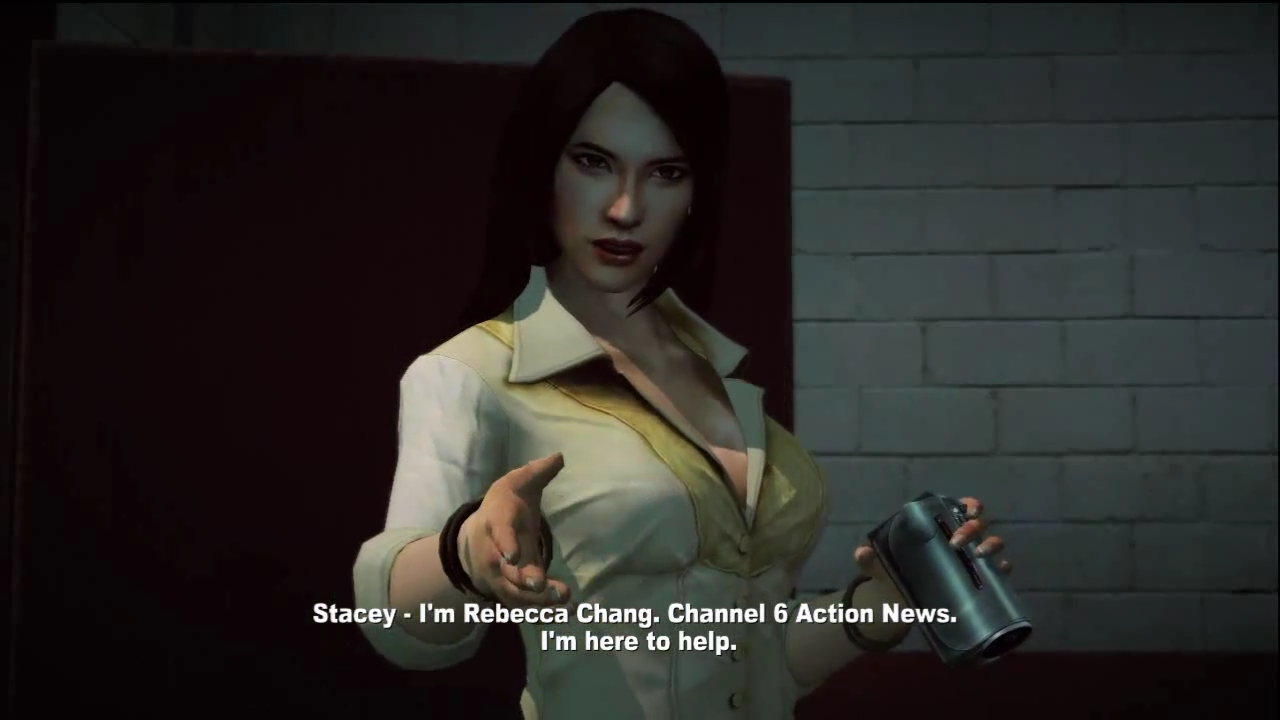
...dead God, please let me hold the camera.

…dead God, please let me hold the camera.

Dead Rising 2 follows Chuck Greene, our low-browed, sloping-foreheaded motocross hero who keeps his young daughter, Katey, in the most luxurious of anti-zombie medications and portable Mega Man games by appearing on the reality TV show, Terror is Reality.  Contestants on this motocross competition rig their bikes with chainsaws, and then plough through an arena full of zombies to score points. Naturally, this draws the ire of the People for the Ethical Treatment of Zombies, and their leader, Stacy Forsythe arrives in town to protest. However, when an unexpected outbreak occurs, Chuck, Katey, and Stacy find themselves in a safe house together…at which point Stacy forgets her anger with Chuck, her desire not to kill zombies, and any character points which might make her at all relevant to the story.  Some obligatory arguments occur in the safe house, then they task Chuck with venturing out into the mall–apparently all this has happened in a mall–to search for survivors and Zombrex for Katey. Stacey stays at the safe house, scanning for survivors on the mall security cameras, and every five minutes or so she’ll call Chuck on a two-way radio–usually when zombies have him pinned down and he can’t answer, or when he wants to quietly sneak by them–to tell him about another survivor.

If it sounds a bit muddled, then I’ve described the game well enough. The story starts off weak. It has some interesting points, such as discovering who framed Chuck for causing the outbreak, but it doesn’t really become coherent until near the end.  The inventory management feels a lot like digging through an overstuffed pocket looking for a dime, and the controls take some getting used to. Still, the story eventually comes together, I did eventually master the controls, and I even leveled up enough that the bosses didn’t completely rip me open and use my squishy carcass as their own personal sandbox. One thing, though, ruins this game like nothing else: the timer.  Adding a limit to every event in an otherwise sandbox-ish game had about the same effect as adding a third Austin Powers movie, two Matrix sequels, and a Star Wars Holiday special to their respective series; nobody wants to give their time and money to induce an aneurysm.

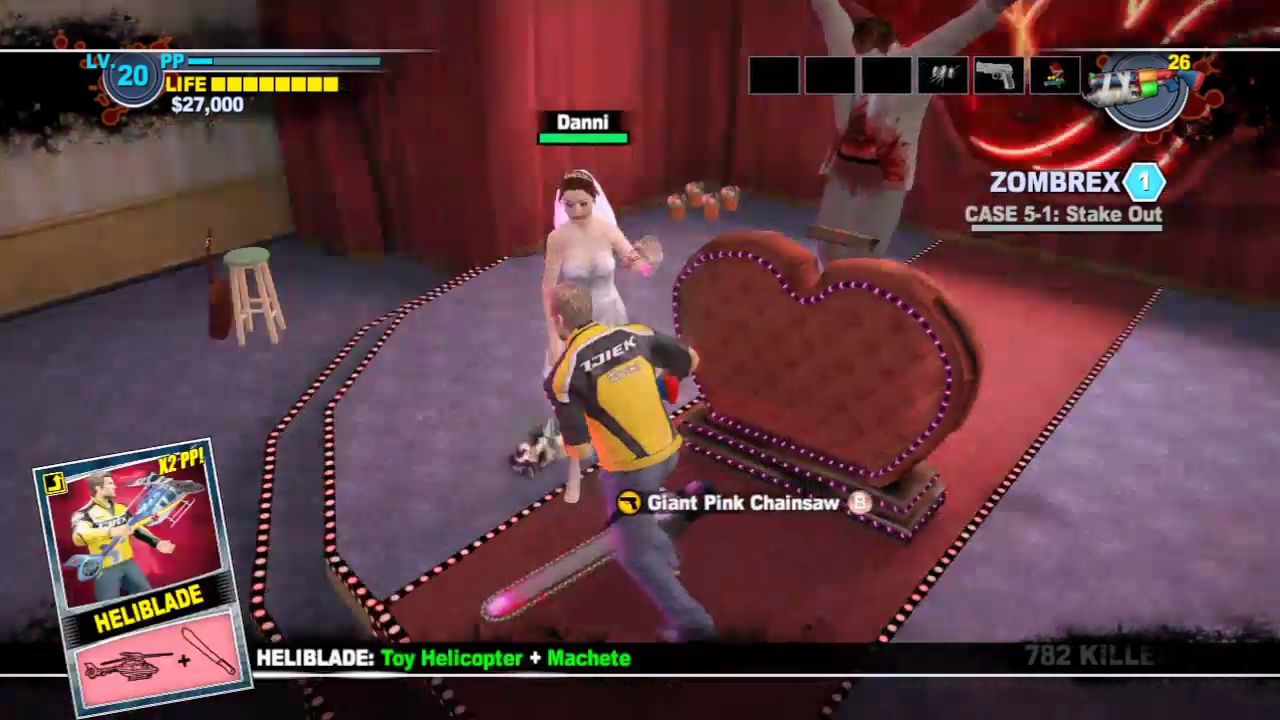
Look at those! Knife gloves. Pretty cool, huh? I couldn't ever find the parts to make them.

Look at those! Knife gloves. Pretty cool, huh? I couldn’t ever find the parts to make them.

See, people like the idea of having free run of a mall, and Capcom designed this interactive environment using notes stolen from Katamari Damacy.  Rewards for leveling up or rescuing survivors include combo cards, blueprints for combining items into eclectic weapons. Unfortunately, none of that matters because of the timer. With Stacy hounding you every five minutes to rescue someone else at the opposite end of the mall, I didn’t have any time to fight zombies on my way from place to place, let alone explore the game’s environment and look for items. If I built weapons, I usually made the first combo I earned because I could find the items in the safe house, and then I’d immediately race against the clock to get to some jerk who would ultimately make me pay for the privilege of rescuing them, or to watch their crazy cabaret show, or to give them something they could easily pick up off the ground themselves.

The game theoretically encouraged combo weapons, but mostly in the way that my Sunday school teachers encouraged me to pray–they couldn’t give a reason, admitted a lack of visible benefits, but I simply needed to do it anyway.  Likewise, Dead Rising 2 offers extra experience from zombies killed with combo weapons, but the difference between the normal 10 points and the combo 200 doesn’t add up all that fast when rescuing survivors gives you 12,000 points at minimum.  Plus, the combo weapons don’t last all that much longer than regular items.  While item degradation usually only forces me to muck up my Fallout inventory to carry dead weight, I must concede that I can see how bashing countless zombies with a golf club might cause some damage to the club, or how a gun that runs out of ammo might only weigh you down, but I draw the line at thinking that hacking through a few monsters with a sword would result in total disintegration of the steel. Considering that, when I found the broadsword, I stocked up because they understandably dealt more damage than pummeling someone with a power drill (no matter how many you attach to a bucket), and lasted just as long as any other weapon.

People? Can I guess people? Did you make people for dinner? Of course you did.

People? Can I guess people? Did you make people for dinner? Of course you did.

So that pretty much describes the game. You charge through the mall at breakneck speeds, hacking through crowds of zombies that never seem to get any smaller despite having no visible entrances or exits to the mall, rescuing survivors steadily over the course of three days. Most of these people, naturally, come out of nowhere (re: nonexistant entrances to the mall) and don’t seem to even notice the endless undead closing in around them. About a third of these people have snapped and will immediately try to kill you–apparently the game means to imply a higher density of psychopaths during zombie outbreaks.  These bosses take virtually no damage until Chuck reaches about level 20 or so. Or maybe I just hadn’t found the sword yet.  I don’t know.  One weird quirk offers you the chance to restart the entire game with all your experience and combo cards, and between the time limit and nearly impossible pyschopath fights, I got the impression that it wanted me to take this option. Let that indicate what level of quality to expect–lacking confidence that people will find value in replaying their game, Capcom tries to force them to replay it.

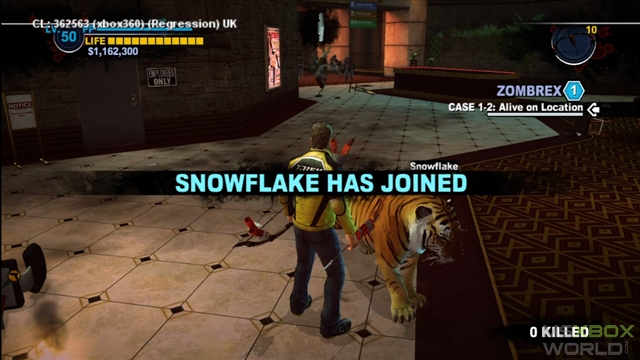
Yep. Somehow a tiger has lived in the mall for at least a day and no one has seen it. And if it doesn't join you, you never see it again.

Yep. Somehow a tiger has lived in the mall for at least a day and no one has seen it. And if it doesn’t join you, you never see it again.

Setting the game in a mall seemed a little weird, and the group of rednecks who show up to bitch about socialism felt a bit hackneyed too. Congratulations, Capcom, you figured out themes that Romero used decades ago.  Care to make them any more relevant? Well, as soon as I wondered that I began to think–yes, these redneck, Tea Party, Ayn Rand fanboys might ironically feel threatened by the brainless masses, but rather than picking off the obvious symbol of left-wing extremism infesting the mall, they shoot survivors, indicating they have no clue how to identify socialism or how to properly solve their political problems. The plot twist clearly shifts the focus of evil from consumerism to corporate greed, and the mall itself replaces anchor stores with casinos, which considering modern fears of class warfare, getting rich versus going broke, and the pure chance involved behind any of that, Capcom may just know how to use zombies properly after all.

Given interpretive value, the literature teacher in me says this game actually needs to exist. The gamer in me wants to hack the game and remove the time limits and any babysitting components, and possibly to tone down two or three of the early psychopath battles, but otherwise, the game doesn’t suck.
snowflake dead rising 2 tiger

Star Fox – SNES

Okay, everyone turn to your right and look creepy. No, creepier.  Like something out of Norman Bates' childhood.

Okay, everyone turn to your right and look creepy. No, creepier. Like something out of Norman Bates’ childhood.

Back in the early nineties, I subscribed to Nintendo Power.  Video games had a pretty harsh stigma back then; not yet harsh enough to brand everyone with an SNES a school shooting waiting to happen, but you still didn’t talk about them unless in a safe zone–usually the woods behind the school playground during recess. The fact that someone bestowed upon us a magazine–a monthly periodical–that not only talked about video games, but provided screenshots, illustrations, top-secret cheat codes and all that other stuff that the internet would eventually render moot, well…who wouldn’t subscribe to it except old people born before the advent of video games and all those weirdos who never talked about anything but hockey and basketball? As a kid, who couldn’t play games all day long, I got my unwired fix from Nintendo Power, along with all my news about upcoming and recently released games. Interestingly enough, if you look through the covers of issues released from January 1993 to December 1994, you might find a lot of games I happened to have in my personal collection.

Dogs, apparently, live in giant blocks with no doors or windows.

Dogs, apparently, live in giant blocks with no doors or windows.

One game, though, touted in my first issue and hyped for at least the duration of 1993, never really appealed to me. Nintendo Power loved it, though, for something it called the Super FX chip, which ten-year-old me understood only enough to know it somehow advanced the technology of the Super Nintendo to produce things never before seen in video games, somehow improved the system far enough to deliver unto us the magic of hyper-realistic, futuristic, uh…flying triangles? Nintendo Power targeted ten-year-olds, which unfortunately meant a somewhat dumbed-down explanation of their subject matter. It didn’t bother to explain how the SNES needed help with things like frame buffering, scaling, and polygon rendering. As a result, Star Fox appeared to me as only a blank, empty-looking game about flying a triangle through space, shooting at things I could have easily drawn in my computer’s paint program. Still, I remembered the full year’s worth of comics printed in the magazine, the weird TV commercials, and, of course, enjoying the N64 game, so when I started this blog, the SNES Star Fox went on my list of games to play.

I think I designed something like this on my Laser 386sx.

I think I designed something like this on my Laser 386sx.

The instruction manual only drops hints of a story.  You know where you need to go, who and what to shoot down, and a little detail behind some of the planets in the Lylat system, but unless you’ve played Star Fox 64, considered more of a reboot than a sequel, the game just assumes you don’t need to know the details behind the mission or any moral qualms between the characters, and that you’ll just blindly follow instructions like a good soldier.  Either that or it figures none of the ten-year-olds who bought the game after seeing it in Nintendo Power will care about anything beyond “outer space battle with animals.”  Still, for those of you unfamiliar with the series, damn dirty space ape, Andross, has launched an invasion of the dog planet, Corneria from his base on planet Venom.  Cornerian General Pepper has called on the help of Fox and Friends, who unlike their counterparts on earth, want to detain Venom rather than spread it. When starting the game, the player selects one of three courses through the Lylat system, each one corresponding to an easy, medium, or difficult mode of play, indicating either that Andross had the courtesy to only invade a minor, easily liberated chunk of the solar system, or that Fox hasn’t figured out that he could probably just fly straight to the final stage and begin his invasion of Venom immediately.

Did someone forget to finish programming the boss?

Did someone forget to finish programming the boss?

After selecting a course and hearing a message from General Pepper that qualifies more as “small talk” than an actual briefing, Fox and team launch their arwings and the player immediately begins…flying a triangle around a series of rectangles and dodging diamonds. Honestly, this game should have clued Nintendo in to the potential failure of the N64. Since the Super FX chip essentially turns Star Fox into a 64 game on the SNES, using scaling and rendered polygons, the fact that it didn’t immediately become the standard against which we judge all SNES games should have indicated that more advanced technology doesn’t inherently translate to better games. I enjoyed the game, but playing it gave me a strong Star Fox 64 vibe, along with the little voice in my head constantly asking, “Why don’t you just go play that game instead?” It almost felt like playing a developmental demo for the 64 game, without skins and details added to make the world look like something other than flying through a geometry textbook.

Pshh. I think I know what to do if an amoeba attaches itself to my star fighter.

Pshh. I think I know what to do if an amoeba attaches itself to my star fighter.

I could mention other things about the game, such as the outer space water level, where all the objects that usually float through the ocean now float through space, or the dinosaur level which would eventually become the basis for Star Fox Adventures.  The SNES game features most of the same power-ups as the N64 installment, albeit fewer of them, and picking up some items, like the health rings, demands a targeting so precise that the only people who possess the skills can also shoot the center out of a dime placed inside a safe using an airsoft gun.  Even if you do manage to pick one up, its healing power ranges somewhere in between a good band-aid (on the high end) and the power of positive thinking. The halfway points restore a substantial portion of your ship’s shield, but they only give you one per level and don’t come before boss battles, so prepare yourself for playing through half the level every time a boss knocks you out with one hit because you had to play through half the level to get to it.

That last point really gets in the way for me. I like this game, and I would play it more often, but I play games differently now than I did twenty years ago. Back then I didn’t get bothered by repetition or time-consuming early levels. I had more patience for practice.  Having owned Nintendo products instead of Sega, I can never reach the skill at Sonic the Hedgehog that I still have at early Mario games.  Star Fox demands that kind of player, the kind who will patiently work through problems and develop a skill. Either that or save states. I could get through the game with save states.

I actually don't have a problem with this. Anyone else? No? Good.

I actually don’t have a problem with this. Anyone else? No? Good.

The technology, as I’ve mentioned, impresses the tech people more than the players. At the beginning of the mission, a synthesized voice tells you, “Good luck!” (Which sounds more like “Greeblock!”) Pre-sampled tones synthetically garbled make up suggestions of character voices, an idea later implemented in Star Fox Command; kind of neat, and undoubtedly difficult for a 16-bit processor to pull off, but they don’t really enhance the experience beyond what we’d get from Final Fantasy VI or a Link to the Past, which focused on complex story and gameplay, resulting in far better games. I may even argue that many 8-bit games, like Mega Man or the original Legend of Zelda, offered more to their players. I don’t want to give the impression that I have no respect for Star Fox, but unless you want to play it for curiosity or out of a die-hard love of the series, you may just want to go straight to Star Fox 64.

Final Fantasy Fables: Chocobo Tales – NDS

This Thanksgiving, enjoy a bird and a story that won't put you to sleep.

This Thanksgiving, enjoy a bird and a story that won’t put you to sleep.

Give any television show long enough and one of two things will happen. Either they’ll make a Rashomon-style episode where every character gives a different recounting of a certain event, or they’ll parody a famous story using their own characters in place of the original. The latter usually only happens with cartoons and almost exclusively with comedy, but apparently it doesn’t require anything more than a long-running series running out of ideas, because that basically sums up Square Enix’s Final Fantasy Fables: Chocobo Tales. And in their eternal struggle to out-epic everyone else on the planet, they have redone not just one story, but sixteen, rewriting classic fables and fairy tales around their main series summon monsters and recurring fauna.

After turning on the game, the title screen greets you with two eyes, a beak, and the questionably euphemistic command to “touch the chocobo,” without giving you a doll to show you where to touch it. Touching said chocobo launches it upward into the title, bringing you to the main menu. A new game opens on a small farm where the young priestess, Shirma, has gathered three or four of her favorite chocobos to read them a story, which they apparently appreciate more than when I perform Shakespeare for my cats. Soon the black mage, Croma, arrives with a wagon full of newly acquired tomes, including one special-looking one that locks with a tile sliding puzzle. Having dexterous, prehensile digits, the humans naturally request help opening the lock from one of the giant birds with only wings incapable of flight. Enter the player-character, a young, silent, yellow chocobo. You undo the book, naturally unleashing all hell upon the world because, after all…Final Fantasy. The book eats all your chocobo friends leaving you alone with the mammals, and the villainess, Irma, struts out with her chocobo lackeys to taunt everyone about restoring the book to its true form….yada yada.

Who needs a hungry, big bad wolf when you have an angry little tonberry with a knife and a grudge?

Who needs a hungry, big bad wolf when you have an angry little tonberry with a knife and a grudge?

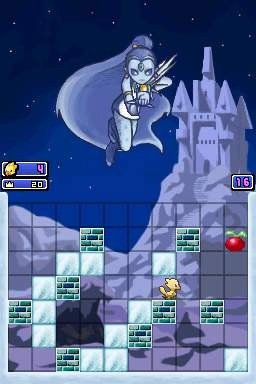
None of that really matters. The real game lies in three areas: pop-up book mini-games, microgames, and of course, Square wouldn’t pass up the opportunity to design an addictive yet time-consuming card game that wouldn’t actually work if you played it outside of the game. The main story only carts you between these games like a rickshaw with plot. The chocobo enters pop-up storybooks scattered around a small world like a Raccoon City library. Each one consists of a story loosely based off a real-life fable or fairy tale. Depending on the difficulty setting, winning the mini-game based on the story will earn you either one of three epilogues, a card that rescues a chocobo from the book that ate it, or a summon card for the card game. The epilogues offer some of the most bizarre prizes in the game. In re-writing these classic stories, Square may have missed the point. While some still sound moralistic, other resolutions wander so far off from the original plots so quickly that I wonder if the game shouldn’t go out to refill its Ritalin prescription instead of telling me stories. Others yet just offer tragedy, such as tonberries who cut off, stomp, and burn the three little pigs’ tails, or how the ugliest chocoling left home to live with the blind mole people and never became a beautiful phoenix. Each epilogue effects one change in the natural world–in addition to effecting a depression in the player–which tends to progress the story, open access to a card, or give the player access to a microgame. Rescuing chocobos will usually open a microgame or the grateful bird will give you a card. Beating the microgames will always give you a card.

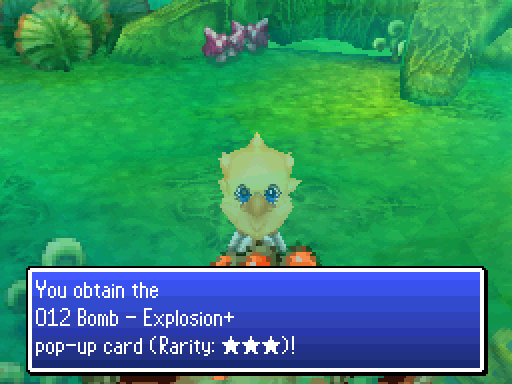
Three-star rarity! That would impress me more if every single card didn't have only one copy in the entire game.

Three-star rarity! That would impress me more if every single card didn’t have only one copy in the entire game.

So really, the game should come to a head at the card game, right? You’d expect plenty of clever card duels with clever designs and challenging deck building strategies, right? You’d also recognize the sarcastic tone and have figured out by now that you shouldn’t expect those things, right? The card game works depressingly simply, but not simple and brilliant like the card game in Final Fantasy VIII and IX. More just plain-old simple. Each card has four zones, each one representing one of the four elements, Fire, Water, Earth and Cobalt-Thorium G. Each zone might attack, defend, or just sit with a gaping opening hoping someone will impale it. During each round, each player selects a card, which summons a classic Final Fantasy monster, and the game compares zones. An attack zone needs to match with an empty zone of the same element to hit, a guard zone of the same element to miss, and an attack zone of the same element for half damage. For successful attacks or blocks, instructions on the card determine damage and effects. The first player to reach zero HP wins the shame of losing the duel.
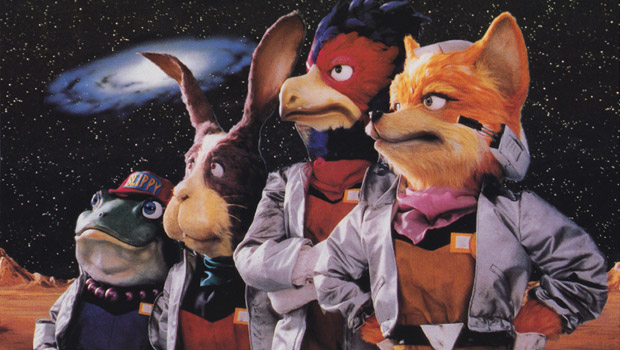
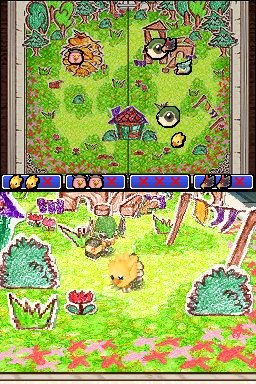
Yeah, I've spent a lot of time on newer systems, but this one tries to look retro!

Yeah, I’ve spent a lot of time on newer systems, but this one tries to look retro!

While the card game has addicting qualities, the simplicity often means that several rounds will pass with no damage. Occasionally I suspect a video game at cheating. Here, it seems like your opponents know what cards you’ve selected and will adjust their selection accordingly, a luxury you don’t have. Add to that unskippable animations for summoning, attacking, guarding, counterattacking, and unsummoning, and you can sometimes spend twenty minutes or more in a duel you know you won’t win. Moments like that made me wonder why Square included a “quit game” feature for the pop-up books, but not the microgames or the card game. Also, one pop-up book offers the option to skip the opening animation, but not the other fifteen or the card game. So while the game takes about 16 hours to finish and complete, you can use a good chunk of that time for reading, homework, preparing dinner, and telling those people from the congressman’s office that no, you don’t want to help out his campaign by calling people and trying to persuade them. The card game, though, doesn’t actually head the game; Square just needed some seemingly useful prize to give for the mini- and micro-games, and they just happened to have a plentiful supply of cards.

Whack-a-Malboro. Easily the most addicting, and surprisingly the least likely to inspire violence.

Whack-a-Malboro. Easily the most addicting, and surprisingly the least likely to inspire violence.

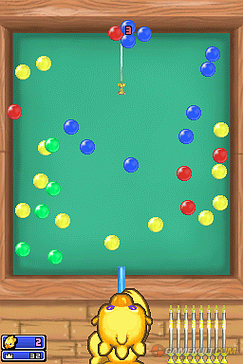
I found that I enjoyed the micro-games more than pop-up games or the card games. These games work like flash games or iPhone games–simple objective, simple rules, fast-paced game play, and difficult enough that you should probably pad your walls with rubber so as not to smash your DS when you chuck it away in frustration. Fortunately, unlike flash games, they offer prizes–cards, of course–which may not benefit you at all, but at least provide a point at which you can say, “Fuck this! I never want to play this game again!” with at least a modicum of dignity still intact. Getting that prize puts a reasonable limit on your need to sit there for hours because you think you can do just a little bit better next time.

Some games make use of the DS microphone, like this one simulating a blow gun. When I regained consciousness, I found I had won the gold prize!

Some games make use of the DS microphone, like this one simulating a blow gun. When I regained consciousness, I found I had won the gold prize!

This light-hearted spinoff doesn’t take much time, and it doesn’t pile on heavy themes of death and sacrifice and identity that the main series does with enough melodrama to sicken even the most self-absorbed teenage girls. The plot never really twists or complicates, and only thickens like a mild curry sauce. It pretty much consists of the humans sending you to the front lines, while they hang back and work as dialogue-spewing machines every so often. Most of the game recycles main series music in a move done either to reminisce on familiar series elements or to capitalize off having a Nobuo Uematsu score years after he left Square-Enix for greener pastures and blacker mages. The chocobo fights card battles to either the FF1 battle music or the FFVI boss music. The boss fight plays “The Battle on the Big Bridge,” one of my all-time favorite battle themes…unfortunately the modified air-hockey game doesn’t quite live up to the music. Still though, the game works, works well, and feels like all those addicting minigames you play when you know you should read or prepare for class instead…except, with more of a point. Other than getting out of work….I have to go play Whack-a-Malboro now.

Darkened Skye – Game Cube, PC

Taste the half-assed advertising campaign. I mean rainbow. Also, give us money.

Taste the half-assed advertising campaign. I mean rainbow. Also, give us money.

Everywhere I go, I hear people lament the loss of good advertising. “Oh why can’t we get a few billboards put up in school hallways?” or “For God’s sake, I don’t have nearly enough time to take dump in the middle of my TV show. Couldn’t we make the breaks longer?” or “These webpages load way too fast! I might have a seizure. If only we could fill it with dead weight to slow it down.”  Fortunately, Corporate America has devised a clever new way of treating us like morons in hopes of us giving them money: product placement in video games! And thus, with a heavy heart, I introduce Darkened Skye, a high fantasy epic action adventure platformer about a young sorceress heroine who unlocks her hidden magical potential…with Skittles. Yes. Those Skittles.

Skye, a young twentle herder with a sort of Christina Hendricks vibe opens the story with an onslaught of unsolicited exposition about not knowing her father, wanting to find her mother, hoping to live to a higher destiny than herding twentle, and other such topics that don’t really segue into one another, but would still help us understand everything about the story without having to subtly reveal this all piece by piece throughout the course of the game. Then, chasing after a twentle that suddenly blitzes a technicolor path away from the herd, she finds an orange skittle, magical things start to happen, and suddenly the game’s great evil puts her on his hit list.  The game reveals very early on that it doesn’t take itself very seriously and adopts an irreverent tone. They even give you a wisecracking gargoyle sidekick. Or, rather, a cracking gargoyle sidekick. His jokes don’t display a whole lot of wisdom or wit.

Trust me. You'll enjoy this picture more than his joke.

Trust me. You’ll enjoy this picture more than his joke.

See, if you want to make a game that mocks the tropes and cliches of mill fantasy stories, first you have to have the talent to actually write a better story. Darkened Skye wants to toy with these tropes, but sometimes makes fun of minor ones while oblivious to the extremely worn out plot devices. Early on, Skye discovers a secret message–which the player never sees themselves–and declares sarcastically, “How will I ever decode this? They wrote it in backwards writing!” Congratulations. You figured out the Mirror of Erised as fast as a borderline-aspergers case who used to read things backwards everywhere I went.  Now would you please throw in some snappy witticism about revealing that the villain’s right-hand man who’s plagued you throughout the game dramatically reveals himself as your father? Please? Even a short remark indicating that you know how often this happens in science fiction and fantasy?  No? We just want to look the other way on this one? Nah, that doesn’t embarrass you in the least, does it?

I have to go where? Do these pillows at least have a railing?

I have to go where? Do these pillows at least have a railing?

Before I continue…Fuck you Mario! Damn you to Hel! You heard me…the Norse Hel. Where a dragon will gnaw on your corpse for eternity.  You save one measly video game industry from collapsing, and now everyone assumes that nothing pleases players as much as hopping from tiny ledges over gaping chasms.  Seriously, though; Super Mario Bros. didn’t even focus on that. Why does everyone who wants to throw together a game without any inspiration whatsoever automatically drain their environments of anything interesting, fill it with water or lava or just take away the ground, and assume that will sell? The early stages of Darkened Skye reveal the heroine’s complete inability to swim just before taking her to an archipelago for the first 30% of the game. And of course, if you so much as get your toe wet, you have to restart the level. Does no one understand that people naturally float? No one should die that easily in water unless their body consists of pure potassium.

Shit! I missed. Would you mind waiting for my candy to recharge?

Shit! I missed. Would you mind waiting for my candy to recharge?

But when not hopping over obnoxious gameplay cliches, Skye has to fight monsters. She begins the game with a staff that she can bash over the skulls of her foes with all the might of a pile of overcooked spaghetti, but eventually starts accumulating offensive magic, which fire different types of missiles at her foes with all the might of a pile of overcooked spaghetti. I can’t tell whether the designers wanted tedious combat or frustrating combat. Either way, you’ll run through a lot of life potions while fighting, and often–especially early on–you’ll lose less life just by turning the other cheek and performing your work as though you didn’t have evil lizard-frogs shooting two or three fireballs at you every second.  Later in the game, this evens out a little, although I can’t tell if that happened because I got better, my spells got stronger, or that I didn’t have to worry about falling off as many precarious precipices. Still, the lack of an aiming mechanic makes fighting enemies at a distance a pain, and even using the staff melee attack, Skye just swings it around ostentatiously with no real regard for the thing directly in front of her that the player wants to kill. Combat takes time, saps life, and I couldn’t have gotten through the game if it hadn’t essentially let me use save states.

Found this long before I got the shrink spell. Had to go through long after I got it. I didn't figure this out immediately.

Found this long before I got the shrink spell. Had to go through long after I got it. I didn’t figure this out immediately.

Except for aforementioned offensive spells, Skye’s magic performs effects. True Sight lets her see invisible things, Firewalk lets her cross lava on foot, and Diminish lets her briefly shrink to a tiny size–an interesting feat when you realize the people playing the game use Skittles to magically increase their size. I’d describe it as a refreshing concept had they actually done it well. They don’t always make it obvious when a new spell becomes available, and oftentimes when you do get one, you don’t yet have enough of the right color of Skittles to perform it. So I ran into a lot of puzzles that confused me to no end, only to find the solution in my magic menu a half hour later.  Or even better, sometimes I’d run into puzzles after forgetting about a spell I used once or twice at the beginning of the game, a problem compounded by the fact that the only person who published a complete walkthrough online seems to consider punctuation pretentious.  The entire guide contains about three sentences and cuts out some important information; at one point it told me to follow a set of human footprints instead of gargoyle footprints, but didn’t bother to mention that without the spell that I literally only used in the first level I couldn’t see either of them.

I wanted to hate this game. I really did. Honest. But despite obnoxious boss battles, lame attempts at humor, endless combat, reloading the game every twelve seconds, at a series of bugs and glitches, one of which makes Skye move through the level like her puppeteer had tangled up her strings, I actually caught myself enjoying it.  Sure they pour inept jokes into the game like a leaky septic tank, but every so often they pull off something genuinely amusing–likely by accident, but still funny.  The stages have no relation to each other, but after about six or so, they start to make the world feel flushed out and complete.  Also I didn’t mind the busty orange-haired heroine with the voice of Princess Jasmine (almost the only acting job she’s taken other than the Aladdin franchise). I actually liked it in a never-going-to-play-this-again sort of way.

If I could take screenshots with my Game Cube, I'd show you the marionette glitch. But I can't. So here's a Chinese-looking guy instead.

If I could take screenshots with my Game Cube, I’d show you the marionette glitch. But I can’t. So here’s a Chinese-looking guy instead.

The length, however, holds the game back more than anything else. While I beat the game with the clock under eight hours, it probably took me four or five times that much what with all the falling into holes and getting killed by monsters and solving convoluted puzzles and looking stuff up in the walkthrough. Thirty hours feels like ages for a simple game like this, and I can honestly say I’ve never given that much attention to a commercial before. I actually don’t mind advertising.  I don’t really want to think about the day when they start casting big-name celebrities just to endorse products–David Duchovney breaking up the conspiracy in XIII with his trusty Ruger Firearms, or Liam Neeson in Fallout suggesting you raid the old Dunham’s store for top-quality protective gear–but I can recognize that I get some good stuff out of it. Namely, I don’t have to fund Futurama’s animation staff out of my own pocket. But even Burger King and Taco Bell can recognize what Darkened Skye can’t; if you want us to sit through a 30-hour commercial, you have to make the game free.