
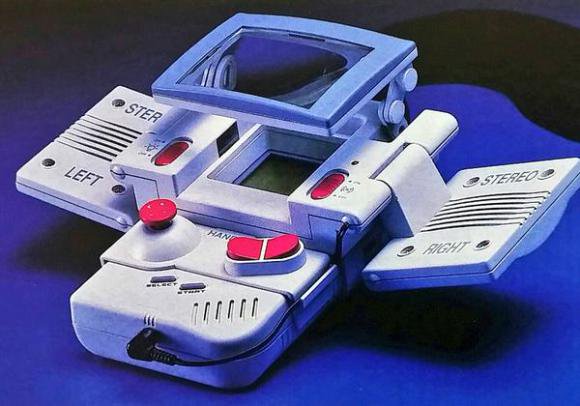
I’m pretty sure we’re looking at Skynet in his punk adolescent years.
Nineteen Eighty-Nine, bitches! Now you’re playing with power! Portable power! Nintendo successfully shoved all eight bits of their classic system into the ridiculously oversized pockets of your soon-to-be outdated parachute pants. This was so awesome, that virtually nobody cared that the green-on-green color scheme looked like someone had puked on a jungle commando in Vietnam, and that you could only see it under the noonday sun in death valley, if the batteries lasted longer than the drive to Radio Shack to buy new batteries. This was portable fuckin’ power! By which I assume they mean either the power to strengthen your wrist to Popeye proportions as you held up the game with the required lighting attachments, or the power to turn your anti-video game mom into a hardened criminal who swipes your copy of Tetris for long plane rides.

“If you put it just really simply, these violent video games are stealing the innocence of our children…” Which is why I have to steal my daughter’s Game Boy to play Tetris. Forget Benghazzi. This is the real crime. Lock her up!
Nintendo has a long history of innovation which usually lead the world into the realm of science-fiction ten or fifteen years down the road, but in the mean time they usually just induce stress fractures to your neck while staring at a rage-inducing red screen, require importing the cool stuff from Japan, or make you waggle a stick until the game enjoys itself more than you do. And even though we tend to remember the Game Boy more fondly than our first hand-job, I have to be honest to say that, like aforementioned hand-job, the fun was a little rough around the edges. Cartridges were a fraction of the size that NES games were, and with all that games had to be cut down, mangled and stuffed into cramped spaces, the offices at Nintendo probably resembled the aftermath of a game of Truth or Dare played by serial killers.
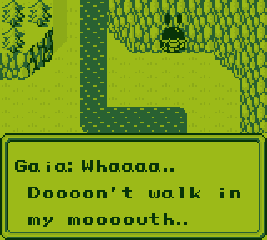
She doesn’t like it when you come into her mouth without telling her.
Enter Final Fantasy Adventure, which as best I can tell is Final Fantasy’s sixth installment in its own series while simultaneously the first game in their second spinoff which ended up being either the first Seiken Densetsu game or the prequel to the Mana series, depending on how you want to look at it. (However you look at it, this game is striking evidence in my theory that Japan numbers their sequels using a dyslexic idiot savant in the throes of a grand mal seizure induced by a cocaine overdose). This game provides an interesting example of how a Game Boy game can be both amazingly good and simultaneously more gaunt and emaciated than an anorexic greyhound with a heroine addiction.

Dr. Bowwow reveals his cyborg chocobo. This game isn’t weird at all.
Gameplay resembles something Koichi Ishii scribbled out on a cocktail napkin after downing three bottles of sake before sobering up to make Secret of Mana. The player wanders through an expansive world that stretches as far as the eye can see (or until they run out of unique ID numbers represented by an eight-digit binary code. Whichever comes first). The map is split into grids, with each of the 256 areas being roughly the size of an airplane bathroom. As per usual, the goal is to traverse through hidden dungeons and towers clearly designed by a single bored architect who knew he had a monopoly on the construction market, so he drew a square room with doors exactly in the center of the wall, pumped out about 256 photocopies, sold the designs, and took all his GP and skedaddled to some colorful, tropical island likely on the Game Gear.
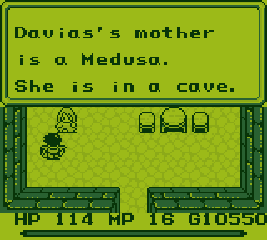
…I’m not sure that’s how that works.
Also present in nascent form are most Secret of Mana enemies, system of casting spells—albeit without adorable elemental sidekicks—and the concept of switching weapons to progress. As in the Seiken Densetsu series proper, the hero wields not just a sword, but axes, spears, whips, chains (and various assorted leathers and novelty condoms), sickles, turkey basters, weed wackers, enema bags, croûtons, medical malpractice attorneys, cocker spaniels and…you get the picture. Long list of irrelevant objects. Haha. Moving on. Your axe can cut down trees while the sickle can cut grass, and whips let you swing like Pitfall Harry over chasms and rivers. You know there’s a problem coming, right? See, the weapons don’t level up with you, and I’ve seen blind guys operate touch screens on drive-through ATMs with more fluid ease than Final Fantasy Adventure’s menu system, so occasionally the game all but forces you to fight with whatever weapon you need to cross barriers. You could look like Fabio and Arnold Schwarzenegger joined together Voltron style, but the instant the batteries fall out of your plastic Sword of Omens, even the cute little duck with bowl-cut hair is going to laugh at you. You get stronger and stronger weapons right up to the final boss fight, but once you get the morning star, that lets you harm magical enemies as well as break through walls that would otherwise require a special item, any stronger weapons you find only serve to mock you with their muscle-bound impotence.
 The game is unfortunately obtuse when it comes to objectives, directions, or puzzles. For a game that traps you in an area of no more than 8 squares at a time, methods to progress are harder to find than the Ark of the Covenant…and no one thought for an instant that Indy would blow that thing up. Here, I think I did drop key items by accident at least once or twice. Some doors can only be opened if you backtrack halfway across Antarctica to find one merchant who sells a specific item that you didn’t know you need. Some switches activate when you step on them, when you stand on them, or occasionally only when you turn an enemy into a snowman and push them onto the switch, as though your lean 80kg of muscle is no match for their 160kg of Mackinac Island Fudge. In the final dungeon I passed the point of no return and realized I hadn’t brought any keys with me. Far from being stuck, FF Adventure just expected me to find the one low-level enemy wandering the tower that dropped the keys, and that if I just left one of them alive before leaving the room, they wouldn’t vanish into oblivion like a dead parrot. Easy. I long for the days when I could just get lost in a labyrinth of rooms that all looked identical.
 And yet I made it through, though being holed up in the woods of Northern Michigan on vacation, I really tested my data plan’s limits in digging up walkthroughs and maps. Somehow I survived the repetition and the unintuitive puzzles and the inventory system that lets you keep fewer items on your person than Joliet Prison. The game did throw some fairly interesting boss fights my way, but wandering around aimlessly does tend to pack on a few extra levels, and with a side character who heals you whenever you ask, Final Fantasy Adventure tends to lean toward the easy side.

As opposed to other plants that crave electrolytes.
Spoiler alert: the hero is the ghost from the beginning of Secret of Mana, and his girlfriend is the Mana Tree. Which means somewhere behind the scenes, these two stripped off their green-on-green armor and tuned up their mana weapons to level up their 8-bits into the hero from the SNES game. I’m tempted to say, “At least Squaresoft had the good taste not to show that,” but since Custer’s Revenge still has more views than any other article on my blog, I think I’m obligated to express disappointment in the lack of pixel porn in the game.
 Having read one of the most amazing novels of my life, I naturally couldn’t wait to jump on to write about it and spread the glory of Ernest Cline’s paean to 1980s pop culture, Ready Player One. However, over the past two weeks of delays and distractions, I’ve come to the realization that God is most likely a triumvirate of Vlad the Impaler, H.H. Holmes, and the Mark Hamil Joker, because there’s no other way I can explain the series of sadistic practical jokes that the universe seems to take such joy in throwing at my daily goals and aspirations. To be specific, I’d like to tell you about a fascinating future where people escape from a socio-political dystopia by burying themselves in the most awesome virtual reality world anyone could possibly dream up, but I couldn’t because the SD card I use as a portable hard drive somehow was switched to read-only, and although there are plenty of commands in place for changing drive permissions, I can’t use any of them because the disk is read-only. Honestly, I consider myself a pacifist, but whoever set up read-write permissions this way is really making a good argument in favor of burning people at the stake.
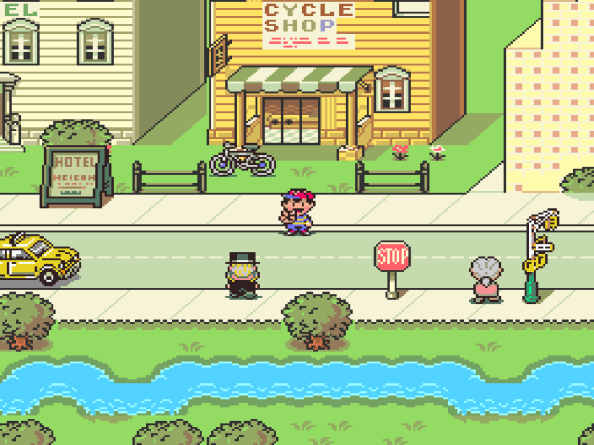


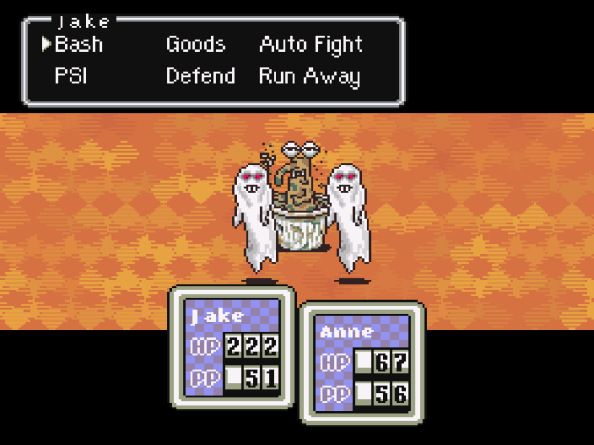
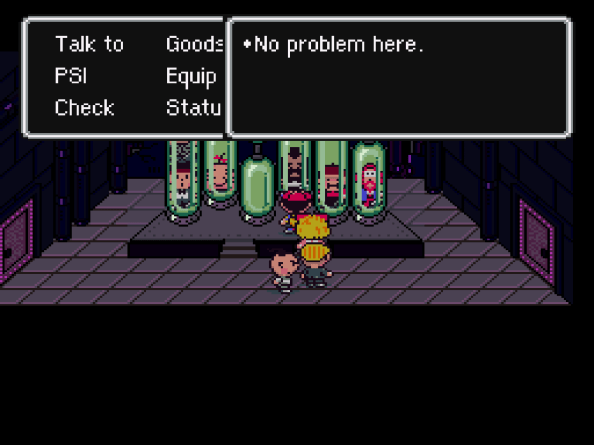

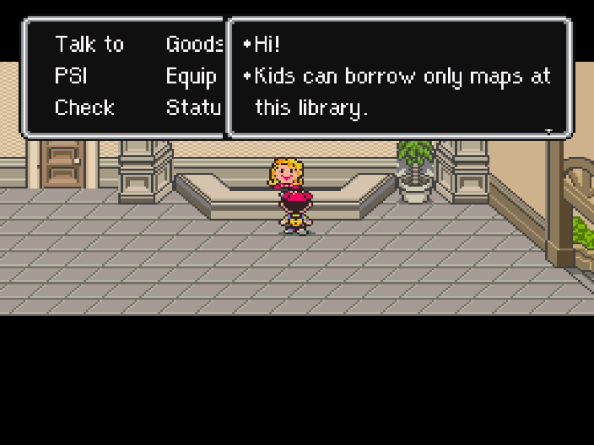
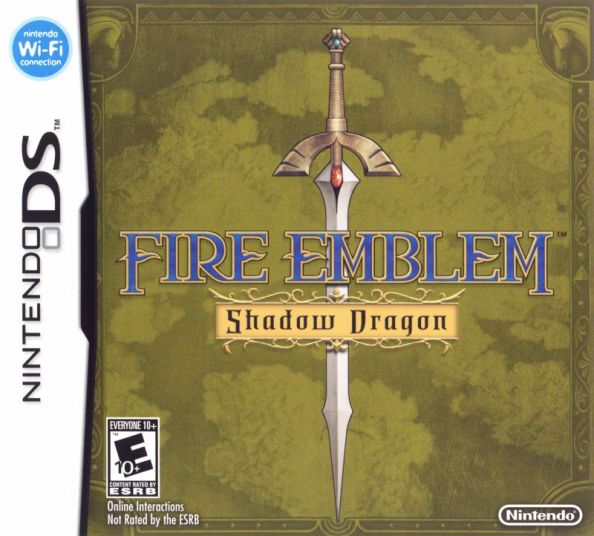
 Fire Emblem: Shadow Dragon tells the story of Marth, a young prince forced from his kingdom when an evil sorcerer, known as the Shadow Dragon, murders his father to steal his throne and his magical sword, Falchion. Fortunately, his pursuers allow him to bring one thing with him into exile: a well-equipped army of highly trained soldiers willing to stop at nothing to restore him to the throne. So Marth launches his campaign which consists of a series of macguffins and convoluted excuses for tactical medieval combat. After a handful of victories, Marth is awarded the titular Fire Emblem, which I assumed must have been pretty important to lend its name to the series. What could this be? Is it a supreme magical macguffin like the Triforce? Perhaps it grants Marth hero powers, such as in Age of Empires? Nope. It lets our hero open up treasure chests, thus allowing a single unit on the battlefield the ability to do what any standard RPG protagonist can do automatically and free of consequence in any dragon’s cave, king’s castle or stranger’s living room.
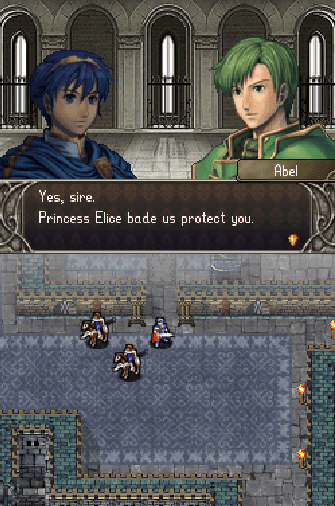 Bearing a strong Shining Force vibe, Fire Emblem presents a simple, no-frills strategy game with everything you’d expect to find and very little else. Noteworthy features include an insane difficulty and a perma-death system rivaled only by the real world. It is a video game, so it does include some healing magic after all, but there’s only one resurrection item. In the penultimate level. That can only be used by a single character. Once. (Which by the time this entry posts is likely to be the Republican healthcare policy) This is, I gather, supposed to make me more considerate of my actions, more mindful of the risks and more hesitant to throw away lives on crazy maneuvers like I was shooting craps with someone else’s money. However, in practice it only makes me frustrated that there’s no option to re-load save files from the battle menu. At least they had the consideration to give me two opportunities per battle to save progress, lest the dozen or so hours I wasted on resets blossom into two dozen.
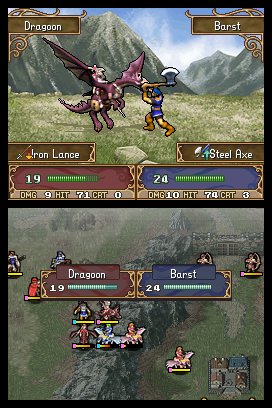 The problem with this, though, is that much like a buffet line, some characters tend to pull more weight than others, and they tend to get rather large, while your other combatants whither away by comparison. Early on, the units who dealt more damage began to gather more experience than the defensive units, and the gap between them grew until the endgame when I waged war with one seasoned soldier, a dozen accountants, and three nuclear bear robots with Ginsu claws and laser eyes. Later stages often became a handful of heroes pushing their way through a crowd of people milling about in the middle of a freeway. It got rather tiresome trying to stash characters in safe places, but the mages generally had the firepower of a toaster cranked up to 3, and as far as I could tell the archers were just lobbing plates of wet spaghetti at the enemies.
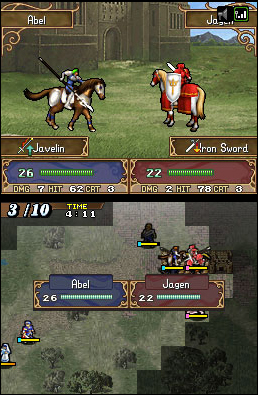 While mostly just a serving of vanilla strategy game, Fire Emblem has an interesting sugar cone underneath. All chests must be opened during battle, and of course those who are easily distracted by shiny objects while under assault will necessarily need to change their strategy. Furthermore, most characters must be obtained by fulfilling certain conditions in battle, such as rescuing them from death, schmoozing with villagers, or simply not killing key enemies. Unfortunately, if you’re anything like me, approaching people for conversation tends to be far more difficult than setting them on fire from a safe distance and hoping they die before expecting you to make small talk, so my ranks tended to grow slowly. Of course, there were also the moments when the game took pity on me as I stood shoulder deep in the corpses of my loyal followers, when it conveniently sent a ragtag group of scrappy fighters to help fill out my ranks without the least bit of concern for why Marth never bothered to learn their names.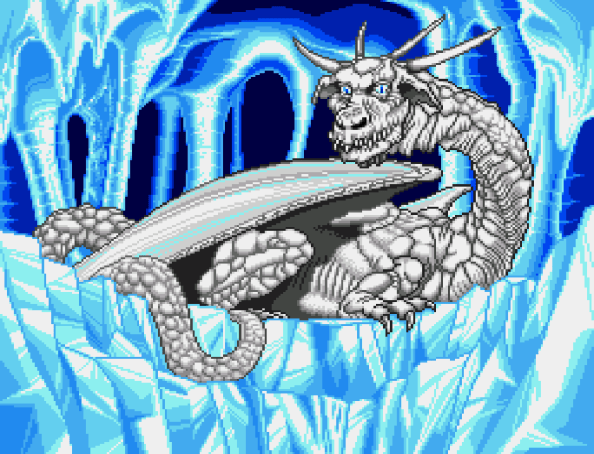




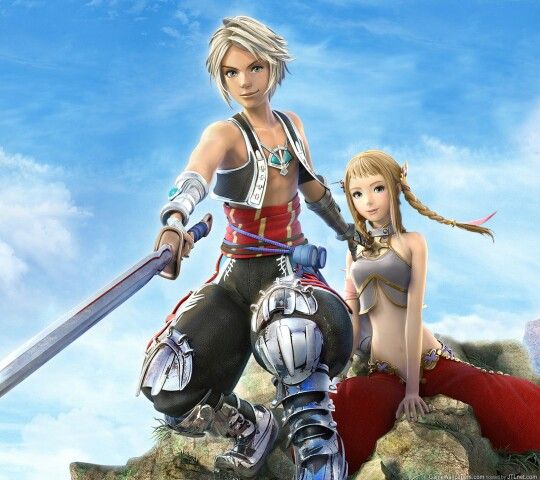
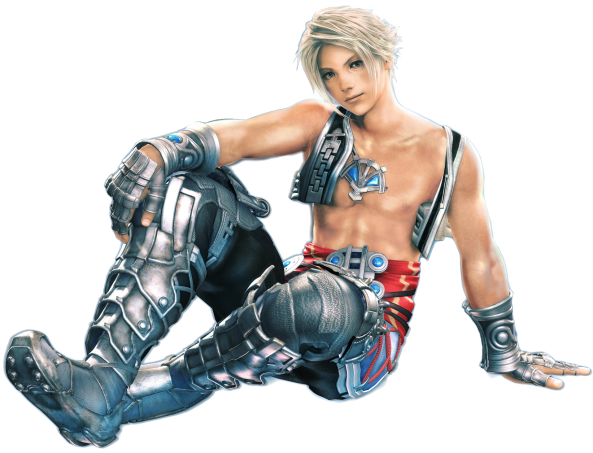
 Moving down the line, we have Penelo, sporting what appears to be a rubber onesie with built in panties—on the outside, in true superhero fashion. Naturally, everyone in the desert wears dark, form-fitting bodysuits because heat stroke is pretty much the only entertainment they have. Her suit is of the high-waisted variety, as it buckles around her collar bone. That might explain the fabric stretching down to her garters. As Mitch Hedberg famously said, “My belt holds my pants up, but the belt loops hold the belt up, so who’s the real hero?” However, it seems she may not need the extra support in light of the sea horses she murdered hollowed out to use as knee socks like an adolescent female Buffalo Bill.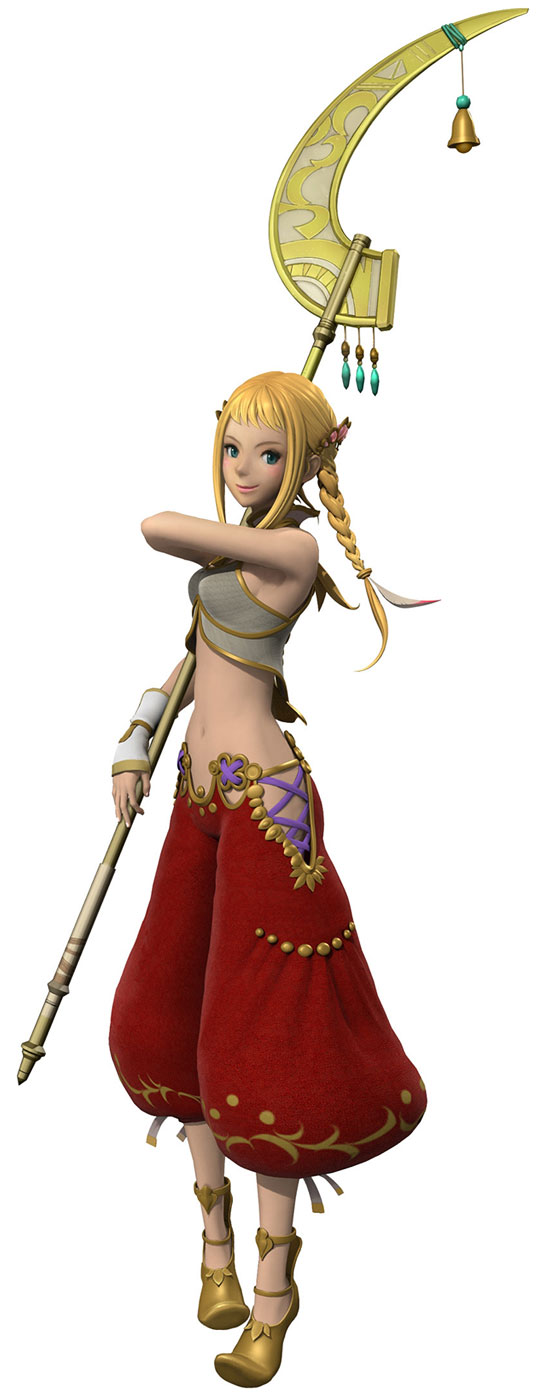
 Of all the characters in the game, Fran is likely the most ready for action, as evident by her countless straps, high heels, and corset that if fully tightened would make her look like a botched attempt at a balloon rabbit. Sadly, I think only Balthier might see the kind of action she’s dressed for. I especially love the loin cloth, draping down with all the opaqueness of a freshly Windexed camera lens. That garment is what even lingerie looks at and calls, “skank,” under their breath.
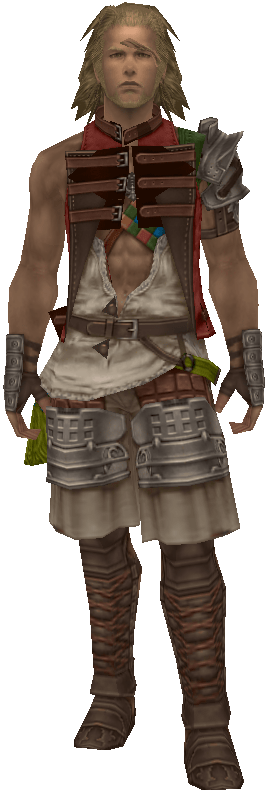 Basch is one of my favorites. The stoic knight, honorable even in disgrace, who speaks with poise and propriety, looks as though he literally ripped his shirt off of the drum major of a marching band. Together with his hair, which looks like he stepped out into a Minnesota winter after a long shower, Basch appears as though he ended up in Final Fantasy XII after getting lost on his way to a Billy Idol concert. While traditionally, knights would ride into tournaments wearing the favor of their courtly loves (like a girlfriend who won’t take her clothes off), this hero seems to be wearing his lady’s entire slip, belted tight around his waist lest it fall to the ground and reveal his knightly nethers. And yet, what’s more, he appears to be wearing his grandma’s favor as well, in the form of a miniature patchwork quilt tucked ever so carefully beside his heart—unless, of course, I am mistaken and he is actually a member of the Ivalice Rubik’s Cube Guild.
 As I breeze by Balthier, who doesn’t merit a picture on account of wearing very little of any note save for an unwound spool of embroidery thread wrapped around him like a shirt, I’ll slide on in to Ashe, an action no doubt made easier by the pink napkin she’s trying to pass off as hot pants. Because, honestly, could we ever take a stern, iron-willed warrior hellbent on power and revenge seriously if we couldn’t also imagine her as a demure sex-kitten ready to fulfill our every desire? Personally, while penetration is definitely on her mind, more likely you’ll wind up impaled upon her blade rather than the other way around, but I guess that’s why they call it final fantasy. Still, the princess here looks as though she assembled her clothing from scraps she salvaged from the floor of the costume shop. Case-in-point: her top appears to be little more than a bikini with a veil and tuxedo tails. Perfect for lounging on the beach with a 120-piece orchestra at your beck-and-call. But one can’t blame a girl rendered completely from computer graphics for being beautiful (despite the fact we can blame the artists for giving her legs so long it looks like she mugged a giraffe for its prosthesis). A real girl might have to worry about her weight and the problems associated with wearing a spare tire around the gut. Ashe, on the other hand, appears to be wearing a literal spare tire around her gut, presumably one she found shredded on the side of the road. That’ll keep you cool in the hot, Dalmascan desert!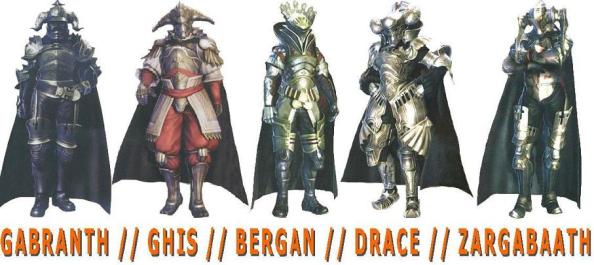



 Utah. America’s El Dorado. Not, of course, in the sense that there’s anything valuable there. It’s more of a matter of no one really knows if it exists or not, and no one ever goes there. Tis a barren, inhospitable landscape with few resources save for dirt, salt, wives, fake moon landing studios, and jokes about Utah. Oh, and Brandon Sanderson novels. For those of you unfamiliar with the name, Sanderson made his fame by taking over the Wheel of Time series after Robert Jordan made everyone worry about George R.R. Martin’s health. Since then, his name has appeared on top-100 fantasy lists with such a high frequency that he violates FCC regulations. So I thought I’d read Mistborn: The Final Empire to see what all the fuss is about. In short, the book was good enough that I had to resort to jokes about Utah to fill out this review.


 Video Game Underworld