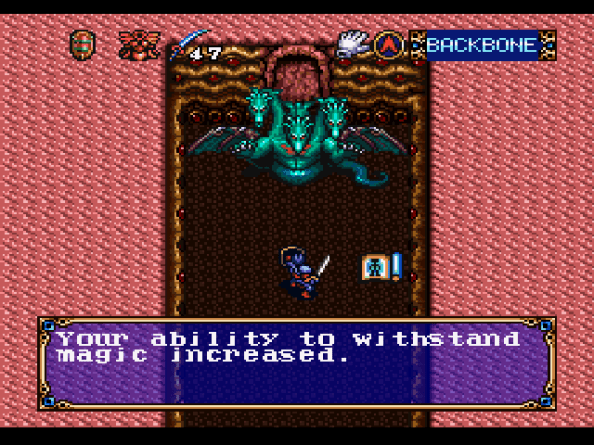
In the same way that getting shot develops an ability to withstand bullets.
I suppose I commonly stretch the definition of “retro” on this blog. A lot of what I review isn’t retro at all; Wii, PS3…books. Honestly, I’m starting to feel like a myopic hipster, clinging to the good old days of blackberries and flip phones and rejecting the ever-so-trendy man-bun-lumbersexual look in favor of coiffing my hair to resemble a freshly frosted cupcake / toothpaste advertisement / steaming dog shit resting atop my head. The point being, if I’m trying to reach into the past while only grabbing things I can reach from the couch, I’m doing it wrong. In my defense, it’s easier to go out and buy games for the Wii or the PS3—much in the same way it’s easier to buy an iPhone than a hand-cranked Victrola—but I have to remember my roots periodically so as not to get carried away. One root to remember involves an SNES game I rented one weekend in high school and completed 75% before I had to return it. Well, it may have taken me nearly two decades to get around to it, but I finally finished the SNES…uh, classic?…Brandish.
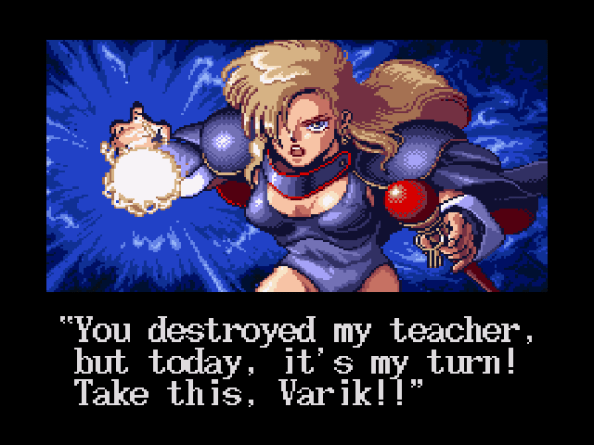
…I don’t know. It might be worth it to let her catch me.
An adventure RPG, Brandish opens with a story of a greedy king transformed into a monster before the powers that be decide to punish all the innocents in the kingdom (No, I’m not talking about a Trump presidency) by burying the entire land deep in the earth. And then everyone forgets about it, so really, have we lost anything? I mean, if New York were to vanish off the face of the planet, you can bet that even Texas would put that in their textbooks until doomsday. South Dakota, on the other hand, could be gone already and none of us would know about it for decades. Thousands of years in the future (in Brandish, not Dakota), the player-character, Varik, is being chased by Alexis, a blond sorceress wearing traditional high-level fantasy armor who wants to kill him for “destroying [her] teacher,” a plot point that ends up as thoroughly as the rationale behind making a Tetris movie. Their fight opens up a hole in the ground and the two fall to the deepest point of a 45-floor labyrinth, fortunately avoiding impaling themselves on all those high-level monsters and…you know…floors…closer to the surface. Because damn it, that’s how this works!
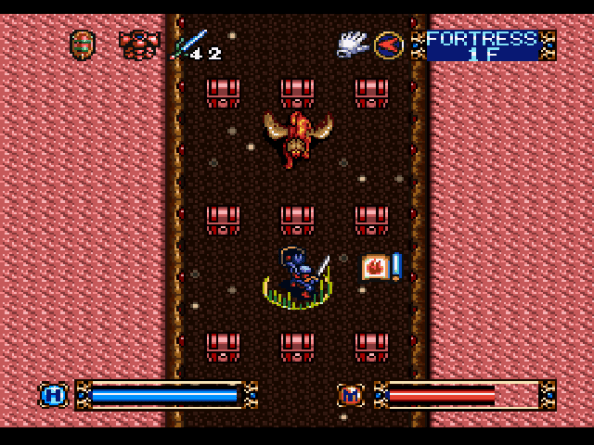
Fuckin’ sphinxes. They’re like rats, infesting the labyrinth and leaving their “riddles” all over the place for you to step in.
Varik then proceeds to explore his way to the surface through a top-down perspective, and before I go any further, I need to address something. You may notice upon taking your first steps, that you can only move forward and backward, and that any attempts to turn left or right induce a nauseating change of scenery. Well, apparently the developers couldn’t be bothered to animate sprites for moving side-to-side or toward the player. I guess rather than change direction, it was easier to make the entire map rotate 90 degrees to one side. Fortunately, when the mighty dragon sunk the kingdom, he installed a few ball-bearing casters so the residents wouldn’t have to worry about silly things like turning. There’s a reason no other game has controls that fucked up; it’s because people who think like that can’t make it to work because they get stuck at intersections waiting for the road to turn. Congratulations! You took tank controls, a design scheme that frustrates players by making them feel like they’re guiding a drunken sorority girl to the bathroom to puke, and simulated the puking experience for the player as well. It turns out that the game is a port of a computer game from 1991, so that may have had something to do with it, and I did figure out that you could strafe from side to side by holding L or R. Still, developers, can we just consider “character moves in direction pushed on D-pad” to be both public domain and a mechanic that doesn’t need improvement? Anything weirder than that, and players are going to accept it about as well as a Neo-Nazi at an NAACP convention.

What do you mean there’s no ethnic diversity in fantasy? That dragon clearly has a Cthulu somewhere in his family tree.
Beyond that—but don’t get me wrong, that’s a pretty significant “that”–I’d say Brandish could be considered a hidden gem for the SNES. It does get a lot of things “right” for the genre; labyrinth full of monsters, useful items and magic, challenging yet logical puzzles, and a surprisingly healthy system of commerce for a lost civilization full of vicious bloodthirsty monsters and a handful of shop keepers. The gameplay centers around making your way through the labyrinth, but every floor manages to find some unique feature to introduce, so even though my eyes wound themselves together like a case of testicular torsion in my head, I never felt the game was slow-paced or repetitive. It was kind of like being in the movie Labyrinth. Except the labyrinth is underground. And there aren’t any muppets. And Sarah is replaced with a man in armor. And David Bowie is actually a Lovecraftian monster that shoots fire from his…let’s go with “appendages,” and Hoggle is a fiery, magic-wielding sex kitten…okay, so it’s nothing like Labyrinth. But it has a nice, adventurous feel to it nonetheless.
Some boss fights are hellishly difficult, a problem augmented by the fact that all the swords you find seem to be forged with the highest quality peanut brittle, and a lot of monsters are either resistant to magic, or it outright slides off of them like they’ve been heavily varnished. The game offsets this by allowing you to save whenever you like. I recommend you save often, but even with the best of precautions, be prepared to become as familiar with the logos and title sequence like a pole is with a stripper’s thighs.

“How is the game?” “Lobsterrific!”
The one other aspect of this game that irritates me like a pair of boxers made from the prickly side of Velcro strips is the menu interface. The select button opens the menu, which freezes certain functions like attacking or defending. The game keeps going to let you do things like cast magic or drink health potions without needing to equip the item, but at certain critical moments when your skin is bursting at the seams and you’re about to spill messy innards all over the floor, you may literally not be able to go on unless you drink that potion. I may be spoiled by all those other games where the monsters take their legally mandated 15-minute break whenever you call a time out to root through your sack of accumulated crap, but I find it just downright rude if an enemy doesn’t shut off the flame thrower long enough for me to rub on some burn ointment. Even more obnoxious are level-up text boxes. These things will pop up whenever you gain a level, increase your arm strength or your knowledge, or improve your magic endurance. And it also disables certain functions until it goes away. I really do believe it’s important to celebrate the small things in life, but honestly I’d rather wait until the giant lobster I’ve been hacking to pieces is wounded enough to lose consciousness (at the lest) before I raise a glass in a toast to my newfound ability to not feel quite as bad when giant lobsters remove my kidneys.

Uhh…do you really have to look at me that way when you say that?
 Despite only two weeks passing since my last entry, I haven’t written anything for nearly two months. Instead of spending my time playing video games like a good, responsible 32-year-old, I’ve been working backstage at our local production of 42nd Street, a show so bad that it literally tries to justify its lack of plot by telling the audience


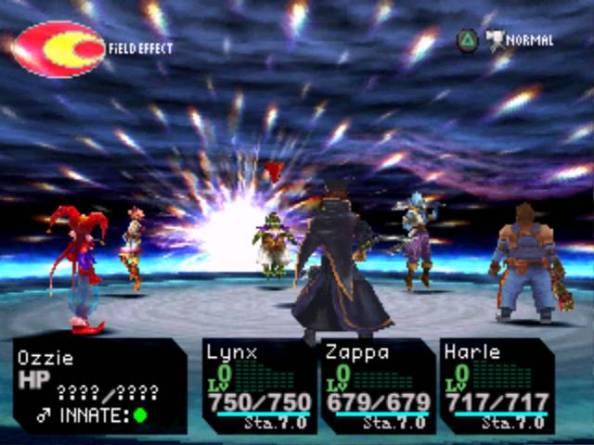
 I’ve reviewed enough games by now that I’m convinced Shigeru Miyamoto is the only game developer on the planet who actually knows how to make a game, and that all other successful games get it right purely by accident. I envision the industry like a Looney Tunes episode, where developers just blunder through a hazardous landscape of booby traps, stepping in just the right spots to avoid the poisoned arrows, leap over the crocodile pit, and dodge the falling anvil to let it fall on the villain’s comically inept henchman. And then we get Chrono Trigger. But having paid close attention for three years, always looking for something absurd to criticize, I feel like I’ve started to notice every corpse with an anvil for a head and every crocodile picking his teeth with the wire frames of eyeglasses.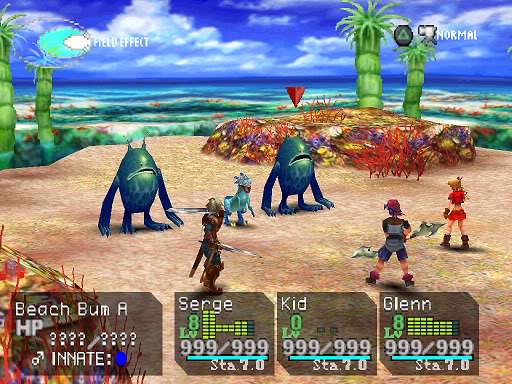
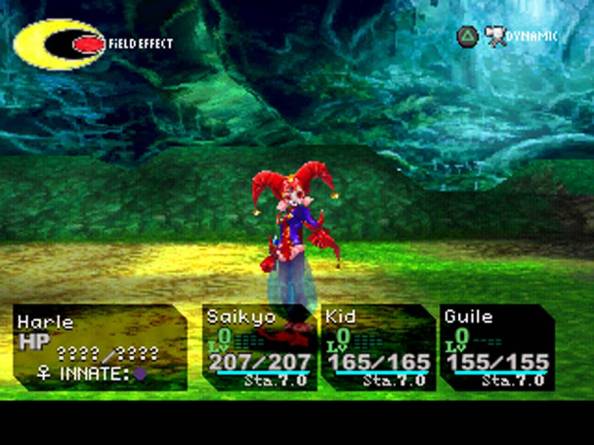
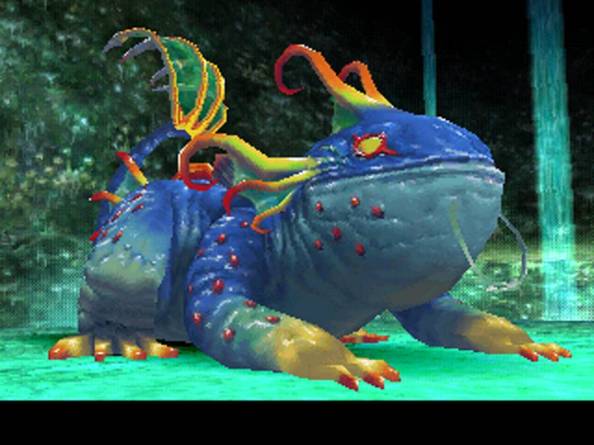
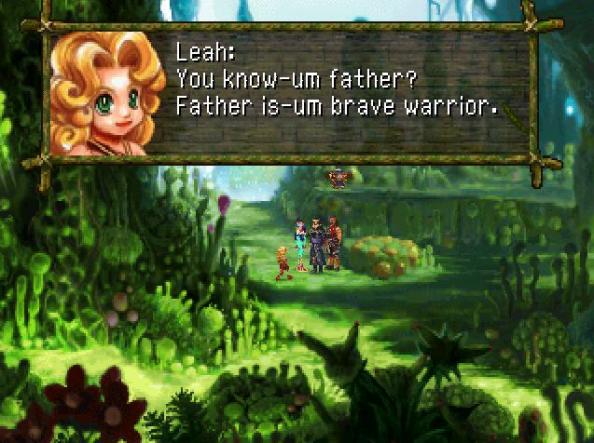
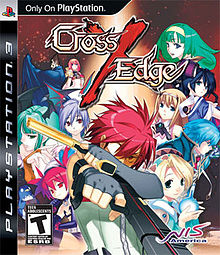
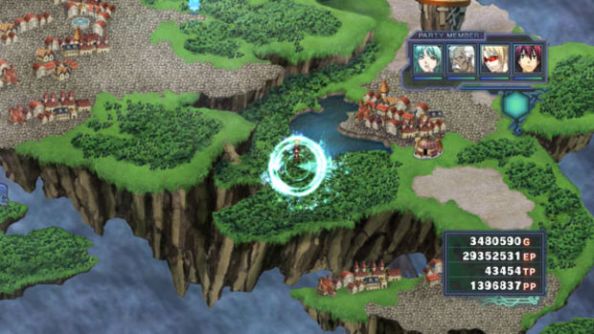

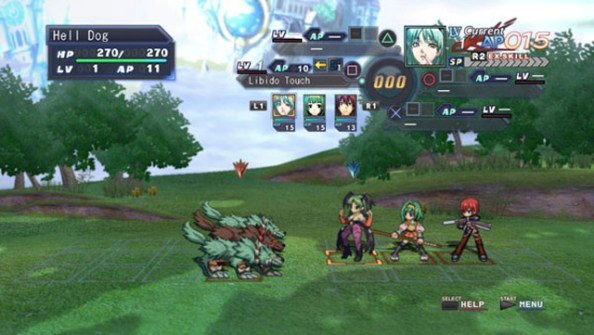
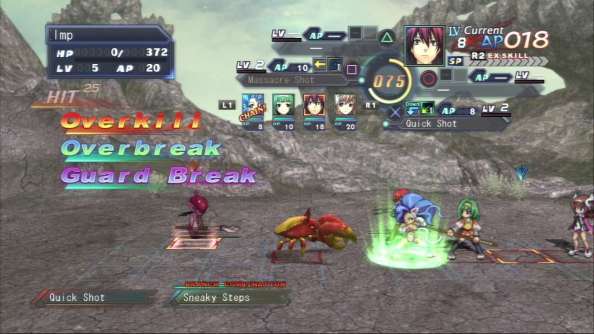
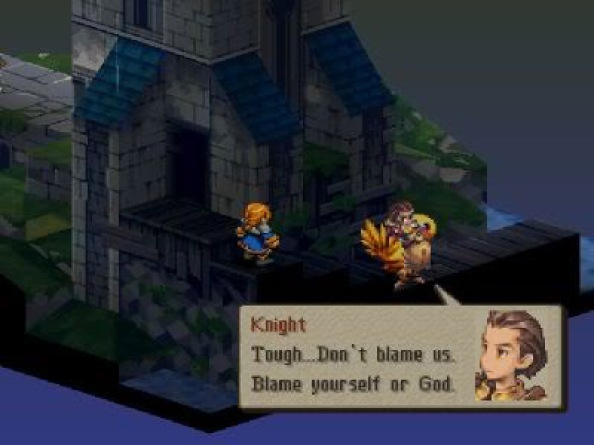
 My latest foray into addictive time-killers is Angry Birds: Fight, which has glued me to my phone every time I get two minutes not immediately filled with something stimulating and exciting. Like many free-to-play games, it offers me rewards and bonuses if I consent to watching ads that try to pitch more free-to-play games which will inevitably offer me more chances to watch videos pitching more free-to-play games until they’ve saturated my time so badly that we repeat the 1983 video game crash while everyone on earth stares at their phones in wonderment of games that could be way more awesome than the games they’re currently playing. Alas, as much as I’d love to bemoan the commercialized state of affairs of modern gaming, the game industry has historically been as all-about-the-art as Donald Trump’s hair stylist. (Low-hanging comedy fruit, I know.) If you don’t believe me, pick out your favorite franchise, and ask yourself how reasonable it is that the in-game world undergoes drastic geological cosmetic surgery from one installment to the next. Sadly, the evidence that developers slap franchise names on games to help them sell stacks up like a life-sized Jenga tower, ready to crumble under its own weight and concuss you with its logs of disappointment.
 The story…well, they say if you put a bunch of monkeys in a room hacking on typewriters, they’ll eventually produce the complete works of William Shakespeare. Assuming that’s true, the monkeys will produce the Heroes of Mana story long before they ever crank out something mildly resembling a sonnet. Roget, first mate of the Night Swan, his captain Yurchael, and an assortment of poorly written anime stock characters (including such favorites as eternally optimistic cutsey girl and grim mercenary with a conflicted past) crash in the wilderness after realizing their own leaders set them up. Why they villains fitted the Night Swan with a mafia-esque car bomb, the game never really explains, but that fear becomes a self-fulfilling prophecy as our intrepid heroes vow to halt the evil they suddenly assume must exist. Blah blah blah, plot lines in and out, a character who gets his ass creamed like chicken soup every time he shows up but somehow manages to inspire fear in the heroes, convolution at its finest, more characters than a story really needs to follow over the course of 27 battles…and one of the monkeys writing this thing must love cliches, because near the end they pull a Luke-I-am-your-father moment, which Roget (and the players) shrug off with a hearty disinterest. In the end, nothing is accomplished. Evil may have retreated, but no one knows or cares why, and the player moves on to story that makes more sense, like Moby Dick, or the United States Tax Code.









 Video Game Underworld