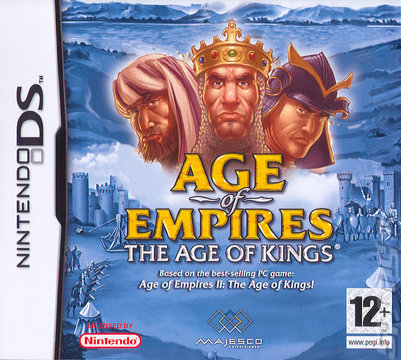
Age of Empires: Age of Kings – NDS

_-Age-of-Empires-The-Age-of-Kings-DS-DSi-_
If you’ve kept up with me for even a few months, you’ve probably noticed a pattern. I play a game, like it, and jump immediately to another game in the series. Or, perhaps, I hate the game and want to play something better. Either way, you can expect another Onimusha entry soon. Maybe another Castlevania, too. But not this week. This week I’ll jump back into the past and re-create historical battles without the need to tolerate people who truly believe the South will rise again. You may recall a few weeks ago when I wrote about Age of Empires: Age of Kings. I felt that between juggling the tasks of deforestation, trading resources like a gambling addict at the New York Stock Exchange, whipping lazy peasants like a plantation overseer, and constantly buffing out the hoof dents in and removing arrows from the skulls of my soldiers, I didn’t feel like I had any time to enjoy the game.  So when I finished–yes, and I also read all the way through Moby Dick. I abuse myself that way–I did what I could to rectify my frustration; I played through the turn-based Age of Kings on the Nintendo DS.

Yes, “turn-based.” The words reviewers always spit out like an angry dilophosaurus, meant to imply something infantile, unrealistic and boring, while still gives them an opening for lavishing praises on Mario, which really does play as infantile, unrealistic and boring.  Reviewers use the term “turn-based” to justify abandoning a Final Fantasy game after playing for thirty minutes and not getting a Call-of-Duty-esque rush of testosterone and a story premise they can sum up into ten words or less. If you haven’t yet picked up on the tone here, I don’t necessarily think games where the enemy patiently waits for you to bash in their teeth before they do unto you actually suffer directly because of that feature. Consider this retribution for panning Assassin’s Creed; now I have to defend something no one else likes. For starters, people who play chess and go take turns, and we commonly believe that geniuses play those games. Now think back to some of the real-time games you’ve played. Kingdom Hearts–do you ever use any strategy other than mashing the X button and occasionally healing? How about Smash Brothers or other fighting games. Do you actually know how to pull off the special moves, or do you just hit buttons and hope to get lucky?

Yup. Grid-based strategy. Like chess, but with trees and rivers.

Yup. Grid-based strategy. Like chess, but with trees and rivers.

See, players will usually do the simplest, easiest thing that accomplishes their goals. Real-time games usually give you a swift, basic attack that you can execute in a pinch. Think about it this way; a spider falls on you while taking a shower. Do you rationally think out a plan to improve the situation, or do you freak the hell out? Real-time games make players freak out. I don’t like that. I constantly have to explain to friends that button-mashing never works better than actually knowing how to play the game, and they never believe me, and then they play as Gannondorf and I play as Jigglypuff and I beat them into submission within moments. The PC version of Age of Kings employed the freak-out strategy, where building a proper economy, scoping out the terrain and developing a strategy often took a back seat to giving a sword to any man, woman, child, horse or hedgehog within sight and pushing them out one at a time to get slaughtered by the hoards of enemy Rohirrim Riding into my village, smashing and hacking and destroying everything in their path.

Wait...doesn't my advisor's name mean "Toilet" in Japanese?

Wait…doesn’t my advisor’s name mean “Toilet” in Japanese?

The DS game, however (to actually discuss today’s topic), gives you both the time to plan out a strategy and the need to do so. In addition to campaigns where you build towns and mine resources to support your army, this game gives you missions with a set number of non-renewable troops and tells you, “Go get ‘em, tiger!” And of course, attacking your enemy directly inevitably results in a wall of bodies–and not the useful kind, like in “300“–and a serious reflection as to your career choice of famous historical warlord. Different missions offer different objectives–destroy a town center, defeat an enemy hero, capture relics, build a tent for Genghis Kahn and make sure no one sets it on fire–and a number of ways to accomplish those tasks.

Hero units make the game. While in the PC version, you only ever took control of Joan of Arc, every mission in the DS game gives you control of a hero, and gives those heroes a number of special powers that effect game play. Joan of Arc can heal, Richard the Lionhearted can make his archers shoot farther, and Saladin will occasionally chip in a few coins to help you save up for that camel you’ve always wanted. Regular units, while only the monks and villagers have special commands, each have their own characteristics or abilities that tailor their uses to specific strategies. Archers can attack from a distance, preventing a counterattack, but if attacked at close range they have very low defense. Pikemen have less attack power than swordsmen, but deal more damage to cavalry. Cavalry deals a lot of damage to most things, but loses strength against buildings. This keeps the gameplay variable, and the bonuses and handicaps mostly feel intuitive, but sometimes come off a little weird. While I appreciate the challenges in ripping down a castle with your bare hands from the back of a camel, I find it difficult to understand how a rock hurled from a trebuchet can rip through that castle like tin foil, but an infantry unit can take the same blow and walk it off with only minor bleeding.

The game, of course, retains its titular feature, “Aging Up.” In campaigns that require economy building, your production lines turn out shabby, brand X fighters, and only by sinking money–and for some reason, food–into research each day can you expect to give them better weapons, stronger armor, or more efficient training. With enough research, a player can advance to the next “age,” beginning in the dark age, then progressing through the feudal, castle, and into the imperial age. With each new age, new buildings become available and new research opportunities along with them. In the feudal age, for example, you can build a blacksmith, which doesn’t create any units, but can improve weapons and armor for your existing soldiers. Likewise, by the time you reach the castle age, you can found–and underfund–your very own university, just like a real national governor.

Uhh...yep. More screenshots. Unfortunately, you don't often see much action.

Uhh…yep. More screenshots. Unfortunately, you don’t often see much action.

Age of Kings follows a historical path–sort of–for the five main heroes; Saladin, Minamoto Yoshitsune, Genghis Kahn, Joan of Arc, and Richard the Lionhearted. Occasionally it has to include a note here and there stating that Minamoto never actually fought the Mongols, that Richard never took Jerusalem, or that Joan of Arc didn’t really win all that many battles. I understand that not a lot of people out there nerd out over Medieval history, but I do, and as much as I appreciate science fiction and fantasy, game developers rarely realize that their products don’t have to fall into one of the two default categories. Unfortunately, it doesn’t include all that many historical re-creations, and the post-game falls short of expectations so hard I think I heard all its bones shatter. By accomplishing challenge goals in the main game, you can unlock extra maps and a few scenario battles to set up hypothetical and partially randomized campaigns to play through. However, all the heroes must have suffered a few too many blows to the head in the main game because even on the hardest settings, enemies often forget to build, research, age up, or attack. Not so much battles anymore, these campaigns have all the difficulty of erasing low-quality chalk off a chalkboard (you young ‘uns should think “dried up ink on a white board.” But then go find some chalk.) These additional campaigns serve only to wean me off the game while simultaneously looking toward Age of Empires: Mythologies, but in the interest of getting through this stack of games I bought by never played, you don’t have to worry for a while.
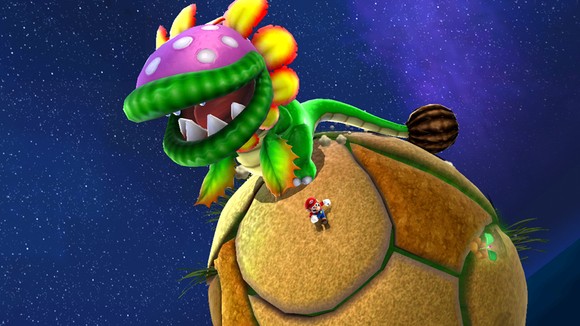
Mario (Galaxy – Wii) vs Wario (Land – Game Boy) – An alternative Prospective

Sorry guys, but I’m taking this week off. Hey, some games just take more than a week to play! Give me some time. Anyway, Anne agreed to take over, and since I don’t share the world’s love of Mario, she came up with a few thoughts on the subject. Enjoy.

I find it difficult to believe that this planet could support an apex predator of this size.

I find it difficult to believe that this planet could support an apex predator of this size.

Some games don’t need a long synopsis to help the player grasp the concept of the game play or the progression of the story. These games tend to change only minimally since the beginning of their series. When someone says they’ve been playing Mega Man you may feel the need to clarify, “classic, X or Zero series?” But regardless of their response, your mind probably fills with images of 8 boss levels of varying themes and everyone’s favorite tiny robotic hero and his blue spandex codpiece. The same goes, if not more so, for the Mario franchise. No, don’t start pulling up your emails to send me an angry rant pointing out Mario RPG’s originality or Mario’s cameo appearance in Mike Tyson’s Punch Out. We both know that the main series has changed only superficially since its 2D NES days.

Dude, he won't take the hint. Just tell him she's on another planet.


Dude, he won’t take the hint. Just tell him she’s on another planet.

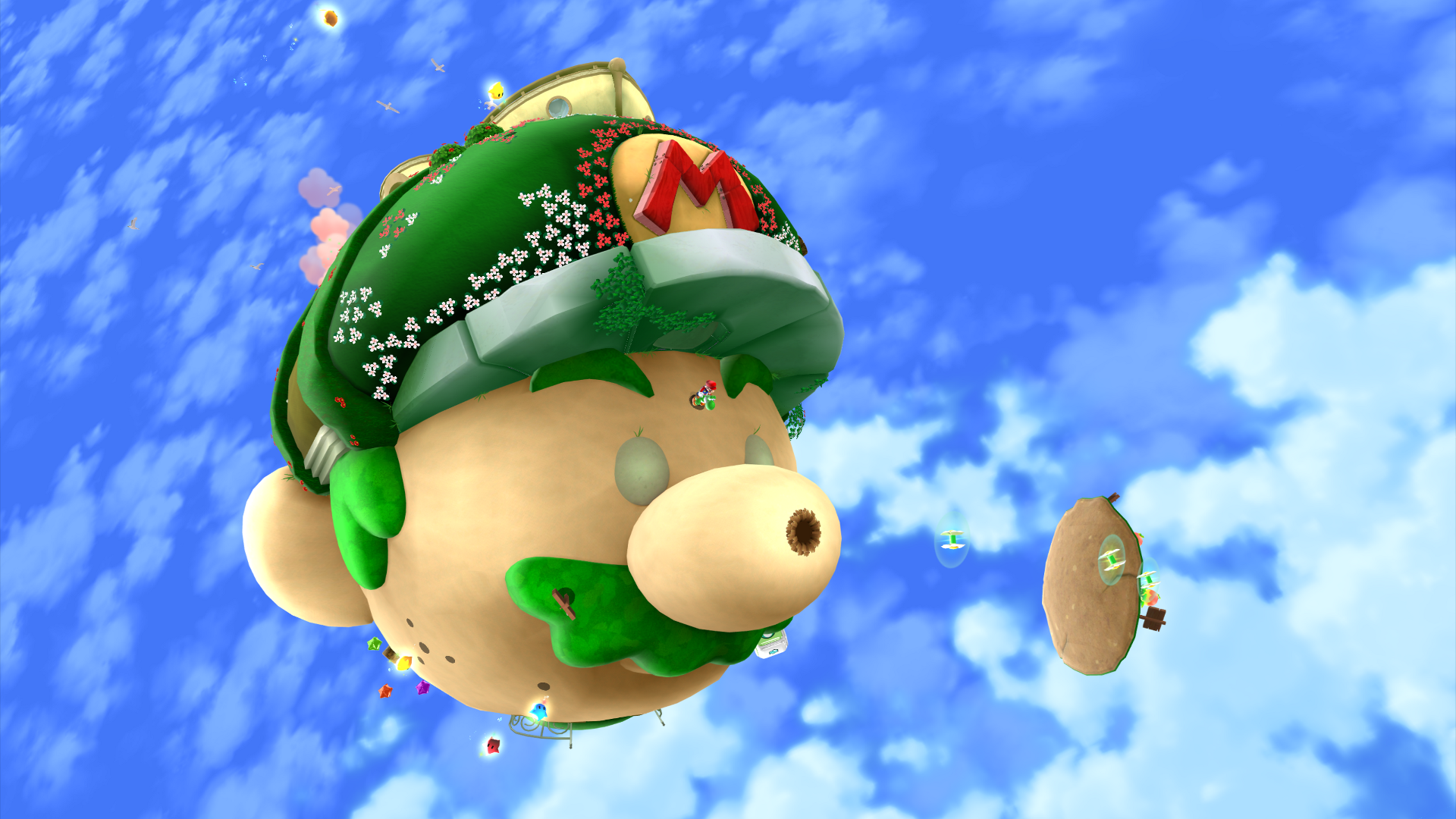
So no, I won’t bore you with a long and tedious description of how the story of Mario Galaxy progresses or spend time lavishing praise over the colorful and creative level designs. For those few of you who have taken up hermitage since before the release of the Nintendo Wii and have only just come down off your mountains: Bowser once more kidnaps Princess Peach, this time into space, and Mario, still unable to take a hint, flies off to her rescue. This of course requires him to traverse the corners of the universe in order to save the least protected ruler of all time. He does this through using changes in the physics of the levels to his advantage as well as turning into the requisite Mario franchise creatures; in this case a ghost and a bee.

Princess Peach meets Jessica Rabbit

Princess Peach meets Jessica Rabbit

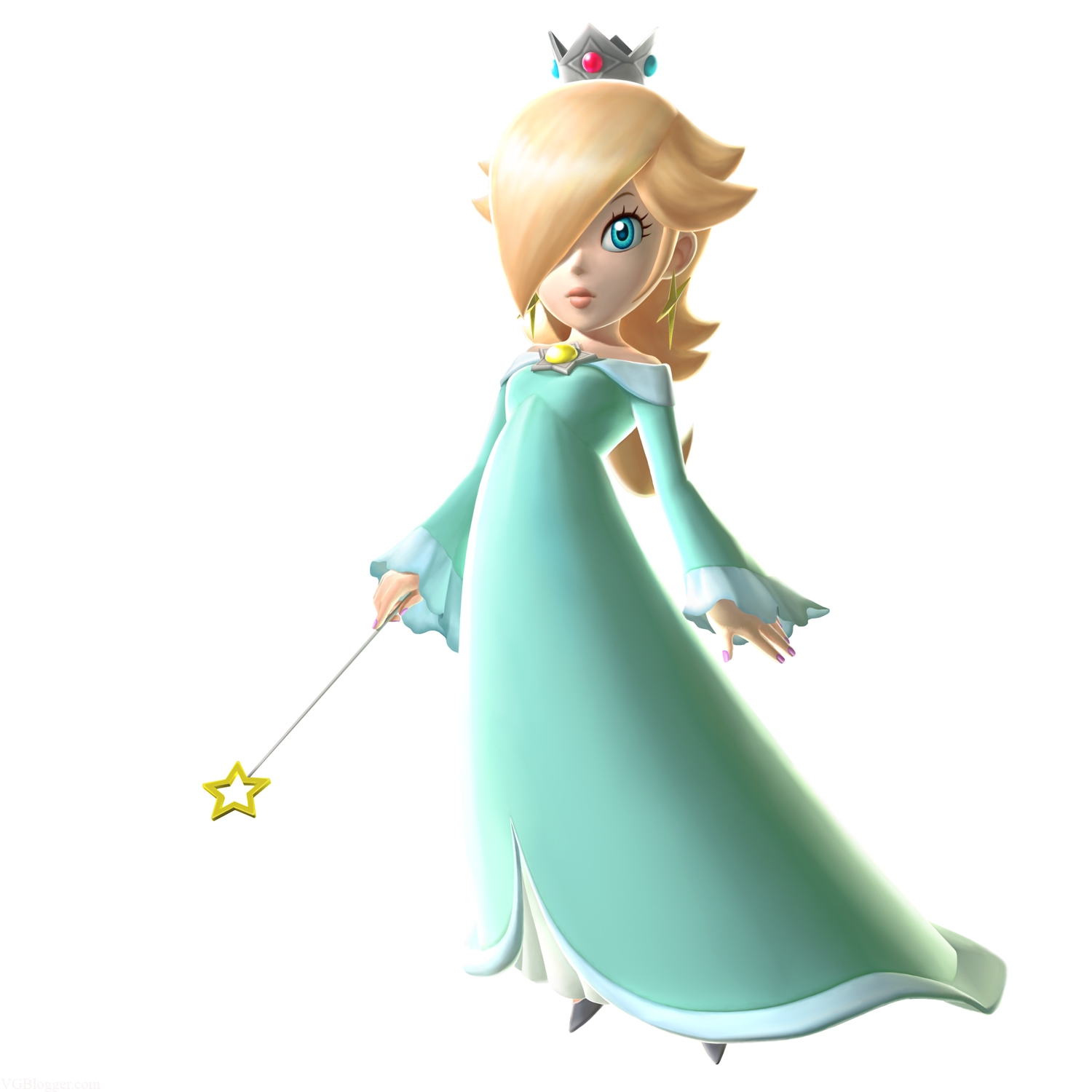
With that out of the way, we can get to the more important topic; why the hell doesn’t Mario just forget about Peach and take up with Rosalina? Kidding of course. The real question is, are we sure that Mario really is the hero of this franchise? I mean, we all assume that since the basis of the games’ quite limited storyline is always Mario saving the princess that he must therefore be a valiant and selfless figure, but many people on the Internet have theorized that Mario is in fact a rather morally ambiguous figure. To mention only a few examples, he murders helpless goombas who pose no threat to him unless he stupidly walks straight into them of his own free will, and in games like Mario Kart he shows his disdain for even his own brother. For more examples I will point you in the direction of the Game Theorist on YouTube and his Vlog article entitled ‘Why Mario is Mental’.

But that then begs the further consideration that, if Mario is not the hero but rather the villain of the tale then how can he have an evil doppleganger. I am of course speaking of Wario, the apparent anti-hero to mirror Mario’s supposedly altruistic persona. I would like to make the argument that perhaps Wario is, in reality, a hero in his own right and that we have been judging him through the colored lens of our belief in Mario’s goodness, and in that he looks like what we expect a villainous version of our protagonist to look like, cue all the jokes about profiling ever. But consider this, when we first meet Wario he is shown stealing Mario’s castle, which leads everyone’s favorite excrement clearer to start a journey to get it back. Yet, what if Wario was taking over for a good reason; what if, in fact, he really was leading a revolution in order to depose the tyrannical despot that has previously been ruling in order to give less understood creatures like the goomba and koopas a chance to thrive right along side their cuter, yet no more threatening counterparts, the Toads? The revolution is upon us, comrades! The proletariat will rise and shed the mushrooms and question mark blocks of our oppressors!

IdLBwLoI would like to direct your attention to the original Wario Land series for the Gameboy where Wario does the exact same things that Mario does in all of his games; punching baddies, dropping through tubes, and more importantly collecting coins. He does this in order to purchase his own castle. Note: PURCHASE, not steal. Yes, he loots ancient treasures but if we as a society are willing to call Indiana Jones and Lara Croft heroes when they do the same thing, then we might be setting a bit of a double standard by villainizing Wario for that behavior. At the end of the first game he comes upon a young woman who has a genie that she orders to murder him. When this doesn’t work out she disappears, and Wario uses his wish, not to get back at Mario or anyone else who has slighted him–including the would-be murderess–but instead wishes for a castle. The size of the prize is dependent on the amount of money and treasure the player has collected to this point in the game (I’m not admitting that I have rarely gotten above the absolute base hovel in most play-throughs so I don’t want to hear any snicker in the back row. That means you!). This clearly shows the connection of his hard work paying off rather than him being given status based on what brainless royal he is currently dating.
I believe that Wario is not the monster portrayed by Nintendo’s over dramatized story-telling but rather the victim of a vicious smear campaign, perpetrated in order to hide the much more dastardly actions of his counterpart, namely everyone’s golden boy: Mario.

Dear God! He's gone full chia! Abandon planet!

Dear God! He’s gone full chia! Abandon planet!

Also, if you need further proof that Mario isn’t exactly the poster child for positive messages, just think about the underlying themes of Mario Galaxy, if not all of his earlier games. The viewer is expected to believe the Mario just happened to come into town on a star-themed festival day that also just so happened to coincide with the newest abduction attempt of his spiky antagonist and then goes rocketing off into space-sans helmet- in order to save his love interest. In the course of this trip he turns into animals, leaves his physical body to become a spirit, rockets around between a rainbow plethora of psychedelic planets with bizarre and often impossible gravity changes. I would like to present this theory to the reader: Mario is not out saving the damsel in a daring space adventure but rather tripping out on Reindeer Mushrooms that he picked up at the star festival and ingested.

Can you believe the earth looked like this when it first formed?

Can you believe the earth looked like this when it first formed?

First, a science lesson: Amanita muscaria, most known by gamers as the red and white Mario mushroom is, in real life a highly toxic mushroom found all around the world. In addition to its poisonous nature this mushroom also has another fun trick up its sleeve in the form of its ability to cause extreme and prolonged hallucinations. Reindeer that eat them in northern climates have been known to chase and even ram cars while hopped up on the effects of these diminutive fungi.

Doesn’t it then, seem much more likely that after seeing all of the star paraphernalia from the festival, ingests some of the country’s most common cuisine (do we really see any other edible foliage throughout the Mario series?) and spends the afternoon tripping out about the one thing he knows best: saving the princess. He even goes so far as to throw in an even hotter love interest and gives himself the power to ignore the laws of space and time. Now I don’t know about you but that sounds like a psychedelic trip to me.

I leave it to you to make up your mind about the accusations laid before you today but keep in mind, if we keep standing behind this possibly psychopathic drug addict we may have no one else to blame when he names himself the unquestioned tyrannical ruler of all.

Evil Dead: Hail to the King – PS1, Dreamcast

Evil Dead Annie

Halloween inspires people to act like idiots. As far as holidays go, this one takes root and festers in more people than almost every other holiday.  It creates almost as many idiots as Thanksgiving, which exists to bring entire extended families together in a single house until they remember how much they hate each other and the courts have to debate the grayer areas of the definition of “premeditated.” All the while, it tries to recall Halloween’s suggestions for the more creative uses for a bread knife, can opener and turkey baster.  But while all the family holidays bulge with volatile anger, the horror-themed holiday pushes people to a different kind of idiocy. Namely, filming barely scripted movies on their iPhones, hoping to produce the next Blair Witch Project or Paranormal Activity, and forcing the courts to debate the grayer areas of the definition of shit. Since Anne likes to burn through these movies like a chain smoker on a lunch break, I’ve seen more of them than I’d care to, but since Halloween demands my attention year-round, I thought I’d discuss one of the most horrific aspects of life on earth just shy of the GOP platform: a movie adaptation video game.

Bad Ash Evil DeadOkay, so strictly speaking I can’t call Evil Dead: Hail to the King an adaptation. It acts more like the Army of Darkness sequel that will never happen. Set eight years after Ash returns to his normal life–also the number of years between the last movie and the game’s release–the iconic swaggering hero still suffers from nightmares stemming from his cabin vacation. His new girlfriend, Jenny, suggests he conquers his post-traumatic stress disorder by facing his fears and returning to the cabin. You know, much in the same way that sending soldiers back into active combat or raping a rape survivor will cure them of their PTSD. Naturally, when they arrive at the Knowby cabin, Ash’s evil hand shows up, plays the professor’s recording of him playing the literary version of “Bloody Mary,” and all hell-on-earth breaks loose. Bad Ash jumps out of a mirror, kidnaps Jenny, then vanishes. Ash has to collect five pages from the Necronomicon. Begin.

If you didn’t see the films, that may not have made sense to you, but from a series seemingly written by an alzheimer’s patient with ADHD, Evil Dead has never really cared much for continuity. Hardcore fans will enjoy walking through the familiar layout of the cabin, swinging the chainsaw, maybe even wandering out back to the work shed. But after the first few minutes, you venture out into the surrounding woods. Which, as it turns out, have a much higher population density than the movies suggested. The pages have scattered around a moonshiners’ cabin, a boy scout camp ground, and a church, all within a few minutes’ walking distance from the isolated setting where the cast of the films had no hope of reaching civilization.

They're coming to get you, Barbara.

They’re coming to get you, Barbara.

You hardly venture a few steps from the starting point when the first monster attacks. Excellent! Monsters! The one thing that would make an excellent game adaptation, right? Well, the first monster rises up out of an interdimensional portal on the floor. Floating just off the ground, you come face to face with a flying torso ghost thing. Because who could forget, right? All those torso ghosts that Ash…hacked with an axe…in the movies? Get used to it. Johnny-haunt-lately here becomes the basic enemy for the game. The goomba. The octorok. The met (hard hat, for those of you unfamiliar with Mega Man nomenclature). Fortunately, fighting them almost never pays off, so if you can figure out how to run (with the ever-so-intuitive R1 button), you’ll live much longer. Otherwise, the game’s combat feels less like a system and more like trading blows. You stand facing it and hit it with either your ax or your chainsaw like a post-modern Green Knight, and the monster stands there and slices off your head like Sir Gawain. All in all, fighting one of these things usually takes about three minutes and five health items. They don’t go down easily. Sure, you get guns later on, but the game limits ammo and has no mechanic for aiming, so you just have to point yourself in the general direction and hope for the best. Early in the game, most enemies leave health items when they die, but this has all the effect of getting a box of band aids and an enema from the guy who gives you ebola.

Now if only I had some alternative way of getting through this door...

Now if only I had some alternative way of getting through this door…

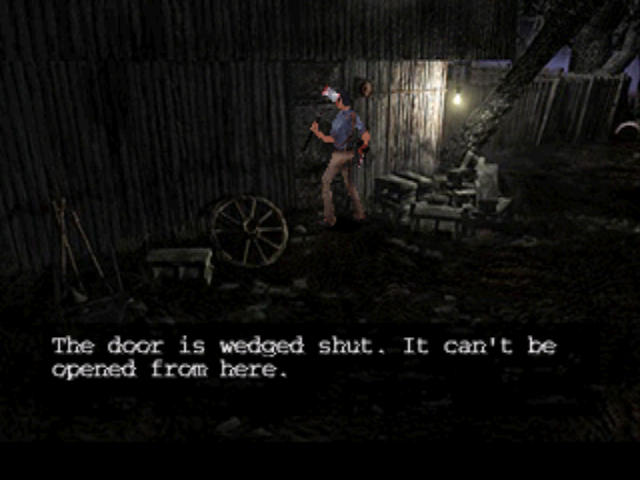
So having mentioned the absurd play control, I should point out that Hail to the King shoots for the survival horror genre, imitating Resident Evil like an obnoxious little brother. It keeps all the most exciting moments, but skips over the finer details that actually make for a finely-tuned sort of stressful experience. Ash gathers items that he uses to open up new areas. Usually it doesn’t take much effort to figure out how to use them. The map for the game doesn’t have nearly as many locations as even RE’s Spencer mansion, so often you’ll find your keys right under the mat. Still, you need a few leaps of faith to bypass the usual flaws in survival horror puzzling; Ash approaches the door to the hellbilly cabin. “I can’t get in! The lock doesn’t open from this side!” I almost had to put down my ax and take off my chain saw arm so I could relax enough to figure out how to get in. (Rest assured, when I do an article on Silent Hill 2, I will say something about how James can’t reach the key on the other side of the bars, but doesn’t think to use his monster-whacking stick.) At the very least, I felt justified in playing this game if not for one puzzle near the end, which said, “A complex scale used to measure the specific gravity of six nearby materials.” Thankfully, the powerful cliche keeping the door locked proves no match for Ash’s (finally) direct problem solving approach–he blasts the scale with his shotgun and the door opens.

Fuck that shit. Finally I get to use my weapons creatively.

Fuck that shit. Finally I get to use my weapons creatively.

While it plays like an uninspired rough draft of Resident Evil that rushes you from boss fight to boss fight like it had a moral objection to down time, Bruce Campbell’s Ash saves Hail to the King from the piles of utter failure. The story revolves around a series of excuses for his swaggering, Army-of-Darkness bravado to take over, and the player even has a button dedicated to firing off taunting quips at the enemies. Bad sequels tend to rehash the same jokes, putting out more fan service than plot. If this game got one thing right, they built new dialogue around an existing character, and naturally Campbell knows how to bring out the finer nuances of cocky cynicism that turned Ash into the Beowulf of low-budget horror.

Oh yeah. They send him to Damascus. Did I mention he spends all of disc two in Damascus? Because that makes sense.

Oh yeah. They send him to Damascus. Did I mention he spends all of disc two in Damascus? Because that makes sense.

This game takes the trophy for biggest disclaimer I’ve ever attached to a recommendation. “You should play this game…if you really liked Army of Darkness or Evil Dead 2…and you didn’t have to pay much for it…and you don’t have access to a Resident Evil game…or Onimusha.” Despite its blandness, it plays well enough, and you can run through the whole thing in a few hours due to its boss-rush design, so it doesn’t require much of a commitment, and I do sometimes lament the fact that they don’t make any Mega Man-length games anymore. But if you have the choice this weekend, opt to see the Evil Dead musical instead.

Castlevania: Symphony of the Night – Playstation 1, PSP, Sega Saturn

Fortunately, this time, you actually have a character and not just a spelled-backwards name.

Fortunately, this time, you actually have a character and not just a spelled-backwards name.

In the spirit of the approaching holiday, I’ve decided to visit some horror classics–other than Resident Evil. Yet, as last week’s Onimusha entry exemplifies, sending a fully armed character into a gauntlet of monsters who charge at him with the survival instincts of a depressed lemming don’t often contribute to a sense of dread in the player. As such, sometimes we overlook games belonging to the genre, despite, say, a gloomy castle setting, epic fight with death personified and a legendary vampire as the primary antagonist. Yes, the Castlevania series, originally a tribute to classic horror, may have spent its creative load and gathered together such an eclectic collection of anything vaguely monster-ish that it feels like remaking a Roman Polanski film with Mel Brooks (as an alternative joke, try “replacing Harvey Keitel with Harvey Korman”). Also, none of the monsters or levels may have ever scared me as much as the difficulty. However, it still has all the telltale details of horror; creepy castle, monsters, an antagonist who several characters refer to as a vampire, despite never biting a single neck. So while I can reasonably include it in the horror genre, and with Halloween next week, let’s examine Castlevania: Symphony of the Night, to see why everyone raves about this thing.

How to identify a vampire...well, he doesn't brood, sparkle, play awesome thunder baseball, chase teenage girls, or drive a volvo, so no. Keep looking.

How to identify a vampire…well, he doesn’t brood, sparkle, play awesome thunder baseball, chase teenage girls, or drive a volvo, so no. Keep looking.

First of all, a few weeks back I lamented the loss of 2-D Metroid games, asking where they went after Metroid Fusion. Well, I found them. They crash landed in Transylvania. Also, Samus traded her energy beam for a sword, her power suit for holy relics, and space pirates for horror monsters. Also, she became a guy. And half-vampire. And now she levels up. Symphony of the Night combines RPG elements with Metroid-style gameplay, meaning it connects with the previous Castlevania series only through a handful of characters and having the same number of dimensions.  The legendary half-human son of Dracula and long-time acquaintance of the Belmont clan, Alucard begins this game dashing toward the castle at an exciting pace. For some reason, he wants to get inside before nightfall.  At least, I assume he has a reason. Dracula hasn’t come back to life, Alucard doesn’t know anyone has planned a resurrection, and he doesn’t even know the identity of the castle’s lord. So he wants to get inside and slash up the joint because…angsty teens need to flout their fathers’ authority?

A reunion of four characters who, if you remember Castlevania III, never actually met each other, except for Trevor

A reunion of four characters who, if you remember Castlevania III, never actually met each other, except for Trevor

Lack of motivation aside, the game plays a lot like a hybrid of Metroid and Castlevania (thus earning the newer games in the series the oh-so-very-clevery term, “Metroidvania”). Rather than the level-by-level design, an unstated assumption in NES-era games, Dracula opted for an expansive, labyrinthine castle built with special architectural oddities–high ledges, platforms, spikes, etc–that prevent anyone from actually accessing any useful areas of the castle. Fortunately, he scattered enough relics to imbue any burgeoning vampire killers with the necessary superpowers to overcome these barriers. Thus Dracula ensures his own demise, but only by vampire slayers with creative problem-solving skills and enough patience, determination and mental instability to keep running circles through the castle, stabbing walls in hopes of finding a pot roast. Along the way, Alucard picks up a number of weapons, armor, capes, accessories and pot roasts, which augment his stats in addition to leveling up the old fashioned RPG way–repetitive monster murder.

Despite the innovative–well, for Konami, at least–game play, Symphony of the Night does retain one core element of earlier Castlevania games: whenever Alucard takes damage, he summons up all of his 300 years of teenage angst, taps his inner Mario, and hurls himself backwards with all the might of a melodramatic lemming caught in a wind tunnel. I realize that Konami includes this element as a challenge, that recovery from taking damage makes the game harder, but I feel like they’ve passed the limit with this mechanic. Often times when fighting a boss or, even more infuriating, the flying medusa heads, Alucard will hurl himself halfway across the screen until he hits the next enemy, which will launch himself in the opposite direction back at the first. On these occasions, I had no choice but to set aside the controller and simply watch the game bounce him back and forth like a tennis ball at the Wimbledon championship.

Cloud of noxious gas and monsters falling out of the sky...this picture needs no caption.

Cloud of noxious gas and monsters falling out of the sky…this picture needs no caption.

When he does manage to plant his feet on the ground, though, Alucard has more options at his disposal than the typical Belmont.  Rather than fighting like a plantation overseer, Alucard generally uses swords, which he finds throughout the castle. In abundance. In fact, not counting the one-time use throwing weapons, the game offers you over 70 different swords, rods or maces, ensuring that about 80% of the time when you discover a new weapon, it won’t have nearly the attack power as the one you already have equipped. Equally useless, you can buy magic spells that require Street-Fighter-like inputs to execute. One marked as “Heal HP by shedding blood,” seemed to have no effect than to slightly lower my MP–no blood shed required. I found that the standard jump-and-slash routine worked for all but the most difficult of bosses, so the spells function about as effectively as parrot feathers–very impressive but do nothing to enhance the flavor. By picking up relics in the castle, you also gain the ability to transform into vampirey things, like a wolf that can trot casually and bark at things, a bat that can fly until colliding with any particles floating on the breeze, or a cloud of mist which, once upgraded to a poison gas, allows the player to drift through the castle with the silence, deadliness, and physical appearance of a good, rancid fart.

He's one bad mother--shut yo' mouth!--I'm just talking about Shaft!

He’s one bad mother–shut yo’ mouth!–I’m just talking about Shaft!

Many games feature multiple endings, but Symphony of the Night offers the added bonus of denying half the game to you if you get the crappy ending. Dracula’s moonlit chamber, as well as the surprise boss fight, become available as soon as you take the little leathery training wheels off your bat wings. However, if you fight all the optional bosses in the first half of the game, get all the proper items and cut scenes, and interpret the riddle “wear in the clock tower” as referring to the long hallway filled with clocks (instead of the area outside Dracula’s chamber like in every other Castlevania game), you’ll get an artifact that lets you see the invisible demon possessing said surprise boss: Shaft! (Who is the thing that would resurrect his vampire king? Shaft! Can you dig it?) If you aim for Shaft, he’ll run off into the sky and summon a new castle. The game continues and Alucard has to fight his way through the same castle he just went through, only upside-down. I guess inverting the map made for easier work for the programmers.

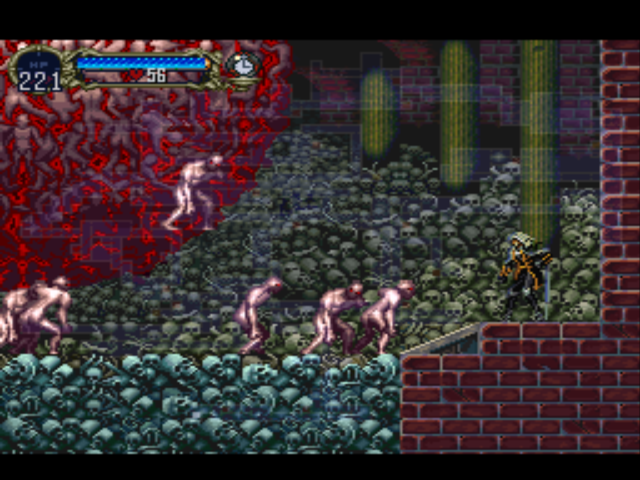
So we fight a massive sphere of conglomerated corpses in a room that makes the Paris Catacombs look cheery...but we fight Dracula at the end? Have you no sense of escalation?

So we fight a massive sphere of conglomerated corpses in a room that makes the Paris Catacombs look cheery…but we fight Dracula at the end? Have you no sense of escalation?

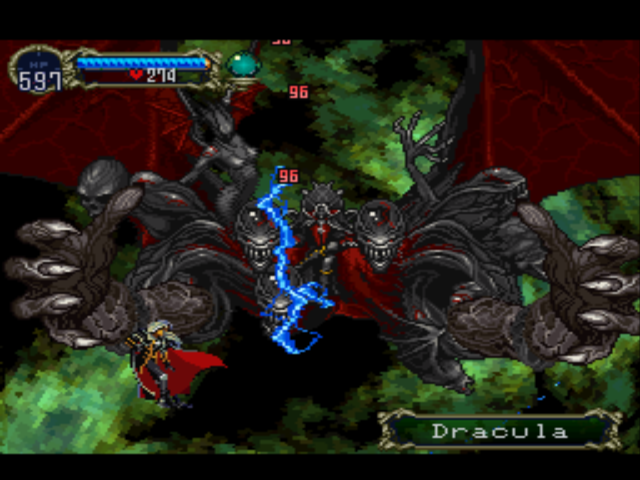
While the first half of the game focuses on exploration and accessibility of new areas, the inverted castle hearkens back to the hack-and-slash roots of the series, where all you do is hunt down the new bosses to capture the relics of Dracula so you can face Shaft. And then Dracula. Here you fight dopplegangers of yourself, Trevor, Sypha and Grant (from Castlevania III), series favorite Death, Beelzebub, and a number of other monsters that would easily make a much more epic final boss than Dracula. Who, by the way, bears as much resemblance to a vampire lord as a xenomorph bears to Bill Nye.

I think, though, that Symphony of the Night deserves the hype it receives. While I usually think that including a character named “Alucard” represents a witticism long since dried up, set on fire, peed on, and then left to dry up again, they actually turned him into a real character with conflict and a beef with his dad, even if he didn’t really have a reason to show up at this castle in the first place. This game may even have a leg up on the original NES version on account of players actually having a chance to finish it. Barring the Resident Evil quality voice acting and a handful of demons that make kitty cat noises, they did enough to revitalize the series, resurrect Metroid, and then promptly use up all that new vitality on about seven thousands sequels.

Women in Video Games and a Lesson on Acceptance and Understanding

Unfortunately, I have to take a time-out from my usual humorous attitude to address a problem in the gaming community. If you haven’t kept up with the news, recently, the game critic Anita Sarkeesian cancelled a speech at the University of Utah after the school received emails threatening a massacre if she spoke. Prior to that, game designer Zoe Quinn found herself the target of rape and death threats because of her role in game design.

I was born in 1983, and can reasonably assume I’m older than most members of the gaming community. To those of you in your twenties and younger, I want you to understand you have a wonderful gift. Your interests are mainstream. People like video games. People respect them as valid entertainment. You can go see movies based on games. You can buy T-shirts with pixilated creeper faces on them and expect people not only to recognize them, but to laugh at it and enjoy a shared interest. You can go on the internet and watch the Game Theorists or The Completionist or read my blog and know that there are a lot of people in the world who would probably like you as a person and enjoy doing the same things you do.

When I was young, I didn’t get that treatment. I was treated as lazy and worthless because I didn’t want to play sports all the time. I could subscribe to Nintendo Power, but I couldn’t go to a store and pick up half a dozen video game themed magazines, or go see a video game themed movie. Worse yet, despite being a straight A student, people eyed me up nervously, expecting me to pull a Columbine and shoot up my school. They believed I was antisocial, desensitized to violence, and that I had no concept of reality.

Gamers today, thankfully, can live without that stigma. However, I almost wish that weren’t true. Because of my experience, I know what a horrible thing it is to be pushed to the fringe, ostracized, and even threatened for something that made me happy, something that didn’t actually harm anyone else. It find the idea that gamers would instigate this against anyone appalling and sickening. Four out of ten console gamers are women. Forty percent. Can you believe that? If that had been true (or if it was true, if I had only known), I might not have any of the social anxieties and phobias I do today. Why wouldn’t we want to accept everyone into our social circles? We’re creating conflict where it shouldn’t exist. Messy, ugly, bloody conflict.

I have no problem with women in video games. I like playing as Samus. Or Yuna. Or Aya Brea, Jill Valentine, Claire Redfield, or any of the other…two or three..women who may not star in their own game, but at least share equal time with their male counterparts. I’ve even been to Sarkeesian’s youtube channel. Go listen to her! She’s brilliant! I’m going to show her to my students. She brings up a few I actually wanted to talk about in my upcoming Mario RPG entry. In fact, let me embed one of her videos below!

But don’t act like dicks. The older members of the gaming community have been terribly marginalized, watched suspiciously, and villified at every turn, and have very little tolerance for those who commit such crimes. So if you can’t play nice, I will pull the player 2 controller out of the socket and finish my game solo. Go play basketball or something because hatemongering is unacceptable.

Onimusha Warlords / Genma Onimusha – PS2, Xbox, PC

Onimusha_-_Warlords_CoverartWhen I lived in Korea, I earned black belts in Haedong Kumdo (Korean Kendo) and Hapkido (Korean Aikido). They issued me licenses for each one; when someone makes some crack about registering their hands as deadly weapons, know that I actually did. The Kumdo license entitled me to legally buy a battle-ready katana, which ended up costing me half a month’s pay. I don’t mean to brag. In fact, rid yourself of the American notions of paranoia that the rebellion will begin any day now, the south will rise again, or that bad guys with guns exist in every store and restaurant, just waiting for a good guy with a gun to mow them down; Koreans practice martial arts mostly just to keep in good health. As such, any mugger who crossed paths with me in a dark alley would probably meet with the law-enforcement recommended protocol of me granting him easy and painless access to my debit card, naturally giving me the last laugh when he tries to find any money in the account. The Haedong Kumdo skill, unfortunately, has even less practical value in real life, as roving bands of samurai no longer wander the streets of Duluth, and have even refrained from menacing Korea for a good seventy or eighty years. Even so, the art claims to adapt the one-on-one sword fighting method for use on a battlefield full of guys with swords. It amounts to forms, really. Dancing with a sword. And honestly, I enjoyed it. Even more than polka. But it has limited uses, even on a field full of samurai. In fact, I can only think of one hoard of enemy it might fight effectively: zombies.

The kumdo license lists my birthday as September 9, 198. They obviously misprinted it. It should read "September 8."

The kumdo license lists my birthday as September 9, 198. They obviously misprinted it. It should read “September 8.”

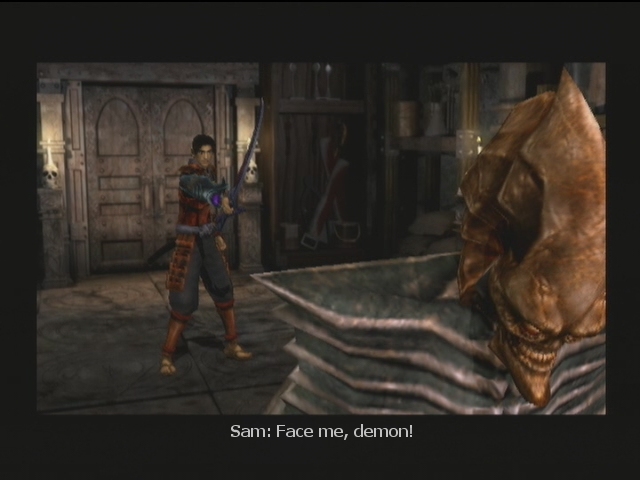
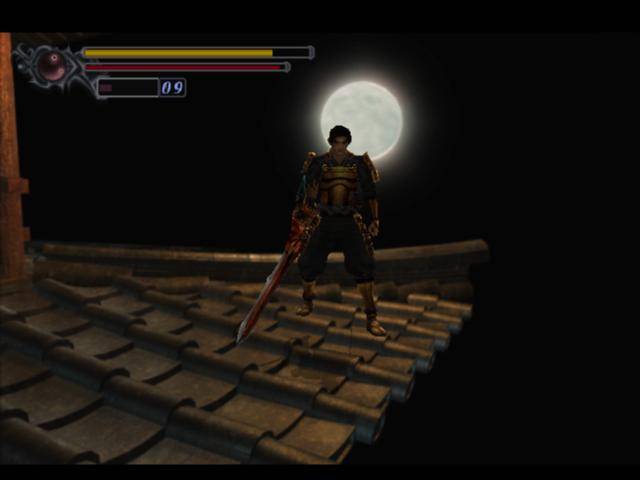
Fortunately, the idea of fighting monsters with a samurai sword doesn’t merely belong to Max Brooks and other brilliant authors; in 2001, Keiji Inafune of Mega Man fame released Onimusha Warlords for the PS2 (Genma Onimusha for the Xbox), which took the Resident Evil engine, set the story in feudal Japan, and replaced the zombies with the Genma tribe of demons. Although a horror game at heart, the concern over conserving ammo tends lose its emotional impact when armed with a sword, so the game strays from the survival horror design into more of an action genre. Which, I guess, makes it exactly like Resident Evil.  The game surrounds itself with real-life historical characters, much in the same way as Abraham Lincoln: Vampire Hunter. It has a profound respect for history in the same way that God of War has a respect for mythology and the League of Extraordinary Gentlemen has for classic literature, going even so far as to explain the fates of the surviving characters at the end of the game–Animal House style. The story follows the ronin samurai, Akechi Samanosuke, a character based on his supposed in-game uncle, Akechi Mitsuhide, who led a rebellion against the famous Shogun, Oda Nobunaga, a historical point rendered unnecessary when the game lodges an arrow in Nobunaga’s neck within three minutes. The need for rebellion neatly eliminated, Samanosuke turns his attention to his childhood friend, Saito Yuki-hime, and her concerns about the Genma demons stuffing her into a bento box with a dash of wasabi. Samanosuke arrives at the Saito castle to find Yuki missing and most of the Saito clan either dead or desperately trying to avoid becoming soylent sushi. The Oni clan whisks him away long enough to grant him a magical gauntlet that will inhale demon souls like a hoover, and let him inject them into his weapons to power them up.

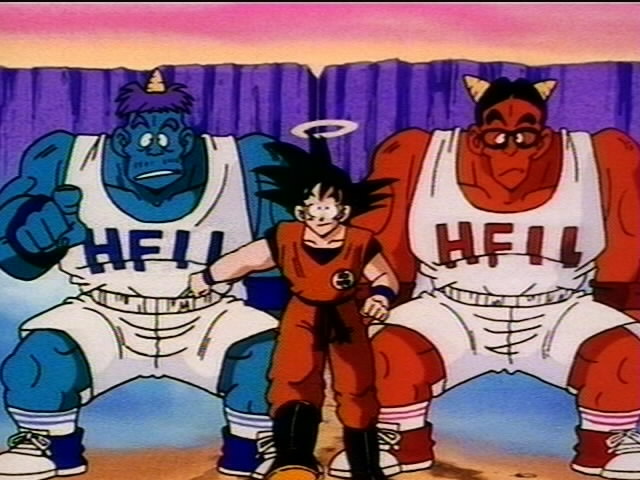
Samanosuke's patrons, the Oni, pictured with legendary monkey king, Son Wukong.

Samanosuke’s patrons, the Oni, pictured with legendary monkey king, Son Wukong.

From there, anyone who has played one of the early Resident Evil games can pretty much predict what happens. Samanosuke fights his way through a haunted house…er, castle…filled with hungry monsters, convoluted locking mechanisms that would only piss off any normal person who lived there, and random encounters with a small cast of characters wandering aimlessly around with no regard for the onslaught of things that want them dead. Onimusha de-emphasizes puzzle solving, which I appreciate even though I can’t think of anything more horrifying than slowing down the pacing of a good story in order to solve a riddle about which order to push a series of buttons. Like Resident Evil, play occasionally shifts to Kaede, Samanosuke’s kunoichi assistant who, again like Resident Evil, has less strength and health, but moves faster. Since she can’t seal souls, Kaede doesn’t have a lot of motivation for hanging around to stab things, so the player has to change tactics to more of a gauntlet run. Except she still has a knife and a belt full of kunai, so her sections of the game didn’t annoy me the way that playing as Ashley Graham did.

I bet you say that a lot while wearing that suit.

I bet you say that a lot while wearing that suit.

The game paces itself very well. Better than most modern games. While many games, RPGs especially, like to throw a challenge at you ten or twenty times to make sure you didn’t succeed those previous nineteen times on a fluke, Onimusha throws a challenge at you, then gives you something new to fight when you finish. Cut scenes and other story elements happen close enough together that you don’t need a libretto just to remind yourself why Samanosuke would rather let pig monsters bludgeon him to death rather than high-tailing it to Okinawa where he could kick back and enjoy the sunny, monster-free weather with a nice bowl of sake in one hand and a nice kunoichi or two in the other. In fact, even with side-questing and leveling up, I can finish the game in about three and a half hours. Because of its length, I can finish with the desire to actually play through it a second time to take advantage of all the unlockable items, and unlike Leon Kennedy and his tommy gun rampaging through Spain with infinite bullets and not enough monsters to put them into, I don’t get bored before the novelty of invincibility wears off. Plus…well…two words: panda costume. Who wouldn’t want to fight demons while wearing something both cute and vaguely unsettling?

Not quite what Tom Stoppard had in mind.

Not quite what Tom Stoppard had in mind.

Onimusha really shines in the cultural department. I come from America, the culture that gave us Charlie Chan movies. If you don’t recognize the name, he came from a series of mystery novels and movies about a Chinese-born detective in Hawaii. When adapting the novels for film, they tried a few different actors, and the American viewing public watched the movies and said, “Yeah…we think the white guy made a more convincing Charlie Chan.” With racism like that, I understand why anything Japan wants to market in the U.S. has racially-neutral characters, that could belong to either Asian or Caucasian heritage, depending on how hard you squint and what you really want to see. Onimusha, however, delivers a cast entirely of unapologetically Japanese characters in a marvelously Japanese setting using traditional Japanese folklore. Er…mostly traditional. For some reason, all the demons bear names out of Shakespeare’s Hamlet, often referred to as “The greatest story ever written.” Hamlet represents the peak of Western literary culture. I’ll let you come up with your own interpretation for that. I, for one, appreciate the distinct cultural flavor of the game (much like visiting Kyoto tourist destinations…but with monsters). For added difficulty, set the game to Japanese audio with English subtitles. The voices sound a lot cooler, and the trick treasure box puzzles have a new twist when you don’t get Arabic numerals.

I hear the Castlevania production team let Onimusha use their set at night (but they had to share with Spanish Castlevania)

I hear the Castlevania production team let Onimusha use their set at night (but they had to share with Spanish Castlevania)

Once more like Resident Evil, the game gives you a report card at the end, one final smack in the face for anyone who thought they did well. Depending on your grade and how many useless rocks you found, the game will either reward you with unlockable goodies and a bonus mini-game (obviously designed with enough difficulty and repetition so as to wean you off of Onimusha and on to your next game), or it will send you to bed with no dinner and take away all video game privileges until your grade improves. Later games don’t quite live up to the quality of the first, which probably explains why the series effectively came to an end in 2006, but I give this first installment an A…even if it thinks I deserve a B.

Oh yeah. Magic. You can use magic. I guess I didn't find anything funny to say about that in the main entry.

Oh yeah. Magic. You can use magic. I guess I didn’t find anything funny to say about that in the main entry.

Age of Empires II: Age of Kings – PC

Don't let the Asian guy on the right fool you: you have to get the expansion if you don't want a completely Euro-centric game.

Don’t let the Asian guy on the right fool you: you have to get the expansion if you don’t want a completely Euro-centric game.

I don’t play computer games. Yes, I know I have a catch-all category for any non-console based game off to the right, and obviously I do indulge in them every so often, slipping from my healthy diet of games that don’t lag, crash, freeze or glitch in favor of a doughy, glazed-over donut of wonder built strictly for computers, but it takes a mighty powerful game to push me over that edge. And yes, maybe I only say that because for the second day in a row, Anne went to work without bringing in the tray full of delicious brownies caked in cookies and cream frosting that I know I can’t eat, but my point still stands; it takes an impressively good game for the voices in my head to overpower me and get me to break. (Maybe I’ll just go look at the brownies for a minute…) Maybe I just don’t play them, though, because I grew up with an NES, SNES and a PC that predated windows and had a 5.25“ floppy disk drive, and when a friend introduced me to Warcraft, I had to learn the hard way that it would take a few hundred of those suckers to fit all the data from the game CD.

I loved Warcraft. I liked anything with a fantasy setting, and I probably had never played a strategy game–now my favorite genre–prior to that. Plus it didn’t hurt that the summoned scorpions looked more like lobsters, appealing to that little insane voice in my head (which, by the way, still wants me to devour all the sugar in my kitchen). Unfortunately, I wouldn’t get my own computer with a CD drive until long past when Windows would let people see it out in public with Warcraft, and Blizzard dropped out of college and started hitting the gym because using words like “grind” and “crawl” made it more popular than if it challenged people to think. But on the upside, in a move proving that nerds will inherit the Earth if we believe in the power of extended metaphors, Microsoft moved in to take over the spot vacated by Blizzard, releasing their Age of Empires strategy games in the late nineties.

For some reason, you can't build fire ships. The game just likes to watch you burn, I guess.

For some reason, you can’t build fire ships. The game just likes to watch you burn, I guess.

After finding a collection of the first two games along with their expansions hiding unappreciated in a Goodwill, I jumped immediately to Age of Empires II: The Age of Kings. Having played the NDS spin-off already, I knew I wanted the version which, presumably, had a little more gusto. And, see, that might have ruined the game for me. The Age of Kings scored ungodly high marks in reviews, averaging about a 9.2 out of 10. It does have a lot going for it, but comparing it to the DS version, it had the organization of a bathtub full of Legos.

Maybe I should start with its better qualities, though. The game basically operates like the original Warcraft games; you use peasants to farm, mine for gold, and build military buildings and defenses. These support your war effort, allowing you to train different types of soldiers, which all have unique stats that make them more or less effective depending on enemy soldiers. From there, you have to interact with the terrain to accomplish goals, usually which involve not a small amount of murder and/or mayhem. Think urban planning with medieval combat. You know–if Sim City let you pillage other players’ towns.

Quoting Star Wars eight centuries before it became cool.

Quoting Star Wars eight centuries before it became cool.

The major addition, though, that Microsoft made when stripping away any potential copyright infringement, gives the series its name. Sort of. Battles progress through a sort of time. You start off most battles in the Dark Ages, and as you build your society, each building lets you research technology that will help your marauding. With enough advancement–and a hefty down payment of food and gold, you can “age up” to the next period in time, which will make new construction and research options available for your disposal, as well as giving you the option to beef up your current forces. Flawless system. Pure genius. Well, it does stretch the imagination a bit. Yes, we know that between games, Link, Samus, et al. have to get stripped of all their equipment, forget all adventuring know-how and sit on the couch eating Doritos until they can no longer perform even the simplest of sword-thrusts or beam-blasts. But that all happens on a personal level, between adventures–half the time this happens between consoles. Yet somehow, Saladin, Islam’s greatest military mind, can conquer Jerusalem, then happens to forget that his soldiers can sit on a horse? Eh. Whatever. Game mechanics. Suspension of disbelief.

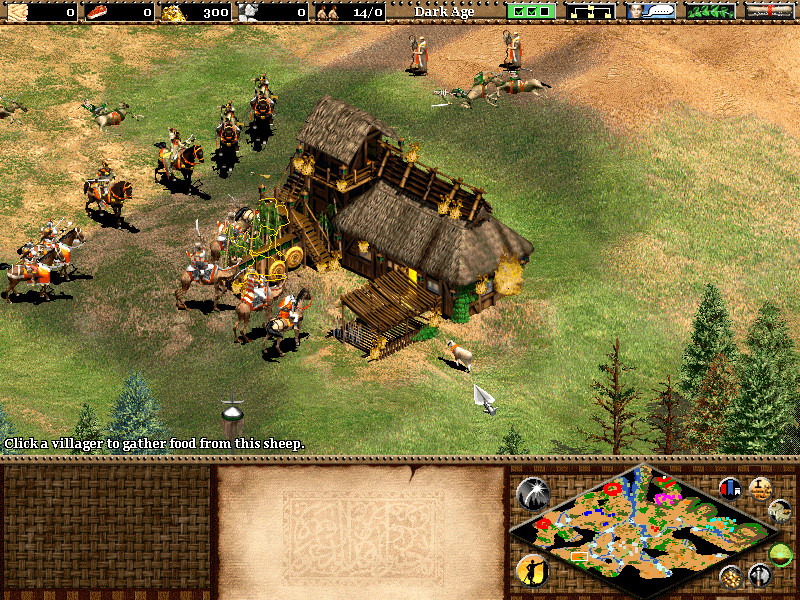
Look carefully and you'll see a well-placed sheep contributing to the demise of this building.

Look carefully and you’ll see a well-placed sheep contributing to the demise of this building.

But that brings up one of my major beefs in transitioning from the DS AoE to the Windows version. The DS filled you in on historical notes, putting you into the context of history and flushing out the moves of some pretty big names from history–not to mention giving you that character for use in each campaign. The Windows version…not so much. Not only does this make the game less interesting, but in order to let the player win, they kind of had to rewrite history. Joan of Arc didn’t succeed quite as much as AoE lets you believe, but no one wants to take an arrow to the eye for the sake of reenacting history–just ask anyone wearing a Confederate Army uniform in the 21st century. While the DS game will fill you in on these details after the battle, the Windows version lets you remain in a blissful state of believing whatever you want, enforcing yet another generation of people who think climate change is a myth, George W Bush attacked the World Trade Center, and that Barack Obama forged his birth certificate and wants to take away our guns to declare himself king. But as most political turmoil caused by William Wallace or Genghis Kahn has more or less petered out, that remains an irritation easily overlooked.

I did struggle with the difficulty. I started the game on the easy setting and it coddled me with the tenderness of an angry dominatrix with nipple clips, a bull whip, and a large supply of hot wax. I didn’t want to crank it down to “easiest,” but it felt excessively time-consuming and replaced free-thinking strategy with a puzzle–“How does the game expect me to turn back this onslaught without winding up as a puddle of goo on these rocks?” The difficulty ramps up even more since rather than handling the traditional two resources that Warcraft, Starcraft, and the DS AoE requires, they expect you to juggle food, gold, wood and stone like you want to join the Cirque du Soleil of feudal combat. Harvesting each resource permanently ties up a peasant, which wouldn’t complicate things all that much, but the resources don’t last forever, and the peasants don’t quite have the brainpower to plant new turnips after eating the old ones, so they require constant attention in order to prevent any slacking off in your ranks. The game includes a button that will jump the screen immediately to the next idle villager, a gesture about as welcome as a hooker who gives you a bottle of penicillin and a warning that you might want to get checked out. I found myself waiting for them to introduce an idle soldier button or an idle siege unit button, but apparently they didn’t think the player would want to find these things quite as much as lazy farmers.

Uhh...well, Wine gets all weird when I try to take screenshots, but they all look alike anyway, so what does it matter?

Uhh…well, Wine gets all weird when I try to take screenshots, but they all look alike anyway, so what does it matter?

On the easiest setting, I still wasted countless hours upon each campaign, but I felt like I got to be creative with my strategy, play off the terrain, and solve problems in more than the single method Microsoft had envisioned. It usually ended up as some sort of variation of: 1) Build to Imperial Age, 2) Build trebuchets, 3) Move trebuchets forward slowly using other units to protect it. The trebuchets, while having the largest range and destructive force of any unit in the game, had a tendency to behave like frightened puppies. “Go over there,” I’d tell them. “Attack that castle.” Then I’d come back after slapping some sense into a peasant standing in the middle of an empty farm and find the trebuchet moving slowly, but confidently in the other direction.

Despite its immaculate ratings, the game suffers in comparison to the DS version, which lets you play with the heroes, focus on strategy instead of urban planning, and take your time to set your pieces into place–yes, I know most real wars happen in real time, but most real generals don’t have to issue individual commands to each soldier at all times. I like the turn-based features. Age of Kings might gray your hair with its difficulty, but I have to remind myself that all good strategy games do that at first, so you may want to put up with sleepless nights and clenched teeth for a little while, if you like this sort of thing.

Metroid Super Zeromission – SNES Hack

Kraid's Room Redesign

So I should apologize for the all-things-Metroid theme lately. For anyone not into the series, I understand that you probably want to claw my eyes out, desperately waiting for me to do Mega Man or Onimusha or…I don’t know…Nintendogs or something. For those of you who actually enjoy the series (or any series for that matter), you know that a good game functions much like a gateway drug; sure, it excites you at first, and maybe for a few times afterwards, but eventually the high wears off, causing you to smash your piggy bank, rifle your couch cushions and shakedown everyone you know for cash so you can branch out into similar, but harder relatives from the same family, trying to get that same fix. (Wow…once again, I compare video games to drugs. Maybe I should seek help?) But as I mentioned last week, Nintendo has only released five 2-D Metroid games. So when I’ve run through all of them, I have no option but to increase my dosage and spend more time in the basement hunched over my obsession, trying to sate myself. Eventually, trying to get that rush, I work my way up to speed…running, until all the time and energy I’ve spent on Metroid pay off with an aneurysm and I drop dead. They find my body weeks later, reaching for Trauma Center to no avail.

Oh! Behind you! Look Behind you! I told you not to go in there!

Oh! Behind you! Look Behind you! I told you not to go in there!

You laugh, but every three or four years, some poor, overworked teenager in Korea will spend three days straight in a PC Room playing Star Craft with nothing but ramen noodles and a haze of cigarette smoke for nourishment, and winds up dropping dead. I’d prefer to avoid that, so for a fresh, unsullied bout with 2D space pirates, I’ve resorted to something a little unorthodox, a ROM hack. Yes, I know that rom hacking only lies the width of a computer science degree away from fan fiction. But while I don’t exactly see the appeal in spending ten hours of my life reading about some ditzy teenager’s difficult choice between her torrid, wild affair with Legolas and her stimulating romance with Will Turner, programmers tend to keep themselves out of the story–often by keeping the story out of the game. So with a little research I discovered a highly recommended rom hack blending aspects of Zero Mission into the basic Super Metroid data.

And for those of you sick of Metroid reviews, good news! Super Zeromission has cured me of my desire for Metroid the way an angry father cures his teenager of the desire to smoke by making him suck down an entire carton of Camels in an hour!

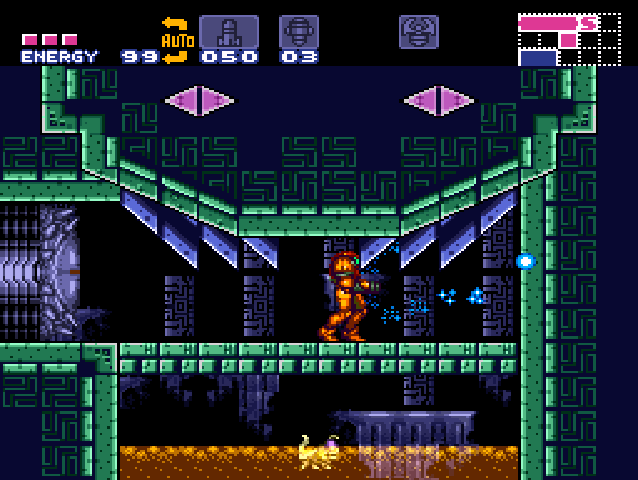
Ridley StatueI’d like to establish first that Super Zeromission rivals canonical games for brilliance. While veteran players will easily note the basic data from Super Metroid, the hacker (or hackers) has (have) redesigned everything from the map to the basic sprite patterns, even utilizing some of the coding for enemies left unused in the original ROM. The game also drastically alters the original item acquisition order and adds in some new puzzles and door locks. This amounts to the game feeling new, something worth playing, and not just a burgeoning programmer trying to pass for clever by giving Samus an afro without actually changing the game.

...you bastard.

…you bastard.

It also follows a predictable logic. Let me explain; when I play a game, I assume at the very least that at least one person in the testing process has completed the game. And although weird stuff does crop up from time to time like giant ice keys or weird islands past the Archangel Dam, I can also reasonably assume that someone has solved all the puzzles, completed all the challenges, and not gotten stuck anywhere that would force them to restart the game. In short, if I get stuck, I can assume the developers made the game possible to complete, and that I just have to stop idling my brain in neutral in order to move forward. Now, I’ve edited entire books before, a process with all the enjoyment of separating beach sand into groups of different minerals with only a magnifying glass and a hand full of swollen fingers, and I’ve done it without experiencing the hulk-smash anger that washes over me every time I have to debug three or four lines of code. For a game ROM, not only does all the code need to work flawlessly, but it has to translate into a a flawless game world.  Games demand layers of editing the same way a toddler expects you to give him food AND clean diapers, and they’ll both give you a massive headache if you deny it to them. Players should never have to resign a game because the developers let them get stuck. I often got stuck in Super Zeromission. In fact, I’d often get stuck in small areas, where I could only go back and forth between one or two rooms, usually with the only visible way out requiring an item that the jackass hacker wouldn’t give me for several more hours. Still, rather than assuming he screwed up, I could rely on a second, more hidden, method of escape. At moments like that, not only did I enjoy discovering a secret more difficult to find than anything Nintendo would dare put in a game, but I knew I found it only because the hacker trapped me in that room. I tip my hat to him/her for showing more brilliance in level design than the entire team at Nintendo.

Chozo StatuesBut I also wag my finger at the sadistic bastard for his unnatural love–nay, his fetish–for shinesparking. For those of you unfamiliar with the term, after reaching full speed with the speed booster, hitting the jump button will rocket you toward the heavens, allowing you to reach untold heights and smash through speed blocks. Further manipulation of this will let you dash horizontally, diagonally up, or let you spin jump and start the dash in midair. In most games, running with the speed boster will get you through all the required puzzles and shinesparking only lets you access a handful of secrets. It also usually drains your energy, but the hacker shut off that feature. Why? Because as previously mentioned, he doesn’t want you to get stuck anywhere, and almost all speed booster puzzles require shinesparking. Lots and lots of convoluted shinesparking. While it made parts of the game feel like a platformer, I will say that it forced me to look up detailed descriptions of how to properly perform the maneuver, as well as how to master the wall jump. Well done, hacker. You’ve become that one teacher everyone hates, but has to respect anyway for actually teaching me something.

Fuck you, bitchtits! You fill your room with water and take away my platforms and I'll make a suitcase out of you!

Fuck you, bitchtits! You fill your room with water and take away my platforms and I’ll make a suitcase out of you!

He/she also has some interesting ideas about how to rethink the purpose for item collecting. Take the varia and gravity suits, which allowed the player in Super Metroid to access new areas, increasing your exploratory capabilities (thankfully, the developers opted for the X-Ray scope instead of the colonoscope). The hacker lets you access all those areas even without the suit, and usually gives you a way to navigate through them. He even goes so far as to require you to do so. That when, when you finally do obtain those suits, you’ll appreciate them like a burn victim appreciates the Klondike. I do like the way he/she thinks, although I have to admit that between playing through water rooms without the gravity suit and my emulator lagging to begin with, the game felt like it moved by at the speed of the film “300.” Even when dry, the difficulty  slowed the pace down to a painful crawl, and while I like the idea of worldwide locks that need releasing, but the releases gave no indication of whether or not you successfully released them. While I enjoyed the scenery redesign, it didn’t quite make up for the hours spent backtracking through a massive world map. Furthermore, the lack of walkthroughs online forced me to rely on youtube let’s play videos done by players who, to their credit, made me feel like Stephen Hawking by comparison.

Illustrating that a good game antagonist has more survival tricks than the Joker.

Illustrating that a good game antagonist has more survival tricks than the Joker.

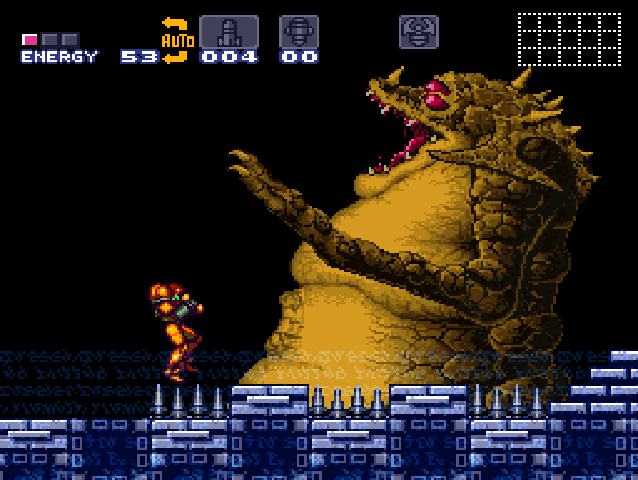
The story…well, the story doesn’t exist. The game lacks any of that fluff we may call “plot” that the other games seem to like so much. Hell, even the first two Metroid games had instruction manuals that listed off a premise. Super Zeromission seems to follow the structure of Zero Mission, so maybe we can use that premise and assume this is another remake. Or since the metroid larva appears and Zebes explodes at the end, maybe the hacker wanted to reboot Super Metroid. I don’t know. I don’t think it matters. You fight Kraid, Ridley and Mother Brain, in that order, but the hacker recycled Phantoon and Draygon, redesigning their sprites as the ghost of Mother Brain and an oddly crustacean-like Mecha Ridley, both fought in the second half of the game. While electing for a non-kosher final boss seems like an odd choice, I understand the difficulty in writing new code, and feel like I should respect that this hacker has at least some limits. Every single boss fight, though, adds something to it that makes the battles more difficult than in Super Metroid. Spore Spawn lives in a room with rising lava–somewhat of a questionable move for a plant–and only the Crocomire can stand on the floor in his chamber, while Samus has to settle for small platforms. Kraid has no more platforms, and you have to rely on the ice beam to let you stand on the crap he shoots out of his stomach. But, at the risk of going too long, the bosses accurately sum up the experience of the game; harder than most 2D Metroids, but in a constructive way that adds to the experience.

————————-

Play Online or Download Rom Here: http://www.letsplaysnes.com/download-metroid-super-zero-mission-rom/

So...replay value? Or does this intend to shame me with feelings of inadequacy?

So…replay value? Or does this intend to shame me with feelings of inadequacy?

So giant flabby monsters can stand on shoddy masonry, but Samus weighs so much she just goes crashing through?

So giant flabby monsters can stand on shoddy masonry, but Samus weighs so much she just goes crashing through?

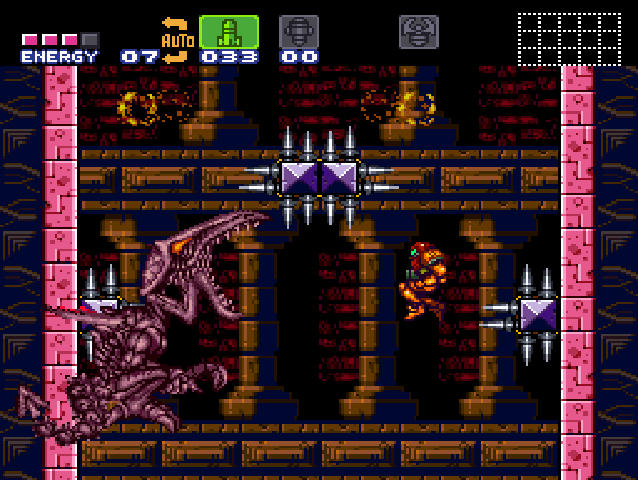
Ridley battle

Why, hello there. Just thought I might ask, you know...how do you operate the console without fingers?

Why, hello there. Just thought I might ask, you know…how do you operate the console without fingers?

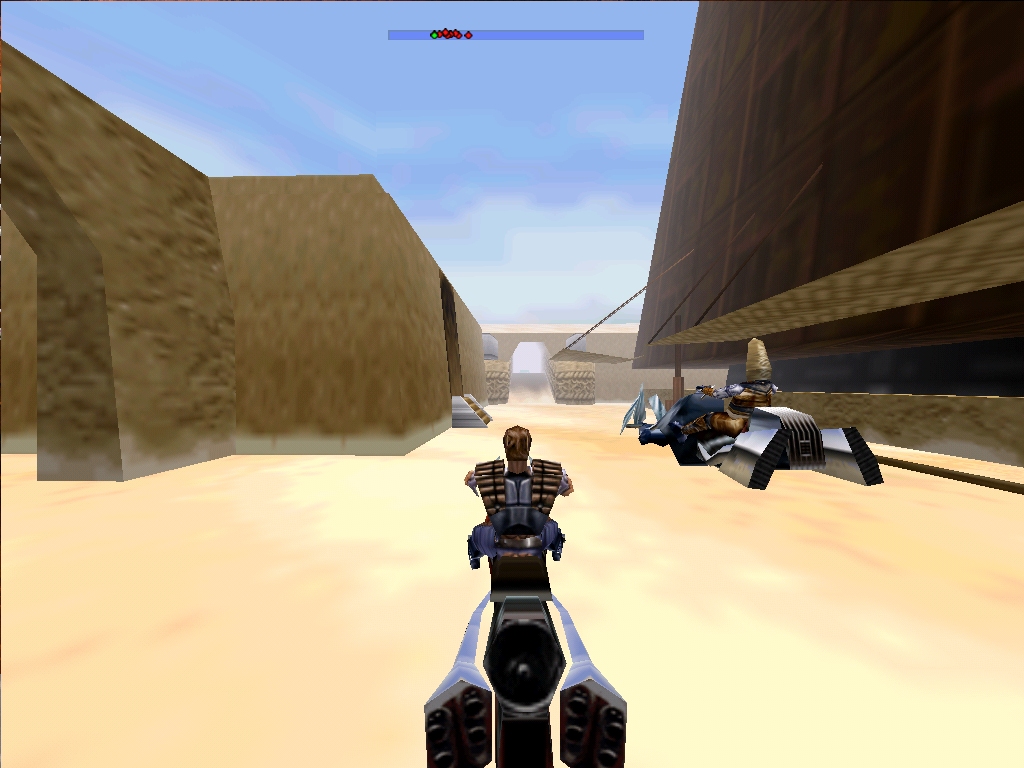
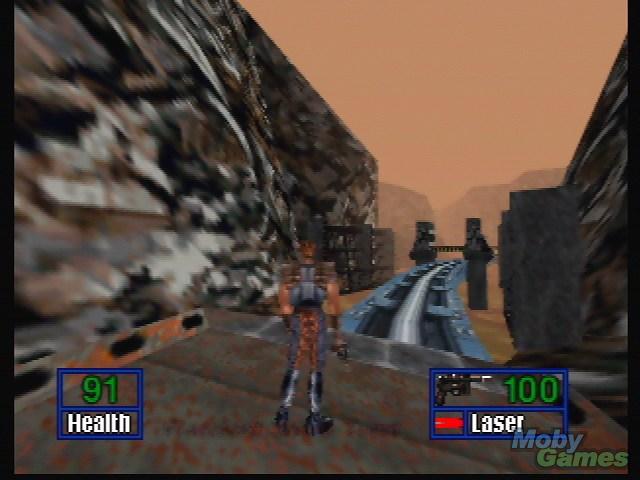
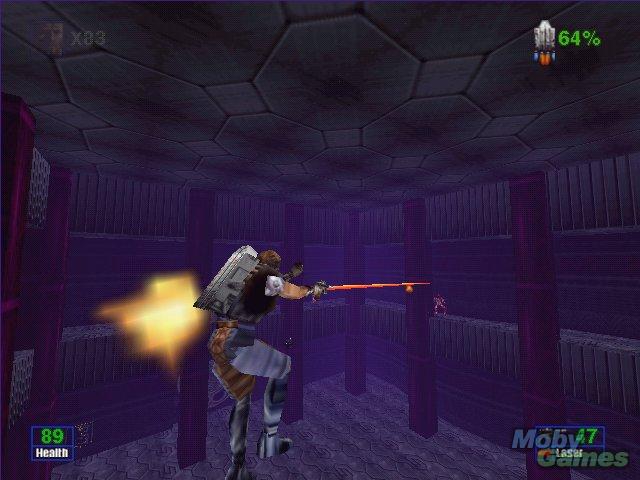
Star Wars: Shadows of the Empire – N64, PC

6157-1-star-wars-shadows-of-theI’ve spent well over a year writing about games from all sorts of origins, but this entry will mark only the second time I’ve written about an N64 game. The deadbeat of the console family, the 64 had all attention diverted from it in its toddler stage for the newborn baby Playstation, which we all soon realized came out with dozens–and eventually hundreds–of good games. (I figured I’d pass on the chance to make an amniotic fluid joke in there) And of course, this problem plagued Nintendo through the Game Cube and even a little into the Wii era. Fortunately by that time, they’d noticed the DS. “Oh, really? Players enjoy a wide array of fun games, along with backwards compatibility so they can still play all those old games floating around?” See, it turns out that selling a system on the tech alone just doesn’t cut it. But sadly, the N64 hadn’t quite read that memo yet, and millions of people decided to bypass its wonderful new 3-D environments in favor of the 3-D environments that Playstation developers made fun and exciting to play in.

So, hunt down about twenty of these guys and kill them. Oh, and you don't have lasers or missiles. Oh, and crashing into anything kills you instantly.

So, hunt down about twenty of these guys and kill them. Oh, and you don’t have lasers or missiles. Oh, and crashing into anything kills you instantly.

Still, while terms like “amass” feel too grand for what happened, I did accumulate a modest collection of cartridges for the system, about three or four of which I actually enjoyed playing. Of the handful of these I have, I probably encountered Shadows of the Empire before anything else. It impressed me. It hooked me on the system, like a free shot of heroin that would eventually lead to an unsatisfying and expensive habit. But hey, Star Wars! In 3-D! The ability to walk around in the Rebel base on Hoth amazed me. Wandering in and out of my star ship…yeah, it sounds stupid now, but at the time it felt like strapping on a virtual reality suit and logging into Quest World (speaking of nostalgic disappointments). Still, I while I do have a tendency to overlook my N64 games in favor of a towering mass of Playstation discs, I recently began to wonder why I had ignored Shadows of the Empire for so long. So I pulled it out, dusted it off, jammed it in the slot and turned it on…then turned it off, pulled out the cartridge, blew the dust out of the game, blew dust out of the N64, put it back in, and sat back in amazement as I realized “Oh yeah, it doesn’t actually have much to offer.”

Hello Mr. Chicken Walker, you have some explaining to do. Seriously...how did you get in here? Look at the size of those doors.

Hello Mr. Chicken Walker, you have some explaining to do. Seriously…how did you get in here? Look at the size of those doors.

Shadows of the Empire owes a lot to two things. The first, in a move surprising both for the game industry–in basing a game adaptation off something other than a movie–and for Hollywood–to resist hacking and slashing an obvious cash cow of a book into bloody pulped mash of beef and bone–they took inspiration from a Star Wars expanded universe novel. The book focuses on the period of time between Empire and Jedi, while the film’s heroes search for Leia’s hunk of a carbonite boyfriend, matching wits against a crime syndicate lord jealous of all the attention Palpatine gives to Vader. The crime lord hatches a plot to bump off Vader, thus endearing himself to the Emperor (a plan which would make no sense with anyone other than Palpatine) and becoming his new green-guy Friday. So the novel ends up looking at how Luke and Leia get by without the disarming wit and street-smarts of Han Solo, pushing them to their limits to test their mettle. Just kidding. They introduce Dash Rendar, a character exactly like Han, who fills his function just long enough to get them through to Jabba’s palace. Dash, a relatively minor character from the novel, becomes the central figure of the game, driving much of the action.

The rebels may have fared better on Hoth had they filled their prisons with Imperials rather than the indiginous fauna.

The rebels may have fared better on Hoth had they filled their prisons with Imperials rather than the indiginous fauna.

Second, the Super Star Wars SNES games clearly influenced Shadows of the Empire’s creation. It retains the same semi-animation style of cut scenes, at least one secondary blaster power-up, and even some of the slightly nonsensical premises for dashing through a gauntlet of stormtroopers, droids and wampas rather than just landing your ship in a better location; it also makes sure you destroy your quota of tie fighters before jumping into hyperspace. The vehicle levels also feel lifted straight out of Super Star Wars, especially the one level they literally just took from Super Empire Strikes Back, spruced it up a bit, and used to open their game; you fly a snowspeeder at the Battle of Hoth, slaying progressively larger and more dangerous enemies that didn’t actually fight at the Battle of Hoth (we all see you, Probe Droid!) until you have to harpoon a handful of AT-ATs and bring them down in what always feels like the sci-fi video game equivalent of walking heel-to-toe while saying the alphabet backwards.

Wait...platforming? Does the game think we'd rather play Mario than shoot storm troopers?

Wait…platforming? Does the game think we’d rather play Mario than shoot storm troopers?

That sort of drunken play control really marks the game, unfortunately. As an early N64 title, it almost feels like a demo they decided to market. I could almost feel the separate layers of the graphics, with Dash responding to the controls on top and an environment doing the same on a layer beneath. The amazing 3-D environments in retrospect come off as simple and non-interactive, with only a handful of objects that do anything more than just sit there, not letting you walk through them and looking all Star-Warsy. Each level jumps up and down like a 3-year old desperately trying to show you what it can do, especially in the various vehicle levels and the one moving-along-the-train level designed by a programmer who apparently slept through high school physics. While Dash has all the equilibrium of Mario in an ice world, once you get the jet pack the game really starts to handle as well as reading a newspaper in a gale force wind.

Flying like a drunk with a pilot light hanging over his ass, Dash Rendar never lacked popularity with his frat brothers.

Flying like a drunk with a pilot light hanging over his ass, Dash Rendar never lacked popularity with his frat brothers.

But I’ve safely navigated through Mario games before, so I can forgive that. I can even forgive the rarity of blaster power-ups effectively classifying them as too-awesome-to-use items. The save feature, though, pisses me off to the point where I’d gladly strangle a Lieutenant if one made itself available. And I had Force powers. Not yet reaching modern times, Shadows of the Empire uses lives. But still in love with itself over 3-D capabilities, it also uses enormous levels that can take upwards of 30 minutes to an hour to complete. If you don’t get to the boss and die. Like I did. Numerous times. On the medium difficulty setting. A setting which otherwise offered the perfect balance of challenge without frustration, yet still allowing adjustment for veteran players. The game only saves at the ends of levels, meaning any mistake and you get to play through everything again! Better pick something good to watch on TV while you do it. (I recommend Joss Whedon’s “Dollhouse”) For extra challenge, each level contains either hidden or difficult-to-reach challenge points. Collecting enough of these will grant you bonus lives which become part of the save data, carrying over into the next level (meaning you can play through old levels again to potentially increase your life total for the next). While discovering these trinkets gives the same rush as finding a twenty dollar bill in a parking lot, the bonus lives don’t add to the minimum–if you have one life left and get three bonus lives from challenge points, the game feels that raising you back up to the minimum lives ought to reward you enough.

Shadows of the Empire has all the nostalgic appeal of Johnny Quest–something you loved as a kid, but then you go back and catch the disturbing racial overtones and shallow plots. The game doesn’t come off as racist (well, unless you count casting green aliens as villains and white humans as heroes), but does kind of flop as a retro hit. For all the frustrations, I’d definitely put it in the top…let’s say fifteen N64 games. Maybe even top ten. But let’s face it; it didn’t exactly have fierce competition.

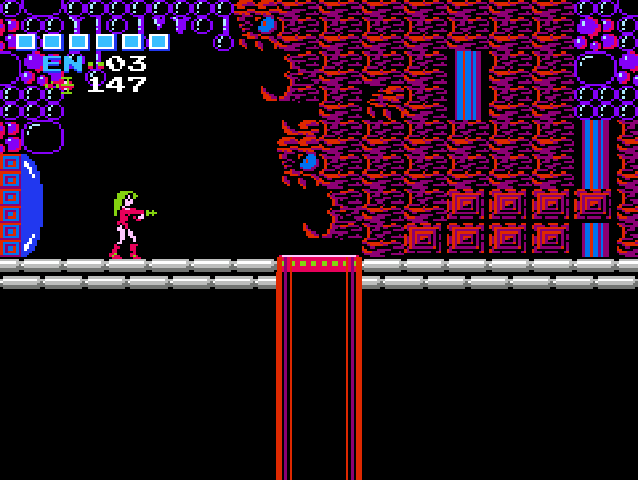
Metroid – NES, GBA

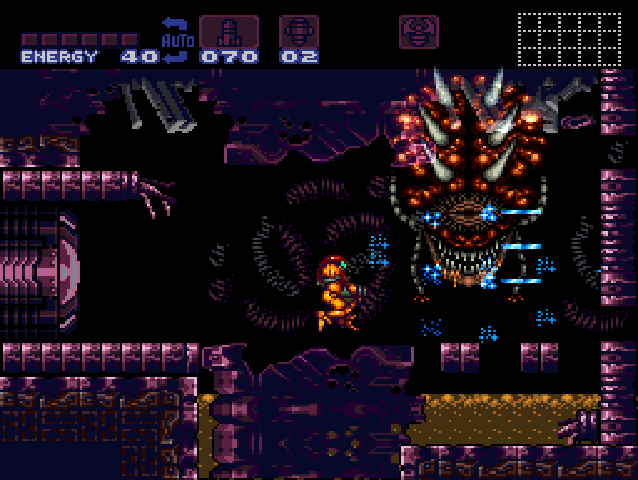
Riding an elevator down through the maw of a giant, two-headed demon. What could possibly go wrong?

Riding an elevator down through the maw of a giant, two-headed demon. What could possibly go wrong?

In the past few days, I’ve finished three games and written about four of these entries. While I enjoy the prospect of getting ahead a few weeks on my posts, the ol’ well of humor might risk drying up. Or burning out. I don’t know. I do know, though, that while I enjoyed Metroid Prime 3, it left me with an aching feeling in my heart (which beats Custer’s Revenge, which left me with a burning sensation in my pee) that nothing quite compares to the old school 2-dimensional Metroid games. To my surprise, when I tallied them up to see which one drew the short straw and had to cleanse me of my first-person nausea, I realized that Nintendo has only made five: Metroid, Return of Samus, Super Metroid, and Zero Mission, which only really should count for half credit as it partially remakes the original. Why do we get so few of these classically styled games, but jumping plumbers have such a fan following that they’ve metastasized into multiple series? Someone contact the New Super Mario Bros. team and tell them what we really need. Still, I needed something to fill the void, and since I’ve already written about Zero Mission, Super Metroid and Return of Samus, I opted to go with the classic 8-bit original.

The story, as typical for games on the NES, has all the complexity Nintendo could detail on six whole pages of an 11.5×9 cm instruction manual. In the year 20X5–because apparently the fact that half the decade has passed matters more than which decade–all intelligent life in the Milky Way has come together into a peaceful federation rather than Earth setting up colonies and raping foreign planets for their resources like would probably happen in real life. However, to fill the void of assholes, a group of space pirates have hunted the wise Chozo bird race to extinction,  taken control of their planet, and used it as a base of operations to rob and loot and pillage from everyone else in the galaxy. You know…like the United States in real life.  Too inept to land a force of Federation Police on the planet, guns a-blazing, the government decides to outsource the job to a single bounty hunter who promises to do a better job for less money while simultaneously dealing with severe PTSD caused by the very space pirates she’ll have to face with no back-up or emotional support. A sort of space Mowgli (fitting with today’s neo-colonialism theme), Samus lived with the Chozo after space pirates killed her human family.

Prepare to spend some time killing bugs for energy.

Prepare to spend some time killing bugs for energy.

To add to the list of reasons why not to send her in, you begin the game at 30% health.  The power suit she wears, which the instruction manual says makes her a cyborg…and also apparently a man…apparently serves more of a Darth Vader suit function. Anyone else starting a game at 30% health would fade into view during the opening fanfare in a full-body cast along with their IV drip. This feels like more of a scathing criticism of the Federation. Why even keep a standing law enforcement agency when a hyperglycemic cancer patient covered in third-degree burns offers a better chance at bringing criminals to justice? But yeah. Samus begins the game with 30 health out of a total of 99, and no matter how many energy tanks you collect, each time you die or continue a game via password, you’ll still begin on the brink of death with only 30 health. Farming energy proves difficult, as you get to choose between doing it safely and doing it quickly, and even the “quickly” option takes time, as the drop rate decreases the more you shoot monsters that continuously spawn out of pipes. So prepare yourself to spend long hours going back and forth, shooting monsters in hopes of seeing those flashing purple baubles worth more than gold. And don’t go in to fight bosses until you know you can take them.

...a lot of time killing bugs.

…a lot of time killing bugs.

Beyond that, I think I should apologize for some unfair criticism of the game earlier. Previously, the lack of an in-game map challenged me to keep my blood pressure from rising in uncontrollable rage as I wandered through endless, identical passages trying to find something useful to do. This time, I decided to try it au naturale. I referred to a map briefly before I started, and realized that the later portions of the game had smaller segments of absolutely identical passageways, and while no less confusing, I could manage them far more easily than I had previously assumed.  So I memorized the initial path, from the morph ball to the missles, through the bombs, and eventually the ice beam. From there I only had to check the map once while looking for a well-hidden path through Norfair.

I'd like to go into McDonald's and have a giant stone human hand me my fries.

I’d like to go into McDonald’s and have a giant stone human hand me my fries.

Once free of initial map frustrations and the exciting and indefinite bouts of energy farming, the game plays a lot like the Legend of Zelda. Samus begins with a piddly array of attacks and range of motion. She hunts down items that increase her abilities. Items like the maru mari (morph ball) let her curl into a ball, allowing her to access corners of Zebes previously available only to the most intrepid of hedgehogs. The high jump boots, well…I shouldn’t have to explain what they do, but they let Samus leap to new heights, as well as making older heights less of a chore to reach. Weapon augments like the long beam allow her to one-up the actual side-scrolling Link, letting her shoot all the way across the screen! And bombs…well, enough with the Zelda comparisons. You get the point.

Most heros just kill their enemies. Samus humiliates them first.

Most heros just kill their enemies. Samus humiliates them first.

These items show the major advantage that the 2-D Metroid games hold over their Prime counterparts; you can use them everywhere, and they might help you anywhere. Lately, Samus’ arsenal consists of items that interact with specific items in the environment, allowing her to open up new areas. Same basic idea, yes, but when an item doesn’t benefit her all around, it amounts to amassing a giant ring of the most eclectic keys the Nintendo designers could think up. Getting the plasma cannon early on in Metroid Prime 3 excited me, until I realized it didn’t actually power up my shots and could only either open red doors or melt patches of ice and scrap metal that obstructed my path. You know, like a door. In this game, the beams actually have a function; the ice beam lets you turn your enemies into stepping stones, and the wave beam broadens your shot, reducing the pesky need to aim at stuff.

Ret-conning Samus' hair color already! Mostly a brunette, it changes to blonde and sometimes green within the game.

Ret-conning Samus’ hair color already! Mostly a brunette, it changes to blonde and sometimes green within the game.

Born in 1983, I owned an NES before I even heard of any other video game system. I have a certain fondness for the system and appreciate the games for personal reasons as well as for their famously superb design. So when I say Metroid surpasses most Nintendo classics, understand that I don’t say that to demean other games at all–it actually plays like a game far ahead of its time. You may have to deal with some obnoxious ret-conning from the storyline. The instruction manual introduces Samus both as a cyborg and a man–both ideas they don’t stick with even through the end of the game. Ridley, apparently, has a claim as the first life form on planet Zebes, which sounds kind of interesting, but the later games’ stories (as well as the Metroid Manga) come off as more compelling.

Completion bonus: After making your way through Mother Brain’s jar and successfully clearing the planet before it blows, the game places you back at the beginning, sans power suit (or with suit if you cleared the game without) and lets you play through again, this time beginning with the items of power–spin attack, high jump boots, varia suit, maru mari, bombs, and whichever beams you had before–allowing for a speed run attempt. While I usually only play through games once before writing about them, I ran through Metroid twice. Energy farming doesn’t take nearly as much time or effort with the spin attack, and a nice quick dash through the game felt like a nice reward–rather than a too-easy cheat mode–for the effort put into the first round.