Parasite Eve: The Third Birthday – PSP

parasite_eve_the_3rd_birthday_trailer_y_fecha_de_comercializacion

Okay, the gamer girl slobbering on an xBox controller wasn’t hot to begin with. Who signed off on Aya frenching the barrel of a gun?

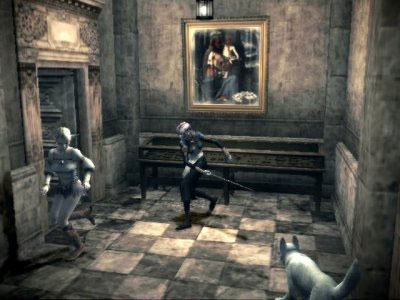
Parasite Eve as a franchise has suffered a major identity crisis over the years. Once a strong, confident horror-themed RPG, in its rough teenage years she caved to peer pressure, trying too hard to fit in with the cool kids in the survival horror clique. So she dressed just like a Resident Evil game, did drugs (developed by Umbrella), showed off just enough skin to keep the boys interested, and severed all ties with her good friends, “breakthrough battle system” and “well-written plot.” And sure, we were all interested for a while, but then we realized she was just a poor imitation with nothing of her own to make her unique. Then in 2010, twelve years after the release of the original game, Square-Enix releases The Third Birthday. How has our old friend fared in the intervening years? Did she reconnect with her old interests and go on to lead a successful and productive life? Or is she running around, still acting like a teenager trying too hard to get the boys to like her? Take a wild guess.

Shower

Excuse me…just have to wash up a bit.

Nothing like a really bad extended metaphor to open an entry, right? The problem is, Square has gone through a similar sort of identity crisis, distancing itself from all the dice-rolling fun of fantasy RPGs it enjoyed in the nineties and started producing games that more resemble Michael Bay’s 10-hour wet dreams than a game appealing to their traditional fan base. (Who would have thought that having my interests go mainstream would actually make me more of an outsider?) I can recover from that. The bright side? PS4s are expensive and now I won’t have to buy one. Unfortunately, they took Aya Brea, the only girl I loved in high school who didn’t try to push me down a flight of stairs, down with them. I played The Third Birthday with the intention of using it for an October entry, but it turns out the game has fewer horror elements than a Victoria’s Secret catalog.

Bride

None of that “wiggle your big toe” coma shit! I’m getting my revenge now!

The story begins with Aya Brea, more than ten years after her last adventure, and follows her as steadily and coherently as a schizophrenic schnauzer after drinking a bottle of tequila. I tend to criticize games that require you to read the in-game encyclopedia in order to understand what’s going on. The Third Birthday lowers the bar even further as reading the files leaves you with more questions than when you started, and most of those questions fall on the lines of, “Did someone actually write this story, or did they just paste together scraps of paper from the dumpster behind the Call of Duty development team’s building?” It really does feel like everyone in the building was told they had fifteen minutes to write a paragraph from a paramilitary adventure, and when their time was up, whatever they had done was coded into the game. In order to get a rough feel for what’s happening, you have to finish the game. Only in the ending sequence does the Third Birthday give any semblance of actually having a plot, but because it plays the same scene about five times, each with alternative events, Square could have displayed the games coding and I’d have a better idea of what they were going for.

3rd_Birthday_gameplay

You spend the entire game exterminating giant cockroaches.

As far as story is concerned, The Third Birthday passes Star Wars prequel level of bad, overtakes the Force Awakens easily, and heads right on into Matrix: Revolutions territory. The awkwardly charming Maeda from the first game is now a horny, giggling mad scientist, and you have to put up with the douche bag from the previous game as a major character. It contains all the standard Square-Enix tropes: a bad guy who turns out to be good, a good guy who stabs you in the back, and a fair amount of Judeo-Christian pseudo-symbolism with as much cogent meaning as a bag of scrabble tiles thrown into a wood chipper. But if you can ignore that, it makes for a pretty good action game. Coming off of Final Fantasy XIII the year before, Square was still high on its discovery of hallway-based gameplay, and hadn’t yet figured out that linear level design is about as likely to make a comeback as bell-bottoms, cod pieces, and the sheepskin jerkin. Aya moves from one room to the next, fighting monsters. She can pick up occasional “ammo recharge” items and can crouch behind small barricades, but can otherwise interact with the environment about as much as a polar bear trapped on an ice floe.
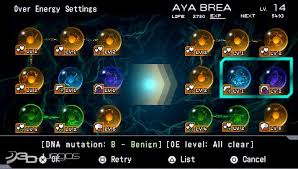
dna

Oh yeah. There’s this thing, too. They don’t really explain it and it doesn’t help much.

But while all of those seem to detract from the ability to have any fun in a game, The Third Birthday focuses entirely on Overdive combat. After stripping away any mention or implication of mitochondria from the game, Square gave Aya the ability to jump into the past by jacking into the Matrix, where she can spontaneously possess anyone around her like Agent Smith in a disintegrating tank top. The national guard is present for nearly all battles, and Aya can dive from one to another in order to exploit an enemy weakness, access a new area, or evade attacks. While dancing around, wearing these soldiers like a Halloween costume, she uses their health bar and has access to whatever special weapon they had equipped (a feature that can be exploited for extra ammo). If you don’t think too hard about Aya blood-bending these guys like an evil puppeteer, leading them into dangerous situations and then abandoning them to their deaths, this gives the game a fast-paced strategic element. You have plenty of combat options at any time, and the enemies fall just on the inside of being too difficult to enjoy. If I did have one complaint about the battle though, the guns hit the monsters with all the destructive force of a spit ball. No matter how fun the combat is, whittling down an enemy’s health by lobbing styrofoam packing peanuts at it takes a lot of time, which feels especially tedious in the more difficult battles. I would have been perfectly fine with enemies dealing more damage if it meant I could load my guns with something a little stronger than Nerf.
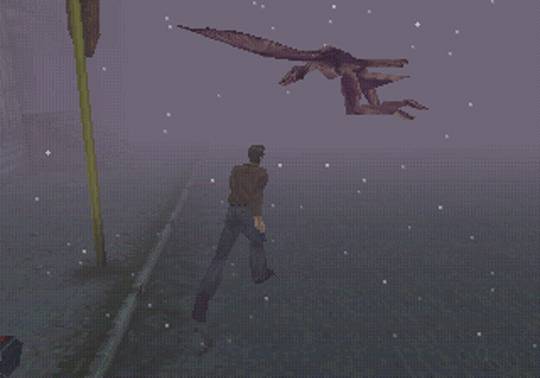
Silent Hill – PS1

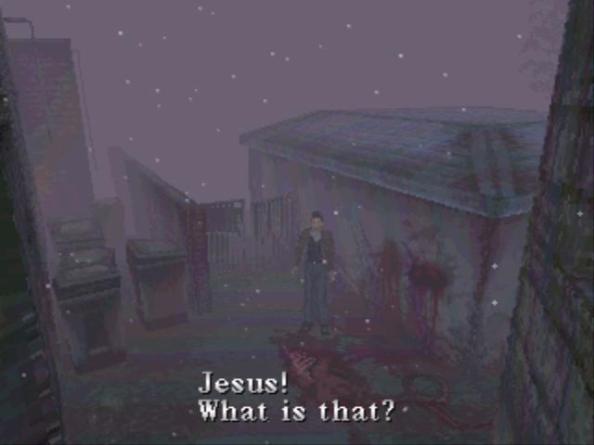
SH What is it

It’s a Western deity worshipped by over 2 billion people.

One of the unfortunate byproducts of writing humor is that often times, I have a tendency to shout out scathing remarks which your average high school student would follow up with, “What? I’m just telling the truth.” However, there’s a limit for mean, a point where the fruit of ridicule hangs so low that it’s slowly cooked by the geothermal heat of the earth’s crust, the kind of mean-spirited taunting usually reserved for major GOP candidates who feel that those poverty-stricken, unemployed, single teen moms have it too good and ought to be taken down a peg. And such is my problem with Silent Hill. After glancing at my notes and realizing that I’ve just copied lines of dialogue verbatim, I can’t help but feel a bit sleazy for going after the video game version of that girl who wanders around a frat party in various stages of undress loudly repeating “I’m so hammered!” in hopes that someone will take her to bed to fix all her self-esteem and daddy issues. I know the game was popular when it came out, but Silent Hill has aged so poorly that it has a permanent spot in the back of the fridge because you’d rather let its primordial soup run its course than get near it to clean it out. But, damn it! I swear I’m going to keep writing these things until someone gives me a job writing comedy, so…on with the show!

SH Boomstick

Where’s a boomstick when you need one?

Harry Mason is your standard survival horror everyman with a personality slightly less impressive than an avocado. He comes to Silent Hill for vacation-slash-finding-his-missing-daughter, but after getting lost in an alley designed by Pac Man, three sloth monsters try to stab him to death. He wakes up in a cafe with the NRA’s wet dream: a 22-year-old police girl who tosses Harry a gun without so much as a perfunctory “Are you a criminal?” She merely leaves him with the instructions, “Don’t shoot me” (indicating the near certainty that she’ll become a boss fight) and “Know what you’re shooting before you pull the trigger.” Three seconds later, an unidentifiable monster attacks and Harry blasts it without thinking, much less a scientific analysis of its genus and species. And thus begins a long and rambling plot full of unexplained events and vague motivations in which Harry spends more time chasing after a cult than looking for his daughter.

Let me get this out of the way; I liked the game. I enjoyed playing it in that way that you sometimes can’t stop fantasizing about girls your brain tells you are unattractive. And in the end, fun gameplay is what counts. But don’t get me wrong—my brain was telling me this game is very unattractive. Something about a fun game that has a character utter the phrase, “Rather than shifting from reality to nightmare, it feels like reality is becoming the nightmare,” creates a mental friction not unlike receiving a hand job from a belt sander. Half the time the game doesn’t trust players to have any sort of thought process running, forcing Harry to narrate out loud and shout out “What is that?” (or another favorite, “Cheryl?”) at so many obvious objects and events that turning it into a drinking game would prove fatal after thirty minutes of game play. I also noticed that the dialogue often spends copious amounts of time reiterating simple ideas. Here’s a line from the script:

This may sound really off the wall, but listen to me. You’ve got to believe me. I haven’t gone crazy and I’m not fooling around. At first, I thought I was losing my mind. But now I know I’m not. It’s not me.

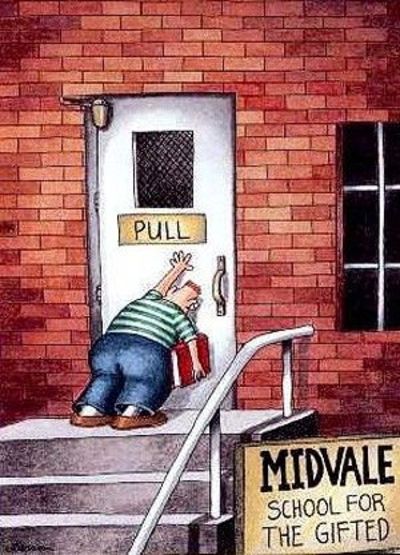
Midvale

Harry Mason, ca. 1982

I honestly can’t tell what’s more off-putting: when a character gets stuck in a loop and you have to give them a good whack to move on to the next thought, or listening to the voice actors say things like, “Devoured by darkness” and “My daughter is missing” with all the passion of a geometry lecture delivered by a narcoleptic. And the other half of the time, the writers rely on the fact that the player’s brain has a shorter draw distance than the town. Early on, Harry finds a scrap of paper with the words “to school” scrawled in Crayola, and like the junior Scooby Doo detective that he is, assumes that Cheryl has simply ditched him to hang out at the school in a strange town. I like to picture this guy in the same graduating class as Rick Grimes and the guy from Heavy Rain.

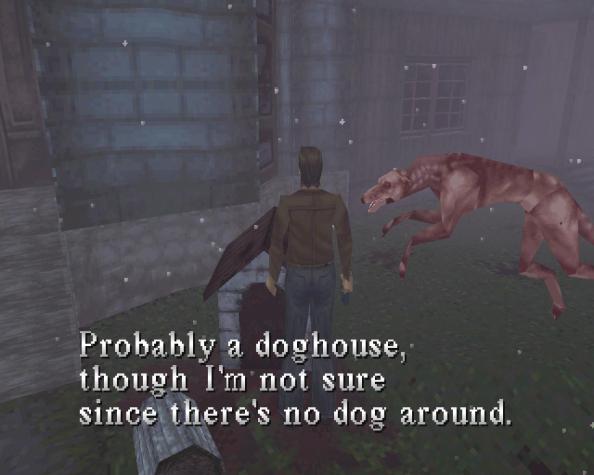
No Dog

But Cheryl could be in there. Or Carl. Jason? Janet? Brad? Janet? Dr. Scott? Rocky?

Game play is all right, I guess. Not exactly a stunning endorsement, I know,. But being one of the early balls to explode forth from the canon of survival horror, I can’t really fault them for abiding by things that weren’t tropes yet when the game came out. You wander through an environment full of obstructions, trying to find multiple keys for single doors which the owners have cleverly scattered halfway across town in some drunken fit of reverse-kleptomania. You solve puzzles. You dodge and fight monsters. The control scheme offers the greatest challenge though, as not only was “Push the direction you want to move” as terrifying, foreign and quite obviously much easier to use as the metric system, the tank controls would glitch out every so often, making it impossible for Harry to step around and avoid monsters. The one saving grace is that it was often rather fun to build up a head of steam and then ram Harry into immobile objects for the satisfying “thwack” it would make, even if I did do this accidentally while being chased, leading to several eviscerations.

I’ve always thought Silent Hill puzzles were a bit contrived. My first time playing Silent Hill 2, I had spent a good half hour whacking monsters with a stick with a nail in it, but then I came to a key that was just out of reach beyond a barred doorway. Oh, if only I had some long, hooked tool that might be able to extend my reach! Woe is me! In the original, I picked up an axe halfway through the game, but still needed keys to get through wooden doors for some reason.

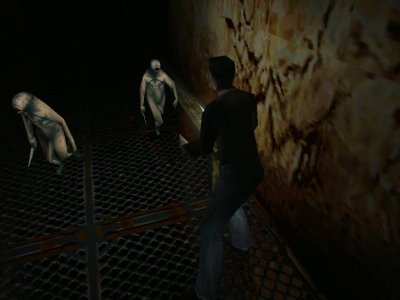
SH - Sloths

Harry faces down one of the seven deadly sins.

One of the bigger annoyances are the sloth monsters encountered in the school level. Despite the fact that you’ll find more bullets than textbooks, there’s absolutely no reason to use them as the sloths are invincible. Personally, I find that this defeats the main decision that makes survival horror fun to play—do you want to eliminate monsters permanently, or conserve ammo and risk a mad dash around the enemy every time? Silent Hill’s school makes that decision for you. Shooting them incapacitates them briefly, but three bullets to the face don’t affect them any more than the recoil of the gun does to Harry, so while he stands there waiting for his pants to dry, the sloths grab on to your legs like murderous toddlers looking for a ride. Not surprisingly, the monsters are actually supposed to be children, but censors felt that in a game littered with corpses and stocked full of monsters, cultists and blood, the idea of killing a violent hell-spawned creature of evil and darkness crossed a line, so long as said demon was only a meter tall.

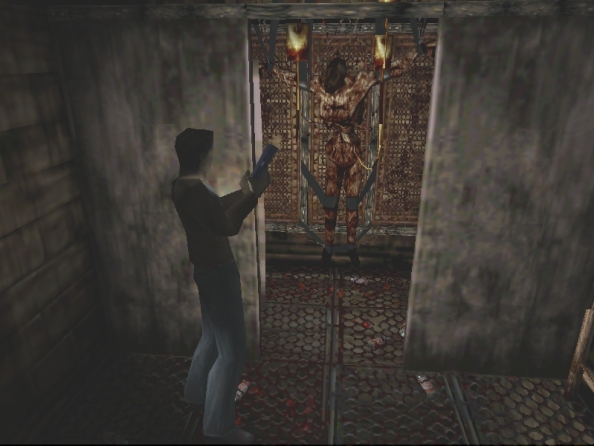
SH Corpse

Oh! Thank god it’s not a kid. Otherwise this might have been tragic and gruesome.

But the game is tolerable, if not good. I had originally planned some jokes about Harry breathing like an obscene phone call when he’s wounded, and how the fog filling the town made it seem like the design team based their whole concept on the game having a low draw-distance. However, not having a life meter is one of the things that contributes to the uncertainty of survival horror (challenging when you think your health items are best spent), and upon reading that the design team introduced the fog for exactly that reason, I started thinking of it as a rather clever solution to a problem. Furthermore, Silent Hill moved away from horror based on jump scares and other things that make people like Markiplier scream like a drunken frat boy overstimulated by a football game. Even considering the control issues and the fact that tutorial tips display when loading after a game over—you know, approximately ten seconds after they would have been useful—I thought the challenge was well-balanced.

Don’t ask me about the weird Animal House style dance video they play after the credits, though. That’s probably the scariest thing about the game.

Castlevania II: Simon’s Quest – NES

RetroArch-0731-164721

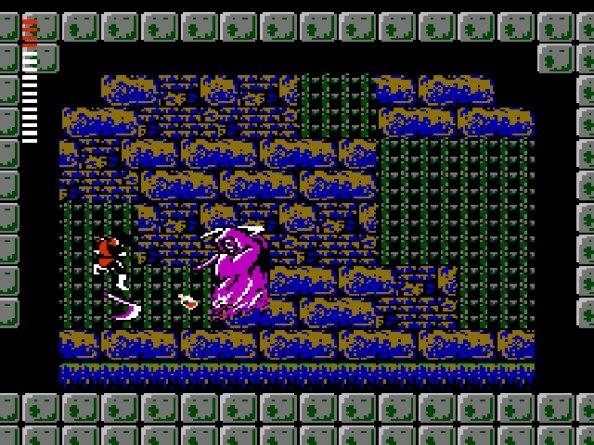
Ah, the Halloween season is now in full swing…by which I mean it’s late-October. And although I can use the month to justify a spurt of survival horror (the likes of which may resurface in December or January, considering my recent purchases), it’s important to remember that not all horror is “survival.” Well, technically speaking everything is survival. Mario has a strong desire to avoid Bowser’s incinerating halitosis, Pikachu tends to fight more effectively with regular trips to the hospital, neglecting your tamogachi/giga pet may have no lasting effects but makes you feel like a careless murderer, and whenever I leave my house I tend to subconsciously scan the area around me for ways not to die. But I digress. What type of writer would I be if I let an October slip by without reviewing a game from a series arbitrarily chosen to represent horror? This year, having been derelict in games from non-disc systems, I thought I’d dig into the one NES Castlevania game I’ve as yet overlooked, Simon’s Quest, in which Simon Belmont slaughters armies of werewolves, undead, and even fucking chtulu monsters, but still reacts to water like a cat with a heart condition tied to a bowling ball.

RetroArch-0731-142326

You know, I always hoped those two would get together. Now that Simon has craptivated the vrampire’s heart, they might move on to krissing, or even something more serious, like frucking.

The story, as told by the instruction manual, picks up where the last game left off (not yet realizing that sequentially numbered games have to skip along a timeline like Quentin Tarantino at Old Country Buffet). Simon Belmont has gotten a bit cocky after putting the legendary vampire king to rest “once and for all,” but a beautiful woman appears to him in a vision and tells him he’s been cursed. In order to lift the curse, he has to assemble Dracula’s body parts, set them on fire, and then kill Dracula again, which sounds an awful lot like how he got into this mess in the first place. In spite of the fact that no intelligent, rational person would put their complete faith into a hallucination who gives them a dangerous quest based on some vague notion of a curse without providing so much as a description of what said curse actually does, Simon gladly accepts the quest.

RetroArch-0731-131723

The goal of each dungeon, naturally, being to locate the unguarded magic bowling ball and poke it with a stick you bought from the RE4 merchant.

Simon’s Quest feels like Konami looked back on the previous Castlevania title and felt it came off a little heavy on the castle without including very much vania. So this game gives you free reign of Transylvania, letting you do all the typical video game stuff like barging into people’s houses, slaying a disproportional amount of apex predators roaming the countryside and city streets, and rolling around in poisonous marshes with nothing but a stick to protect you. Along the way you can buy weapon upgrades and find or buy items that augment your skills and abilities. Simon’s Quest is the hipster Castlevania—it was doing Metroidvania before Symphony of the Night made it cool. Granted, this early attempt at flirting with an interesting idea feels about as awkward as my first middle school dance, complete with the raging erection over something that hadn’t quite developed yet, it’s definitely a good thing even if no one involved had any idea what to do with it. (An open map with branching paths clearly had a lot of potential, but after descending into a dark, murky cave, the last thing I expect to find is a warm, inviting town.)

2016-07-09 08.11.48

“There! That’s how you put a dead body together!” [Victor Frankenstein shakes his head slowly.]

Case in point, item collecting is fun in Zelda and Metroid, but despite being a horror game, it felt…let’s go with “out of character”…for Simon to wander through the countryside with Dracula’s viscera stuffed into his pockets, whipping out various body parts like his own personal multi-tool, or wearing them like the latest fashion trends. Furthermore, I’m not sure the random assortment of body parts Simon finds would, even accounting for dark magic, add up to a vampire. Forgoing the usual collection of torso, legs, right arm, left arm, head, Simon instead collects Dracula’s rib, heart, one eye, a fingernail, and somehow this curse-breaking spell can get DNA information from Dracula’s ring. Considering both the lackadaisical effort in reuniting the scattered remains of the vampire and the fact that none of those things actually burn very well, it’s no wonder that Vlad comes back to life at the end for one last hurrah as an obligatory final boss battle. Although to his credit, he’s quite a bit smarter than Gannon. In Zelda II, Link quests to stop the pig lord’s revival. In Castlevania, Dracula gets Simon to do the dirty work for him. (But then again, that makes a lot of sense if you’ve ever seen Captain N.)

RetroArch-0731-140723

One hand on the railing, feet firmly on each step, no sliding down the banister and you can slay those monsters *after* you’re on solid ground!

Typical NES Castlevania controls apply here. Simon still moves like a drug mule running Ambien and one of the condoms broke. He can equip secondary weapons that by the end of the game kill enemies as effectively as coughing on them and hoping they come down with a severe cold in a few days. Fortunately you can upgrade your whip, permanently, four times, and the fact that these upgrades are spread out over the game makes it feel like something a little more valuable. In the original—as well as Castlevania III and many of the games to follow—you only have to whack a few candles and if you don’t have a fully upgraded weapon after breaking open two or three of these waxen piñatas, it feels like the game has cheated you. As usual, going up and down stairs is a bit of an ordeal, as this brave, Herculean vampire slayer also epically listens to his mom when she tells him not to screw around on the stairs: he refuses to run, jump or throw weapons, and will only whip enemies providing he can keep one hand on the railing at all times.

RetroArch-0731-124550

And, lo, Jesus said unto his disciples, take care of the poor, but let them not into the house of the Lord during the zombie apocalypse, for yea, we have a good thing here and outsiders may forsake us.

As one of the earliest games to have them, Castlevania’s night-day cycles makes the game interesting…if by interesting, you mean infuriating when you’re looking for a shop and arrive just as the sun goes down so the shopkeep won’t let you inside. Night prevents Simon from entering buildings. Monsters double their life total, and drop more hearts. Of course, since Simon and Link shop for wallets at the same 8-bit store, he can’t carry more than 256 at a time, so night usually just means harder monster and standing on a wall, flipping through facebook while you wait for the sunrise.

RetroArch-0731-151740

Long overdue for retirement, Death practices his golf swing.

All in all it’s a rather odd game. Often maligned for its confusing layout, unclear purpose, and depending too much on backtracking, I have already pointed out that the layout, purpose and backtracking with new items to access new areas put Castlevania on a lot of people’s map with Symphony of the Night and other metroidvania style games. But I can’t disagree that something is wrong with Simon’s Quest—it’s boring! While other games are detailed and use vibrant colors, this one looks like Konami painted it with their toddler’s water-color set where all the paints have mixed together. The enemies, even at night, put up only a token resistance. All the dungeons are staffed by the same bored and confused skeletons. There are only three real boss fights, and even Death comes at you with the defeated apathy of a cop who’s ready to retire because he’ll never stop the endless wave of life he’s dedicated his…life…to stomping out. When you die, you restart with full health on the nearest safe ground to where you were, and don’t lose anything except hearts—if you have to continue your game—but like I said before, this punishment is like pouring a single bucket of water into the room with you to deprive you of air. If you haven’t played this game before, pretty much all you’d need is a decent map and you could get through the game in an hour or two.

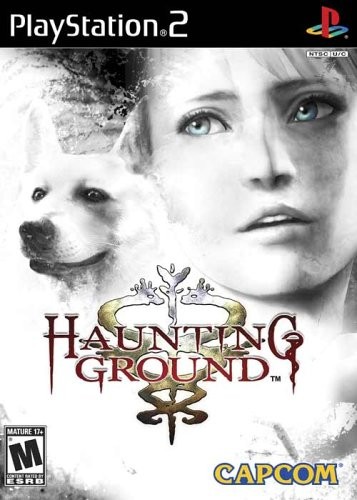
Haunting Ground – PS2

HauntingGround_NA_PS2cover

Rest of the Herd

Gary Larson cartoons are not easy to come by online.

I don’t understand horror. Don’t get me wrong, I like it well enough, but when a zombie punches through an oak door that would have shattered a karate master’s arm to the elbow and the people watching the movie with me engage in a spontaneous spelunking into the depths of the couch cushions, I don’t really get the panic. Ghost movies, too. They all use the same, cliched haunting tricks. The room is empty, and the chair moves by itself. Terrifying! Based on popular movies—strike that—based on the crap that Netflix posts because every college student with a camera is so desperate for their homemade found footage film to be seen that they practically give away the rights, you’d wonder why ghosts go through all the effort of returning from the dead to wreak bloody revenge and do nothing more than mess up the living’s feng shui. But then, maybe it’s the rest of the herd that’s gone insane. I remember a creative writing assignment in eighth grade that focused on horror. After a dozen stories about ghosts and monsters and people screaming and running, the teacher read my story—narrated in the second person (“You” instead of “I” or “He/She”)–where the readers find themselves jumping at shadows, alone in the woods. When we finally coaxed the other students to come out of their backpacks, I realized maybe I actually did understand horror.

Breast2

Breast physics courtesy of CG Animators who have never actually seen a naked girl before.

That issue came up for me again as I tried to justify the $80 price tag of “Haunting Ground.” The game’s pacing ripped along at glacial speeds, the combat is as thrilling as a Gus Van Sant film, and 36-Ds describes both the protagonists breasts and last three years of high school. But at the same time, there’s something unsettling enough about this game about castles, alchemy, cloning, and Frankenstein monsters. I think it’s because it feels like it could really happen.

Breasts

Normally when someone’s scared, they only lift their eyebrows.

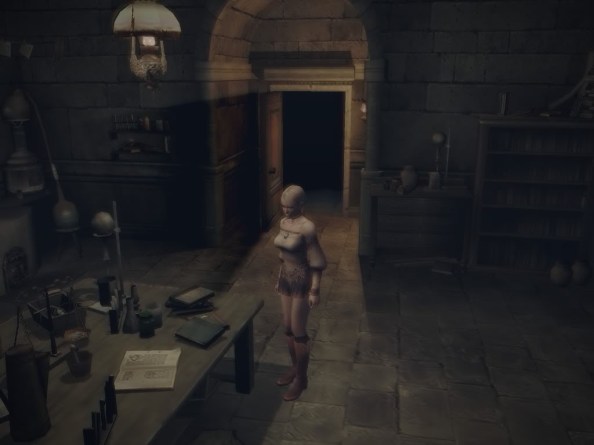
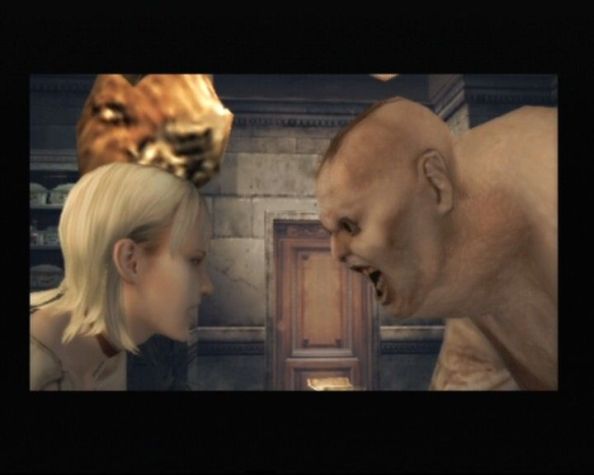
Maybe I should explain. The story follows Fiona Belli, a young girl with a heart of gold, the breasts of a goddess, and the brain of a sea cucumber, who wakes up after a car crash to find out she’s inherited a big, gloomy castle with a definite Luigi’s Mansion vibe. While first wandering the castle, Fiona encounters two things. One, a white German shepherd named Hewie, who takes an immediate liking to the girl, follows her around, and obeys her every…fifth or sixth…command. Second, she runs into a man with the body of Hodor and the face of Smeagol, who looks between her and the doll he’s holding, chucks the doll aside, and with an excited look, grabs his crotch. When a grown man reaches for his junk with a childlike gleam in his eye, you know only two things can come next. Either he’s about to vigorously molest and/or rape you, or he’s about to perform “Smooth Criminal”…and then vigorously molest and/or rape you. Much like in the Clock Tower games that came before Haunting Grounds, Fiona has the combat prowess of Winnie the Pooh, and so the true challenge of the game is not to fight and defeat enemies, but to flee and evade them.

Daniella

The maid, Daniella, tries to kill Fiona. Hewie Lewis tries to save her with the Power of Love.

Fiona has several options, most of which give way to “run like hell,” which can take anywhere from a minute or two to a half an hour or more. She can order Hewie to attack, which if successful will buy her a few moments to put distance between her and her pursuer, but will more often simply alert her to the fact that the dog has wandered off and is likely halfway across the castle rolling in something interesting that he smelled. (This gets especially frustrating about halfway through the game when, in a cut scene, Fiona manages to get Hewie to leap up a statue and place a key item in a dragon’s mouth, but the fucking dog still won’t come when you call it.) You can kneel down to all the effect that kneeling would help you escape from a real-life stalker in a parking deck, or if you have a good head start and know where you’re headed, you can dive into one of the castle’s…four or five…hiding spots. Each of which you can only use once. If you’re lucky, you’ll manage to shake your stalker, after which you can go back to whichever puzzle you were trying to solve when you were interrupted (Note to contractors: If you ever get a request to build a room that only appears when you insert a statue into a model, or a door that won’t open without three crests, a diamond key, and the death of your trusty henchman, call the cops. Ain’t no one wants that shit unless its for some evil, H.H. Holmes crap.), at which point you’ll likely get interrupted again before you can figure out the solution.

Smeagol

Smeagol, after discovering that Pizza Hut not only delivers, but tastes better than raw fish.

The game is frustrating, time-consuming, and a bit slow paced, but definitely worth playing for the unique and subtle story. I can’t think of another title that doesn’t salt its gameplay with jump scares like it were preparing it for a year-long sea voyage, and none of the villains parade around in viscera like a burlesque dancer from a Saw movie. Haunting Ground relies on a more organic sense of horror generated from tense, creepy situations and semi-realistic villain motives. Your first adversary chases you with an adolescent lust and a poor understanding of personal boundaries. After dealing with him, you find yourself stalked by an older woman who is literally jealous of your womb and feels incomplete because she’s not as young, healthy and fertile as Fiona. Next comes two much older—several hundred years older—men who want to make her pregnant and expect her simply to, well, lie down and take it without putting up any complaint or personal choice in the matter. For one reason or another, every enemy in the game wants you for your womb and doesn’t care what you think. It doesn’t take much in the way of imaginative gymnastics to look at Fiona as the poster child for modern feminism and the pro-choice movement, not for any personal inner-strength she portrays (I’ve seen graham crackers hold together under more pressure than this girl), but for presenting realistic concerns in a way that is understandably scary.

Debilitas

Dog leaps in to save Fiona, who stands there like a confused cheerleader. Meanwhile, Dog comes down with a case of athlete’s tongue.

And it’s all presented subtly. The game gives you a handful of cut scenes, but none of them are as frightening as crawling under a bed and hearing someone walk around the room, only able to glimpse occasional looks at their feet from a limited field of vision. Or hearing sounds off-screen and trying to interpret them—depending on who catches you, the sounds overlaid on the game-over screen can sound like a brutal rape, or an insane woman removing your reproductive system with all the care of a loose tooth tied to a door knob. Items and journals you find, as is common in survival horror, give you some back story, but it doesn’t unnerve you the way that hearing Hewie growl at something in the next room does. Throughout the game you have to keep yourself from losing both stamina and composure, but they’re almost superfluous when the player actually starts to become unhinged while sitting on the safe side of the screen. (Although I did rather enjoy the boss fight where Fiona, Hewie, and the enemy had all lost stamina and spent a good five minutes chasing each other around the room as though they had just been released from the ICU.)

Yes, the game has flaws. No, as far as video games go it’ll probably never rank up with Chrono Trigger, Resident Evil or…I don’t know, what the hell do people like these days? Let’s go with Nintendogs. (Hah. Recycled Family Guy joke.) Fiona is terribly frustrating to control—dear God, woman! Just stomp on his head a few times while he’s pinned to the ground! Or take the maid’s weapon from her! Don’t just stand there wallowing in your own cowardice and likely a few bodily fluids! (Hah. Recycled Futurama joke.) And the dog is even worse, obeying all your commands like an angry teenager just an MIP-scolding away from joining the French Foreign Legion. Probably the most frustrating aspect is the system for crafting items and equipment, in which you essentially have to line up a ten-part slot machine in order to get anything good. (Naturally, the one time I actually crafted a protective necklace, I died and lost the progress)

Cheap Death

Oh yeah! I forgot to mention…sometimes the castle just kills you without warning. Save often.

But for the most part, the game is unlike other video game experiences, and the $80 price might actually reflect the quality of story, rather than just Capcom’s lack of foresight and failure to make enough copies for people who would want it.

Michigan: Report from Hell – PS2 (Europe)

Loved

I loved you, but if you can’t prioritize me over that big gaping hole in your abdomen, I don’t think this relationship is going to work.

In the Firefly episode, The Train Job, they pull out a map of the route the train takes. From west to east, it runs from Hancock to Paradise City. This was a big hit in Northern Michigan, where it takes roughly five hours to drive from Hancock in the west to Paradise in the East. Michigan, you see, has a bit of a geographical identity crisis. Not only can you visit paradise, but its only a ten-minute drive from Florida to Alberta, and if you’d like you can stop at Phoenix on the way. We have a small town, Sault Ste. Marie, that’s named itself after the thriving Canadian city just across the water. It also has Christmas 364 days a year, and nowhere is happier than the Gay Bar…in the town of Gay. And that’s all just in Northern Michigan. Down in the Lower Peninsula, where the people don’t realize we call them trolls (because they live below the Mackinaw Bridge), things aren’t quite as nice, but not only did they christen a town named Hell, but it regularly freezes over. So naturally when I found out about the Europe-exclusive game, Michigan: Report from Hell, I thought it deserved at least an hour of my time. And as luck would have it, it deserved two.

HELLFirst of all, let me say that setting Michigan: Report from Hell in Chicago borders on dishonest. It’s like opening a bottle of Mountain Dew and tasting Diet Coke. Or flipping open a Pizza Hut box to find a hubcap from a Winnebago. I think we can take legal action against Europe for wasting a title like that. Second, I don’t usually believe that something can be “So bad it’s good,” but if this unique piece of…survival horror was trying to elicit a strong emotional reaction from me, it succeeded beyond any horror game I’ve ever played. If it was trying for fear, though, then it may have better luck selling football equipment at an ICU.
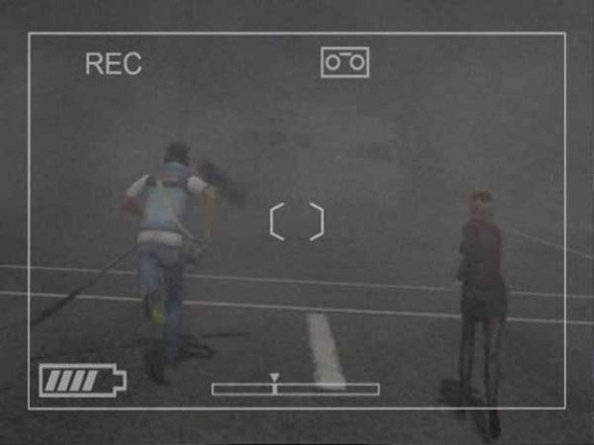
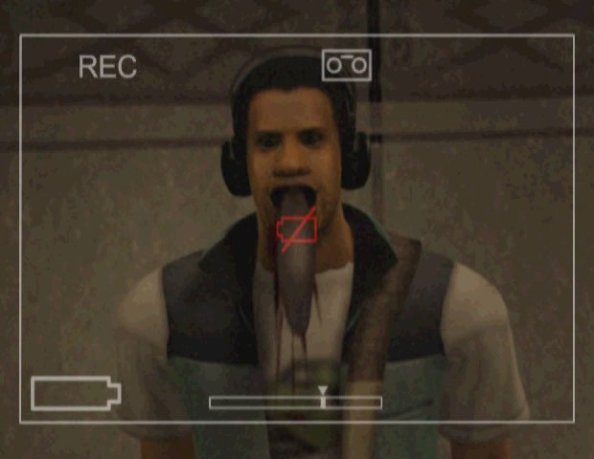
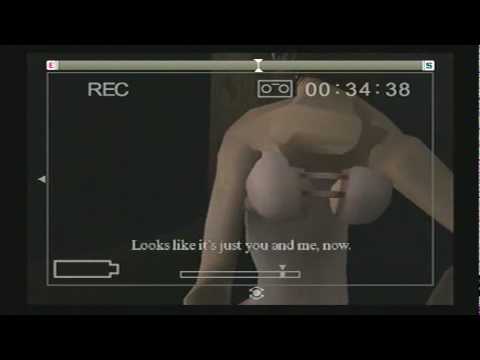
You play as a cameraman for a Chicago news team. You also apparently have no arms and have grafted the camera onto your forehead because you can’t actually interact with anything other than to ram them with the camera, a move that takes more time to charge than a super kamehameha. Instead, you zoom in on objects to examine them or to tell your reporter to do something for you, like opening doors. The goal is allegedly to alert the reporter to the right objects, puzzles and monsters to keep them from stepping into, let’s assume, a portal to Hell. In reality, these reporters are more fragile than a Christian girl’s hymen on prom night. One of the first reporters I had to babysit saw a spider and literally died. I hadn’t even made it to hell.

Escape

He’ll never think to look for us on the other side of that line!

The story opens in a thick fog. Apparently Chicago is known for its warm, sunny climate and perpetually mild weather because the government has ordered an evacuation. The game says this is because they don’t know the cause of the fog. Apparently no one ever told them how water condenses out of humid air as the temperature drops, or that such a thing happens rather frequently along Lake Michigan (Oh, hey! That explains the title!…poorly.) On your first assignment, a bloodied woman staggers out of the mist and into an interview with a reporter who had, in the tutorial only moments before, suggested that you stop and help people if they clearly needed it. (You know, sometimes I truly envy youtubers who can actually show you this shit) The girl decides she’d rather be devoured by a monster, frightening the reporter so much she turns around and high-tails it to safety nearly ten whole meters down an unobstructed road to her news van. Then, naturally, the monster eats her too. Ah, the wonders of natural selection.

Action

Now let’s re-hash this several times before you bleed to death.

Technically, the first level starts with your next reporter. Standing in a ruined hotel room, she receives a phone call from a panicking girl. “It’s okay,” she tells the girl in a calm, unhurried tone. “Stay where you are. We’re coming to help you. You’ll be safe. I promise. We’re on our way to rescue you.” Because the speediest rescuers often get stuck on one thought like an autistic myna bird. And if responding to her panic like Ferris Bueller’s econ teacher accidentally instilled too much confidence in her, she immediately rushes downstairs to give a ten-minute pep talk to the sound guy, who’s dramatically torn up over the death of the first reporter. Apparently, though, reporter #1 “knew the risks” when she signed on to the job. I’d like to see my local news station’s liability form for “may get devoured by hell spawn.” And then she runs over to a fountain machine, can’t pour herself a Pepsi, sees a spider, and if you don’t squish it on the camera lens, she dies. No health bar, no second chances, thankfully no restarting the level and sitting through the inane, repetitive dialogue. She just dies and the game dispenses the next reporter like the next pinball on your quarter.

Brisco

The sound guy turning into Gene Simmons would have been very exciting…if I had actually seen it while playing the game.

And that pretty much sums up my major complaint with the game. The concept is interesting, but when the phone rings and the game feels I need a character to explain, “Hey, that’s the telephone,” I start to think I may find better things to do with my time. After getting a reporter who doesn’t have the survival instinct of a lemming, I got to wander around a nursing home for a bit. That’s when I noticed that while you can use the camera to get the reporter to open doors and search for things, she’ll only open whatever door she’s standing by and will only search for items within her reach. This means the game offers only slightly more challenge than playing I Spy while treading water in the middle of the Atlantic Ocean.

Erotic

Rendered by someone who clearly has never had sex with a woman before. Aren’t you turned on by women who store cherry popsicles between their legs?

I didn’t stick with the game long. I encountered a woman who I assume is Reporter #4, strapped to a pool table in such a way that I felt like I had interrupted something way more interesting than Report from Hell. She asked Reporter #3 to set her loose, and rather than cutting the straps, we had to comb the area for missing pool balls, then rack them up with no more hints than a supposed poster on the wall darker than Dick Cheney’s soul. That’s about when I had had enough.

Softball

This is either erotic, or a dolphin who swallowed two softballs and then died.

It’s a great concept, I’ll give it that much. You’re sufficiently disempowered to make a great horror protagonist. There are moral choices, and even the option of scoring “erotic” points for filming compromising shots of the reporters. Unfortunately in two hours of gameplay I encountered absolutely none of that. Personally, the only thing this game is good for is an episode of JonTron.

Luigi’s Mansion – Game Cube

Luigi6

I had a teacher once say about procrastination, “If you put something off long enough, eventually something will happen that means you won’t have to do it at all.” He used to work at a mental health clinic, and said that there were some patients where it just didn’t make sense to file the discharge papers. They’d be back. Soon. And if their discharge hadn’t been filed, it would be like they’d never left. Still, I maintain this blog as a way to write on a regular basis and an attempt to have a bit more skill at humor than, say, a dead mackerel, Rush Limbaugh, a Perkins Mammoth Muffin, or Will Ferrell. As such, I sometimes struggle to keep things posted on time, and every game I play (and recently, every book I read) deserves equal attention online if not just for the purpose of buying me time. So even though I played this game months ago, I only got around to writing three paragraphs at the time, and now I really need to sit down and finish it. Bonus points to readers who can guess which three paragraphs I wrote immediately after, and which ones sound old and stale, like a dead Mackerel, Rush Limbaugh, a Perkins Mammoth Muffin, or Will Ferrell.

Luigi2Sometimes I question whether it’s healthy for me to write about every game I play, or whether I’m intentionally turning myself into a sour cynic, hell-bent on juicing every flaw out of a game for lame attempts at comedy. And after attempting a run at Mario Sunshine, I looked at the copy of Luigi’s Mansion I acquired with that same sad look I give the bathroom door at 4:00 in the morning–it’s going to happen, but I don’t have to like the inconvenience. But while it doesn’t happen often, occasionally I get so wrapped up in a game that I forget to think of anything funny to say about it. Which means I’m still in a tough spot, even though I liked the game. So I guess I’ll throw out one of my simplified reviews: It’s like Fatal Frame with a vacuum cleaner.
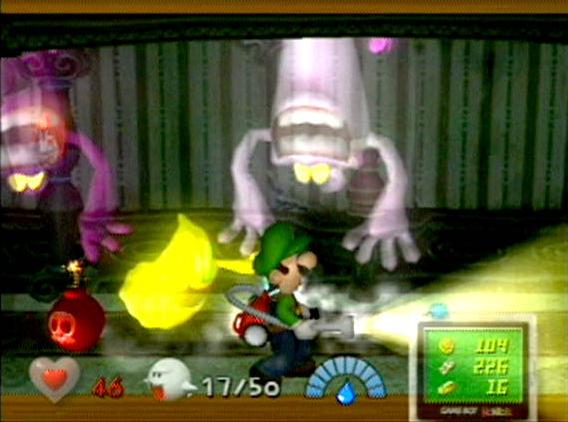
Luigi1

…he slimed me.

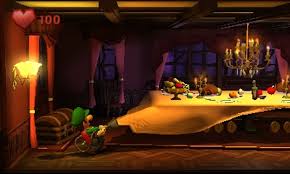
The game opens with Luigi on his way to a mansion that he won in a contest he didn’t enter. Inside he finds a bunch of ghosts and Professor E. Gadd, a goofy little scientist who seems to speak a dialect of Ewok. Gadd is experimenting with the idea of Ghostbusters’ nuclear-powered proton packs: namely, if a common, household vacuum cleaner wouldn’t be a safer, cheaper option. (Spoiler alert: it is.) When he meets Luigi, he recognizes hero potential, and not the kid-gloves and pulled-punches potential of Mario is Missing. But as it turns out, Mario is, indeed, missing, which happens to be the only time Luigi can get any screen time. So rather than leave his brother to rot and run off with the princess himself, Luigi straps a hoover to his back and starts sucking down all the ghosts that got loose in his mansion.

Luigi5

“Jesus fuckin-a-christ! I sure-a hope I don’t get-a my face devoured by-a those skinless-a hell hounds!”

Luigi’s Mansion represents an odd foray by Nintendo into the world of survival horror. Screw you, Wikipedia, for listing it as action-adventure. Let’s run down a checklist, shall we? The character searches for a missing sibling. Check. Luigi wanders through a creepy mansion filled with ghosts, looking for keys that help him get into other areas. Check. When accessing a new area, the game shows a door “loading” screen. Check. Obnoxious footsteps that make you sound like a Dutch clog-dancing tournament. Big Check. For Bowser’s sake, Luigi can’t even jump—but the ghosts can. The game hits every cliché in the survival horror book like it was trying to get an “A” on the test. However, you don’t often see genres mixed into this one. If you play survival horror, you can damn well be certain the game will either try to scare the ammo out of you, ignite a passionate wrath…with awful controls…or lull you into a coma of boredom with horror tropes and jump scares. Luigi’s Mansion turns it into a cartoon, a rather amusing one, at that. The ghosts each have their own personalities (seemingly straight out of Ghostbusters). Luigi himself displays a level of fear that could give a whale a heart attack, which in addition to making him more endearing than Mario ever was, implies either a great bond of love and devotion to his brother, or a pretty severe case of codependency and/or Stockholm Syndrome.

Luigi3

Am I interrupting something?

Tank controls have been a staple of the genre since Resident Evil. “We’ll have them fight zombies, but conserve ammo!” “But the zombies move more slowly than social progress in Alabama!” “Well, lets just kick the controls in the head. By the time they figure out how to run away, their brains will be Cap’n Crunch for zombies.” However, Luigi’s vacuum cleaner controls feel both challenging and meaningful. I absolutely despise fishing (constantly being told not to talk or I’d scare the fish…which I later found out was just a bullshit excuse to shut me up), and refuse to do it even in Zelda games. But I imagine the satisfaction of reeling in a ghost is a lot like what people who enjoy fishing must feel when they finally bring in that barracuda they’ve been stalking.

Luigi4

The Flowers are Still Standing!

One last thing to say about this game, the music is catchy. So catchy in fact that every so often Luigi himself starts humming nervously along with it. It’s a nice little ditty, and if you decide to play the game I certainly hope you like it too…since it’s the only song they give you for the entire game. “Sorry, Luigi. Even Nintendo doesn’t want to waste time on you, so here’s something I plunked out on my piano this morning!” By the time you finish the game, that song remains the only truly horrifying thing left to face.

South Park: The Stick of Truth – PS3, PS4, XBox 360, XBox One

Kupa Keep
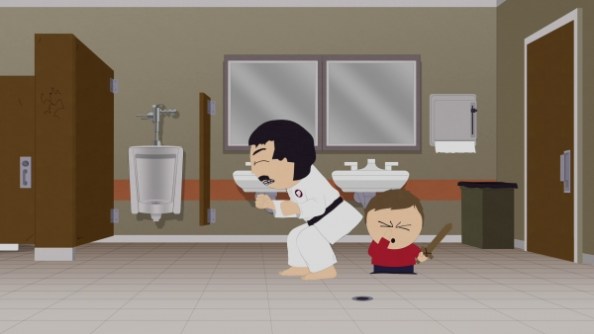
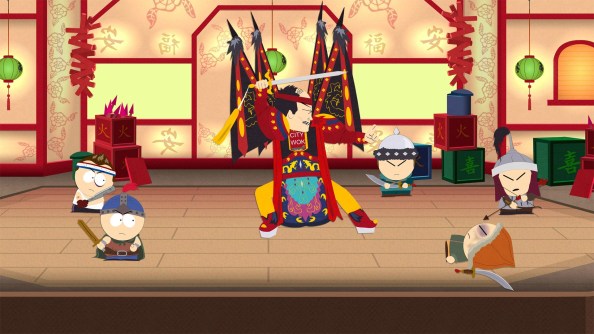
The world of RPGs is in dire peril. The once-noble Square-Enix has abandoned its loyal subjects and now appeals to the lowest common denominator. Sacrificing gameplay, story and style, they have heaped enough muscles onto their protagonists that each one qualifies as its own Olympic wrestling team and armed them with enough firepower to give the NRA spontaneous orgasms. Meanwhile, Nippon-Ichi floods the market with games written as though someone had copy-pasted a bunch of fan fiction pdf files and didn’t notice that the formatting fucked up. These games consist of one bombardment of verbal diarrhea after another that connect repetitive and clunky battle systems that work as well as an NES with broken connector pins…after someone threw it into the Grand Canyon. Bethesda offers us reprieves with an occasional Fallout or Elder Scrolls title, but these come only slightly more frequently than a nun and have so many bugs that the games require heavy fumigation. But in our hour of need, two warriors emerge from the darkness, standing tall over everything we’ve lost. Armed with nothing but their wits, a love for RPGs, and a virtually unlimited amount of financial support based on the success of a major TV series running for nearly two decades, Trey Parker and Matt Stone stepped forward to give us their role-playing masterpiece, South Park: The Stick of Truth.

Homeless

Beat up the homeless so they leave town. If South Park doesn’t have homeless people, they’ll look more compassionate.

The game gives you control of The New Kid, also known as Douchebag, who arrives in South Park just in time to be swept up in a long-term game between Stan, Kyle, Kenny and Cartman, that more resembles a minor gang war than a 4th grade playtime. Cartman leads the humans as the Grand Wizard of the Kingdom of Kupa Keep (KKK), who possess the Stick of Truth, the most macguffiny macguffin ever conceived for fiction. Whoever controls the Stick, they say, controls the universe. You’d think that control of the universe would include the power to keep the KKK’s rival faction, the Drow Elves, from stealing the Stick. But of course that’s the first thing that happens, giving Douchebag the impetus to begin his quest.

Cartman

The Grand Wizard of the KKK, using fire to smite his foes.

It’s sad for me to say this, but a game that lets you fart into your hand and throw it at enemies is better than anything that Square-Enix has put out in at least ten years. But it happens. Frequently, actually. Because parodies have to be so tuned into the tropes, characteristics, and weaknesses of their genre, they often become paragons of what they’re mocking. When I first saw the Venture Bros., I felt like re-watching Johnny Quest, only to find out the series developed plot less than an episode of Scooby Doo and oozed enough racial superiority to bleach the Klan’s linens. I’ve read that Parker and Stone are huge fans of classic RPGs, which goes a long way to explaining why so many elements that frustrate players don’t appear in Stick of Truth. Random battles happen only enough to stay interesting, and the type of enemies vary enough that you don’t get into the standard RPG pattern of taping down the X button and going outside to mow the lawn. Many games use backtracking like a bra—the padding makes it look bigger and better, but once you strip if off you’re left with a deep-seated disappointment. Stick of Truth, on the other hand, has a fast travel service, but I found myself opting to walk across the map because it had enough interesting things going on in the background. But this begs the question, if the South Park creators know what players want because they are fans of RPGs, what exactly do full-time game developers do for fun?

Class

The game focuses heavily on story and plays like an extended episode of South Park. Playing to their strengths as writers, Parker and Stone have found new and interesting ways to incorporate their brand of humor that should have gone stale in 1998. They do avoid their usual satirical style, most likely so that the game has a shelf life longer than grocery store sushi, but do rely heavily on social media trends like Facebook and Twitter. They also center a quest around Al Gore’s search for Manbearpig, their rather embarrassing comment on climate change denial, but I can forgive this. Like drunken antics at a college party, we can look back and admit something might not have been a good idea, but was still funny as hell.

Butters

If there’s one complaint I have about the game—and I can’t believe I’m saying this—it’s the overly complicated fart mechanics. Trying to pass its gas off as a magic system, farting works more akin to Skyrim’s dragon shouts. Each of the four flatulent skills you learn requires a specific combination of inputs with the right and left control sticks. Holding the right stick in the down or up position allows you to change direction, tune a frequency, or steer with the left control stick, and you can let rip your attack, unleashing chemical warfare in the form of deadly gases, by changing direction with the right stick at the right moment. Farting in the Stick of Truth demands precision, the type you need to throw a hadouken fireball while tuning radio dials, adjusting rabbit ear antennas, and filing your taxes all at the same time. Fortunately, the game only requires you to fart in one or two battles, and it’s a lot easier to do it on the map, so I didn’t have to worry.

Fart

Yup. This is happening. And it’s a GOOD game, remember.

There are other problems, to be sure. The game feels too short, and a little sparse on available quests. You have companion characters to use in battle, the four main stars, Butters and Jimmy, but halfway through the game, they kind of peter out and don’t help much in battle other than to use items. But that problem corrects itself by making the game progressively easier as you learn how to use the battle system, eliminating most of the challenge even on the highest difficulty setting. But still, I can’t praise this game highly enough. It shows us what PS3 era RPGs could have been, if only game developers weren’t sitting around like corporate monkeys, throwing their feces at traditional players in hopes of selling something to any moron with an xBox and a copy of FIFA 2013. The industry’s behavior almost sounds like an episode of South Park…

Summons

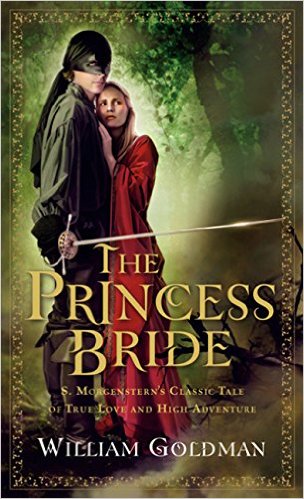
The Princess Bride – William Goldman

PrincessCould there ever be a better tale of winning love, fighting evil, pursuing evil and buckling swashes than The Princess Bride? Yeah, probably. But the movie is still a cult favorite today, and since I don’t want people coming after me with candles and ceremonial daggers and other cultish cutlery, I have to find a tactful way of trashing the book. Much like the Elixir of Life, the Loch Ness Monster, flying cars and universal wifi, mentioning in public that a movie might be better than its book runs the risk of having people cart you off to a hospital and giving you a coat with extra-long sleeves. Nevertheless, I’ve read the entire main story, some of the forwards and special messages, and the first few pages of the “sequel chapter,” Buttercup’s Baby, and I’m so underwhelmed with the story that I stopped writing in the middle of this sentence because cleaning up a backpack that my cat peed on sounded more interesting.
The Princess Bride, as a movie, is actually pretty good. I tried to pin down the class of people I remember from high school who would have heated it up and injected the film straight into their veins if they knew how. Of course there were the love-struck girls, the girls for whom torrid love affairs were a constant source of entertainment, the students of unknown sexuality (S.O.U.S.) who liked the idea of pretending to be straight while still dressing like a pirate, the drama students who routinely laugh in the face of copyright infringement by writing illegal stage adaptations, and the hipsters who just appreciate the witty dialogue. In fact, the film is so unobjectionable, that if we could capture its essence and spritz it around Washington D.C., we’d probably put an end to American politics as we know it.

So with such universal acclaim what does the book add to the experience? Short answer: about 400 pages and eight hours. Pretty much everything that happens in the film also happens in the book. Westley works on Buttercup’s farm until he declares his undying love by getting on a ship and sailing a few thousand miles away from her. Prince Humperdinck finds her, promotes her to princess, then plots to have her abducted and murdered because he’d rather start a war with a neighboring country than bang a hot chick every night. Westley returns to chase her abductors, gets captured and killed by Humperdinck. Fezzik and Inigo decide they’re so inept that they need help from a dead man, Miracle Max brings Westley back to life, then he saves the day.

There are cuts that were made for the movie, of course, but you could shave the gristle off of a steak and I’d miss it more. Rather than just Inigo’s back story, Goldman tells us about how Fezzik never wanted to be a wrestler. He repeats ad nauseum how much Humperdinck likes to hunt as though it were a vital piece of propaganda meant to sway the mindless masses. And Fezzik and Inigo have to fight their way through a Zoo of Death to save Westley, which mostly serves as an excuse to exchange a few wisecracks and play out a gag based on Fezzik’s hobby for rhyming.

But the major difference is the author, William Goldman’s biographical information about abridging the book, originally written by S. Morgenstern, that his father read to him as a child and that he wanted to adapt for his son Jason. These sections of the book are personal, sentimental, deeply meaningful, and completely fictional. Morgenstern, a contemporary of George McFly, Beedle the Bard and Kilgore Trout, is only slightly less fictional than the country he hails from. Goldman says he has a son, but in reality only had two daughters, meaning he talks about his children exactly the opposite way as would a disapproving father after his son came out of the closet. He also throws in stories and anecdotes about Hollywood and celebrities he’s met with all the veracity of a supermarket tabloid. The only thing he’s missing is a heavily photoshopped picture of a heroine addict he claims to be Andre the Giant after his stunning plastic surgery meant to fake his own death.

As the story goes, Goldman gave the book to Jason for his birthday, only to realize that his own father had heavily edited the story when reading it. Anyone who’s picked up classic literature will know that any highly respected author includes tangents so far off the main path of the story, they’re discovering new continents. Meanwhile, 21st century readers sit in utter confusion as to why they’re being asked to dwell on the spiritual philosophies inherent in whale lard for 200 pages. Morgenstern, apparently, is no exception, and Goldman constantly interrupts the story to tell us about a large section of text he cut out, and what is being described for how many pages and for what literary, satirical reason.

Now I have a master’s degree in English, I can recognize complex symbolism and metaphor on my first reading, and I pride myself in my skill for answering student questions with intelligent, well-thought out and meaningful arguments that I totally made up on the fly. But I have no fucking idea why Goldman wants us to know so much back story behind the story itself. His quest to eliminate long, irrelevant passages might ring a little more true if he didn’t replace them with even more long, irrelevant passages. Also, being more fictional exposition than fictional narration, it isn’t nearly as entertaining or—dare I say—meaningful as Columbo reading a fairy tale to the kid from the Wonder Years.

Lego Indiana Jones – PS2, PS3, Wii, XBox 360, NDS, PSP, PC

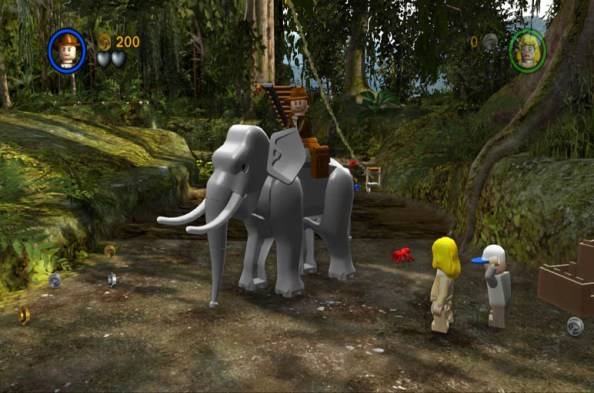
Indy1
I enjoy playing Lego games once in a while, but I could work with a metal detector, a team of bloodhounds, and ground-penetrating radar strong enough to take lewd photos of the earth’s core and I couldn’t find anything new to say about them. Indiana Jones would have trouble uncovering details that I’ve lost, and this review primarily focuses on him. Developer Traveler’s Tales found a formula that works. They recreate famous movie scenes with Legos. The player runs around collecting enough cash from dismantling the scenery to be dubbed “True something-or-other,” and throw in a fair dose of humor since they realize you can’t draw Picasso’s Guernica on a place mat with a box of Crayolas and expect art historians to publish articles about it for years to come. So for years they’ve been churning out the same products, a little bit stale, a little bit funny, but it’s something to do in the evening that hasn’t made me too sick yet. In that respect, the Lego series has much in common with McDonald’s.

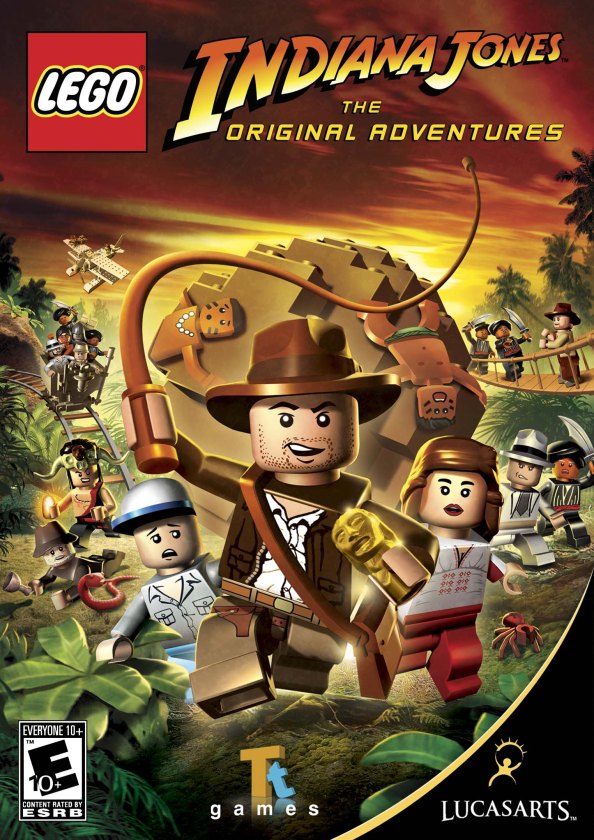
Lego Indiana Jones: The Original Adventures attempts to send the player through poverty-stricken areas of India, Somalia and Texas for a sobering look at the economic crimes of the rich. Just kidding! It lets you play through Indiana Jones’ original adventures! Although I don’t know why they have to specify “original” adventures as, thank Kali, they never made any more than the three. I suppose they could be comparing it with the Young Indiana Jones Chronicles, but that pretty much faded into obscurity during the mid 90s, gone the way of Surge, Jncos, and those shoes with the lights that flashed every time you moved.

Indy3

To digress a bit, I’ve always wondered why, exactly, the Kingdom of the Crystal Skull failed badly enough that South Park accused George Lucas and Stephen Spielberg of raping Indy. It has pretty much the same formula as the other films. Indy’s on a search for a magical macguffin with some divine significance—yes, maybe with so many legitimate, respectable religions in the world, picking the gods of anal probes and hallucinating rednecks may have somewhat detracted from the air of importance—and there are bad guys to beat to the chase, slightly comical action scenes, and a girl to win over in a way that looks James Bond look as charming as the guy who waits until last call to pick up the women everyone else rejected over the night. But maybe it is about the air of importance. Most Americans will understand the Ark of the Covenant, even if they’re not Christian, and the Holy Grail has literally become synonymous with something you desperately want to find. Maybe we don’t really know what a Sankara stone is, but rescuing enslaved children makes sense. Plus as soon as you see the cult leader rip out that dude’s heart and hold it up high as it bursts into flames (…while blaspheming the name of one of those legitimate gods I mentioned earlier), I think we pretty much establish he’s the bad guy and we want to take him down. Same thing with Nazis. Indy hates Nazis. Jake and Elwood Blues hate Illinois Nazis. Pretty much any person with an ounce of decency hates Nazis, so you don’t have to explain anything to people. Soviets, on the other hand…not as evil in retrospect. At this point in Indy’s life, it makes more sense for him to be fighting arthritis. And the skull of Beldar Conehead doesn’t seem like something that matters whether or not it falls into the wrong hands. Also, we never got a movie about an aging James Bond reuniting with the mother of one of doubtless dozens of children he’s fathered along his swath of destruction through the Cold War.

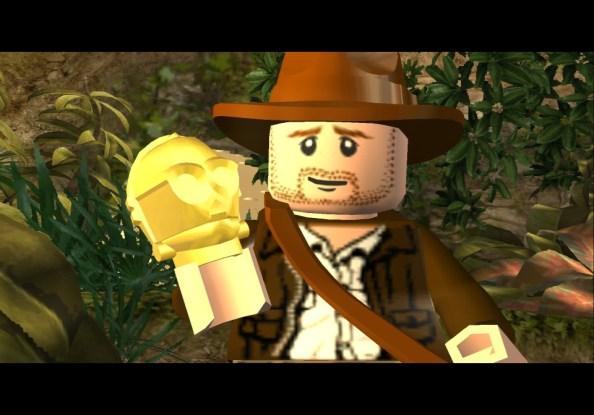
But back to the game…you punch things. As usual, the real objective in the game is to collect enough money to unlock characters to help find all the hidden items that, quite honestly, I stop caring about once the movie plots end. To be fair, you can punch them or whip them. Either way, when the scenery explodes and all that cash falls out, it feels pretty good. Not to mention the explosion sound it makes pretty much sums up the force required to separate Lego bricks. Other Lego games give certain characters innate abilities that help them progress through levels. While to some extent this game does that as well, you also have the option of picking up tools, like shovels, wrenches, guns, or books, and using them to interact with the environment. Or to launch a rocket at a Nazi. The problem in this mechanic lies in the fact that the button to pick up these items is the same as the one to use innate abilities. And Willie Scott’s innate ability is screaming to shatter glass. Often during The Temple of Doom, I found I simply had to switch characters if I needed to grab something or else I’d have to listen to Willie shrieking like a 12-year-old girl at a Justing Bieber concert while she ran around looking for just the right spot to pick up the item.

Indy2

Boss fights, as usual for Lego games, are so lame I feel comfortable diagnosing the game with advanced stages of muscular dystrophy. Since Lego combat tends to be as threatening and authentic as a trip to Taco Bell, nearly every major villain in the game seems to have attended the Monty Python school of battle. So each fight plays out like any girl I asked out in high school; they run safely out of reach, leaving me nothing to interact with but the room around me. Since most of the game consists of finding pieces and building things to progress, boss fights don’t really change up game play. The only difference is you have some prick standing by to laugh at you when you screw up. So yeah, exactly like dating in high school.

But really, whatever. It’s a Lego game. If you like Indiana Jones and other Lego games, you’ll get pretty much the same experience here. It’s fun. It’s cute. There are also a number of Star Wars cameos hidden throughout the game, including Luke frozen upside down in a wampa cave in Nepal. Which is good. Like I said before, you don’t want to take yourself too seriously

Epic Mickey – Wii

Epic Mickey2

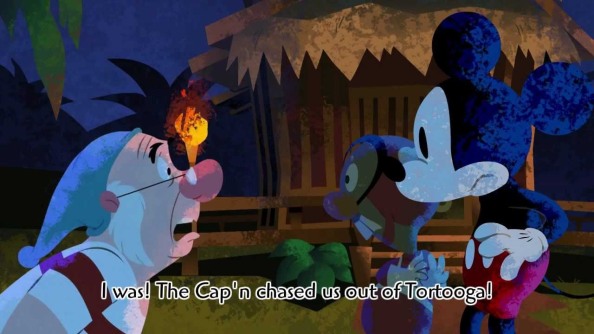
A gremlin serves as Mickey’s Navi. Gremlins spend the bulk of the game repairing busted machinery, which either indicates the Wasteland is so damaged that they can only repair things, or that Disney has no idea of what a gremlin does.

Mickey Mouse stands as one of the most recognizable icons of all time. Lately, the little black-faced rodent has been eclipsed by Mario, proving that Americans hate anything more complex than a plate of spaghetti and a stupid accent. Even so, Mickey has still won votes in every presidential elections since 1928. In 2008, he beat Santa Claus, Joe the Plumber, and Jesus, and with 11 votes nationwide, he clearly has twice as many supporters as Jill Stein. Perhaps that’s simply America’s attempt at saying they want a leader who’s animated, unlike so many half-dead politicians (and, you know…Donald Trump), but if Mickey has so much charisma that America would follow an animal who literally can’t feed himself or get out of bed without a team of at least 20 people (You know…like Donald Trump), then it’s a wonder that Disney holds the rights to such a famous piece of intellectual property and does nothing more with it than pass out cheap felt-and-plastic hats to kids who coat them with a gallon of saliva and drop them behind the couch as soon as they get home. Other than the short that ran before Frozen, I can’t remember a single Mickey movie or cartoon since The Prince and the Pauper in 1990, and his animated TV appearances reduce him to the role of an MC. However, Disney still allows him to come out of his retirement home every now and then to run around, wreaking havoc in the occasional video game, of all things. And nine times out of ten, as is the case with Mickey Mousecapade, Mickey Mania, Kingdom Hearts, and now Epic Mickey, the theme of that game is remembering all the classic characters Disney has used up and left by the wayside like a futon in front of a frat house.

Epic Mickey 2.5

A home for forgotten characters, unless Disney really wants to use one that people remember.

Kingdom Hearts, turned the lovable trickster scamp into a Norse God, a mighty warrior-king, vanquishing enemies with a legendary sword, clad in his armor of…bright red hot pants. (Because nothing says, “Where dreams come true,” like a story about hearts and souls being torn from a person’s spirit.) Epic Mickey follows that disturbingly dark tone, sending the titular hero into The Wasteland, a gloomy, twisted model of Disney’s theme park built by Yen Sid (Yes…the sorcerer’s name is officially Yen Sid. Because nothing says “Magic Kingdom” like following the naming conventions of the Satanic Church.) to house all of the characters lost or forgotten over the years,

goldfinger

Poor Goldfinger…he just wanted to be friends with her.

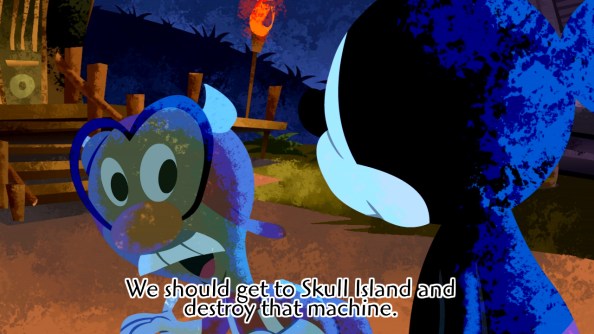
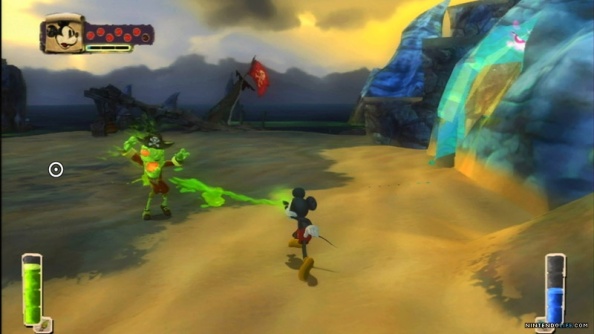
So short version, Mickey spills a jar of paint thinner on the model, which unleashes the Shadow Blot monster. We’re supposed to view this symbolically as Mickey eclipsing all the other characters and literally as the sin he must atone for. However, I can only imagine Yen Sid was planning some Old Testament style rampage, keeping that thing right next to the Wasteland. Mickey gets sucked into the model and absorbs some of the Blot’s aspects, which apparently means he gets a magical paintbrush that shoots out both paint and thinner and lets him hose down the environment like a porn star. Disney apparently decided that Mickey was wasting his potential to be a dick to people, and thought he could use a moral choice at the very least. You have the option to solve most puzzles by either obliterating part of the landscape with thinner or by repairing it with paint. Same option for enemies. You can convert them by slathering them in paint, at which point they swarm the unconverted and beat them with copies of The Watchtower until Mickey can’t get a clear shot even if the Wii Mote didn’t interpret cross hairs over the enemy as the desire to make Mickey ejaculate paint all over his shoes. Or you could straight-up murder them and get the health items and paint/thinner refills they drop. The only difficult thing about that decision is whether or not you want to see Mickey Mouse acting like Dexter. But that’s not to say the game is simplistic. You get to make a whole bunch of moral choices, like whether or not to find the scattered limbs of your animatronic friends and put them back together. Or the moral choice to help or deny the human pirate in his quest to woo the cow of his dreams. Congratulations on the bestiality quest, Disney. (Although it isn’t the first time you’ve swung that way…)

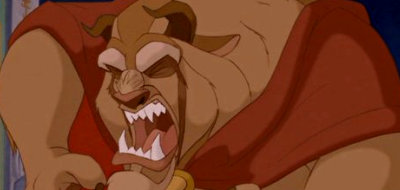
Beast

The Beast’s orgasm face.

Epic Mickey 4

Now you don’t have to walk under such a bland scenery element.

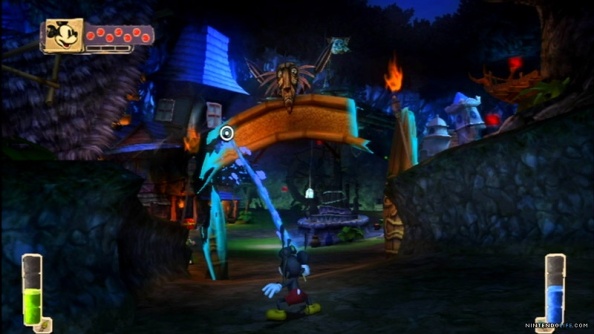
Still, the bulk of your time will be spent spraying your various goos all over the landscape, trying to find the occasional interactive spot. Other than that, any potentially clever gameplay that let’s the player express themselves artistically is pretty much just a way to spend the bulk of the 10-hour game wasting time changing colors from bright to dark. And even though the paintbrush does amount to nothing more than a glorified paintball gun, the enemies seem like a formality more than anything else, as they appear only occasionally and fight back with all the vigor of a severely depressed lemming. The game play isn’t as inspired as it could be, but it certainly doesn’t suck…at least not until the final stretch, when it shifts from “exploring the wasteland and taking on quests” to “avoiding holes like you’re jumping over a gonorrhea clinic.” My old nemesis. Designers who completely missed the point of Mario. These people think, “I like coffee! I’ll boil it down until it’s pure, black sludge, and then it will be awesome!” These are the people who read Harry Potter and then write their own 1000-page novel on quidditch.

Epic Mickey 3

Mickey pulling what I call “Judge Doom’s Dip” on a monster that just wanted to be his friend.

It’s not a terrible game, even if it doesn’t know where to end. If it does a saving grace, it’s that it’s actually pretty interesting to view Disney through a darker lens (although maybe not literally. Walking out onto dark sections of floor is more dangerous than Russian roulette.). And while a modicum of interpretation can usually reveal some dark, unintended message behind kids’ stories, Disney actually thought this out, decided “We want to show the misery our beloved mascot inflicted on all these characters by eclipsing them with his fame,” and then proceeded to buy the rights to Oswald the Rabbit, Walt’s very first character, for the express purpose of having him rule over the Wasteland, harboring a resentment toward the mouse. Because nothing says, “The Happiest Place on Earth” like a 90-year grudge held by a cartoon rabbit.