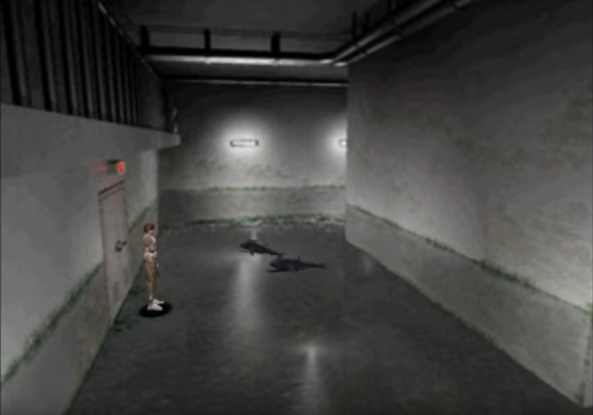
You have to give it to Rebecca: she finds an underground industrial complex with sharks flopping around on the concrete and doesn’t even flinch.
In 2010, I worked as a tour guide for the Split-Rock Lighthouse in Minnesota. In the lighthouse keeper’s house, they kept an old typewriter with a little card saying, “Please don’t type on the typewriter.” Bored with my job and with no fucks left to give, one day I changed that card with one that said, “An old typewriter. If you had an ink ribbon, you could save your progress.”
However, despite what you’d think, the kind of person who gets their kicks slaughtering zombies and running around abandoned buildings collecting junk doesn’t really overlap much with the kind of person who wants to see phallic buildings with giant flashlights in the Minnesota wilderness. I even witnessed a mom read the card to a six-year-old girl without so much as a twinge of confusion, as though it made perfect sense given the context. I guess a lot of people just glaze over in any setting that’s even remotely educational.
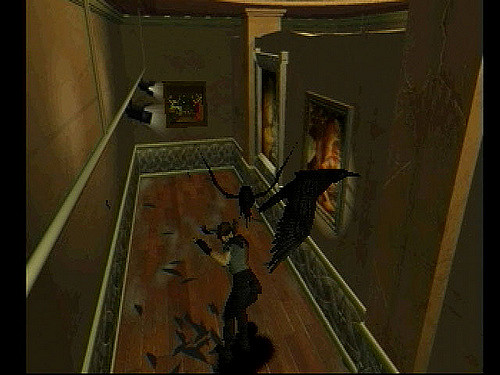
These crows have little tolerance for the unwashed masses who don’t appreciate art.
One of the big decisions I had in reviewing “every” Resident Evil game is just how many different versions of this game I’m willing to slog through in a row. Seriously, there’s the original, the directors cut, the directors cut Dual Shock Ver, the game cube remake, Resident Evil: Deadly Silence, as well as a battle version for the Sega Saturn. Apparently there was even a game boy color port in the works before Capcom realized that was pure fucking stupidity. So naturally the ROM leaked and plenty of fans were willing to pay a literal ransom in order to play a 32-bit game on an 8-bit system with a 166×144 display.
Short answer: I’ll post about the original and the Game Cube remake. I’ve done Deadly Silence already, and the others just don’t seem different enough not to drive me crazy with repetition.
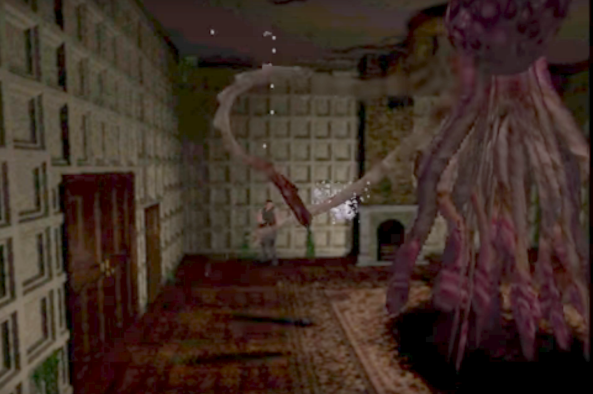
Chris shoots a plant, the prequil to Chris Punches a Rock
You have your choice of playable characters. Some of you know Chris Redfield from Resident Evil 5. It’s worth noting that before he was a hulked-out Call-of-Duty wanna-be who punched boulders, he was a terrible actor in an ill-fitting cop costume who shot plants. Jill, on the other hand, before adopting her femme fatal look for Resident Evil 3, went into life-and-death situations dressed like she was on loan from the French Foreign Legion. The major difference between them—which will become a trend in the world of Resident Evil—is that boys have more life, while girls have more pockets. You know: exactly the opposite of the real world.
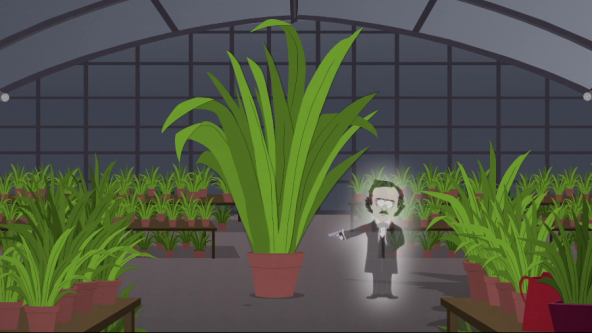
Seriously…you want me to shoot a plant?
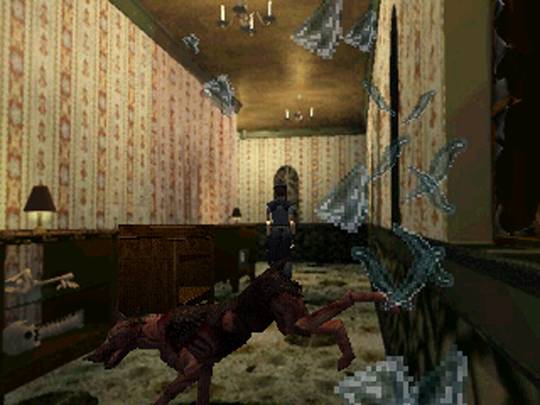
Fortunately, launching itself head-first through the window gave it a concussion, and he’s rather easy to avoid after that.
Resident Evil is just an escape room where you get to shoot things. Focus is less on combat, more on conserving bullets while you solve puzzles to proceed. It is frustrating at times that, by the game’s logic, a grenade launcher and an herb both take up the same amount of space in your pockets, but I think to how many things slide out of my grip when I’m just walking from the couch to the kitchen. I suppose I don’t really need to leave a trail of junk that I’ve tried to stuff in my pockets to feed my kleptomania. On those occasions when one must do battle with a monster, I doubt they’d wait for me just a minute while I pick something up.
Final Score:
Jill – 5:47
You’d think for as many times as I played this game, I wouldn’t suck quite so much.
Chris – 4:20 “What a tough guy! You’ve closed this case completely!”
God, even the congratulatory text somehow manages to come across as a terrible actor.
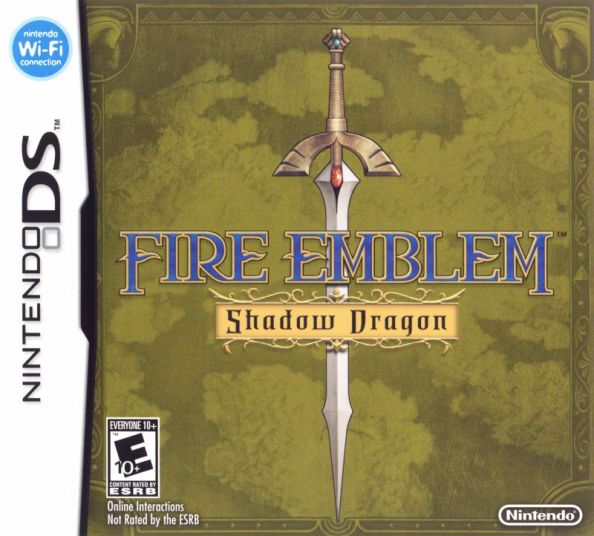
 Fire Emblem: Shadow Dragon tells the story of Marth, a young prince forced from his kingdom when an evil sorcerer, known as the Shadow Dragon, murders his father to steal his throne and his magical sword, Falchion. Fortunately, his pursuers allow him to bring one thing with him into exile: a well-equipped army of highly trained soldiers willing to stop at nothing to restore him to the throne. So Marth launches his campaign which consists of a series of macguffins and convoluted excuses for tactical medieval combat. After a handful of victories, Marth is awarded the titular Fire Emblem, which I assumed must have been pretty important to lend its name to the series. What could this be? Is it a supreme magical macguffin like the Triforce? Perhaps it grants Marth hero powers, such as in Age of Empires? Nope. It lets our hero open up treasure chests, thus allowing a single unit on the battlefield the ability to do what any standard RPG protagonist can do automatically and free of consequence in any dragon’s cave, king’s castle or stranger’s living room.
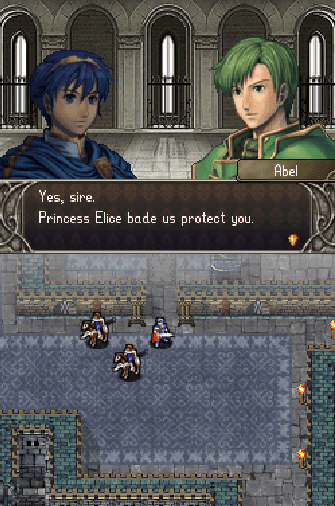 Bearing a strong Shining Force vibe, Fire Emblem presents a simple, no-frills strategy game with everything you’d expect to find and very little else. Noteworthy features include an insane difficulty and a perma-death system rivaled only by the real world. It is a video game, so it does include some healing magic after all, but there’s only one resurrection item. In the penultimate level. That can only be used by a single character. Once. (Which by the time this entry posts is likely to be the Republican healthcare policy) This is, I gather, supposed to make me more considerate of my actions, more mindful of the risks and more hesitant to throw away lives on crazy maneuvers like I was shooting craps with someone else’s money. However, in practice it only makes me frustrated that there’s no option to re-load save files from the battle menu. At least they had the consideration to give me two opportunities per battle to save progress, lest the dozen or so hours I wasted on resets blossom into two dozen.
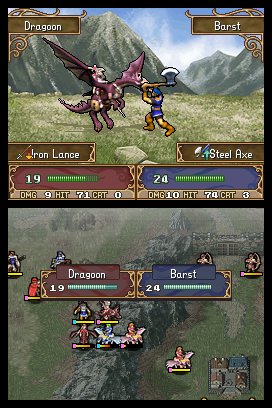 The problem with this, though, is that much like a buffet line, some characters tend to pull more weight than others, and they tend to get rather large, while your other combatants whither away by comparison. Early on, the units who dealt more damage began to gather more experience than the defensive units, and the gap between them grew until the endgame when I waged war with one seasoned soldier, a dozen accountants, and three nuclear bear robots with Ginsu claws and laser eyes. Later stages often became a handful of heroes pushing their way through a crowd of people milling about in the middle of a freeway. It got rather tiresome trying to stash characters in safe places, but the mages generally had the firepower of a toaster cranked up to 3, and as far as I could tell the archers were just lobbing plates of wet spaghetti at the enemies.
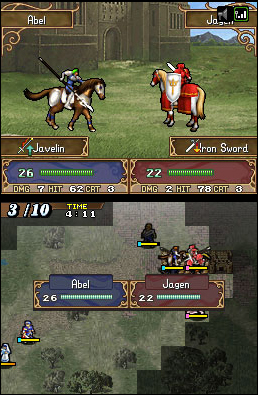 While mostly just a serving of vanilla strategy game, Fire Emblem has an interesting sugar cone underneath. All chests must be opened during battle, and of course those who are easily distracted by shiny objects while under assault will necessarily need to change their strategy. Furthermore, most characters must be obtained by fulfilling certain conditions in battle, such as rescuing them from death, schmoozing with villagers, or simply not killing key enemies. Unfortunately, if you’re anything like me, approaching people for conversation tends to be far more difficult than setting them on fire from a safe distance and hoping they die before expecting you to make small talk, so my ranks tended to grow slowly. Of course, there were also the moments when the game took pity on me as I stood shoulder deep in the corpses of my loyal followers, when it conveniently sent a ragtag group of scrappy fighters to help fill out my ranks without the least bit of concern for why Marth never bothered to learn their names.


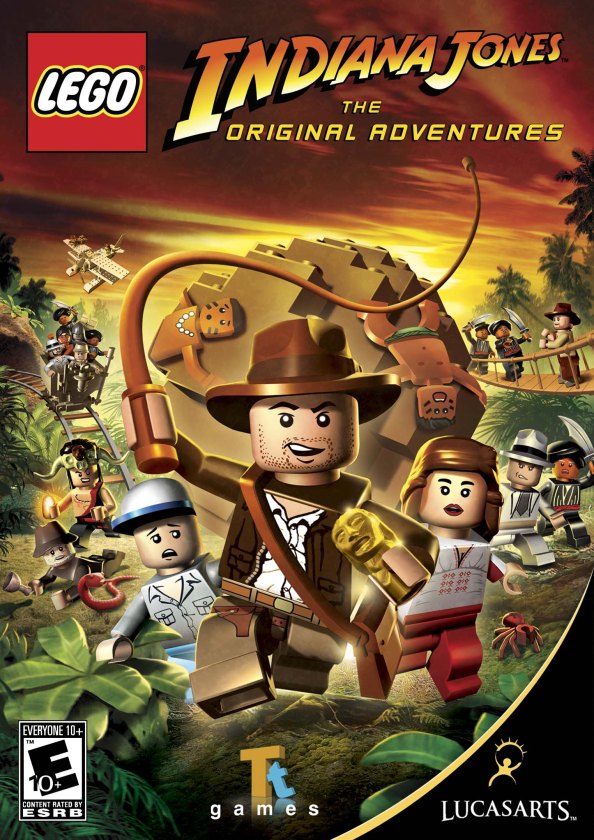
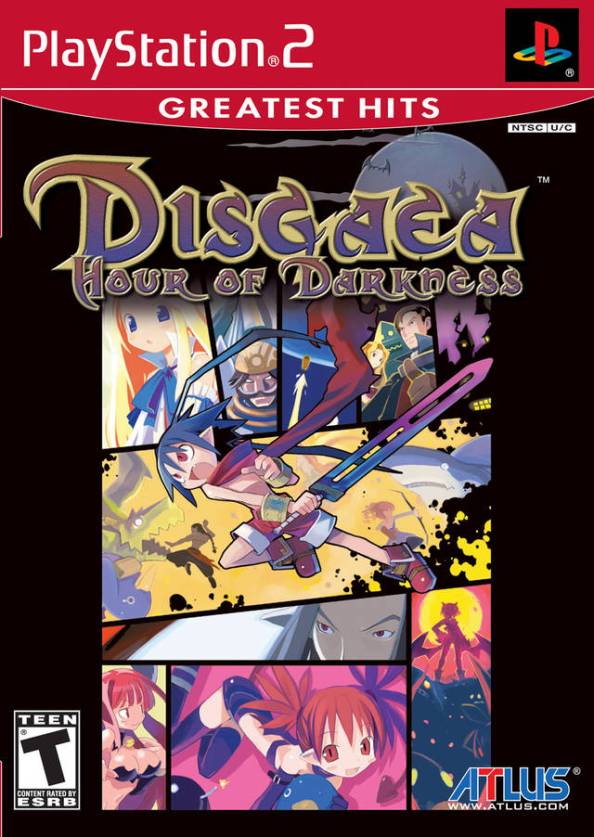 Despite only two weeks passing since my last entry, I haven’t written anything for nearly two months. Instead of spending my time playing video games like a good, responsible 32-year-old, I’ve been working backstage at our local production of 42nd Street, a show so bad that it literally tries to justify its lack of plot by telling the audience
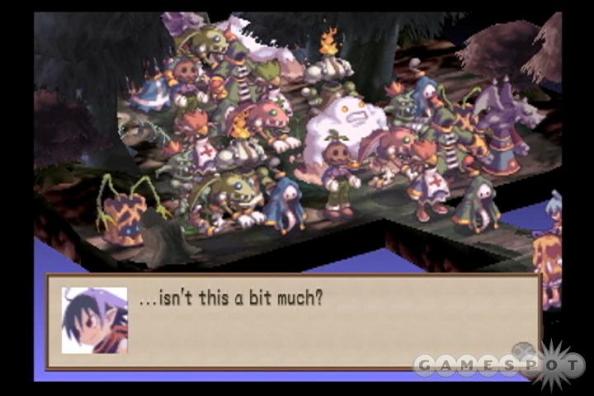


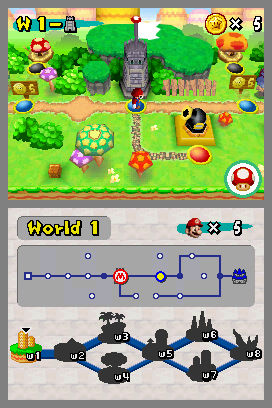

 My latest foray into addictive time-killers is Angry Birds: Fight, which has glued me to my phone every time I get two minutes not immediately filled with something stimulating and exciting. Like many free-to-play games, it offers me rewards and bonuses if I consent to watching ads that try to pitch more free-to-play games which will inevitably offer me more chances to watch videos pitching more free-to-play games until they’ve saturated my time so badly that we repeat the 1983 video game crash while everyone on earth stares at their phones in wonderment of games that could be way more awesome than the games they’re currently playing. Alas, as much as I’d love to bemoan the commercialized state of affairs of modern gaming, the game industry has historically been as all-about-the-art as Donald Trump’s hair stylist. (Low-hanging comedy fruit, I know.) If you don’t believe me, pick out your favorite franchise, and ask yourself how reasonable it is that the in-game world undergoes drastic geological cosmetic surgery from one installment to the next. Sadly, the evidence that developers slap franchise names on games to help them sell stacks up like a life-sized Jenga tower, ready to crumble under its own weight and concuss you with its logs of disappointment.
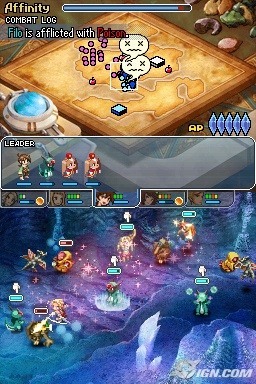
 The story…well, they say if you put a bunch of monkeys in a room hacking on typewriters, they’ll eventually produce the complete works of William Shakespeare. Assuming that’s true, the monkeys will produce the Heroes of Mana story long before they ever crank out something mildly resembling a sonnet. Roget, first mate of the Night Swan, his captain Yurchael, and an assortment of poorly written anime stock characters (including such favorites as eternally optimistic cutsey girl and grim mercenary with a conflicted past) crash in the wilderness after realizing their own leaders set them up. Why they villains fitted the Night Swan with a mafia-esque car bomb, the game never really explains, but that fear becomes a self-fulfilling prophecy as our intrepid heroes vow to halt the evil they suddenly assume must exist. Blah blah blah, plot lines in and out, a character who gets his ass creamed like chicken soup every time he shows up but somehow manages to inspire fear in the heroes, convolution at its finest, more characters than a story really needs to follow over the course of 27 battles…and one of the monkeys writing this thing must love cliches, because near the end they pull a Luke-I-am-your-father moment, which Roget (and the players) shrug off with a hearty disinterest. In the end, nothing is accomplished. Evil may have retreated, but no one knows or cares why, and the player moves on to story that makes more sense, like Moby Dick, or the United States Tax Code.



 Video Game Underworld