Galaga – Arcade

Galaga

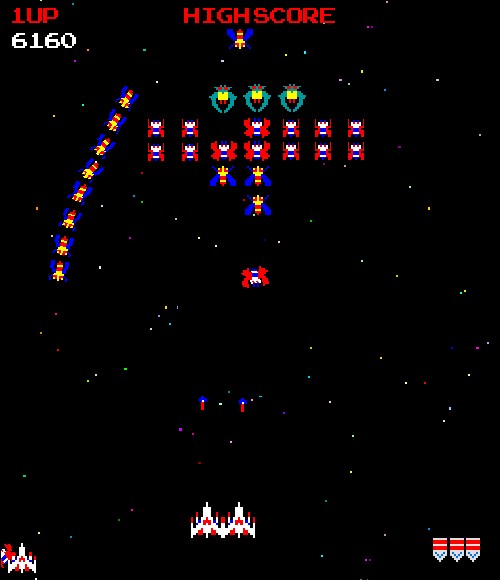
Twice the ships! Twice the firepower! Twice the target for the space bugs!

This blog gets viewers so rarely, I’m starting to think I may actually be writing an M. Night Shyamalan film. So whenever I have to switch to bi-monthly updates instead of weekly ones, I can’t help but think that will be the final nail in the coffin, the act that will dethrone me from my lavish lifestyle of fame, fortune, a diet consisting entirely of ramen and twinkies, and a driveway that turns into applesauce if it rained at all within the last decade. Unfortunately, since blogging wouldn’t pay the bills if the electric company issued me a refund for ten years of overcharging me, so I sometimes have to focus on other things, such as a horror novel that will probably get published as soon as the Republicans and Democrats finally agree on something (which with my luck, they’ll outlaw reading and writing), a comedic history of Duluth using sources with less historical continuity than the Star Wars prequels, not to mention I’m attempting to get licensed to teach public school, which involves less knowledge of the stuff you’re teaching and more learning how to avoid the temptation to go ballistic with a ruler when a classroom of 35 kids decides they’d rather re-enact the Iliad than read it. So here’s Galaga, the first of a series of games that I can play in an afternoon, write a few paragraphs about, then schedule it to post sometime in March.


It’s Space Invaders on steroids. There. Done. See you in two weeks!


GalagC

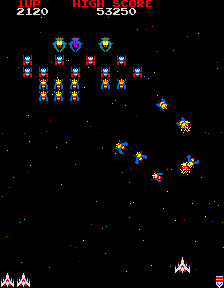
Space bugs apparently need wings to fly through a vacuum.

Seriously, though. I just spent about a half hour after writing that last sentence trying to think of something else to say. This game clearly belongs in a 1981 arcade. It effectively holds my attention for about a quarter’s worth of my time (have you ever noticed there’s no symbol for cents on the keyboard? That’s pretty obnoxious), and that’s even taking inflation into account. I’m sure in 1981, the idea of sliding a pixelated spaceship back and forth at the bottom of the screen while spamming the attack button could have held me in rapt attention well beyond the 45 seconds it took for the game to reduce all three of my lives to shrapnel. With a pocket full of quarters and the technology for better games still years away, the game works like a Nigerian prince scam. You feel invested in the game, and that one time you blew up–that was just a stupid mistake. If you drop in another quarter, you’ll get much more play time on this next round.


Nowadays, a quarter isn’t so much an investment as a game of chance, “I think I can get in and out of the game store in twenty minutes if I only put one coin in the meter,” or even, “They quit enforcing the meters at 5:30. What are the chances I’ll get a ticket in the next thirty minutes?” Games are also generally better designed. Outer space has three whole dimensions, Galaga. Your ship moves on a line. That’s two dimensions you’re just refusing to use. “There’s an enemy approaching from the left. I have literally an infinite number of directions I can go to evade, most of which I could literally travel for eternity without hitting anything, but if I can’t go exactly 90 to my immediate right, life isn’t worth living.”


So…Galaga…worth playing? Maybe if your father contracted malaria from a mosquito and you have the overwhelming urge to seek revenge on giant space bugs. The enemies provide the only really interesting aspect to the game, swooping in like a flock of drunken geese with their bug-like wings flapping uselessly in the vacuum of space.  But once you’ve seen that, you’re just playing Space Invaders, in color, without the shields. I rank it with Moby Dick as a timeless classic about an epic battle that also doubles as a sleep aid.

Galagb

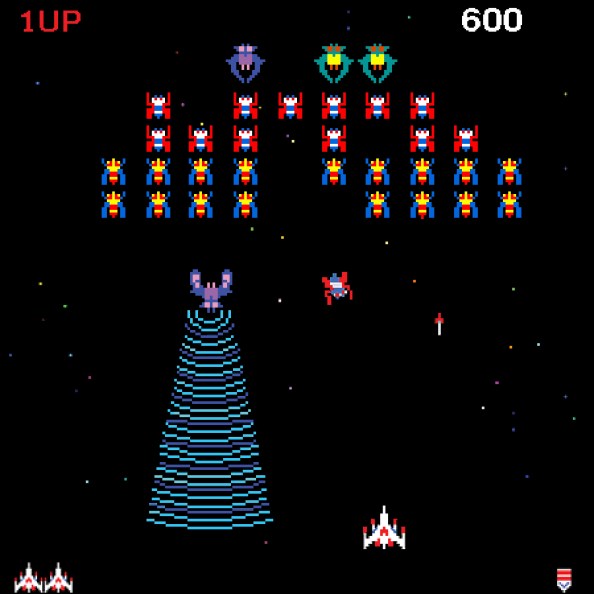
Yep…and here’s a space bug with a tractor beam. Not a lot of variety in Galaga screenshots.

Sabriel – Garth Nix

“A book! WTF, Jake? How the hell does that relate to retro gaming?” I’ll admit, book reviews fit in with as well with retro gaming as Bernie Sanders fits in with the Wu Tang Clan. But I’ve been asked to write a few book reviews, and since most of them are sci-fi or fantasy, I thought your interests as a gamer might just imply a few things about your reading habits. If not, read on anyway. It should be entertaining, at the very least. And expect a few more of these in the months to come. I’m a little crunched for time, so I thought they’d be a good way to prevent slipping into the every-other-week pattern you may have noticed lately.

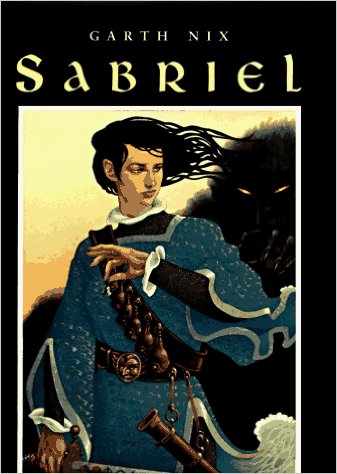
Sabriel.jpegIn the past twenty years, the name “Garth Nix” has begun to inspire awe and wonder among Fantasy readers, despite sounding like a Sith Lord who moonlights as a country music singer. Fantasy has, unfortunately, never been known for being an especially progressive genre, what with C.S. Lewis lacing his work with Christian Allegory and Tolkien ethnically cleansing the orcs off the face of Middle-Earth. Kings are good, emperors are bad, and no one has ever innovated a single piece of technology–it’s all just sort of always been there, unchanging, as though crossbows, saddles, and blacksmithing were residue left over from the Big Bang. Most of all, the only people who matter in Fantasy are heroes, powerful, intelligent young men armed only with their father’s sword and the blessings of God who undergo bloody combat to harden themselves in order to face the evil idolatrous sorcerer bent on ruling the world through global slaughter. Sabriel is…not actually any different than that. But the hero is a girl! That ought to count for something.

Nix’s novel begins with Sabriel on a long-term study abroad program in Ancelstierre, a country separated from her native “Old Kingdom” by an ancient wall, which, let’s be honest, does nothing to keep Mexicans from crossing into the Old Kingdom to look for work or White Walkers from coming south to haunt Ancelstierre. But the wall exists to give citizens of Ancelstierre peace of mind because they fear magic and want to deny it’s existence, much like comprehensive sexual education south of the Mason-Dixon line. And also like sex ed in the south, Sabriel’s school will only teach magic with the written request of a parent, and even that is rather discouraged. So our heroine finds herself confused about why her father, Abhorsen, sent her to this strange country for most of her life to receive a magical education. (Perhaps the next book in the series will send her to Texas for a Ph.D. on climate change.) One night, when Abhorsen doesn’t answer her mystical Skype call, she gets worried and heads into the Old Kingdom to search for what she somewhat presumptively assumes will be his bloody, mangled corpse lying in a ditch, bloated with maggots. She soon discovers first, that Abhorsen is a title, meaning she’s the kid with the weird father who insists that his children call him “President Dad,” and second, that upon his death, she will assume the duties of Abhorsen.

The Abhorsen, named for the executioner in Shakespeare’s Measure for Measure, is tasked with going around the Old Kingdom, knocking on graves and checking, “You still dead in there?” Death is depicted in the novel like a Justin Bieber concert or a theater playing an M. Night Shyamalan film, and once the dead realize how boring it is, they just want to step outside into Life for a little fresh air. As part of her inherent magical talent, Sabriel can travel freely between Life and Death as though she’s trying to get St. Peter to fill up her punch card for a free latte.

The unique addition to the standard Hero’s Journey trope, other than a hero who only makes 79% of the average hero’s salary, is the coming-of-age angle. The eighteen-year-old Sabriel leaves school, comes to terms with adopting a new identity, searches for a father she barely knows, discovers romance, and stands up to the pressures of professional responsibility. Just throw in one quirky, best-friend character and you’re one saccharine trope away from giving the reader diabetes. Fortunately, though, Nix’s handling of the situation uses more Splenda than sugar, and the best-friend character follows more of a Sabrina the Teenage Witch path, giving her a feline companion who houses the spirit of a great evil.

The story is entertaining, if not groundbreaking. Nix outlines the skeleton of the Old Kingdom, leaving it a little threadbare, and he leaves his system of “Charter Magic” and “Free Magic” frustratingly underexplained, dangling inferences for us to piece together, like trying to understand the plot of Star Wars by splicing together footage from the film trailers. Still, Sabriel behaves as a realistic and interesting character, and it’s a nice adventure that breaks from the tradition of meat head knight/swordsmen protagonists. Any fans of general Fantasy, especially those with an interest in magic, would enjoy it, but the feminine protagonist could also serve as an entry point for a lot of girls to enter a genre that has, until recent years, been a bit of a sausage fest.

Castlevania: Lords of Shadow 2 – PS3, XBox 360, PC

How-will-the-game-end-620x

Trevor and Alucard claim to be the same person, but I distinctly remember seeing them both in the same room together in Castlevania III.

As much as I love the Castlevania games, the series feels like developing a relationship with a teenage boy with an identity crisis. Is it an action game? A horror game? Does it want to try adventuring, or whatever Simon’s Quest was supposed to be. Will it feature classic horror monsters, mythological creatures, or make up my own? I actually rather liked when it started dressing in black, wearing heavy eyeliner, and presented itself as an emo/goth version of Metroid. But it’s also tried on RPG clothing as well. So although I can still fault them for this, I suppose I ought to have expected the new development team would ask “What game do Castlevania fans want to play?” and answered not “Castlevania,” but “God of War and Assassin’s Creed.”


church_lady_could_it_be_satan-1

If you’re old enough to get this reference, gently rap your cane against your walker.

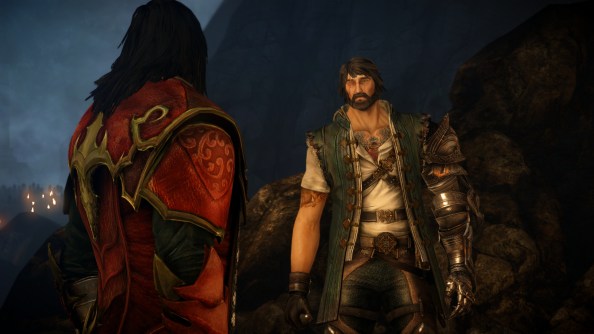
In short, LoS2’s story puts you in control of Dracula, formerly Gabriel Belmont, the rebooted series’ patriarch (sorry, Leon) of a famous line of vampire hunters whose career objectives very much exclude “Become an undead demon prince and feed off the blood of the innocent.” However, suicidal games tend to send the wrong message (and really don’t put up much of a challenge), so the development team replaced the final boss with Satan, who apparently has spent the last few thousand years picking up every cliched, convoluted tantrum ever thrown by a Bond villain. Teaming up with his LoS1 enemy, Zobek, a monk who gives off an evil-Professor-Xavier vibe, Dracula wakes up in modern times and fights his way through a setting with very little Castle and practically zero Vania in order to bring down an evil pharmaceutical corporation, which I guess will lead him to the ultimate Evil.


Castlevania-Lords-of-Shadow-2-RealGamerNewz-9

Gabriel Belmont, meet your descendant, Ezio Belmont.

When Kratos–sorry, I mean Gabriel–doesn’t romp through stages filled with mythical monsters, tearing through anyone and everyone he meets and wearing their internal organs as costume jewelry, Ezio–sorry, I mean Gabriel again–plays itsy-bitsy-spider in extended climbing sections that derive player enjoyment from pushing the directional stick in the direction you want to go, then watching Gabriel swing over to the next conveniently placed handhold, completely forgetting that vampires–even in the Castlevania series–have the ability to turn into a bat and fly. Like Kratos and Ezio, Gabriel lumbers along in a hulking slouch, doubled over from the body suit of extraneous muscles he totes around. This sack-of-testosterone design seems to have taken over character design, presumably to appeal to the modern breed of misogynistic he-man wannabe gamers, but belonging to the old school breed of nerdy, sports-hating 1990s gamers, I find it hard to control someone like Ezio Auditore and not picture a guy in a big white hoodie trying to waddle around in Jncos.


castlevania_lords_of_shadow_2_prohozhdenie-1397378516

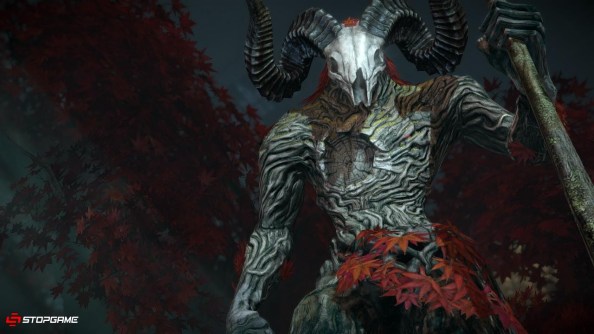
Play that funky music, Goat boy!

Out of all the game comparisons I could make, God of War and Assassin’s Creed aren’t exactly the equivalent of calling LoS2 “an overcooked casserole of coding leftovers baked from meats that were rancid the first time around.” For the game to deserve an insult like that, it would have to merit a special level of bad comparison. Like to the stealth sections of Legend of Zelda: Phantom Hourglass. While most players find gimmicks like quick time events as pretentious bribes to make people think they can interact with the game, forced stealth sections such as in Phantom Hourglass and LoS2 actually blow holes in the plot so wide you could actually build the next Castlevania game inside of it. The idea of an enemy that can’t be fought ever takes a lot of the luster out of Satan. If, by the end of the game, you can kill the King of Hell, the Prince of Lies, and the source of all wickedness and Temptation this side of Oz, but still can’t risk being seen by a low-level goon for fear of a flash-boiling from their flame throwers, why aren’t the goons in charge? Or at the very least, why wouldn’t Satan force you to fight them? Yes, it would ruin the game and render it unbeatable, but maybe the developers should consider that for a good long while. And I can’t even decide if that actually improves on the extended stealth section in a garden full of crunchy leaves, after which you do fight and destroy the boss who was hunting you. I guess Konami really loved its sadistic idea to put bells in the fight, like the Garradors in Resident Evil 4. I shot a projectile to ring a bell, darted the other direction, and had a brief vision of a giant hoof in my face before having to restart the level.


Projectile

It looks bad, but he actually just won the pie-eating contest from “Stand By Me.”

While I always wondered why Bowser didn’t simply dig an uncrossable pit of lava with no platforms, Castlevania places Dracula partly in his own castle, explaining how he can traverse some of the more convoluted architectural choices, such as every door, monument, mechanism, and hidden bonus requiring his personal blood sacrifice to activate. Once, however, I got turned around, and had to cross the same bridge three times in five minutes. As it required a blood sacrifice each time, I can’t help but think that even a vampire might get a little dizzy. I would have to imagine Dracula has a pretty dangerous morning routine, gnawing open his wrist to flush his toilet, then trying to make toast, but needing to squeeze out a few extra drops when the toast comes out black the first time. The fact that he could easily fall into a river of fire if he gets a little woozy makes me think there could have been a simpler design for his home. Still, it almost feels like a reasonable option in this world, since characters constantly projectile vomit enough blood to put out a burning building faster than the New York City Fire Department during a tsunami.

Alucard

Alucard, who reversed his father’s name in order to oppose all that Dracula does, turns out to be more helpful than a boy scout.

One thing I can say about Castlevania: Lords of Shadow 2 is that it has boss fights. Lots of boss fights. I can’t really say whether this improves the game or not. Some of them have a really inspired design to them, such as the obligatory end-game fight with Death. Others just feel like “press square until the monster dies.” During one fight, the boss encased herself in a hamster ball, which I had to pound mercilessly with a weapon slower than a tortoise with down syndrome, without pausing, while she and her two minions pressed their attacks. Even when I turned down the difficulty to “easy,” I could only beat this one by getting lucky. Early in the game, I spent over an hour fighting the gorgons, trying to figure out the convoluted button combinations required to throw an ice bomb. As a result, I have a few suggestions for any would-be game designers in my audience: the option to shut off the QTEs? Brilliant. Shutting off stealth sections would have been preferable. Even more so, not programming stealth sections in the first place. But one thing you really need to stop doing? Having bosses repeat phrases during battle like Dora the Explorer’s map.

TOYMAKER_610

Quack, quack, quack!

2415904-clos2_screen_08

Shortly after this, his father Darth Belmont comes to his aid.

Heroes of Mana – NDS

Heroes_of_ManaMy latest foray into addictive time-killers is Angry Birds: Fight, which has glued me to my phone every time I get two minutes not immediately filled with something stimulating and exciting. Like many free-to-play games, it offers me rewards and bonuses if I consent to watching ads that try to pitch more free-to-play games which will inevitably offer me more chances to watch videos pitching more free-to-play games until they’ve saturated my time so badly that we repeat the 1983 video game crash while everyone on earth stares at their phones in wonderment of games that could be way more awesome than the games they’re currently playing. Alas, as much as I’d love to bemoan the commercialized state of affairs of modern gaming, the game industry has historically been as all-about-the-art as Donald Trump’s hair stylist. (Low-hanging comedy fruit, I know.) If you don’t believe me, pick out your favorite franchise, and ask yourself how reasonable it is that the in-game world undergoes drastic geological cosmetic surgery from one installment to the next. Sadly, the evidence that developers slap franchise names on games to help them sell stacks up like a life-sized Jenga tower, ready to crumble under its own weight and concuss you with its logs of disappointment.


If I could brand any game as such a “log,” Heroes of Mana would be a prime candidate. The game brands itself as an RTS, and while I have no qualms with the “RT,” I have one or two suspicions about the accuracy of the “S.” Set in the Seiken Densetsu…category on amazon…Heroes of Mana uses monster design from Secret of Mana and themes from other Squenix failures in development at the same time. Otherwise, the game plays less like a Mana game and more like a (very) rough draft of Final Fantasy XII: Revenant Wings using Mana artwork.


Heroes 2The story…well, they say if you put a bunch of monkeys in a room hacking on typewriters, they’ll eventually produce the complete works of William Shakespeare. Assuming that’s true, the monkeys will produce the Heroes of Mana story long before they ever crank out something mildly resembling a sonnet. Roget, first mate of the Night Swan, his captain Yurchael, and an assortment of poorly written anime stock characters (including such favorites as eternally optimistic cutsey girl and grim mercenary with a conflicted past) crash in the wilderness after realizing their own leaders set them up. Why they villains fitted the Night Swan with a mafia-esque car bomb, the game never really explains, but that fear becomes a self-fulfilling prophecy as our intrepid heroes vow to halt the evil they suddenly assume must exist. Blah blah blah, plot lines in and out, a character who gets his ass creamed like chicken soup every time he shows up but somehow manages to inspire fear in the heroes, convolution at its finest, more characters than a story really needs to follow over the course of 27 battles…and one of the monkeys writing this thing must love cliches, because near the end they pull a Luke-I-am-your-father moment, which Roget (and the players) shrug off with a hearty disinterest. In the end, nothing is accomplished. Evil may have retreated, but no one knows or cares why, and the player moves on to story that makes more sense, like Moby Dick, or the United States Tax Code.


Heroes 5

This RTS game gives you multiple ways to strategically send all of the same type of monster at your enemies.

The gameplay follows a typical real-time strategy format, as long as that strategy is “select characters, attack enemy.” Units have a four-way rock-paper-scissors (rock-paper-scissors-lizard?) relationship going on, with a handful of units existing outside that structure. Ranged deals double damage to flying, flying deals double to heavy ground units which deal double to light ground units, and each time they introduce a new type of unit, the game puts you through the entire explanation again because when it comes to rock-paper-scissors, you have the brain of a goldfish, but when it comes to following the story, you are Albert Einstein performing a Vulcan mind-meld with Sherlock Holmes. Disregarding tutorials more repetitive than the ones from Dora the Explorer, I initially thought the four-way relationship sounded interesting. Unfortunately that all falls apart when trying to decide which units to purchase with your finite resources, as there’s no way of determining what type of unit your enemies are; just because they don’t stand on the ground doesn’t mean they’re flying units, and the fact that they can hit you from three squares away doesn’t qualify them as ranged. Heroes of Mana is just a dimmed DS screen away from being both literally and figuratively a stab in the dark.


Like Revenant Wings, you summon monsters to do your dirty work for you. The monsters don’t level up, but you get stronger ones as the game progresses. You also have a separate party of “leader” units, consisting of the fifteen characters seen in the story, all of which interact with Roget for a battle or two, then join your party and shut the hell up like a good subordinate tag-along. These characters don’t level up either, but you can win equipment in battle to boost their stats (naturally giving all of it to the same five characters who seem mildly more interesting than all the rest),  which makes as much difference in the long run as giving yourself a concussion to raise ALS awareness, because you’ll never take them anywhere near the fighting, since losing the main character results in an instant game over.


But even holding back characters like that is not a guarantee that they won’t charge headlong into the melee with their lone hit point ablazing. Of all the virtues of the NDS, screen size is not one of them, and trying to select characters, pathways or enemies to attack has all the finesse of a figure skater with the motor skills of an infant. Furthermore, since friendly characters refuse to step to one side of their square or to do that awkward thing people do in movie theatres and on airplanes where they try to make themselves as skinny and flat as possible to let people through, pathways get blocked easily, leaving the AI to take the scenic route around the battlefield, detouring right through the enemy camp. Even without clogged roadways, the AI has the IQ of George W. Bush with his head stuck in a plastic bag, often sending peaceful resource-gathering monsters on roundabout ways past hostile enemies, or telling dying characters to get three or four more parting shots in before retreating from the enemy currently making haggis out of your bowels.


Heroes 4

Precision tuned to let you follow all the action with only moderate permanent damage to your visual accuity.

There is one more feature to combat, summoning benevodons (the latest in asinine wordplay added to the World of Mana) to damage every enemy on the map. These are impressive attacks with exciting animated cutscenes that you will never use nor see (respectively) because they take up so much of your resources that in most battles you’ll never collect enough for the summoning. I pulled them off once or twice, mostly out of necessity rather than choice, and they all have pretty much the same effect, making them another nice attempt, but ultimately pointless addition to the game.


As usual, I like to include a “but the game’s not worthless!” section here. I did enjoy the game for all its flaws, and preferred in infinitely over Children of Mana, released at roughly the same time (and featuring the lame benevodon and malevodon wordplay…which mean “good tooth” and “bad tooth” respectively). As mentioned before, it reminded me of a draft version of Final Fantasy: Revenant Wings, so if you liked Revenant Wings…go replay that game instead of Heroes of Mana.

Chrono Trigger: Crimson Echoes – SNES ROM Hack

RetroArch-0729-020645

L’chaim!

One common lament I often hear wailing from the insincere lips of our species, Homo Obliviosa, criticizes books, literature, television, and within five years, I guarantee those game-show infomercials that play on the pumps at gas stations, for being too predictable and not having a shred of originality that they didn’t pick up at a yard sale somewhere. Still, if we’ve learned anything from seven Saw films, twelve Friday the 13th movies, The Land Before Time 14, the entire James Bond series, and 27 years of watching Debbie gyrating her aging pelvis across Texas until she files her bones into a fine powder, we’ve learned that Americans have a serious problem when it comes to sequels. And sequels don’t even do it for us anymore; our problem has spread like a raging yeast infection to cover things like adaptations, novelizations, novelizations of adaptations, and fan fiction. Personally, I’ve never finished a story and thought, “I need to fix this so Hermione marries Malfoy and Hagrid ends up with Dumbledore!” or felt that I couldn’t really judge Star Wars until I read about how some 35-year-old McDonald’s assistant shift manager would have destroyed the Sith, brought balance to the Force, and made passionate love to Queen Amidala. But a fan-made adaptation has come along once or twice (no wait…twice. Exactly twice) that makes me take note, and so with a heavy heart, I introduce you to Chrono Trigger: Crimson Echoes.


RetroArch-0729-074940

They were going to go with “Time Lord,” but the phone booth ruined the epic showdown feel.

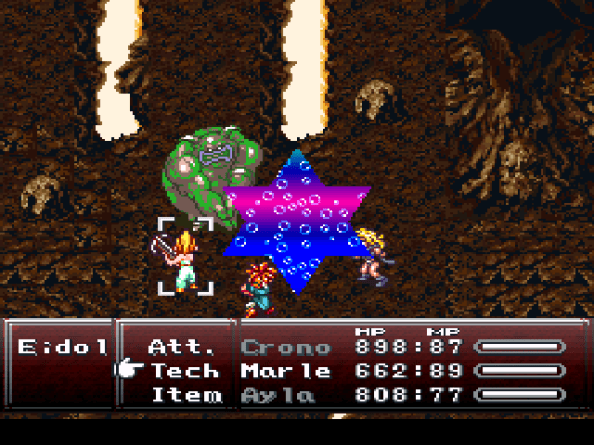
A team of devoted fans produced Crimson Echoes after compiling everything they knew about Chrono Trigger and Chrono Cross, hacking the SNES rom for six years, and presumably smoking so much weed that they felt implying a romance between Frog and Ayla wouldn’t come across as weird and out-of-character as Gollum shacking up with Galadriel. The story weaves together several plots, including a war between Porre and Guardia, Magus’ search for Schala, Dalton’s quest to find new and more creative ways of being a major douche while demonstrating all the power of crystal therapy after a viking raid, and some weird jazz about alternate timelines. King Zeal emerges from the shadows as the primary antagonist, who aims to resurrect the kingdom after his ex-wife gained custody of it and ran it into the ground (literally) in the first game.


RetroArch-0728-025243

Yet somehow I still have all of the other me’s memories and skills.

Chrono Trigger rocks, and I can understand wanting more of it, but a game with a setting that spans “all of history” leaves about as much room for more as a fat guy with a lifetime pass to Old Country Buffet. Writing a sequel to a time-travel game has to carefully weave in the events of the previous game–a la Back to the Future Part II–or it looks like the heroes spent the whole quest to fight the god of hedgehogs oblivious to all the other action going on. “Fuck you, fans of the first game,” it says. “You should have been paying attention!” For better or worse, though, it works, as the developers understand the literary mechanics of time travel about as well as a teenage boy with Asperger’s Syndrome understands a speed-dating event. “Marty!” I hear doc Brown’s voice saying, “You’re not thinking fourth-dimensionally!” They get points for trying new ideas, but their idea of extra timelines gives the impression that time flows normally, centered around Crono, and these other timelines are just tacked on in weird succession, like a video editor with ADHD (God, I’m being just brutal to people with disabilities in this paragraph.) Time Travel feels more geographical than fourth dimensional, as if 65,000,000 B.C. lies just past the Wisconsin border.


RetroArch-0729-072445

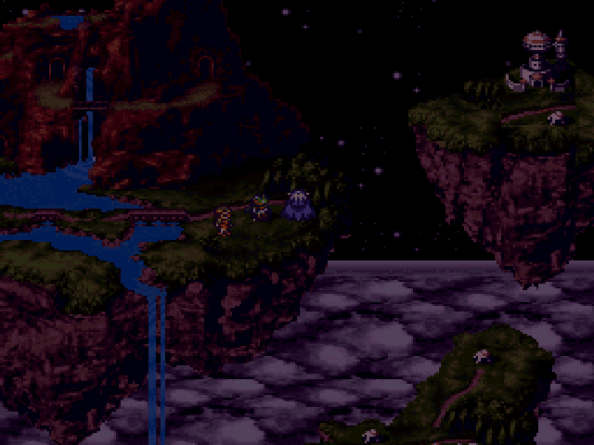
Apparently the guy designing backgrounds was sick that day.

I’ve played through Chrono Trigger probably fifty times in my life and seen the Back to the Future trilogy probably into the triple digits. The thing that gets me stuck in an ever-repeating loop of irony is this sense of how time stacks on itself, about how, like a good party, billions of years worth of events can happen in one place (and how as the guy who shows up the next morning to pick up his drunk friends, I seem to miss all the exciting parts.) Crimson Echoes doesn’t give me the feeling of the vastness of time, or how it connects with each other. Whereas Lavos was eternal, living his life content to move down time like a one-way street, meeting up with our heroes whenever they felt like visiting him, King Zeal pops up in random time-periods as Crono et al. do the same, in a cosmic game of whack-a-mole. Furthermore, the three gurus somehow watching all the changes Crono makes from some point in the distant future makes about as much sense as learning about the life span development of a chicken by studying an omelette mcmuffin. Near the end of the game, the gurus dish out a list of side quests, but while in the original game, these added to the enormity of time and centered on the seven playable characters, the Crimson Echoes sidequests have little to do with anyone or any-when. Most of them are damn near impossible to even find without help, and the ones I did felt so fetch-questy that the only way they’d develop character is if you happened to be a labrador retriever.


RetroArch-0728-064748

Travel twelve hours through time! Explore the mysterious “night.”

In adding to my swelling list of grievances, the designers cranked up the difficulty setting like crazy. For whatever reason, the general video game fan community interprets the quality of a game as directly proportional to how hard it is. God knows if you want to find a version of Castlevania that’s been hacked to remove life limits, you’ll inevitably stare down lists of hacks for people who thought the original NES game felt too simple, then another list of hacks for people who thought the first list of hacks didn’t successfully raise their blood pressure enough to burst from their veins like an anime blood-geyser. But when it comes to simple ideas to maintain challenge without tedious repetition of hours worth of gameplay, game hackers dry up like the Sahara desert as described by Henry David Thoreau and read by Al Gore. But even if challenge did implicitly make a game better, how exactly does one make an RPG harder? You can raise monster stats all you want, but the only thing a player can do in response is level grind which only challenges them to stay awake long enough to build up their stats. Most bosses don’t especially put a good fight, but rather wind up like a college drinking game, with the player slamming back as many potions and ethers as possible, hoping the other guy passes out first. For a while, I actually appreciated that the astronomically high enemy HP forced me to dig into my otherwise unused techniques, but by the end of the game, most enemies could absorb at least three of the four styles of magic (and Magus apparently has suffered a stroke in the intervening years, rendering him unable to cast anything but shadow magic), leaving me to tape down the A button and go scoop the cat box.


RetroArch-0728-064231

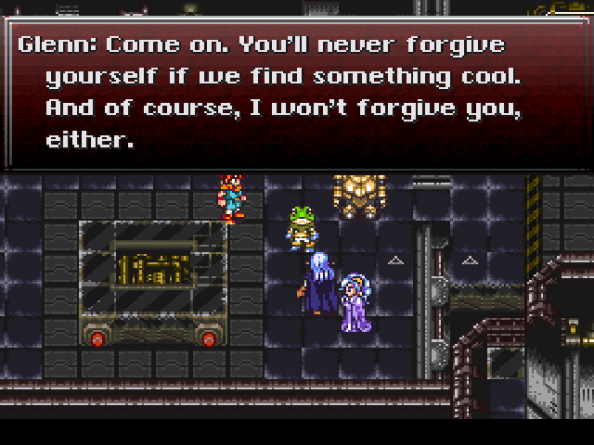
Forthwith anon! Thou shalt besmirch thy honor if we henceforth discover…uh…something cool.

This isn’t to say, of course, that the developers simply chewed up the ROM and spit it back out into whatever arrangement the physics of projectile vomiting so decided. They added some interplay between Magus and Frog (who they renamed Glenn and completely abandoned his formal, pseudo-Middle-English style of speech), and the residual animosity actually approached something feeling organic. None of the characters are hidden, although Ayla doesn’t join until nearly the final dungeon. In another bold and senseless act of violence against the original game, the designers re-imagined the artwork, replacing Akira Toriyama’s  character portraits with new, updated ones supposedly reflecting the five-year time difference. Sorry, guys, but if you want to infringe on copyright, at least keep the stuff worth infringing upon.

RetroArch-0728-013808

And saying this in no way alleviates any legal ramifications you may have faced.

Hey there! I know I usually update on Mondays, but I have something special planned for this week, and unfortunately it’ll have to wait a few days–you’ll understand why when you see it.

Check back on Wednesday for something good!

future-continued

Women in Video Games and a Lesson on Acceptance and Understanding

Unfortunately, I have to take a time-out from my usual humorous attitude to address a problem in the gaming community. If you haven’t kept up with the news, recently, the game critic Anita Sarkeesian cancelled a speech at the University of Utah after the school received emails threatening a massacre if she spoke. Prior to that, game designer Zoe Quinn found herself the target of rape and death threats because of her role in game design.

I was born in 1983, and can reasonably assume I’m older than most members of the gaming community. To those of you in your twenties and younger, I want you to understand you have a wonderful gift. Your interests are mainstream. People like video games. People respect them as valid entertainment. You can go see movies based on games. You can buy T-shirts with pixilated creeper faces on them and expect people not only to recognize them, but to laugh at it and enjoy a shared interest. You can go on the internet and watch the Game Theorists or The Completionist or read my blog and know that there are a lot of people in the world who would probably like you as a person and enjoy doing the same things you do.

When I was young, I didn’t get that treatment. I was treated as lazy and worthless because I didn’t want to play sports all the time. I could subscribe to Nintendo Power, but I couldn’t go to a store and pick up half a dozen video game themed magazines, or go see a video game themed movie. Worse yet, despite being a straight A student, people eyed me up nervously, expecting me to pull a Columbine and shoot up my school. They believed I was antisocial, desensitized to violence, and that I had no concept of reality.

Gamers today, thankfully, can live without that stigma. However, I almost wish that weren’t true. Because of my experience, I know what a horrible thing it is to be pushed to the fringe, ostracized, and even threatened for something that made me happy, something that didn’t actually harm anyone else. It find the idea that gamers would instigate this against anyone appalling and sickening. Four out of ten console gamers are women. Forty percent. Can you believe that? If that had been true (or if it was true, if I had only known), I might not have any of the social anxieties and phobias I do today. Why wouldn’t we want to accept everyone into our social circles? We’re creating conflict where it shouldn’t exist. Messy, ugly, bloody conflict.

I have no problem with women in video games. I like playing as Samus. Or Yuna. Or Aya Brea, Jill Valentine, Claire Redfield, or any of the other…two or three..women who may not star in their own game, but at least share equal time with their male counterparts. I’ve even been to Sarkeesian’s youtube channel. Go listen to her! She’s brilliant! I’m going to show her to my students. She brings up a few I actually wanted to talk about in my upcoming Mario RPG entry. In fact, let me embed one of her videos below!

But don’t act like dicks. The older members of the gaming community have been terribly marginalized, watched suspiciously, and villified at every turn, and have very little tolerance for those who commit such crimes. So if you can’t play nice, I will pull the player 2 controller out of the socket and finish my game solo. Go play basketball or something because hatemongering is unacceptable.

Metroid Prime 3: Corruption – Wii

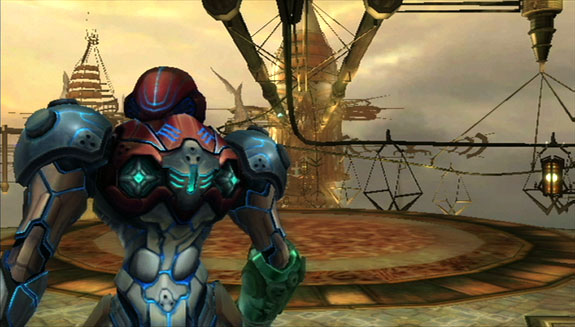
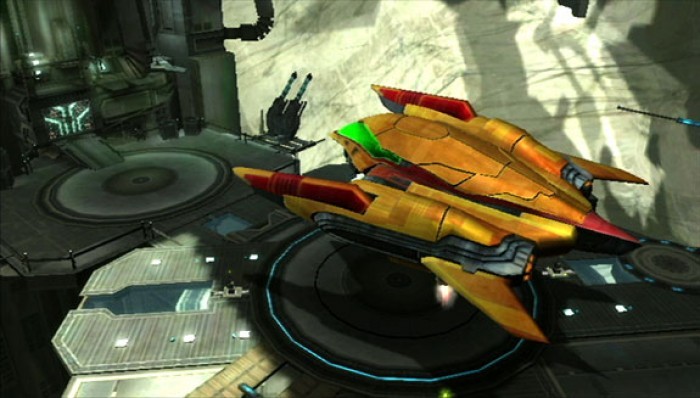
TitleMovie sequels, almost without question, have a quality inversely proportional to the number of films that precede them in the series. Video games, fortunately, routinely buck that trend. However, the literary gymnastics required to pull off a chain of sequels, prequels, inter-quils, alterni-quels and the other host of ploys developers use to desperately milk their cash cows after the udder has long since dried up and broken off has a tendency to some creative game numbering. As if “Final Fantasy II” didn’t epitomize nonsense in titling, the series eventually moved on to things like “Final Fantasy X-2“ and “Final Fantasy XIII-3.“ Having recently finished Assassin’s Creed: Brotherhood, which comes sequentially after Assassin’s Creed II but still two games before Assassin’s Creed III, I often have to throw aside any suspension of disbelief that these people can title a game more meaningfully than Mary Poppins song lyrics. Probably the prime example of this comes from the Metroid games. This week I’ll talk about Metroid Prime 3: Corruption, the tenth game in the series which takes place as the fifth or sixth game chronologically (depending on how you interpret the original and Zero Mission), and fourth in the Metroid Prime trilogy. Wrap your head around that while watching the Lion King 1&1/2.

Explain how a monster that, in 8 bits, looked like a demon child with down syndrome turns into a creature that Samus can only smite Gandalf-style.

Explain how a monster that, in 8 bits, looked like a demon child with down syndrome turns into a creature that Samus can only smite Gandalf-style.

Corruption immediately stands out as different from the rest of the series by having cut scenes (although disclaimer: I haven’t played Echoes yet), thus trying to have some semblance of storyline other than shreds of information given in instruction manuals and plastered on Metroid Wiki pages. The story begins, as usual, on a space station that will shortly swarm with space pirates. Samus, with the help of her bounty hunter friends, fight back. Recurring dragon-pterodactyl Ridley shows up, challenging Samus to a Balrog-style duel as the two of them plunge indefinitely into a dark yawning chasm. Just as Samus and Team come close to saving the day, Dark Samus shows up and infects them with large amounts of phazon.  A month later, Samus wakes up, and rather than receiving the proper medical care due to a combat veteran coming out of a 30-day coma, the Galactic Federation forces tell her they’ve harnessed the phazon in her body for use in battle, and oh, by the way, wouldn’t she kindly go and hunt down the other bounty hunters who may have gone insane from the effects of phazon?

Samus's posse. She gets a posse in this game.

Samus’s posse. She gets a posse in this game.

Unfortunately, while I generally prefer detailed story lines in games over all else (to the point where I have played Xenosaga Episode I several times), it doesn’t fit Metroid. At least, not the way they did it. Rather than playing as the super-awesome solo bounty hunter single-handedly fighting her way through planet Zebes, Corruption portrays a Galactic Federation Military who must have exclusively recruited from the ranks of the Gotham City Police Department. Each new transmission relays an objective that would convey less risk if Samus had, say, a highly trained team of space soldiers to aid her, but for some reason, they all want her to do this herself. Trying to portray her as a silent protagonist, she comes off not just a little festering and resentful.

Upon starting the game, the player will first notice the nausea. While generally I don’t get sick playing first-person games, the notoriously precise Wii controller has a habit of zipping the view around unexpectedly, or losing contact with the sensor and leave Samus twirling in circles. Fortunately, I adjusted to this after about two hours of playing, but the first-person perspective may not always provide the most realistic game experience. Judging from the exploration aspects that the original games shared with the Legend of Zelda, one might think that a 3rd-person over-the-shoulder view would work as well for Samus as for Link (They picked that perspective for Ocarina of Time, apparently because they thought players would want to see a cool character like Link. I guess Samus probably also gets paid 70% of what the male video game heroes make as well…) Still, that brings up another issue I had with the game–the decreased focus on adventuring and exploration.

Not many games give you the option of ripping the life right out of your enemies. This one does.

Not many games give you the option of ripping the life right out of your enemies. This one does.

The first Prime game takes place immediately after the original Metroid. So it makes sense that Samus has her high-jump boots and morph ball and missiles (even if it doesn’t make sense that she has the grapple beam, space jump, and plasma cannon). However, early-game disaster naturally strips her of all the weapons, armor, and bonuses in order that she can start over again, making for a cliched story, but a satisfying game. In Corruption, that doesn’t happen. She begins with the morph ball, bombs, space jump, and a form of the grapple beam, and just keeps them. This sends Metroid on a trend like the Legend of Zelda. Items in both series originally helped characters reach new areas, fight enemies easier, and improved movement. Once activated, the player could use them creatively at any point on the map. Now, items have much less pizazz. They have specific uses, interacting with easily-identified objects in the environment, and only have a worthwhile use at those spots. It makes new items much less exciting to gain, and raises questions about why so much of the galaxy’s architecture favors inhabitants with morph balls and bombs at their disposal.  Can everyone morph? If so, why don’t we see anyone else do it? Why can’t we find store fronts filled with morph balls?

Oh, hell no! Platforming...my arch-nemsis.

Oh, hell no! Platforming…my arch-nemsis.

The game borrows the central hub idea from Metroid Fusion, except that you travel to different planets to reach new areas, and while in Fusion you began to discover that each sector of the ship connected with the others, you can’t get that unfolding sense of lost-in-a-labyrinth horror you get from the atmosphere of the 2-D games. (Taking into account the series connection with the “Alien” movies, introducing non-aggressive characters also takes away from the sense of loneliness). And of course, the super-detailed environment, while graphically impressive, sometimes feels like playing in a magic eye picture, forcing you to stare at it for hours before seeing the supposedly simple tasks the designers wanted you to notice. They offer you a map, but the 3-D stylized blocks they give you works about as well as solving a rubik’s cube blindfolded. Twisting, zooming and panning through it reveals nothing more than a sense of throbbing astigmatism.

I don’t want to give the impression that I didn’t like the game, though. In fact, I thought the Wii controls drastically improved the Prime series, and (for a while at least) I got no small amount of pleasure from ripping the fixtures off of walls with my grapple beam. Boss battles became a little repetitive in this area, though, as most of them require shooting at obnoxious, fast moving targets in order to reveal a weak spot that would stun the boss long enough to rip off a segment of armor so you could switch into hyper mode in order to actually deal damage.  Hyper mode–attainable because of Samus’ phazon infection–added nice features to the game, allowing overpowered blasting, shooting, and electrocuting when whittling enemies down with the charge beam got too boring, and unlike other games’ super modes, you can switch into it at any time (at the cost of some life energy), rather than just when you fill up a gauge or collect enough items or take enough damage–in most games, this usually happens just after I finish a boss or other section where such a bonus would actually benefit me.

Other than your ship, the game gives you about one save station per planet. Prepare yourself to lose hours of progress.

Other than your ship, the game gives you about one save station per planet. Prepare yourself to lose hours of progress.

Metroid Prime 3: Corruption can’t really compete with the 2-D Metroid games, especially Super Metroid, Metroid Fusion, and the original, but it does offer some satisfying aspects, and offers a nice challenge without sending you scrambling for a walkthrough every other room. Still, I may write to Nintendo and demand back all the hours of my life wasted from stupid deaths because they only give me one save station per planet.

Boss Monster – Table-top Card Game

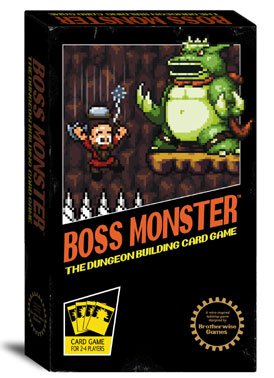
boss_monster_retail_box-smallWow!

So it appears I last wrote about three weeks ago. Awesome. Yeah, yeah, I know the rules. “You want to keep readers,” they say, “Update frequently! Daily if possible!”

Unfortunately, as much as I’d like to update daily, I find that playing through an entire Fantasy RPG and writing about it in a 24-hour period doesn’t tend to leave me with enough time to go to work, eat, sleep, use the bathroom, write about the game or finish a full Fantasy RPG. Furthermore, the fact that I’ve still spent a good number of evenings the last three weeks addicted to the random reorganization of pixilated blocks into ultimately meaningless re-creations of buildings I used to think were “neat.”

Ah, Minecraft. the heroine to Fallout’s morphine, you have no point, no direction, other than to keep me at your side.

Not to mention, the excessively long Dragon Quest IV has only exacerbated my problem of not finishing games in a timely manner. Also, soon I’ll write about the multiplayer mode in Secret of Mana, but Anne tends to get slightly narcoleptic after 8:00 at night, so progression there has slowed down from “Playing through a fun game” levels to “waiting until work lets out,” then down to “DMV Bureaucracy.” Thankfully, we haven’t yet hit “Congress,” so you can count on something productive sooner or later.

Anyway, to give you something to feed on for the interim, check out “Boss Monster.” Anne and I found it over the weekend, luring us closer with its NES-Box style art and seducing us further with subtle nods to classic 8-bit monsters, such as “Cerebellus: Father Brain” and artwork on “Brainsucker Hive” that hearkens back to Metroid. Each card offers an 8-bit style pixilated image, and many of them derive their theme from some pop-culture reference. Not limited to video games, you may also run into Futurama, Harry Potter jokes or others.

The players begin to create the most challenging dungeons for their heroes filled with the most expensive treasures—which will lure them to their untimely deaths. See, you play, as the title suggests, as the Boss Monster, vile, odious, and ever powerfully awesome. Let’s face it: no one has wanted to play the knight in shining armor since grade school. Why do you think they love Tyrion Lannister so much?

Games play quickly–usually less than fifteen minutes–and challenge each player to strategically build dungeon rooms to offer the best treasure (a.k.a. Hero Bait) while also dealing the most damage to the poor saps who wander in, fresh out of the archetype factory. Early in the game, however, heroes may overpower your dungeon, leading to the possibility that you’ll end up like most villains–just another hackneyed monster meant to indoctrinate young children into believing that if they misbehave, they’ll suffer through life until someone kills them. Sorry, but I defer to Johnny Dangerously here…at the end of the film, the ex-gangster finishes his moral proselytizing by declaring to the young shoplifter that, “Crime doesn’t pay!” Then he changes into a tuxedo and gets into a luxury car, declaring to the camera, “Well, it paid a little.” It just so happens that in “Boss Monster,” it pays you in souls of those you destroy in your dungeon.

“Boss Monster” apparently owes its origins to Kickstarter, which means it owes its existence to a partly democratic process of determining whether or not it looked “cool.” It does; I won’t argue that. However, once you strip away the aesthetics, you find a simplistic wiring system that might get the job done, but may also short itself out in the process. The game plays through three de facto phases: “heroes can get through your dungeons,” “heroes can’t get through your dungeons,” and “epic heroes may or may not get through, but probably won’t get through your dungeons.” This places much of the strategy simply on luring heroes to your dungeons at the right time. They have absolutely no interaction with the rooms you build other than to progress through them and kindly take a beating as though they had a fetish for undead S&M. The game might have played better if heroes put up some sort of fight, or had personalized abilities that affected the game in a way other than deciding which pile to drop their corpse into. Magic spells allow players to manipulate certain things, but once cast, you won’t come by new spells very easily.

Furthermore, while most of the cards seem to hint at some sci-fi, fantasy, or video game reference, many of them either don’t, or are obscure enough to make it difficult to understand, and others I suspect don’t make much of a connection other than “Well, I guess I can kinda see that in a video game.”

Still, I enjoyed the game. I hear that expansion packs might hit stores someday, but possibly only if the game sells well. I’ll leave you the link here and let you decide, while I have laundry to do and schoolwork to stop neglecting.

“Boss Monster,” Brotherwise games:

http://brotherwisegames.com/

A Brief History of Video Games as Literature

Final exam time has crawled up from the depths of the calendar and overtaken all my time with grading, but fortunately it will soon shuffle us off this academic coil and unpause the game works, enabling me to write a little more often, at least for a few weeks. My current projects involve “The Last Story,” a conglomeration of tropes and cliches from your favorite fantasy RPGs, and the entire Super Star Wars trilogy; however, the latter may take some time to get to, as I haven’t quite figured out how I can stretch out multiple identical games into different articles without showing the awe-inspiring, death-defying cut-and-paste skills that Lucas Arts seems to have employed to make the games. Once I figure that out, I may spy some Mega Man articles in my crystal ball.

Yes, I just referred to a 8-bit icon loved and admired by more people than Ghandi, Martin Luther King Jr, and Little Debbie combined as formulaic. Before you sharpen your pitchforks and light your torches, please reconsider your reaction to branding something with the term as a negative. This entire semester of molding minds (or, perhaps, minding molds) culminated with an argument that video games count in the literary world, and that the nature of technology even allows us to expand on methods of communicating a story to an audience. As such, we have to understand that different rules apply to different media, and while House, M.D. may not push the limits of philosophy and abstract reasoning, rewriting the plot of Star Wars (which rewrites ancient plots itself) into thatgamecompany’s Journey might actually let you expand your mind without the fear of bad trips, chronic health problems and risk of incarceration.

Point one: for all the intricate stories ancient people weaved, they lacked imagination. Even disregarding all their formulas, if you wanted to hear a story, you needed someone to tell it to you. Interested in the Odyssey or Gilgamesh? Call in a bard to recount the story. Need an emotional catharsis to purge your soul? Go to the theatre and listen to them. Even if you knew how to read and had access to books, you would actually tell the story to yourself–they didn’t invent silent reading until the later Middle Ages. Music helped, but until the Romantic period, they didn’t try to tell stories with music without using them to highlight lyrics.

If you want genius, though, go to youtube and search “Buster Keaton.” This guy can run comedic circles around my best attempts at humor. I recommend “the Boat.” These silent movie stars oozed creativity and innovation. They had to. They couldn’t talk, but they could do things not possible in a theatre or easily described in a book (Seriously. Buster Keaton. The Boat. I’ll wait for you here). When the Jazz Singer learned how to sync up an audio track with the film, they gained a freedom that would have made Sophocles wet his pants.

A romantic comedy about the back-and-forth relationship between two kids from opposite sides of the tracks.

A romantic comedy about the back-and-forth relationship between two kids from opposite sides of the tracks.

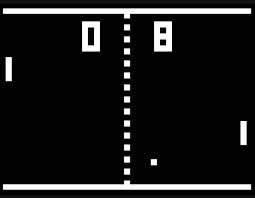
Now, video games have existed since the forties, and I can’t honestly make an argument that they all constitute great works of literature, but printed language has non-literary aspects, too; just look at cereal boxes, this guy, the instructions on a tube of Preparation H,  and the Twilight novels. However, some games clearly have storylines, and thanks to J.R.R. Tolkien, that means we can study them as literature. In 1936, Beowulf didn’t get a lot of respect. People used it to study history, the Anglo-Saxon language, or to keep their libraries warm while they pick through the works of Chaucer looking for “ye naughtye drawinges.” Tolkien, however, questioned why no one had yet looked at the poem…as a poem. In spite of its thirty-pages-of-tiny-print length, the argument astounds me with its simplicity. I get a lot of mileage out of this. Study a poem as a poem. Study a novel as a novel. Study a story as a story.
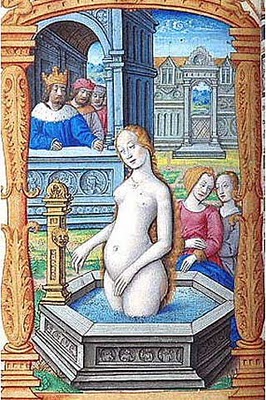
Oh, ye dirty girle! Ye needes a bathe. I bet ye like heated water...Why doth mine parchment feel sticky?

Oh, ye dirty girle! Ye needes a bathe. I bet ye like heated water…Why doth mine parchment feel sticky?

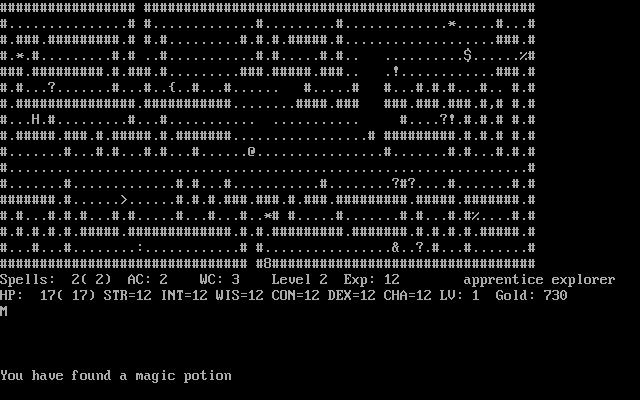
So let’s look at the stories. Early video game stories derived from Dungeons and Dragons, an innovative method of immersive, spontaneous storytelling that promptly put all its focus on bashing, thumping, cutting, and torching monsters (Picture a Fantasy Football league with a plot). All this combat required heavy-duty math skills, but thankfully in the late seventies, computers dropped in price to a nice, affordable $1300 (Equivalent of $4,800 when adjusted for inflation, 2011), so these hulking calculators soon became an excellent platform for D&D style games, with the added bonus of eliminating all that bothersome socializing. Since role-playing didn’t particularly emphasize the story over the combat, neither did the early games. In fact, games such as Rogue (pictured) seemed to emphasize players ability to interpret complex symbols without inducing migraines.
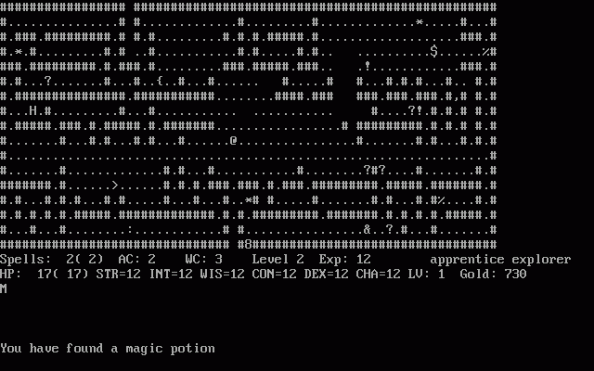
Oh God! It's horrible! We must protest all this graphic violence in video games!

Oh God! It’s horrible! We must protest all this graphic violence in video games!

The early eighties introduced simple premises, basic backgrounds for a story given in the instruction book, but not developed in-game. Certain games used knowledge of pop culture to tell stories subtly; Donkey Kong invoked the details of King Kong, Castlevania reminded players of classic horror movies, and Pitfall took shape from Indiana Jones. Developers soon began to use stories to explain details about the games, such as Link changing from left- to right-handed as they flip the sprites (a memory-saving feature, explained as Link keeping his shield toward Death Mountain out of superstition). They also used simple tricks to make powerful statements, such as Samus taking off her suit at the end of Metroid to shatter the players assumptions about gender roles, and thusly proceed to use their imaginations to de-pixilate her bikini-clad form.

So...I think I just figured out why people love these characters.

So…I think I just figured out why people love these characters.

In-game stories didn’t develop much until the late eighties with Dragon Quest/Warrior and Final Fantasy. Still, developers hadn’t yet realized that programmed computers don’t really appreciate the spontaneity of interactive storytelling the way other people do, so they designed these games in ways that let the players impose themselves onto the protagonist. However, this demanded characters with zero personality (pictured), which they eventually realized made a lousy story.

Enter Final Fantasy IV, the first time in video game history (as far as I’ve found) that introduced a protagonist with personality, conflict, development, and actual combat experience. It told an in-game story with plot and themes and all that other stuff we study in English class. Furthermore, it didn’t diminish the players emotional connection to the game at all. I mean…who among you can honestly say you felt nothing when Sephiroth killed Aeris (…spoilers?). The fact that all these gamers, proclaimed by society as de-sensitized, sociopathic potential school shooters training themselves for murder with these electronic killing simulators found the emotion to organize and submit a petition to revive her speaks to a very strong emotional connection to game characters.

But developers haven’t taken the idea of the player-as-character and crammed it all the way down the garbage disposal. Some games retain this attempt in the form of silent protagonists, something that films and novels can’t do at all (except, maybe, in choose-your-own-adventure books. Do they still publish those?). You may have noticed a concerning lack of verbosity in characters like Link, Crono, and Chell. Rather than have character conflict and development drive the story, they let other characters in the game tell the story, while the player’s actions advance game play and trigger certain events. Moral choice systems (when done correctly, like in Fallout) have a huge impact on how minor characters interact with the player, which can alter the tone of the story dramatically, and multiple endings can provide a level of suspense and uncertainty that you can’t get from a story with a single path.

I mean, how could I have known that Silent Hill 2 would interpret me looking for some way to use Angela’s knife as James contemplating suicide?

While I’ll spare most of the details from my lecture, electronic storytelling has revived old uses for an ever-present element: music. Ever wonder why people put so much effort into emoticons? I gather not many people spend their lives on MSN, AIM or ICQ anymore (I’ll bet double that no more than a handful of people even remember ICQ), but if you’ve ever had an argument with someone online, you may notice the wrath escalating disproportionately fast (theory states that if these go on long enough, someone will eventually refer to the other as “like Hitler/the nazis.”) It turns out that tone of voice doesn’t come through the printed word very easily. As a result, music, once just played as undertones to highlight parts of films, now took over as the primary driver of emotion.

Notable figures here include Koichi Sugiyama of the Dragon Quest series and a plucky kid inspired by Sugiyama’s music named Nobuo Uematsu. Uematsu resurrected old operatic ideas like theme and leitmotif, using them much in the way Wagner and other composers did at a time when the audience didn’t so much understand the language used to write the story. His scores for Final Fantasy made him incredibly popular, and by the time the series had risen to fame, musical elements and scenes played important points in the plot (e.g. the Opera House in FFVI or using the Hymn of the Faith to calm Sin in FFX). Japan requires its sixth graders to study the love theme from FFIV as part of their standard music curriculum.

Interestingly enough, music drives the plot and the action of many Legend of Zelda games, which coincidentally have retained silent protagonists well into the era of voice acted games.

Modern games, however, have found ways to take sound and music to an entirely new level. Enter Journey, a game that takes a lot of things to a new level. The game intentionally eliminates all semblance of language (except for the word “hold” on some tutorial screens) in favor of music. Austin Wintory’s score nearly earned an award, but “Grammy Nominee” describes the music about as well as “Nice Guy” describes Jesus of Nazareth. The music flows freely, adapting seamlessly to the location and actions of the player, allowing it to highlight a free-form story as effectively as a movie. A lone cello persists throughout the soundtrack, symbolizing the character, and the rest of the score interacts with it the way the character interacts with the environment.

But hey, music people have always done artsy things like that, right? Well, consider the little chime that sounds every time you press the circle button…yeah, they’ve designed that to always stay in tune with the chord in the soundtrack.

journeyWintory stated in an interview that he wrote the music to reflect Joseph Campbell’s “Hero’s Journey” monomyth theory, which the game’s story also follows. The call, supernatural aid, the mentor…even the death and rebirth (uh…spoilers?) make themselves evident in the game–a remarkable detail considering the vow of silence taken by the developers. But again, this reinforces the idea that we should study games as literature; if they share interpretive elements with epics, myths, Star Wars, and all those other things we respect as art, we should respect game developers–who create as enthusiastically as any other artist–as craftsmen putting together something they find meaningful, in which we may also find meaning.

Journey clearly makes a powerful statement about the nature of life and death, and judging by my final exam question, my students all found interpretations and meanings that even I didn’t notice before.
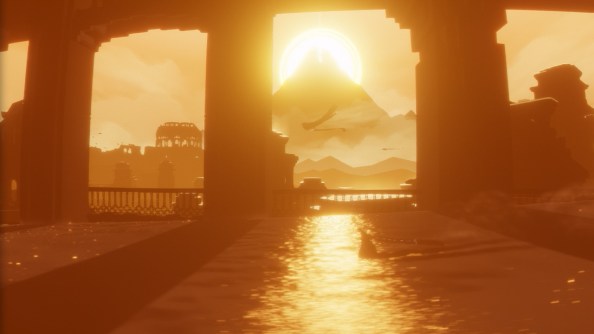
Yeah, yeah...everyone uses this image. It's the best from the game, but the rest are worth seeing, too. And picture the iconic scene (pictured) of the little Jawa-looking guy skating along the sand with the sunset in the background. The colors shift to a darker tone, and the sand shimmers like water with the mysterious mountain in the background. People all over the internet say they feel something there, and a few have even managed to put it into words. Now try to describe the scene in prose.

The technology gives us the opportunity to feel things in ways we’ve never felt before. It opens up a new venue of expression. It lets us learn on our own that huddling together with the other player keeps you warm in the snow, and we can draw our own conclusions from that free from the directives of language.

A quick google search will show you other people around the world debating the question of whether or not to consider video games art. I find it insulting to even consider the debate. With all the evidence, the previous arguments, the value people already find in it, plus the realization that film, television, comic books, and each individual genre of music all have had their debates, yet we have always eventually accepted them into the canon, the only problem I can think of asks “How can I best fit video games into the classroom?”

Thanks for keeping up with me for an extra-long entry, especially as I dropped off the humor toward the end. Naturally, I realize in the time I took to write this, I could have written entries about two games, so I promise I’ll get back to that soon. In the next few days I’ll tackle Super Star Wars. Until then, thanks for reading!