The Last Story – Wii

Last Title

Between planning lessons for school and writing about every game I play, I’ve begun to suspect that I may not actually have something to say about certain things. Certainly the terrible games like Dr. Jekyll and Mr. Hyde let me spout elegant prose as rapidly as I spout an elegant stream of profanity while playing the game, and of course the excellent books, once again like Dr. Jekyll and Mr. Hyde, lend themselves to interesting discussions of the pointlessly abstract. But honestly, some things just don’t have much worth mentioning. I’ve always intended to write about Burger Time, for instance, but while concepts of a short order cook trampling food like a grape stamper running around in flagrant defiance of health codes conjures up a delicious opportunity for ringworm jokes, it doesn’t really have much substance to it to write any more than that.

Despite the hurdles, however, I now turn your attention to The Last Story, a game so generic that even its developers decided to fill it up halfway with as many fantasy RPG tropes as they could list off in an afternoon, at which point they called it good and went home before the rancid filth of blandness they created could swell up, devour any remnants of artistic integrity still sucking meager nutrients from their soul, and chain them up and whip them until they produced a line of unwanted sequels. They did, at least, learn to avoid the fate of the Final Fantasy XIII team.

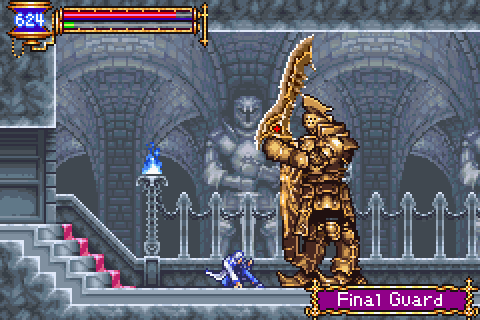
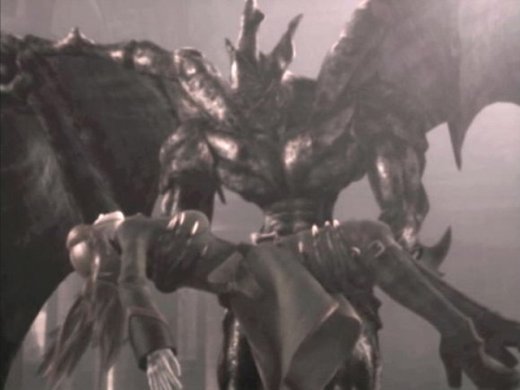
You know, I find it amazing how this in no way resembles the octopus battle from Final Fantasy IV.

You know, I find it amazing how this in no way resembles the octopus battle from Final Fantasy IV.

The not-so-subtle Final Fantasy nods in the game indicate the developers intended to take the throne that the giant RPG Series sucked into the void with the last few attempts at reinventing themselves. Obviously the synonymous titles give off a familiar vibe, jabbing our eyes, demanding attention like a Twilight book cover slapped on Wuthering Heights. The game weaves personal, political, and worldwide existential crises together, has a similar art style and logo as Final Fantasy, and even shares a few minor similarities such as series creator Hironobu Sakaguchi and composer Nobuo Uematsu.

I find it amazing how this in no way resembles a fuzzy-headed Gannondorf

I find it amazing how this in no way resembles a fuzzy-headed Gannondorf

Unfortunately, the legendary developers and beloved Fantasy elements don’t seem to push this game forward so much as drag it with the oomph of a golf cart pulling a dead horse.  The game opens with the obligatory action scene. The player takes control of Dagran, a young mercenary who we very quickly learn will act only as a supporting character when, after one battle, control switches to the real protagonist, Zael. As Reptar-themed monsters pour out of the camera’s blind spots, Zael hacks endlessly at them with a Buster-Sword-sized weapon. After a few hours of spamming the A button, I realized that the game hacks automatically, with no need to input attack commands. This made sense in Final Fantasy XII; actually, it seems a bit embarrassing that it took Sakaguchi eleven main-series games before he realized how often we used it. But at least in Final Fantasy, we had the option of programming the characters’ behavior. Yeah, it took the need to thoughtlessly mash buttons–a technique perfect by Shadow Hearts–away from us, but we never lost control, nor did we sacrifice options for battle strategy. Zael, on the other hand, when he receives the “Supernatural Aid” portion of his hero’s journey, claims the Power of the Outsider, which allows him the ability…to do something else in battle besides hack with a sword.

This move requires you to target an area on the ground as you run up the side of a wall. Both actions use the joystick. I didn't use this often.

This move requires you to target an area on the ground as you run up the side of a wall. Both actions use the joystick. I didn’t use this often.

His first new skill allows him to resurrect fallen semi-playable characters while simultaneously tempting all the enemies to hunt him down as their main target. Now you may ask what good will come from drawing all the monsters toward the person you want to revive, but I can say with confidence that Zael’s uncontrollable need to relentlessly slash everything within a two meter radius will keep your companions safely dead until you finally wrestle with the controls enough to get away from the battle. Another skill, the ambush slash, only really works going into a battle, as it requires Zael to hide. A third ability lets him attack friendly magic spells for additional effects. I had some more abilities, but like many other RPGs, the basic attack option works best, and in the Last Story it has the added bonus of not demanding surgical dexterity to perform.

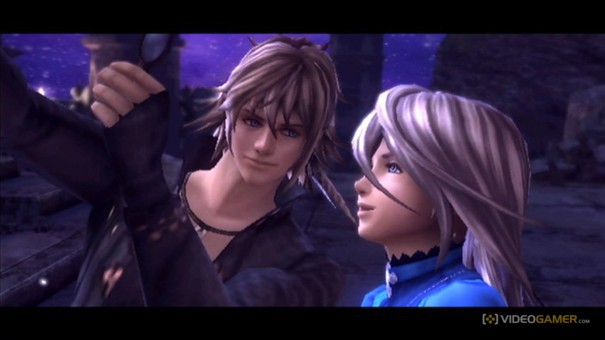
Zael putting the moves on Callista, showing her how to look at things like he can.

Zael putting the moves on Callista, showing her how to look at things like he can.

Zael lives to underwhelm. In addition to a handful of battle options, he can fire arrows from a crossbow that the enemies almost feel, and outside of battle he frequently assumes the task of… looking around the environment…for stuff. The game offers roughly 25 to 30 hours of play, which somehow still feels padded, despite its clear disdain for side quests. On an early mission Zael must go to the other side of town to get beer. And if he gets beer, he has to go get more beer. As it turns out, the game expects the player to notice things on the way and get distracted in order to further the story. The lack of direction given the player also serves no end except to pad out a short game to a minimum acceptable length. At regular intervals, the player takes control of Zael, usually as he sits in bed, and proceeds to walk around until something happens. The world doesn’t extend beyond a castle and a town, so chances are it won’t take long before you stumble into the area that triggers the cut scene, but I would appreciate maybe a hint or an arrow now and then.

The best suggested strategies in this game more often than not fall terribly short of the standard run-in-waving-your-sword-at-anything-that-moves technique.

The best suggested strategies in this game more often than not fall terribly short of the standard run-in-waving-your-sword-at-anything-that-moves technique.

I did enjoy the story. Tropes become tropes for a reason, and I saw a lot of what I like in the fantasy genre in this story. Unfortunately, the designers didn’t add any ideas to the story–except, apparently, a blues harmonica player–so I could predict twists and turns in the plot most of the time. They clearly intended the identity of the final boss to shock the player, but when the ally who had acted suspicious through the whole game suddenly failed to join the party during the final dungeon, I didn’t exactly lose my breath; I’d wager that more Superman fans would have trouble identifying Clark Kent. Also, while the length of the game makes it possible to play an RPG without asking time off from work, it also detracts from developing any of the characters enough to have their actions make sense.

From what I gather, they announced “The Last Story 2“ a while back, but only as an April Fool’s joke. I would have liked to see improvements on the game; it has potential, even if can’t deliver in the first instalment. Besides, I hated Final Fantasy XIII enough that I want other series to succeed, but I may have to wait a little longer.

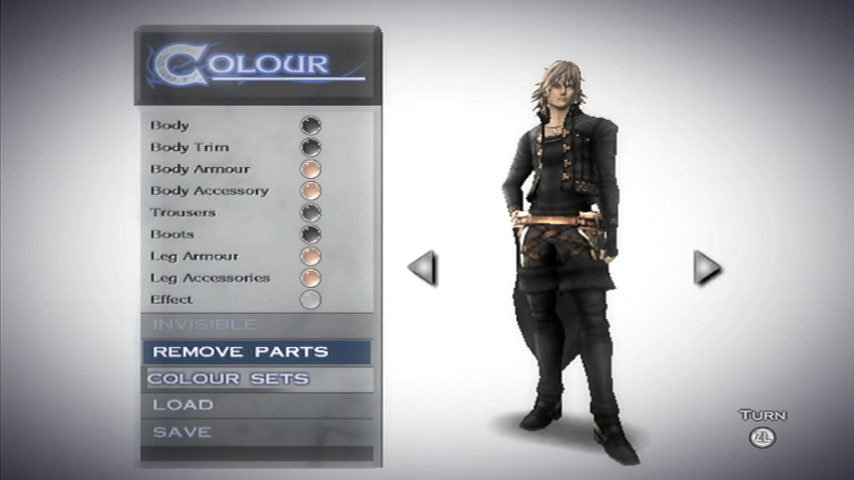
The game doesn't offer much in the way of armor variety, but it allows you to change the color. I usually went with the "invisible" dye.

The game doesn’t offer much in the way of armor variety, but it allows you to change the color. I usually went with the “invisible” dye.

Coming up soon: Minecraft, and Dragon Quest IV–if I can pry myself away from Minecraft long enough to play it.

Plants vs Zombies 2: It’s About Time – Android, iOS

A screenshot that successfully tells the player what to expect from the game--notice the load hasn't completed.

A screenshot that successfully tells the player what to expect from the game–notice the load hasn’t completed.

Plants vs Zombies got me through my last semester of grad school. Marathon reading for ten hours a day often left me twitching as though I suffered from the residual effects of a sturdy blast of electro-shock therapy. But having the trusty cartridge in my DS, ready to whip out and play a few flags of endless mode lifted my spirits like a busty cheerleader jumping up and down on the sidelines waving her…pompoms. Despite its flaws, the first Plants vs Zombies game kept my attention and stayed interesting through months of casual play. So you can imagine after delay upon delay, when the lightning bolt struck to bestow new life upon this deceased corpse of a game, I fully supported their choice to subtitle the game, “It’s About Time!”

Thanks for reading! If you enjoyed that free sample paragraph, you can continue this article by sending $1.99 to my Paypal account to unlock the next sentence! This month only, you can buy the entire next paragraph for 25% off!

And if that didn’t clue you in, the game flopped like a trout sunbathing on a stone slab. Yes, the game garnered high scores and praise from critics and spread itself like a plague to the rabid 25 Million rabid PvZ enthusiasts who downloaded the game without a trace of realization that film directors have used zombies for years to criticize mass consumerism. Yes, it designed new worlds with clever themes for their zombie attackers.  And yes, it gave us brand-new plants and let us unlock costumes to make them look cuter.

This screenshot alone nearly reaches the total I paid for the completed original

This screenshot alone nearly reaches the total I paid for the completed original

But when most of the features hide behind the checkout counter of the online store, the game basically amounts to playing a commercial, and even with all the optional purchases you couldn’t tempt viewers with such a threadbare ad if you played it during the Superbowl. In fact, I only felt inspired to make a single purchase during the entire game; the HD version of the original. (The DS version had a tendency to seize up when the player blankets the entire field with Cob Cannons) The DVD rack in my living room will testify to my willingness to shell out as much as $60 for a game, but I would rather pay more for a complete game than a pittance of coins to buy parts in installments. Naturally though, if they thought they could have made more money with a single up-front cost, they would have sold it that way. Rather, PvZ2 inundates you with an avalanche of tiny purchases that EA hopes no one will tally up to realize how much money they’ve actually vaporized playing the game.

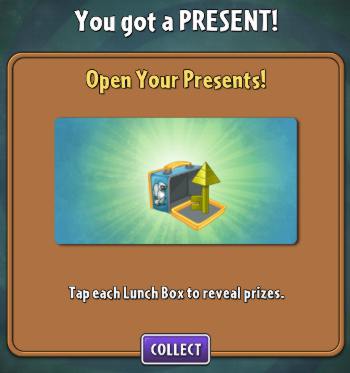
Yetis drop lunchboxes with prizes. Don't expect to get this, though; they deleted keys from the game.

Yetis drop lunchboxes with prizes. Don’t expect to get this, though; they deleted keys from the game.

Furthermore, taking a page from Microsoft’s book, they haven’t even completed the game yet. One world, as of the time of this writing, still remains blacked out with question marks enticing us to keep us playing indefinitely, so they can dangle their unlockables in front of us like the light on an angler fish’s head. To add to this, every few days they’ll offer a “yeti event” or a “party,” a bonus level that lets you…kill a robotic yeti or play a specialized mini-game level, which I’ll admit had me running to the game every night until I realized that this offered virtually nothing except a handful of in-game cash too meager to use for anything because they’d rather sell you in-game cash in exchange for your real cash. Fair trade, right? Think of it like buying a gift certificate, only less useful. While the shop in the first game had interesting items that added to all aspects of game play, money in PvZ2 will only buy you Deus-ex-Machina attacks, which don’t fall in the category of “useful tools” since you can finish every (existing) level with just the (free) plants.

The map offers players branching paths that let them decide what order to unlock prizes. Don't expect to see this; they removed it from the game.

The map offers players branching paths that let them decide what order to unlock prizes. Don’t expect to see this; they removed it from the game.

To add to the frustration of not having a completed game, PvZ2 underwent a massive redesign about a month ago. Formerly a map with branching paths that could be unlocked by keys randomly found (but more often purchased) by completing challenges, they opted to make it linear, offering angry players a handful of in-game cash to sooth the anger welling up over the fact that some of us played the game for weeks trying to build up those damn keys! The redesign also added the gigantuar mini-bosses from the original, but even with the addition, the variety of zombies, attack patterns, and–even with all the purchasable items the number of plants.

Also, don’t look for mushrooms, night levels, roof levels, aquatic plants, or a Zen garden. The mini-games have also lost variety and almost entirely resemble the main game, as well. Factor in the change from branching paths to a linear progression, and one may suspect the game designers visualize us as helpless dolts, fearful of having to make the slightest decision without consulting our life coach or dialing up our psychic friend or pulling de-contextualized phrases out of the Bible like we’d read the phone book and interpreting them as literally as possible. Sorry, but even the simplest of minds enjoys making their own decisions once in a while, but when you strip those decisions down to which handful of plants you’ll use each level, the game becomes boring very quickly.

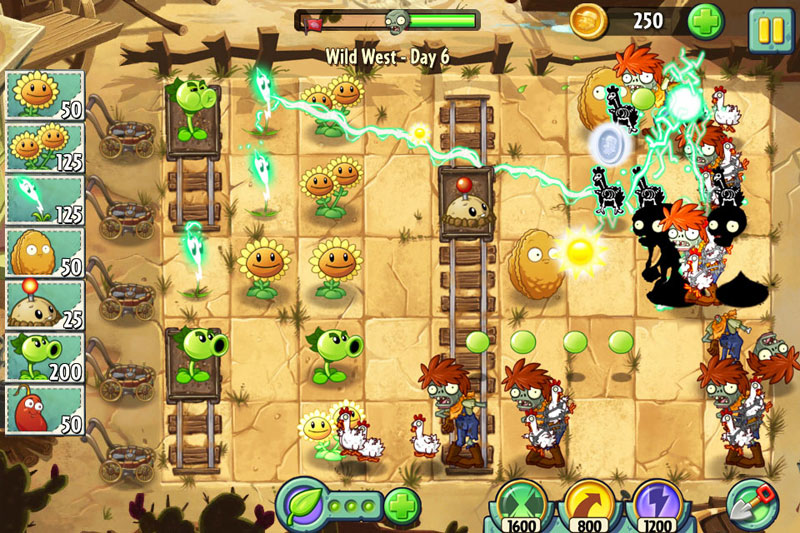
This shot shows some of the interesting mechanics added to the game. Unfortunately, they don't make it as interesting as it looks

This shot shows some of the interesting mechanics added to the game. Unfortunately, they don’t make it as interesting as it looks

Recognizing the fact that I don’t always describe very well the games I write about, I suppose you may appreciate a run down of the game to figure out what I’ve yammered on about for the last three pages. Tower defense. Zombies come at you. Five rows of them. Plants based off clever puns. Pea shooters, iceberg lettuce, bonk choy. Zombies eat plants; zombies eat your brains. There. Does that help?

Yup. Still waiting. They call it future world, but by the time they release it they'll have to call it "the Past."

Yup. Still waiting. They call it future world, but by the time they release it they’ll have to call it “the Past.”

The game doesn’t exactly thrive on complexity. The original did very well not because it reinvented the tower defense genre, but because they put a lot of care into the elements of the game, easily giving us a variety of problems, decisions, strategies, etc that forced us to adapt level-by-level. The game offered amusingly misspelled notes left by zombies who offered very thin facades to coax us into opening our doors to them (one note even bearing the signature “mom (not the zombies)”). Plants vs Zombies 2 replaces the variety of elements with a variety of sales pitches, and rather than genuinely humorous interludes, we get your neighbor, Crazy Dave, searching through time to find a taco he ate at the beginning of the game; this seems to attempt Stupid Humor (think “Napoleon Dynamite”), and while a lot of people seem to enjoy Stupid Humor, the returning fans will miss the Clever Wit of the original, while the taco quest becomes the same joke repeated indefinitely. Literally indefinitely–we have no idea when they’ll release the next world of the game.

Plants vs Zombies 2 doesn’t qualify as retro, I know, but I thought I should drop in a reminder about why we should play more retro games.  As game developers lean more and more toward terrible ideas, gamers need a refuge where they can play something fun. So ignore the positive reviews. PvZ2 loses its charm very quickly, while the original will hold your attention like Fallout 3 on Ritalin. Buy that one instead.

—————

Update (July 7, 2014): PvZ has, by now, released two new worlds for this game. However, by this point, I have long since stopped caring.

Super Star Wars (series) – SNES

Geeky Star Wars fans dress up their girlfriends like this. True Star Wars fans prefer to put themselves in Leia's place.

Geeky Star Wars fans dress up their girlfriends like this. True Star Wars fans prefer to put themselves in Leia’s place.

Despite my previous piece on the literary and artistic value of games, I’d like to make it perfectly clear that the deeper meaning many artists put into their work does no more than ask, “Do you want to super-size it?” That statement alone reveals the corporate world’s fetish for up-selling, as they used to ask, “Do you want fries with that,” right up to the point when they realized everyone always bought fries already, so why not try to sell us bigger fries? Andy Warhol realized that he couldn’t tell the difference between art and advertising, so he gave us a painting of a Campbell’s Soup can, which everyone treats as a cute novelty without actually understanding his point.

And so we get to video games based on movies; those of you my age might laugh as you remember such debacles as “Last Action Hero,” “Beethoven,” or “Home Alone.” More recently, we’ve had to suffer through Harry Potter games and an entire Lord of the Rings trilogy.  I fully expect a Hobbit: Desolation of Smaug movie to capitalize on the lousier points of the film and give us long sequences where we can have Legolas use every tree stump, barrel, ax blade and goblin as a snowboard.

It may look innoculous, but this level will make your hair fall out.

It may look innocuous, but this level will make your hair fall out.

Still, in the feeding frenzy of capitalism surrounding us, a few games actually make me stand up and proudly admit, “Meh. Not too bad,” and most of these games belong to the Star Wars franchise. Don’t ask me why. After announcing that N*Sync would guest star in Attack of the Clones, I nearly swore off Lucasfilm entirely, but since they backpedaled on that decision to avoid the Force turning angrily against them, I have to admit that George Lucas doesn’t always make crash-and-burn decisions.

Let’s face it, though; if nothing else, Lucas’ studios have consistently pulled of effects and spectacles well, and in run-and-gun action games like Super Star Wars, you don’t really need much else.

Yes, dear readers, I have wracked my brain for nigh on two weeks and I haven’t thought of anything else to say about this game–rather, these games–than “Meh. Don’t really need much else.”

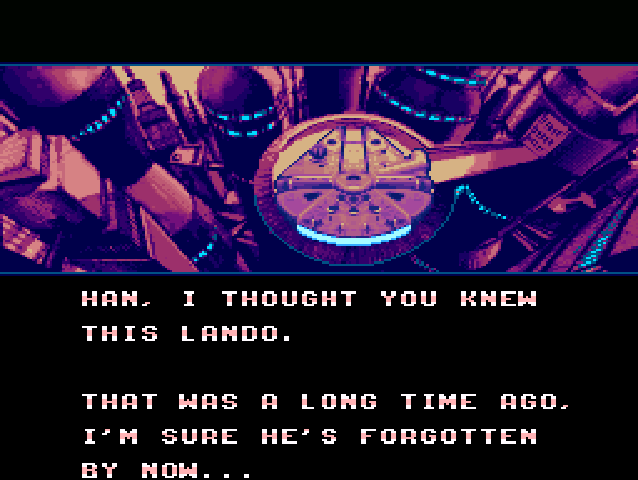
Note: We need Chewie's lines. This completely changes the meaning of the story.

Note: We need Chewie’s lines. This completely changes the meaning of the story.

The three games that make up the Super Star Wars series (Super Star Wars, Super The Empire Strikes Back, and the aptly named Super Weekend at Bernies 3; Return of the Bernie) recount the story of Luke Skywalker’s journey to become a Jedi and save the galaxy. They do this mostly through cut scenes in between levels, more as a side-story, like a salad to a run-and-gun platforming entree. Also, they included gameplay. The gameplay lets players romp merrily through said galaxy killing things that usually have no relation to the movies. But hey…lightsabers. Doesn’t really need much else.  The first game opens with the familiar scene of Darth Vader capturing Leia’s ship and the droids ejecting toward the planet Tatooine. From their, we switch to the not-as-familiar scene of Luke dashing through the desert with a blaster as though he swore revenge on it for killing his mom. The first stage ends with the explosive death of the Sarlac Pit, thus rendering the climax of act I of Super Return of the Jedi completely nonsensical. From there, he sets off on a quest to liberate C3-PO, a droid he’s never met before, by killing his way through the entire population of jawas that he and his uncle depend upon to do business. I don’t know, Luke. Why would imperial stormtroopers want to slaughter jawas?

Once you’ve accomplished that task, relax, get yourself a snack, and use the bathroom because you’ve got about two and three quarters of a game left of these I personally enjoy the way they reworked Luke surrendering to Vader in Jedi as an epic battle through the forests of Endor, followed by a hack-and-slash run through the Death Star before he finds Vader and the Emperor.

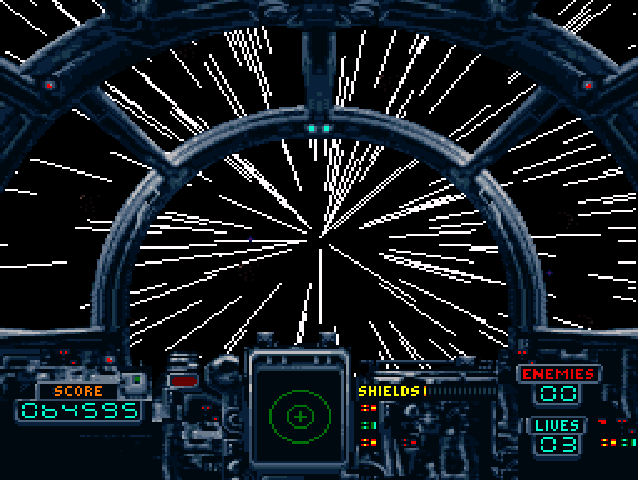
Drive along a Northern Michigan highway at night in the winter, then switch on your brights. Seriously; it looks just like this.

Drive along a Northern Michigan highway at night in the winter, then switch on your brights. Seriously; it looks just like this.

But before you consign the cartridge you bought in exchange for handful of pennies and that shiny bottle cap to the ebay scrap heap, give it a run. LucasArts kept the nonsense to a minimum, really, and certain game elements follow a modicum of logic. Luke begins with a blaster and gets the lightsaber when he meets Ben Kenobi. He can switch between them from that point on, but the blaster deals more damage, so the game at least nudges you to follow the progression of Luke’s training. The lightsaber doesn’t become a reasonably powerful weapon until Luke lands on Dagobah in Empire, although it does deal a fair amount of damage to wampas. By Jedi, Luke loses the ability to use a blaster altogether.

On Dagobah, he can learn special Force abilities by collecting hidden power-ups, but if you don’t find them, you have to finish the duration of Empire without those abilities. Generally, though, using the Force causes more problems than it solves thanks to the clunky control scheme. For example, one skill lets the player toss the lightsaber and steer it around the screen to hit enemies. I might even enjoy that if I didn’t have to completely relinquish control of Luke, leaving him standing like a Tauntaun staring in the headlights of an oncoming AT-AT.  The levitate ability helped me stay out of holes, (a pesky element from the platforming genre, who like a drunken uncle at a Thanksgiving dinner only made it in because someone felt the need to include everyone in the family) but I primarily stuck with the heal ability throughout the game.

They mumble this guy's name only once in a loud action scene, but somehow we all know Boba Fett. We have a Boba Fetish.

They mumble this guy’s name only once in a loud action scene, but somehow we all know Boba Fett. We have a Boba Fetish.

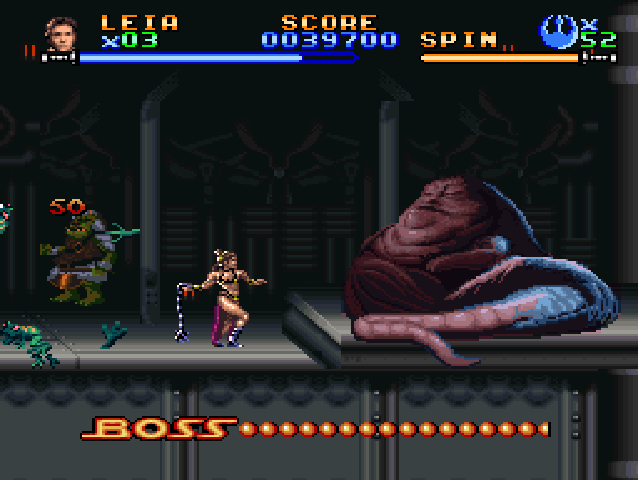
Chewie and Han each have small tweaks to balance out their power with Luke’s, although their default level-2 blaster disappears for the third game, making them somewhat underpowered. In Jedi, Wicket becomes a playable character, as do Leia in three different costumes, although compared to the other characters, she doesn’t have much to offer, and she usually fades into the background of the other characters, except for the fight with Jabba.

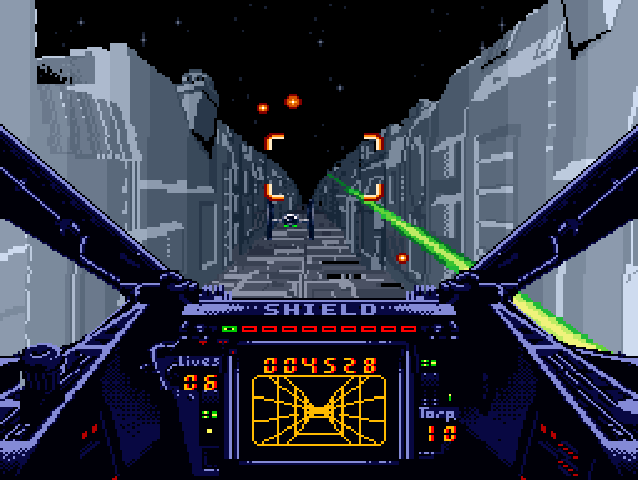
I know I've gone lightly on the side-scrolling screenshots, but the games go for an interesting variety with the vehicle levels.

I know I’ve gone lightly on the side-scrolling screenshots, but the games go for an interesting variety with the vehicle levels.

I really don’t have much to say about these games individually. They didn’t exactly innovate much as they released these over the course of three years. Even with minor differences between them, they could play as the same game. However, they do score points for creativity in their 3D vehicle levels. While many play out similarly, each one feels like driving a different Star Wars ship (even sometimes when different levels use the same vehicle). The player has a chance to drive Luke’s speeder, the X-Wing fighter, Snow Speeders, and the Millenium Falcon, each one in a unique level that, for the most part, resemble the movies with a degree of accuracy better than…uh…with a degree of accuracy.

Fortunately, these games play well, and despite only mildly acknowledging that they should bear a resemblance to the movie, it gives the player a Star Warsey feel to it. Worth playing, even for a movie tie-in game, but at least they didn’t base it off a commercial…or make it into a commercial. Speaking of which, look out for a Plants vs Zombies II article. I know it doesn’t qualify as retro, but I have important things to say.

May the Force not bend your NES connector pins out of place.

A Brief History of Video Games as Literature

Final exam time has crawled up from the depths of the calendar and overtaken all my time with grading, but fortunately it will soon shuffle us off this academic coil and unpause the game works, enabling me to write a little more often, at least for a few weeks. My current projects involve “The Last Story,” a conglomeration of tropes and cliches from your favorite fantasy RPGs, and the entire Super Star Wars trilogy; however, the latter may take some time to get to, as I haven’t quite figured out how I can stretch out multiple identical games into different articles without showing the awe-inspiring, death-defying cut-and-paste skills that Lucas Arts seems to have employed to make the games. Once I figure that out, I may spy some Mega Man articles in my crystal ball.

Yes, I just referred to a 8-bit icon loved and admired by more people than Ghandi, Martin Luther King Jr, and Little Debbie combined as formulaic. Before you sharpen your pitchforks and light your torches, please reconsider your reaction to branding something with the term as a negative. This entire semester of molding minds (or, perhaps, minding molds) culminated with an argument that video games count in the literary world, and that the nature of technology even allows us to expand on methods of communicating a story to an audience. As such, we have to understand that different rules apply to different media, and while House, M.D. may not push the limits of philosophy and abstract reasoning, rewriting the plot of Star Wars (which rewrites ancient plots itself) into thatgamecompany’s Journey might actually let you expand your mind without the fear of bad trips, chronic health problems and risk of incarceration.

Point one: for all the intricate stories ancient people weaved, they lacked imagination. Even disregarding all their formulas, if you wanted to hear a story, you needed someone to tell it to you. Interested in the Odyssey or Gilgamesh? Call in a bard to recount the story. Need an emotional catharsis to purge your soul? Go to the theatre and listen to them. Even if you knew how to read and had access to books, you would actually tell the story to yourself–they didn’t invent silent reading until the later Middle Ages. Music helped, but until the Romantic period, they didn’t try to tell stories with music without using them to highlight lyrics.

If you want genius, though, go to youtube and search “Buster Keaton.” This guy can run comedic circles around my best attempts at humor. I recommend “the Boat.” These silent movie stars oozed creativity and innovation. They had to. They couldn’t talk, but they could do things not possible in a theatre or easily described in a book (Seriously. Buster Keaton. The Boat. I’ll wait for you here). When the Jazz Singer learned how to sync up an audio track with the film, they gained a freedom that would have made Sophocles wet his pants.

A romantic comedy about the back-and-forth relationship between two kids from opposite sides of the tracks.

A romantic comedy about the back-and-forth relationship between two kids from opposite sides of the tracks.

Now, video games have existed since the forties, and I can’t honestly make an argument that they all constitute great works of literature, but printed language has non-literary aspects, too; just look at cereal boxes, this guy, the instructions on a tube of Preparation H,  and the Twilight novels. However, some games clearly have storylines, and thanks to J.R.R. Tolkien, that means we can study them as literature. In 1936, Beowulf didn’t get a lot of respect. People used it to study history, the Anglo-Saxon language, or to keep their libraries warm while they pick through the works of Chaucer looking for “ye naughtye drawinges.” Tolkien, however, questioned why no one had yet looked at the poem…as a poem. In spite of its thirty-pages-of-tiny-print length, the argument astounds me with its simplicity. I get a lot of mileage out of this. Study a poem as a poem. Study a novel as a novel. Study a story as a story.

Oh, ye dirty girle! Ye needes a bathe. I bet ye like heated water...Why doth mine parchment feel sticky?

Oh, ye dirty girle! Ye needes a bathe. I bet ye like heated water…Why doth mine parchment feel sticky?

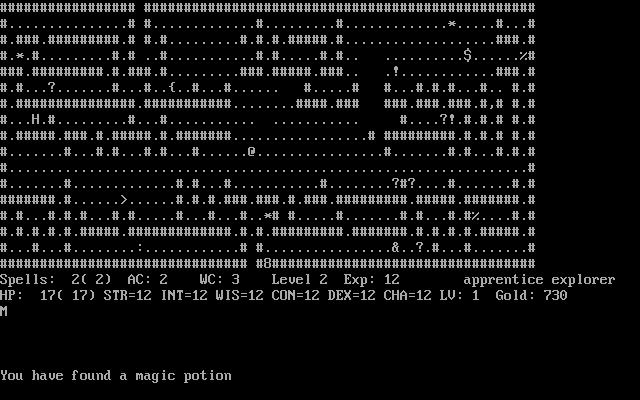
So let’s look at the stories. Early video game stories derived from Dungeons and Dragons, an innovative method of immersive, spontaneous storytelling that promptly put all its focus on bashing, thumping, cutting, and torching monsters (Picture a Fantasy Football league with a plot). All this combat required heavy-duty math skills, but thankfully in the late seventies, computers dropped in price to a nice, affordable $1300 (Equivalent of $4,800 when adjusted for inflation, 2011), so these hulking calculators soon became an excellent platform for D&D style games, with the added bonus of eliminating all that bothersome socializing. Since role-playing didn’t particularly emphasize the story over the combat, neither did the early games. In fact, games such as Rogue (pictured) seemed to emphasize players ability to interpret complex symbols without inducing migraines.

Oh God! It's horrible! We must protest all this graphic violence in video games!

Oh God! It’s horrible! We must protest all this graphic violence in video games!

The early eighties introduced simple premises, basic backgrounds for a story given in the instruction book, but not developed in-game. Certain games used knowledge of pop culture to tell stories subtly; Donkey Kong invoked the details of King Kong, Castlevania reminded players of classic horror movies, and Pitfall took shape from Indiana Jones. Developers soon began to use stories to explain details about the games, such as Link changing from left- to right-handed as they flip the sprites (a memory-saving feature, explained as Link keeping his shield toward Death Mountain out of superstition). They also used simple tricks to make powerful statements, such as Samus taking off her suit at the end of Metroid to shatter the players assumptions about gender roles, and thusly proceed to use their imaginations to de-pixilate her bikini-clad form.

So...I think I just figured out why people love these characters.

So…I think I just figured out why people love these characters.

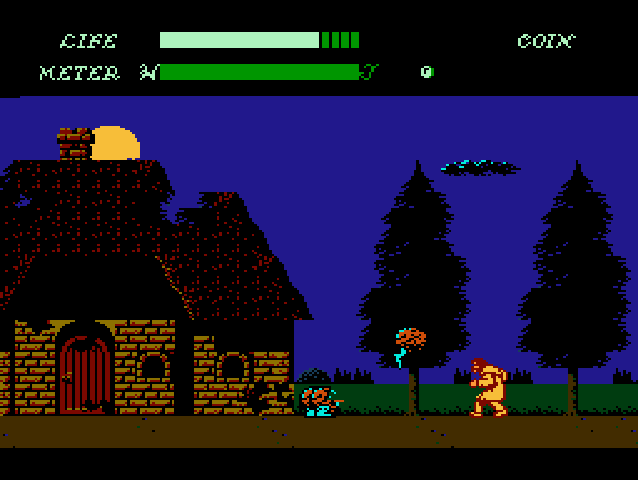
In-game stories didn’t develop much until the late eighties with Dragon Quest/Warrior and Final Fantasy. Still, developers hadn’t yet realized that programmed computers don’t really appreciate the spontaneity of interactive storytelling the way other people do, so they designed these games in ways that let the players impose themselves onto the protagonist. However, this demanded characters with zero personality (pictured), which they eventually realized made a lousy story.

Enter Final Fantasy IV, the first time in video game history (as far as I’ve found) that introduced a protagonist with personality, conflict, development, and actual combat experience. It told an in-game story with plot and themes and all that other stuff we study in English class. Furthermore, it didn’t diminish the players emotional connection to the game at all. I mean…who among you can honestly say you felt nothing when Sephiroth killed Aeris (…spoilers?). The fact that all these gamers, proclaimed by society as de-sensitized, sociopathic potential school shooters training themselves for murder with these electronic killing simulators found the emotion to organize and submit a petition to revive her speaks to a very strong emotional connection to game characters.

But developers haven’t taken the idea of the player-as-character and crammed it all the way down the garbage disposal. Some games retain this attempt in the form of silent protagonists, something that films and novels can’t do at all (except, maybe, in choose-your-own-adventure books. Do they still publish those?). You may have noticed a concerning lack of verbosity in characters like Link, Crono, and Chell. Rather than have character conflict and development drive the story, they let other characters in the game tell the story, while the player’s actions advance game play and trigger certain events. Moral choice systems (when done correctly, like in Fallout) have a huge impact on how minor characters interact with the player, which can alter the tone of the story dramatically, and multiple endings can provide a level of suspense and uncertainty that you can’t get from a story with a single path.

I mean, how could I have known that Silent Hill 2 would interpret me looking for some way to use Angela’s knife as James contemplating suicide?

While I’ll spare most of the details from my lecture, electronic storytelling has revived old uses for an ever-present element: music. Ever wonder why people put so much effort into emoticons? I gather not many people spend their lives on MSN, AIM or ICQ anymore (I’ll bet double that no more than a handful of people even remember ICQ), but if you’ve ever had an argument with someone online, you may notice the wrath escalating disproportionately fast (theory states that if these go on long enough, someone will eventually refer to the other as “like Hitler/the nazis.”) It turns out that tone of voice doesn’t come through the printed word very easily. As a result, music, once just played as undertones to highlight parts of films, now took over as the primary driver of emotion.

Notable figures here include Koichi Sugiyama of the Dragon Quest series and a plucky kid inspired by Sugiyama’s music named Nobuo Uematsu. Uematsu resurrected old operatic ideas like theme and leitmotif, using them much in the way Wagner and other composers did at a time when the audience didn’t so much understand the language used to write the story. His scores for Final Fantasy made him incredibly popular, and by the time the series had risen to fame, musical elements and scenes played important points in the plot (e.g. the Opera House in FFVI or using the Hymn of the Faith to calm Sin in FFX). Japan requires its sixth graders to study the love theme from FFIV as part of their standard music curriculum.

Interestingly enough, music drives the plot and the action of many Legend of Zelda games, which coincidentally have retained silent protagonists well into the era of voice acted games.

Modern games, however, have found ways to take sound and music to an entirely new level. Enter Journey, a game that takes a lot of things to a new level. The game intentionally eliminates all semblance of language (except for the word “hold” on some tutorial screens) in favor of music. Austin Wintory’s score nearly earned an award, but “Grammy Nominee” describes the music about as well as “Nice Guy” describes Jesus of Nazareth. The music flows freely, adapting seamlessly to the location and actions of the player, allowing it to highlight a free-form story as effectively as a movie. A lone cello persists throughout the soundtrack, symbolizing the character, and the rest of the score interacts with it the way the character interacts with the environment.

But hey, music people have always done artsy things like that, right? Well, consider the little chime that sounds every time you press the circle button…yeah, they’ve designed that to always stay in tune with the chord in the soundtrack.

journeyWintory stated in an interview that he wrote the music to reflect Joseph Campbell’s “Hero’s Journey” monomyth theory, which the game’s story also follows. The call, supernatural aid, the mentor…even the death and rebirth (uh…spoilers?) make themselves evident in the game–a remarkable detail considering the vow of silence taken by the developers. But again, this reinforces the idea that we should study games as literature; if they share interpretive elements with epics, myths, Star Wars, and all those other things we respect as art, we should respect game developers–who create as enthusiastically as any other artist–as craftsmen putting together something they find meaningful, in which we may also find meaning.

Journey clearly makes a powerful statement about the nature of life and death, and judging by my final exam question, my students all found interpretations and meanings that even I didn’t notice before.

Yeah, yeah...everyone uses this image. It's the best from the game, but the rest are worth seeing, too. And picture the iconic scene (pictured) of the little Jawa-looking guy skating along the sand with the sunset in the background. The colors shift to a darker tone, and the sand shimmers like water with the mysterious mountain in the background. People all over the internet say they feel something there, and a few have even managed to put it into words. Now try to describe the scene in prose.

The technology gives us the opportunity to feel things in ways we’ve never felt before. It opens up a new venue of expression. It lets us learn on our own that huddling together with the other player keeps you warm in the snow, and we can draw our own conclusions from that free from the directives of language.

A quick google search will show you other people around the world debating the question of whether or not to consider video games art. I find it insulting to even consider the debate. With all the evidence, the previous arguments, the value people already find in it, plus the realization that film, television, comic books, and each individual genre of music all have had their debates, yet we have always eventually accepted them into the canon, the only problem I can think of asks “How can I best fit video games into the classroom?”

Thanks for keeping up with me for an extra-long entry, especially as I dropped off the humor toward the end. Naturally, I realize in the time I took to write this, I could have written entries about two games, so I promise I’ll get back to that soon. In the next few days I’ll tackle Super Star Wars. Until then, thanks for reading!

Dragon Quest / Dragon Warrior – NES, GBC

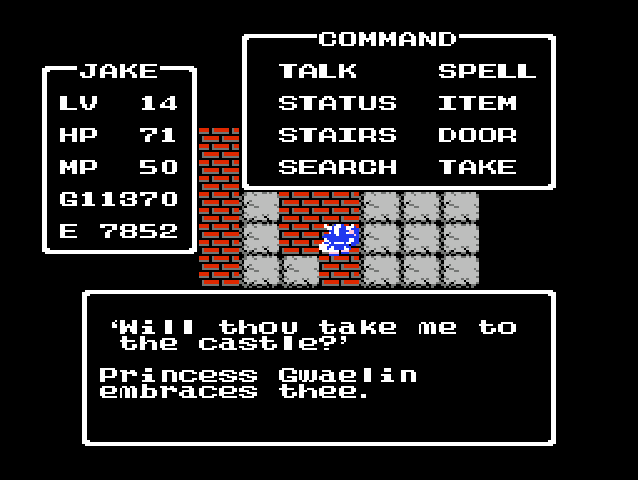
Yep...she makes you carry her halfway around the world.

Yep…she makes you carry her halfway around the world.

In tenth grade, my school required me to buy a graphing calculator. My trusty TI-85 and I became inseparable when I realized it came with its own programming language. I spent days in my bedroom, hunched over my calculator with thumbs blitzing like epileptic clog dancers until I managed to program a simple, shoddy dungeon crawler with about 20 rooms and 4 or 5 monsters that could beat you into negative hit points. It filled the calculator’s entire memory, had more bugs than a gas station bathroom, and I only played it once, but I still loved it. The next year I upgraded to a TI-89 and shinier, newer games found their way to me, including Phoenix, a 4-level version of Mario, a version of Tetris where blocks fell all the way down when their supporting blocks vanished, and a four-screen-map sequel to Final Fantasy VII with two characters, one boss fight, not enough monsters to level-up, and an inconclusive ending.

Any of these math-class knock-offs released on a dedicated gaming console would have undoubtedly given the impression that the video game industry had replaced all their experienced developers with a team of lemurs who had a penchant for writing fanfiction. They glitched. They wasted memory. They ran poorly on systems not designed for games. I had a Playstation and an N-64 by this point.  I didn’t need these crummy games; yet I still played them. I mention this because my recent play-through of the 1986 RPG legend, Dragon Warrior, left me in a quandary, puzzled over how games with as much substance as a half-finished knock-knock joke written on a pizza box can gather a large enough fan following to inspire one of the most long-lived series in video game history.

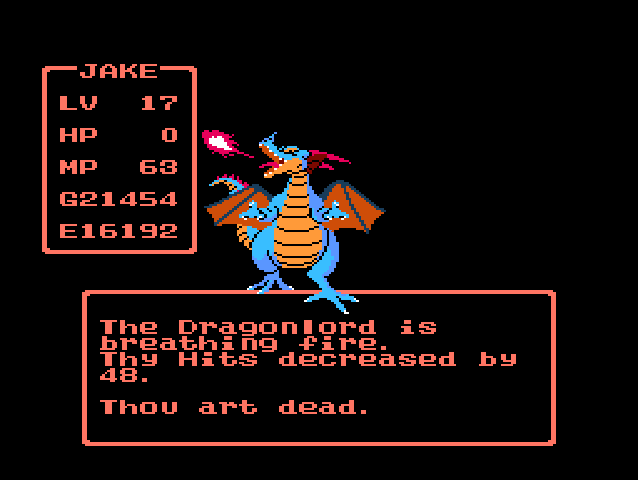
GwaelinDragon Warrior (known in Japan as “Dragon Quest”) hails from an age where RPG developers wanted to re-create the Dungeons and Dragons experience without the dice, paper, or need for that pesky socialization, but hadn’t yet figured out that interactive storytelling doesn’t exactly work the same way with pre-programmed computer characters.  As such, you play as _______, and up-and-coming warrior with the charm, charisma and personality of Edward Cullen after eating his weight in magic brownies. The King of Tantagel, in a display of straightforwardness that most video game mystics would find offensive, gives you a simple task: 1) Find the princess and 2) Kill the Dragonlord. After which, young ________ ambles through the world, slaughtering the indigenous fauna until he feels confident enough to carry out the assassination the king entrusted to him.

As much as the simplicity sounds like a breath of fresh air, however, we play games exactly for the roundabout nature of questing. In fact, if you’ve spent any length of time with literature professors, they’ll remind you that the world’s alleged greatest, most classic piece of literature focused entirely on Odysseus gallivanting around the Mediterranean for years, cavorting with nymphs while “guilt” over his marital fidelity “tortured” him, when it may have only taken him two or three weeks simply to walk home. I get that NES cartridges didn’t have the capacity to store complex stories, but like most RPGs from the 1980s, Dragon Warrior has a problem with math. Leveling up to the point where the Dragonlord won’t vaporize you like a bottle of  Zippo fluid requires over 20,000 experience. The most reasonable enemy to fight while level grinding gives you 54. With nothing to do in-game, I hope you have a second TV in your living room because you may want to put on a movie while you grind.

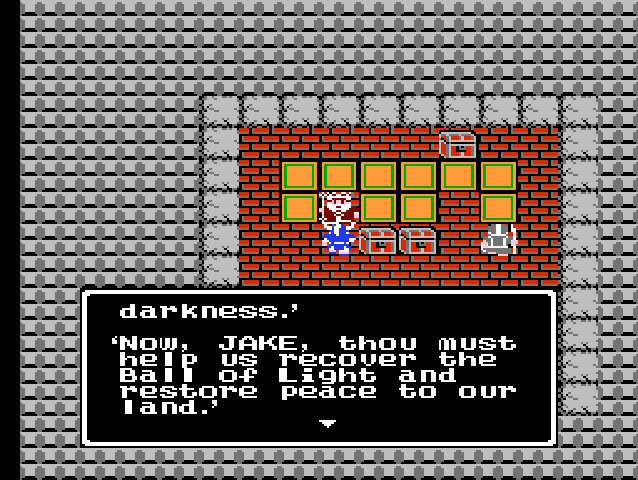
I humbly accept this quest my liege, and...did you just take my wallet?

I humbly accept this quest my liege, and…did you just take my wallet?

Furthermore, your gold supply creeps up with an impressive lack of urgency, while weapons and armor can run as high as 14800. To add to the tedium, every time ________ dies, he wakes up in front of the King of Tantagel, who admonishes you for having the gall to allow the overpowered monsters of the countryside maul you to death. The first time this happened, I didn’t realize that I kept all the experience earned since I last saved because my gold stock had dropped substantially from the moment of my death. But Eventually I realized that in addition to chewing you out for your audacious apathy toward life, the King takes half your gold every time he revives you.

Is it to late to reconsider your offer?

Is it to late to reconsider your offer?

After my initial outburst of anger at having to replenish larger and larger sums of money at each death, this got me thinking. One of the inconsistencies in the design, only certain buildings have roofs and entrances, while the rest simply appear as walled-off areas with a gap to pass through. The fact that some areas have inside maps suggests that the houses without them actually remain open to the elements. With a king who rifles through dead men’s pockets for loose change, I began to wonder if the Dragonlord might actually want to enact social change in the land of Alfgard. Perhaps instead of the black-and-white good-versus-evil trope of the fantasy genre, the villain’s crime doesn’t extend beyond threatening the provincial villagers with scary, scary change.  Unfortunately, while the game does offer the chance to team up with him, taking that option will end in a game-over after days and days of piling up monster corpses for the scraps of stat bonuses necessary to get that far.

First the old man asks me to find his balls, and now this guy?

First the old man asks me to find his balls, and now this guy?

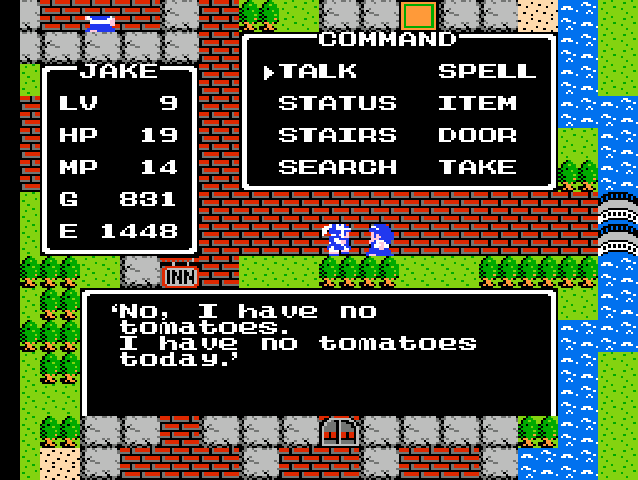
Another factor that compounds the tedium stems from the cryptic hints and clues as to how to finish your quest, gleaned from random townsfolk throughout the game. The King shoves you out the door with absolutely zero direction, and every step you have to take you have to guess based on riddles thrown at you. They’ll point you in vague directions, or suggest items that you must infer you need to progress, or even tell you to visit certain people in certain towns, most of the time leaving you to guess the names of each town because the game won’t label them in any way. Rather than send myself into an angry rant, let me describe it this way; Any game that forces me to look up a walkthrough to progress automatically earns one strike against it. If upon figuring out what I need to know, I still feel like I couldn’t have figured it out on my own no matter how much time I gave it, the game earns another strike. Dragon Warrior forced me to create a third category; games where I look up the walkthrough and still can’t figure out the puzzles.

Dragon Warrior boasts its artwork, done by Akira Toriyama (Dragonball, Chrono Trigger), which could have saved this game…if I had seen any of his influence in it. Maybe the designers based the sprites off the interesting, colorful designs that probably looked something like Goku, but the 16×16 pixel designs couldn’t even hint that Toriyama had any hand in the game development. Someone else clearly did the box art, and I even downloaded the original instruction manual, hoping for more than the second-rate fan art that often graced the pages of NES games intended for 8-year-olds. But no. Even Toriyama couldn’t save this game.

RetroArch-0907-094525
But still, as the first NES-era RPG released in Japan, the series succeeded. People there love it. They perform Dragon Quest music at major symphonic performances. Video games hold an advantage over movies in that their sequels don’t have to recycle the rotting corpses of the original, so I do trust that the later games in the series surpass the first by far. I can only explain its success via my calculator story; the portability and disguise of an education tool allowed me to take games into places previously forbidden, places I couldn’t exactly lug my Playstation.  Having it with me gave me an option. I enjoyed it more for the novelty of its existence rather than the value of its games, and Dragon Warrior can certainly claim the same novelty for its era and console. Still, the painfully slow pace of the grinding, also seen in Final Fantasy (released the following year in both Japan and North America, while Dragon Quest waited three years to cross the pacific…I wonder if that has anything to do with the popularity of each series in each region.), along with the dangerously unstable battery-backed saves of the NES cartridges, tell me I should put my time into the SNES-era games instead.

Castlevania: Aria of Sorrow – GBA

Aria of Sorrow Box Art
I have a confession to make; I had never played a Castlevania game other than the NES installments until recently, when I picked up Castlevania: Aria of Sorrow. But hey, I enjoyed the 8-bit games enough, and this one has a really cool name. Sad to say, Aria of Sorrow involved no singing whatsoever, and I only approached sorrow somewhat at the beginning of this sentence when I said, “Sad to say.” I noticed some angry characters, some scheming characters, and some characters completely devoid of any emotion or motivating force at all, but no one felt even a little down, even at the mortal wounding of one of the NPCs. So the title may have misled a little; the Venture Bros. proved that you can call yourself “The Monarch,” but if you dress yourself and your henchmen in butterfly costumes, your intended intimidation will fall drastically short.

Furry and *Fabulous*!

Furry and *Fabulous*!

But titles mean very little, so why not dig into the game itself? The player takes control of Soma Cruz, a young boy whose fur-trimmed coat suggests his mother would have preferred a girl, and whose name suggests his father hoped for an iced tea or a bowl of instant ramen or something. Soma and his female companion, Mina Hakuba–whose name may or may not irrelevantly suggest “Mina Harker”–intend to watch an eclipse, but end up in Dracula’s castle instead. “How?” you might ask. Well, I might ask it too. They encounter Genya Arikado, a poor transliteration for “Alucard,” proving once again that the Japanese can’t imagine a wittier or more clever thing than spelling Dracula’s name backwards. They never do this with anyone else. Tnomleb Nomis didn’t struggle against Asudem, Nietsneknarf and the Repaer Mirg in the first game. Why, WHY must we always spell Dracula backwards?

Anyway, Arikado tells Soma he possesses a dark power, which apparently inspires him to wander through a castle filled with monsters. In between the action, he runs into a large cast of characters who almost never interact with each other, only appear two or three times, and have virtually no effect on the story at all. First you meet Graham Jones. “Hi, I’m a missionary,” he says. Then Yoko Belnades says, “Don’t trust Graham!” And of course the next time you meet him, Soma cries loudly in lament, “Why! You were so friendly to me!” A member of the Belmont clan–the real Castlevania protagonists–appears to tell you of a mystical whip with the power to defeat Dracula, after which he vanishes from the game and you hear no further word from him until your next playthrough. Finally, Soma also encounters an American who came to the Hakuba shrine to sell weapons without the least awareness of the irony or satire he portrays. Then you fight either Graham or the reincarnation of Dracula–the game leaves that up to the imagination–and Arikado appears once more to tell you to click your heels together three times to warp you and Mina–who by this point has had less effect on the course of events than the font on the title screen–off to safety.

Fin.

General Soma Crosses the Delaware

General Soma Crosses the Delaware

Although I intend to argue that the gameplay makes AoS worth playing, I feel I need to point out how they ruined a potentially good game by trying to introduce a written story. Remember the original game? How Simon began by walking up to the gate with the silhouette of the castle in the distance, and how the iron bars swing open to beckon him inside? That definitely set a strong atmosphere. Remember the detail of the backgrounds? Torn curtains, cracked bricks, crumbling stairs? Remember the bosses? The Giant Bat, Frankenstein, the Mummies, Death, and Dracula himself? These guys worked because the players already knew everything about them. We recognized them and they instantly evoked images of stories and horrors we already knew. And the entire game told this story with no more than the five words that explained the menu.

Old friends. Still a bitch, but I guess that's one of the two things you can always count on.

Old friends. Still a bitch, but I guess that’s one of the two things you can always count on.

Aria of Sorrow doesn’t live up to that level of design. Some enemies and one or two bosses might make cameos, but if anything, they rely on previous knowledge of the series.  Some areas have very intricate backgrounds, but not all of them, and the dull colors of the Game Boy Advance don’t jump out at you like the vibrant NES color scheme, which pits deep-blue backgrounds against the complementary orange of Simon’s sprites. If anything, the script dumbs down the effect, making it into more of an inane, B-Rated, anime-style story, rather than “Castlevania,” a game that stands on its own reputation.

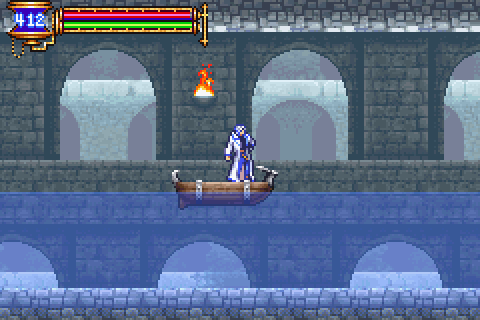
However, I don’t intend to argue that the game fails to entertain. You just may have to focus on the gameplay elements rather than the script that crawled out of the trash of a third-grade English class. Here, the game actual improves on the original.  If we establish the analogy that Simon Belmont handles like a sluggish, poorly maintained Model-T with only a few drops of gas left, then I can describe Soma Cruz as the Delorean from Back to the Future.  Exploration and character advancement incorporates Metroid-style abilities, obtained usually by picking up an item after a boss fight.  By the end of the game, Soma can double jump, high jump, slide, float, backdash, and even turn into a bat, all features that allow him to reach new areas for more exploration.

One of my favorites. Packs a litle more punch than a cross-boomerang.

One of my favorites. Packs a litle more punch than a cross-boomerang.

The game uses an RPG experience system, allowing the character to level up after defeating enough enemies, and equip weapons, armor, and accessories found or bought in the castle. Furthermore, Soma’s dark powers–as the game so poorly explains–allow him to literally beat enemies to death with their own souls. Replacing the secondary weapon mechanic, he can equip absorbed souls to use enemy abilities against them. The player retains souls for the duration of the game, but carry the drawback that since you obtain so many of them, it can take some time to figure out a boss’s weakness, and by then you may have used up your MP. Potions and other items, as fitting for Castlevania, haven’t really decided if they actually want to join the game, and you’ll encounter them sparsely; mostly, you’ll have to buy them.

aria_8_168While I seem to have written a great deal more about the lack of quality in the story than I have about the virtues of the actual gameplay, keep in mind that very little of this game actually requires you to follow along with the characters and their hopes and dreams and wishes on rainbows. In fact, I got through the entire game without really understanding…well, anything.  The game succeeds at providing a fast-paced combat, and while combat and level grinding could theoretically get tedious, Castlevania knows when to quit. I needed less than five hours, even with grinding, to finish the game. Aria of Sorrow knows about its issues, but covers them up by knowing when to quit. Not exactly a stunning endorsement of the game, I know, but for someone interested in either Castlevania or action-horror games, and even to some extend RPG fans, AoS provides a decent enough experience.

Zombies Ate My Neighbors! – SNES, Sega Genesis, Virtual Console

ZAMNTitleNaturally, when people find something they like, they tend to want more.  Lately it seems that America just can’t get enough of zombies. Apparently they can’t find nearly enough stories about the living dead as they’d like. After all, what can you do when Hollywood limits stories to: White Zombie, Revolt of the Zombies, Revenge of the Zombies, Teenage Zombies, Zombies of the Stratosphere, Night of the Living Dead (1968), Night of the Living Dead (1990), Dawn of the Dead (1978), Dawn of the Dead (2004), Shaun of the Dead, Day of the Dead, Land of the Dead, The Evil Dead, Evil Dead II,The Re-Animator, Zombie vs Ninja, Redneck Zombies, Scooby Doo on Zombie Island, 28 Days Later, Hellsing, World War Z, Resident Evil and the Walking Dead.

In such a generic dearth, one may have to turn to literature, such as: The Zombie Survival Guide , Herbert West: Re-Animator, Pride and Prejudice and Zombies, Pride and Prejudice and Zombies: Dawn of the Dreadfuls, Warm Bodies, Undead, The Dead, The Dead of Night, The Living Dead,  Pride and Prejudice and Zombies: Dreadfully Ever After, Dead@17, Shaun of the Dead, World War Z, the Resident Evil novelizations, and the Walking Dead.

And when you run out of those, unfortunately, zombie video games don’t offer much more than: The Last of Us, Survivor FPS, Amy, Lollipop Chainsaw, ZombiU, Dead Block, Dead Island, No More Room in Hell, Yakuza: Dead Souls, Call of Duty: Black Ops: Zombies, Dead Nation, Red Dead Redemption: Undead Nightmare, Zombie Panic in Wonderland, (the aptly named) I Made A Game With Zombies In It, Minecraft, Plants vs Zombies, Plants vs Zombies: It’s About Time, Zombie Apocalypse, Dead Space, Left 4 Dead, Resident Evil (1 through Six, Zero, Code Veronica, the Umbrella Chronicles, and Outbreak)…and the Walking Dead.

And if you blow through all those, I left off literally hundreds of titles listed on Wikipedia.

Zombie media has worn out its novelty. However, people haven’t quite figured this out yet. Every time a book, movie, TV show or game pops up with “Zombie” or “Dead” in the title, people flock to stores with no realization of how frequently artists use zombies to criticize mass consumerism.  Given the situation, I face a challenge in talking about “Zombies Ate My Neighbors,” a run-and-gun action/horror game from 1993: namely, no one cares about zombies anymore.

"Oh, is that hair gel?"

“Oh, is that hair gel?”

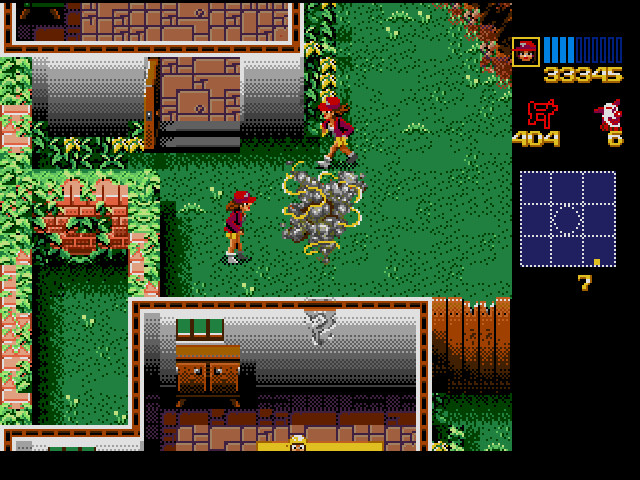
The title, however, might confuse people. Rather than a description of the challenges facing the player, it broadcasts the game’s sense of humor which parodies famous horror films prior to the sixties. The game has a simple design; you select either the girl character, Julie, or the 3D-glasses-sporting, Vegeta-haired boy, Zeke. After loading a squirt gun–presumably with a combination of Holy Water, WD-40 and sulfuric acid–the chosen avatar begins a mad dash through a top-down view of suburbia, trying to prevent–you guessed it–zombies from eating your neighbors. Initially, you have ten people to save per level, but since they have a tendency to stand by obliviously as werewolves knead their intestines like a ball of dough, this number drops rather quickly. If a victim dies, you begin with one less neighbor to rescue in the next level.

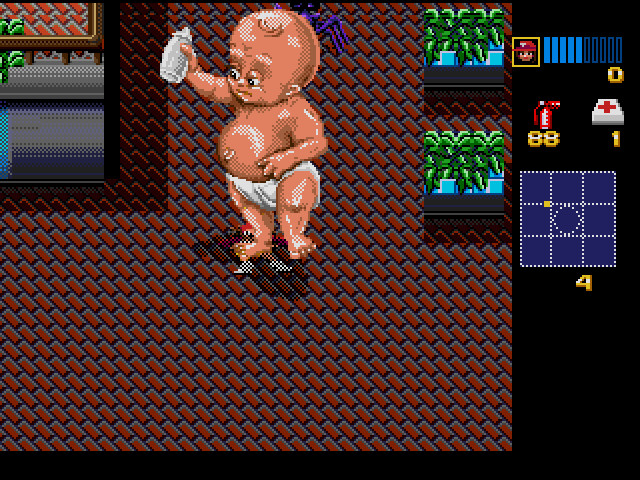
Ever wonder what they keep in the back room at the grocery store?

Ever wonder what they keep in the back room at the grocery store?

Zombies, rather than the focus of the game, serve more of a basic enemy goomba-type role, cheap, limitless fodder to throw at you whenever the game feels obligated to give you an enemy, but doesn’t want to put too much effort into it. After the first few levels, a whole slew of mummies, pod people, Chucky dolls, chainsaw maniacs, Martians, giant ants and more crawl out of the woodworks to grab a tasty mouthful of soylent suburbia.  The developer, Lucas Arts, clearly put some thought into this, which elevates Zombies Ate My Neighbors above most of the zombie books, films and games I listed at the beginning of this article. The game assumes familiarity with classic horror, then uses that as a foundation for parody. Each level sports an introduction with humorous titles such as, “Evening of the Undead,” “Dances With Werewolves,” “Where the Red Fern Growls,” “The Day the Earth Ran Away,” and more, with many sequel levels which proclaim themselves as “More Shocking” or “More Terrifying” than the one before it.

Even the music looks back to classic films, with tense ostinato tones reminiscent of the Twilight Zone theme, combined with a theremin melody inspired (much like Danny Elfman’s score to “Mars Attacks”) by Bernard Herrmann’s score for “The Day the Earth Stood Still.”

ZAMN provides an early example of a classic video game trope: using random every day objects as weapons. You start out with a squirt gun and pick up some logical weapons like a bazooka and a weed whacker, and certain objects like crosses make sense, but you also chuck a fair share of soda cans, plates, footballs, silverware (for werewolves), tomatoes and popsicles at the hoard of beasties.  While it amuses me to no end envisioning what might happen if you fought a mugger by conking him with a popsicle, I have to side step that amusement for a word about combat.

ZAMN1
If I had any criticism for the game, it would stem from the combat system. You start with a finite amount of ammo and have to pick up more as you go along, and unlike the survival horror genre, you can’t usually just run away from fights. The zombies must have recently feasted on the Wicked Witch of the West because they explode at the slightest touch of water, but most enemies have significantly more health.  In addition, the game only sometimes lets you know that your chosen weapon has any effect on the monsters at all–bosses blur out-of-focus briefly, and some enemies flash, but only a few and not with every weapon. While discovering halfway through the game that yes, in fact, the squirt gun does harm mummies and giant ants may have only inconvenienced me slightly, I did from time to time realize I had spent the last thirty seconds launching ammo just slightly to one side of a monster, like I wanted to kill an even worse monster standing behind it to gain this monster’s trust back.  Unfortunately, to add to this, several monsters flit around like humming birds, making them hard to hit, and so I’d find myself tossing away my weapons supply as though it would give me cancer. ZAMN.3Enemies in general, but bosses more than others, have a little too much life, and I found certain key fights dragged on to the point of boredom. Snakeoids, a recurring boss seemingly based on the graboids from the movie “Tremors,” often found themselves the victims of long strings of verbal abuse. Not only did they need a sturdier pounding than Rasputin before they died, but they could only take damage for brief moments when they surfaced to attack. Sometimes they’d surface at reasonable intervals, and on a few occasions I got them to glitch out and surface repeatedly, but most often I’d just stand for minutes on end like a donut tempting them to ruin their diets while they ran circles around me, deciding whether they should eat me or not. ZAMN3They offset the NES-level of difficulty slightly by offering a password system. By entering a four-letter password, you can start near the last level played with none of the weapons except the squirt gun, one health kit, and the exact number of neighbors you had left. The fact that the game only has memory for neighbors actually doesn’t make the game as difficult as it would seem–fewer neighbors to rescue means less time spent in each level, and while you may not pick up as many items that way, you’ll take less damage and last longer. Still, if you lose all your neighbors, you lose the game. Furthermore, the game rations out passwords once every few levels like it might run out, so you may find yourself repeated a lot of stages that you already know you can beat.

But mostly this nice little gem of a game, now twenty years old, still finds ways to entertain, not just with gameplay, but also by tapping into timeless horror icons, much like the original Castlevania did. And even those who might not have a library of silver-screen films or the knowledge of trivia to make the connections can still appreciate the light-hearted horror humor presented in Zombies Ate My Neighbors.

Maybe we can look back to some extant pieces of the zombie canon and move on to the next big monster fad…I don’t know…werewolves or something. We have enough already to keep us entertained for a long time without getting bored. We don’t need to see any new, terrible zombie films. It’s a good thing Zombies Ate My Neighbors never sunk that low.

Oh wait…

Shadow Hearts: Covenant – PS2

sh2

In tenth grade, my friend Albert (who today would probably be best known for his work on this) came to school with a hilarious bit of trivia. It seems he found a book in his pastor’s office that listed off pop culture icons that defied God. Most notable among the entries, it suggested we shun the Smurfs because a) Papa Smurf used magic to help his fellow smurfs instead of prayer, and b) Gargamel drew actual Satanic symbols when casting his own evil spells. While these aspersions seem about as productive as speculating on the sexual orientation of a teletubbie, Shadow Hearts: Covenant, the final instalment of my reviews on the game series, kinda, sorta, actually does this.

Legend states that King Solomon used a ring engraved with the Star of David to capture and enslave 72 demons. A book known as Goetia, The Lesser Key of Solomon, or sometimes Lemegeton, supposedly authored by Solomon himself, lists off all these demons, describes them, and shows the crests used to call them into service. Not only does Covenant base its magic system off this legend, sending the player across the world to find these demons and equip them, but when you summon them in-battle, the actual crest from the book appears on the battlefield. So just a warning, while I recommend this game, you may run the risk of actually calling monsters out of your television.

Yuri (as Amon) and Karin in homage to the box art to the original game

Yuri (as Amon) and Karin in homage to the box art to the original game

Now that I’ve issued my disclaimer, I can get on with describing the game…except I don’t really have much to say that differs from my articles on the original Shadow Hearts or From the New World.

The game follows Yuri Hyuga once again, continuing from the bad ending of the first game.  The Vatican sends Nikolai Conrad, who has a personal beef with Yuri for beating Albert Simon before he had the chance, to curse him.  Attacked with the “holy mistletoe” curse, Yuri loses all weapons, items, and fusion demons from the last game, as well as the ability to get any action from the game’s double-D female lead (which, not to ruin the game for you, probably works out in Yuri’s favor.)–probably the games greatest irony considering mistletoe’s reputation for inspiring sexual hedonism akin to playing Twister.  Once thusly cursed, Yuri and Company set off on a crusade to take down the secret society responsible for making the Vatican look like Dick Cheney’s personal assassination squad. Along the way he rediscovers demons and, you know, just might learn a little something about himself.

Like the original, Covenant emphasizes character development over action and plot. Unfortunately, players despise quick-time events that ask them to “press X to not die,” so I don’t think they’d readily accept “press X to introspectively examine your purpose in life after the death of your lover.” On the positive side, Nautilus did not actually include these events in the game, instead favoring flimsy excuses for geographical movement into a series of irrelevant dungeons.

Torture scenes exist in all three main series games...but only here do you get a BDSM dominatrix along with the pain.

Torture scenes exist in all three main series games…but only here do you get a BDSM dominatrix along with the pain.

And while the story masterfully outlines Yuri’s development, I wouldn’t go so far to say that each character adds something vital to the story.  Much like the dungeons, it feels like the guys at Nautilus sat around trying to think up caricatures to round out a battle party.  “We can’t get through the game with only two characters!” someone said. “Let’s throw in a super-hero….pro wrestling…vampire,” offered a staff writer, who probably just flipped through the nearest copy of Game Informer until he found three successful titles. Granted, when given the option of using a super-hero pro-wrestling vampire, few players will resist the call.  Shadow Hearts has always designed their characters people want to use in battle.

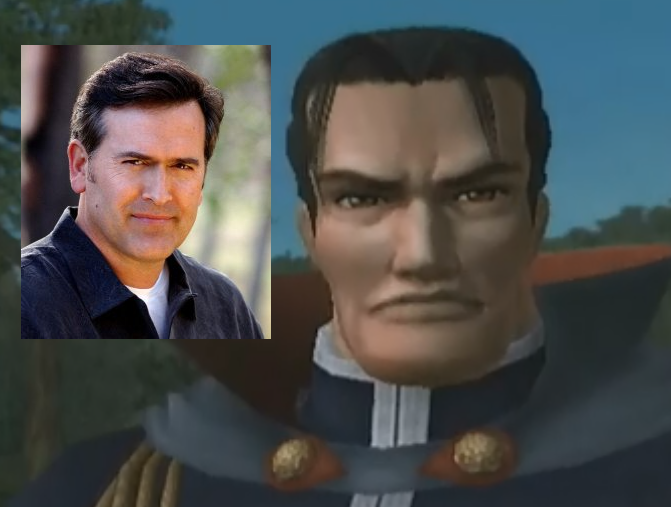
But hey, if you do one thing well, just do it ad nauseum, right? The game uses the alternate history genre to present a parade of cameos. Characters from the first game make appearances, including Kato, Albert Simon, Roger Bacon, Alice, Keith and Margarete–as well as historical figures like Lawrence of Arabia, the Great Gama, Gregori Rasputin…and Margarete.  Also, Kato looks more than a little bit like Bruce Campbell, so that should count for something, I think.

Summoning demons with a book, resurrected girlfriend, and chins bigger than China...coincidence?

Summoning demons with a book, resurrected girlfriend, and chins bigger than China…coincidence?

However, the carnival of characters and the dismissive plot tend to retcon parts of the game’s universe. Apparently, Albert Simon only wanted to destroy the world in the first game because he needed more power to fight one of the major villains in this game. I’d need a good long time with the latest edition of the DSM to count the psychological disorders required to make that logic work. Apparently Yuri only needed to sit down with him and have a chat about the problems of overkill to solve the conflict in SH1.  Whether he does or not, the change in motives takes the fangs out of previously enjoyable villainy.

Covenant improves on mechanics developed for the original.  Players have options for customizing the judgement ring, as well as equipping an item that slows it down to a reasonable speed.  In the first game, the ring fixed the traditional RPG mechanic of finishing battles by hitting X repeatedly–by making you hit X four times as often and at very precise moments.  Covenant offers their characters a reasonable amount of MP, making magic and special techniques a valid option. The game clearly had influences–if you ran a drug test, its urine would contain more than trace amounts of Final Fantasy–but in Covenant, it developed enough of its own flair to stand on its own…which of course made it branch off into obscurity, eventually leading to the cancellation of Shadow Hearts 4 and the downfall of the series, despite attaining a quality and ease of playability that other RPGs would envy.

Yes, the dog is sidling to avoid being seen.

Yes, the dog is sidling to avoid being seen.

Covenant exists to impress. This game introduced me to the series, and still stands as its strongest game.  A rare occurrence of RPG direct sequelage, it manages to inform the player of all relevant plot points from the first game in less than three cut scenes, seemingly animated by Yuri’s own hand-drawings of the events.  These scenes also illustrate the otherwise dark, gothic game’s aloof sense of humor, although the gay-sex-between-athletes innuendo remains a reward for the fervent side quester.

And on a final note, Shadow Hearts does side quests better than any any other game I’ve played.  If you’ve ever played an RPG, you’ve probably gone through dozens of quests for ultimate weapons, magic, or skills, only to find yourself at the end of the game with literally nothing left to use them for except the final boss who at that points fights back with all the rage and fury of a plastic cup filled with pudding.  Covenant, however, offers multiple side quests for every character, most of which include full-length dungeons and bosses.  Yes, eventually you’ll run out of options and have no choice but to end the game, but by then the game feels satisfying, if not just a little too easy.

So I should probably throw this in before wrapping this up: Solomon didn’t write the book.  Unless he knew German. And worshiped Jesus…thousands of years before his birth.  But as an element of the real world–as well as all the other real-world elements in Covenant–it immerses the player into the fantasy, and it does it well.  Well enough, obviously, to get me to play an entire series over the course of two months.  Although I don’t rate games, I feel this particular game merits some sort of quantitative praise, so I will bestow upon it my highest ranking: 10 stars out of two thumbs up multiplied by 100 tomatoes.

Why play the game? Here are two big reasons.

Why play the game? Here are two big reasons.

Sorry for the delays in updating. I’ll target some shorter games over the next few weeks to make up for it. Thanks for reading!

Not a Review, but Consider it a Halloween Bonus

So I don’t usually spend a lot of time on creepy pasta websites; as a teacher, I understand that it’s good exercise for aspiring writers, but I personally don’t find them very scary.  However, after the conversation I recently had with a guy who had been haunted, I feel I need to spread his warning to as many people as possible.

Recently, as you may have noticed, I’ve been playing through games in the Shadow Hearts series, a hidden gem of an RPG based on Lovecraftian horrors and demon possession.  The game features some amazing design, but has a very aloof sense of humor, so like most horror fiction, I didn’t find it very scary.  However, I recently received an email about a comment on one of my posts about Shadow Hearts. It simply said,

“Stop talking about this game. It’s evil, and every disc should be snapped in half and melted down!”

As any avid gamer can sympathize with, I’ve endured plenty of people accuse me of being anti-social, or a serial killer, or a school shooter for playing video games, and I also know about the religious fanatics who think things like Harry Potter are gateway drugs into a lifetime of worshipping Satan.  I dismissed this comment as belonging to either one or the other.  I denied approval for the comment and forgot about it for nearly a week.

This person didn’t give up, though. He pieced together some of the personal information I talked about in my blog posts, figured out where I teach, and looked me up on the school’s directory.  One day I logged on to check my email, and found an unknown address in my inbox. The subject line read, “Shadow Hearts Blog Post.”

I clicked on it and read the email. “Please don’t encourage your readers to play Shadow Hearts. The game is dangerous.”  As a blog comment, I simply wouldn’t respond, but since the guy had my email address, I figured I’d politely tell him to stop bothering me, and that I didn’t want my blog to be hijacked by religious fundamentalists.  I figured I’d leave it at that and ignore any further emails, but the response I got intrigued me.

“I’m sorry if I gave the wrong impression. I’m not a religious fanatic. I just need to warn you that people have died because of that game.  It’s very important.  Please give me just a little bit of your time.”

I told him I’d listen, although I only thought it would give me something interesting to put on my blog. I wrote back and told him I was willing to hear him out.  I’ll post his response verbatim below:

“My trouble with Shadow Hearts began about six months ago. A student in my dorm was taken to the hospital just after midterms. Rumor had it that after two weeks straight of studying, he had spent three days straight playing video games, then just keeled over. I had heard that every so often, kids in Korea or Japan will do that. The guy was some sort of Asian, so I thought that might have been the case. Word got out that he died a week later, but no one believed it until his parents showed up to clean out his room.

“The next day was my laundry day. People are always getting rid of stuff in our dorm; they’ll just leave it on the table by the washers for anyone to take.  I like to get there early so the machines don’t fill up, so I throw in my wash and look around at the new pile on the table. Underneath a stack of notebooks and bad kung-fu DVDs, I found a copy of Shadow Hearts in near perfect condition.

“Being somewhat of an RPG nut, I snatched this game right away. I probably even looked around the room to make sure there was no one I’d have to fight for it.  I had played Covenant, but I’d never even seen a copy of the original.

“The first thing I did was open it up. I saw the disc inside, reflecting the fluorescent lights above me. I later learned that this wasn’t the standard label design, but I didn’t know it at the time.  I held it up and to stare at my reflection, but I saw something dark move behind me. This freaked me out a little, so I stopped and turned. I didn’t see anyone in the room. It was dark outside, so I stared at the window for a few minutes before I convinced myself I was just being crazy. So I turned around to examine the disc, which I found designed with part of a demon’s face. A glowing red eye, like one of the monsters from the game, stared back at me. It even seemed to move as I tilted the disc, like one of those holographic images. I saw it blink once, but couldn’t seem to make it happen again.

“Having no plans for the day, I immediately ran up to my dorm room to play it.  I remember the title screen, a solid, dark crimson that gave the title of the game, Yuri’s amulet, and the phrase, “Limited Edition: 1/3.” At that point, I thought I had hit the jackpot, finding a rare game being tossed out in a dorm laundry room. I played most of the day, clearing a good quarter of the game in one sitting before I remembered the Asian kid and decided to call it quits.

“That night I dreamed I was in a graveyard—the graveyard from the game.”

[author’s note: For those who have not played the game, the main character, Yuri, has a graveyard in his soul.  He can go there to fight monsters and demons, and if he wins, he can transform into those monsters during the game’s combat. Several other major story events occur here as well.]

“In this dream, I heard voices coming from the tombstones. They hissed and whispered.  I couldn’t see anyone or make out any words, but I felt like something was watching me.  It was dark, but I remember running to two of the three gates, and neither one would open.  I ran towards the third, but I somehow knew—even though I had never played the game—that the God of Death was waiting behind it.  The whispers grew louder, and I woke up suddenly, sweating and breathing heavily.

“What frightened me more than the dream, though, was that I could still hear the whispers for a few seconds after I woke up.  The noise died down very quickly, but in those seconds, I heard the first clear words come out of the darkness: ‘Black God.’ The nightmare bothered me, and while I can usually shake off bad dreams and go back to sleep, this time I felt like I should sleep with my reading lamp on.

“The next day I felt much better, but the dream still hung in my mind.  I wondered about the phrase ‘black god,’ so I googled it.  I didn’t find much at first; just some manga and anime references, a facebook page, and a bunch of images.  I was about to attribute the whole thing to a pizza nightmare, when I got the impulse to delve further. I typed ‘black god shadow hearts’ into the search field, and came up with something important.  One of Yuri’s high-level monsters is called ‘Czernobog.’ Apparently Czernobog is a real mythological thing, although I couldn’t find much information about it, other than his name translates into ‘black god.’”

“I wasn’t scared at the time. I thought it was interesting. I had seen Czernobog in the game, even if I hadn’t gotten far enough to use him myself.  But there was no way even my subconscious mind could have known that it meant ‘black god.’ Still, all this thought about Shadow Hearts made me eager to play the game again.  I turned it on, not expecting anything to happen, but when I selected ‘continue’ on the title screen, a demon’s face flashed on the screen for a second, the same face from the holographic image on the disc label.

“During my playthrough, some weird things happened. Somehow, I lost all the fusion monsters I got the day before, but I could use one new one; Czernobog. I noticed some other glitches as well. During a normal playthrough, each character’s sanity points drop slowly, little by little on each of their turns, and when it reaches zero they turn berserk.  Every half hour or so, however, Yuri’s sanity points would instantly drop to zero, even when it wasn’t his turn. He’d immediately transform into a demon—the one from the disc label and the title screen—kill my other players in one hit, then turn and stare at the screen. At that point, the game would freeze and I’d have to restart.

“After this had happened three or four times, I lost my patience and shut off the game. As an afterthought, though, I opened the Playstation and checked the disc label. As much as I tilted it, all I could see was my own face staring back, and parts of the room behind me.

“That night, I dreamed I was in the graveyard again.  I heard the whispers just like before, tried the two gates, and stood frightened before the third. This time, though, just beyond the bars of the God of Death’s gate, I saw two red pinpoints of light glaring back at me. It was then that I woke up like the night before, sweating and gasping. Once more I heard the whispers for a few seconds, making out the word ‘angel.’ Except this time, when the words died down, I saw the lights. Outside my window, they formed from slits, as if something were opening its eyes. I waited for them to vanish, like the voices, but they didn’t. Frozen with terror, it took me probably five minutes to gather the nerve to reach for my reading lamp. When I clicked the light on, the red lights vanished, but my window filled with my reflection, and I could no longer tell if anything lurked outside.

“I did some research on what ‘angel’ might mean in relation to the game.  I learned that two monsters, Sandalphone [sic] and the Seraphic Radiance are both types of Angels in Jewish lore.  I remember Covenant talking about King Solomon, so I thought this was more than a coincidence. I didn’t want to play the game, but I wanted to know if what I suspected was true, so I popped the disc in, loaded my save file, which did not summon a demon to stare me down, and checked my fusion monsters.  I only had one, the Seraphic Radiance.

“The idea of an angel made me feel better, so I decided not to push my luck and shut off the game. That night, though, I had the same dream: the graveyard, the whispers, and the red eyes, staring at me. This time, though, I woke up with a pain in my chest, which made me think of the way Yuri grabs his heart every time he transforms into a monster. The eyes stared at me until I turned on my reading lamp, but this time, I had the distinct feeling that I wasn’t alone.

“I went a week without even touching the Playstation. I investigated possible sources for the lights outside my window and found nothing.  I asked everyone in the dorms if they had been talking late at night, giving off the impression of voices I may have heard in my dream, but no one had.  All week long, wherever I went, I felt like I was being followed, like something was constantly watching me. I continued ignoring the game, hoping it would go away. Still, each night I had the same dream, but each night the red eyes seemed to get closer and closer.  One night I woke up and screamed when I saw the eyes inside the room with me. I tackled the light, struggling to turn it on in my panic. When I did, the eyes disappeared, but afterwards, every so often, I’d hear the whispering in my head, even during the day. Also, and I could have been imagining this, I had phantom chest pains at odd intervals, usually when I was alone.

“Finally, I thought the only way to end the nightmares would be to finish the game, so I once more picked up the controller to plow my way through the end. Unfortunately, the glitches got weirder and weirder.  Characters would randomly die, the music stuttered, droned and crackled, and eventually cut out completely, leaving no sound in the game except for a static hiss, which reminded me too much of the whispering of the demons. The accumulation of malice [author’s note: malice is the vengeful souls of enemies Yuri has killed, come back to haunt him, and he has to fight it to prevent it from getting too powerful.] occurred very fast, maxing out after every battle.  Eventually, I couldn’t fight against it at all; I go to the graveyard, and instead of asking “Do you wish to quiet the malice,” the masks would ask “Do you wish to quiet your dreams?” All the while, as Yuri progressed through the story, losing more and more of his mind and soul to the monsters that possessed him, my chest pains became more frequent and more fierce.

“Eventually, I reached the point in the game where Alice meets the God of Death. Normally, this is where the game decides how the story will end; Alice fights in exchange for Yuri’s soul, and if she wins, Yuri doesn’t die, while if she loses, she dies in his place. Except, neither of those happened.  She crossed the gate (the one I was too scared to cross in my dream), and the game went black.  Moments later, I heard a deep rumbling voice say something in a language I didn’t understand, and then the game continued, starting after Alice’s fight. I finished the game an hour and a half later. Both Yuri and Alice survived, but after the ending credits where the game should have described the start of World War I, I found myself face to face with the red-eyed demon.  The pain in my chest grew, and I blacked out.

“When I came to, the game had been turned off, but I could hear the whispering demons loud and clear, running through my head constantly. I felt like something unnatural was living in my body, making it difficult to move, although I found I could still control how I moved.

“That night, however, something inside me took over. Rather than trying to escape the graveyard dream through the two gates, I found myself unwillingly stepping closer and closer to the God of Death’s gate. The masks that taunt Yuri in the game now taunted me, and the monsters’ whispers now rose to a disquieting laughter.

“The world went black, and all of existence felt like it simply turned off, except for the red-eyed demon, feasting on some grotesque lump, smacking loudly. It sucked down the morsel in its mouth and turned so I could see its face. ‘I have enough souls for now,’ it said. ‘I’ll come for you when I get hungry.’

“And then I woke up. I listed the game on eBay within ten minutes. I wanted no more part of this. It needed to be as far away from me as possible. I wasn’t thinking at the time. I didn’t consider that someone else might play it and see the same visions that I did. But someone in Oregon bought it, and I dropped the game off at the post office even before his payment came through.

“It didn’t stop the howling demons in my head. Sometimes they scream so loud I can’t hear anything in the world around me. They call to me. Taunt me. Screaming curses and damnations, mocking my imminent death. I can’t think straight.  I had to drop out of school, and I couldn’t spend normal time with friends ever since.  I black out once every day or two, and I come to miles away from wherever I was before. What little sleep I get is spent entirely in the graveyard in my soul, and throughout my waking nights I simply stare at the red eyes constantly watching me at the foot of my bed. I can’t see them when I turn on the light, but I know they don’t go away. The fear and torment only left me once; leaving me completely lucid just long enough to read about a mysterious death that happened to a teenager in Oregon.

“And instead of guilt over this kid’s death, all I can feel is the spark of hope that the God of Death has passed me over, but I don’t know for how long.”

Here, his email ended, except for a few pleas for help, and a repeated request to take down my posts about Shadow Hearts and to denounce the game to anyone who would listen. I haven’t done that, and I don’t intend to, but something bothers me about his story. The game, if he is to be believed, said it was one out of three in a limited edition. I’ve scoured the internet, but found no mention of any special releases, nor have I found testimonies or newspaper records of any similar incidents. It makes me curious if there are two more of these games, packaged and sealed, waiting to burst forth to take the lives and souls of anyone unlucky enough to buy them. Whether the story is true or not, it can’t hurt to urge you to be careful when buying a Shadow Hearts disc.

I kept daily contact with the guy who told me this story. One way or another, I knew he needed some human contact, someone to connect with, to ground him either to life or sanity. I heard from him every day for nearly a month, but decided to relay on his story when his emails stopped abruptly over a week ago.

Dr. Jekyll and Mr. Hyde – NES
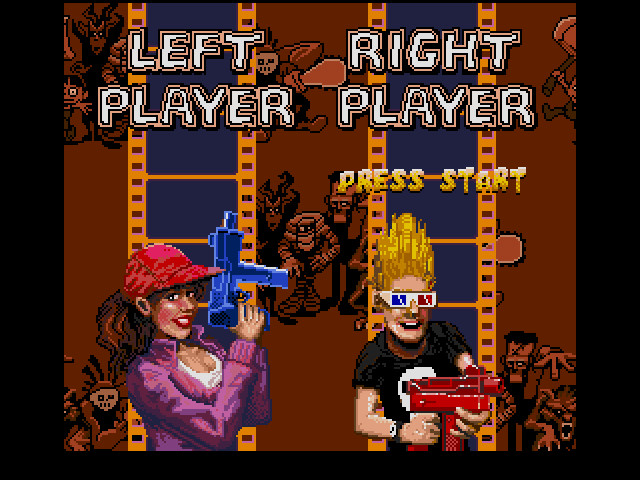
RetroArch-0906-151611

Covering The Strange Case of Dr. Jekyll and Mr. Hyde in class this week, my students couldn’t have shocked me more if they had all ambushed me with cattle prods; they actually liked the book. But why not? It actually makes a good story, reads easily, and only lasts about eighty pages. However, the reason they gave was the suspense of not knowing what would happen next and the twist ending. Yes, my students hadn’t even heard of the story before, and jaws dropped faster than a cartoon wolf in an Asian strip club when they figured out that Dr. Jekyll and Mr. Hyde were, in fact, the same person!

Hopefully I didn’t ruin the story for any of you, but I insist that spoilers have a statute of limitations, and I have no obligation to keep secret a plot devised in 1886.  Unfortunately, while I couldn’t believe how many of my students hadn’t heard of Dr. Jekyll and Mr. Hyde, I have no shred of doubt that the developers at Toho and Bandai hadn’t heard of the book either.  While the book comments quite adeptly about the duality of human nature, clandestine desires, and the forced separation of public and private lives, the NES game has the literary value of a bird shitting on pedestrians. I didn’t intend to employ sarcastic wit in that last sentence; the game literally forces the player to dodge steaming piles of bird crap, lest it kindle the rage within Dr. Jekyll, transforming him into the incredible, hulking figure of Mr. Hyde. Covered in feces.

I wonder why it comes out pre-piled...

I wonder why it comes out pre-piled…

NES games didn’t sell themselves on strong stories; most games had a premise, at best a scenario to follow, but they didn’t consider gameplay as the venue for developing plot.  However, with a timeless tale of horror already fabricated, making the game interesting should pose no problem at all. Right?  Unfortunately, while the book focuses on Jekyll’s close friend investigating the bad crowd the doctor has fallen in with, while giving us glimpses of Jekyll losing control of his personality, the game has the good doctor on his way to the church to get married.  Apparently harboring a criminal rage that indulged in dark pleasures didn’t excite Toho quite as much as the conflict of not being somewhere else. Along the way, the common rabble of London work their magic to piss Dr. J. off as much as possible.

Robert Louis Stevenson when they pitched the bird shit idea to him.

Robert Louis Stevenson when they pitched the bird shit idea to him.

While I’ve played games with pretty far-fetched elements (including the murder of frogs by force-feeding turnips), I find the scenario downright implausible.  Everything becomes an obstacle. Vicious dogs make sense, as do ruffian orphans.  Yeah, we’ve all watched the skies with guarded eyes for the rogue seagull with dysentery, and I can even stretch to say some people may freeze in their tracks if a spider dropped out of a tree.  However, I can’t quite see why every full-grown adult in the London streets feels the need to body check Dr. Jekyll like they only have one shot at the Stanley Cup, and the dozens of mild-mannered citizens dropping bombs at his feet give me reason to wonder why the police feel the need to make Mr. Hyde a priority arrest. By the final level, the game starts chucking barrels like it always wanted a career in Donkey Konging and its father forced him into a career murdering classical literature, and in addition to the suspension of suspension of disbelief, it becomes virtually unplayable, even with save states.

As Mr. Hyde, beating up on brains makes you feel warm and fuzzy.

As Mr. Hyde, beating up on brains makes you feel warm and fuzzy.

The game did experiment with a few novel concepts for its time.  The player has not only a life meter, but a mood bar as well.  When the life bar enemies, the player dies–no surprise there. However, when the mood gauge empties, the player transforms into Mr. Hyde, day becomes night, side-scrolling moves right-to-left, dogs and cats living together…mass hysteria.  Apparently Mr. Hyde needs some down time to vent his frustration, and wailing on monsters and demons rampaging through London (which again gives pause over the danger Hyde poses) makes him feel better. Successfully not dying as Hyde returns Dr. Jekyll to his quest of…going to church…and refills some of his life bar.  Also as Hyde, enemies drop coins, which Jekyll can use to pay off singers who spout out music notes like shrapnel, and to much of the same effect.  Dropping the pretense of music causing physical harm, this amounts to a man putting off his own marriage because he feels the need to stop and comment on how much he doesn’t like street performers. And again, Hyde is the jerk?

Normally when a game frustrates me, I remind myself that developers plan gameplay and test their games to make sure players can, theoretically, get through them.  However, Dr. Jekyll and Mr. Hyde ruined challenging games for me by shattering that axiom.  I could barely finish the game using save states.  Some scenes threw so many enemies at me that I had no choice but to replay them and hope for a fortunate random behavior to give me an opening to get through, a task made infinitely more difficult by the fact that Jekyll handles like a Winnebago with four flat tires and no engine trying to pull itself free from a swamp using a broken winch and fifty centimeters of dental floss. The B button controls a walking stick, which the player can wave around to feel more like a Victorian gentleman, but it doesn’t actually effect the game in any way.  I chalk that up to a glitch, considering the number of bombs that followed me as I jumped over them, and how the game inverted its colors during the final level.

This is what happens when you finish. Literally. You see this screen.

This is what happens when you finish. Literally. You see this screen.

Honestly, I wonder how people thought games like this would sell.  I’ve finished some difficult games in my time, but I’ve always felt someone could finish them without save states if they had enough free time on their hands, but I don’t think Dr. J. and Mr. H. falls into that category. The end of the game offers less satisfaction than even the SNES Jurassic Park adaptation, but at the very least I won the right to complain about how terrible this bird crap of an idea turned out.

Working my way through Shadow Hearts: Covenant. Slow going, but I’ll try to update when I can. Thanks for reading!