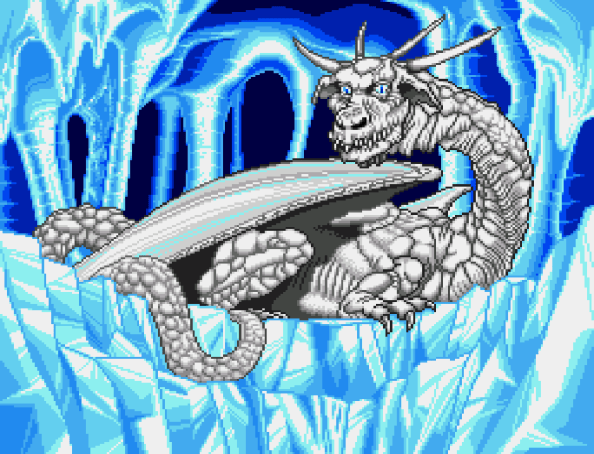
Quark gets the same look in his eyes when his grandkids remember to visit.
Lunar: The Silver Star Story Complete is an awesome game. The first time I finished it, I asked myself what game I’d most like to play next and decided, “I want to play this one again! Because 50-plus hours alone in a basement doing repetitive tasks isn’t the least bit indicative of Asperger’s!” I didn’t know much about the game at the time other than it was a remake of a Sega CD game, which didn’t interest me much. After all, the Sega CD add-on was about as common in the early 90s as blacksmith shops, and game remakes, even to this day, tend to undergo a process akin to dying your average Easter eggs. However, since the developer Working Designs chose a name for themselves that literally means, “Meh. We’re not quite there yet,” it probably shouldn’t have shocked me to realize that Lunar: Complete underwent a massive remodel for its transition to the Playstation. Yet this always raised the question, how good was Lunar: The Silver Star to begin with? As it turns out…it’s a game that feels rather incomplete. That’s two points to Working Designs for apropos naming.

Copyright DC Comics 1958
The story begins with Alex, your average teenager living in a sleepy, boring, podunk, inbred mountain town, who dreams of packing his things and setting out in the world to make it big as the Dragonmaster (although through fierce competition for the job, most teens get a few auditions for commercials before going broke and falling back on porn before moving home to live with their parents). Lucky for Alex, though, his friend drags him along on an adventure to plunder some shit (literally) from a nearby dragon’s cave, and the dragon thinks he might have potential. So the bright-eyed boy sets off on an adventure full of people who lost their stuff and need him to get it for them, because what better item could a potential master of dragons and protector of the goddess have on his resume than “helper monkey”? I guess, though, even fantasy worlds need unpaid interns. So the fetch quests commence until a villain finally surfaces and Alex decides to finally get serious and track down the three remaining dragons.
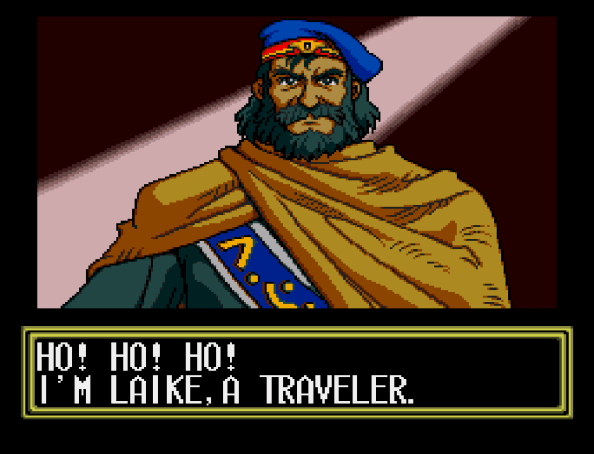
I’m, laike, totally a traveler! Totally!
Although I enjoyed the game, the hardest part about playing it is the realization that I write prolifically, publish a free, weekly blog read by about ten people, all while Working Designs made millions by pawning their rough drafts off on Sega owners. The game is so threadbare that I’m surprised they edited out the popsicle sticks and sock puppets used for character sprites. While I can make allowances for 16-bit graphic design, Jessica, the feisty beast-girl priestess, looks like someone draped a Statue of Liberty robe over her shoulders and topped it off with a molding George Washington wig. They try to build up Alex as a silent protagonist, but his taciturn disregard for anything happening in his immediate vicinity just rubs off on the other characters. Their complete and utter lack of passion left me with less emotional investment in the story than I have digging a spoon into a bowl of Fiber One. And yet, if one feature of the game let me understand what the quest to become Dragonmaster feels like, it’s the realization that slaying monster after monster for hours on end isn’t exactly a lucrative practice, be you fantasy hero or Sega owner, and I only had slightly more money in the game than I do in real life. Generally the point of “fantasy” is for real people to vicariously experience impossible scenarios. Sorry, but I spend enough time window shopping at Savers to want to do it in a digital reality, too.

Yeah, this is something a hero would say that no one should be suspicious of in the least.
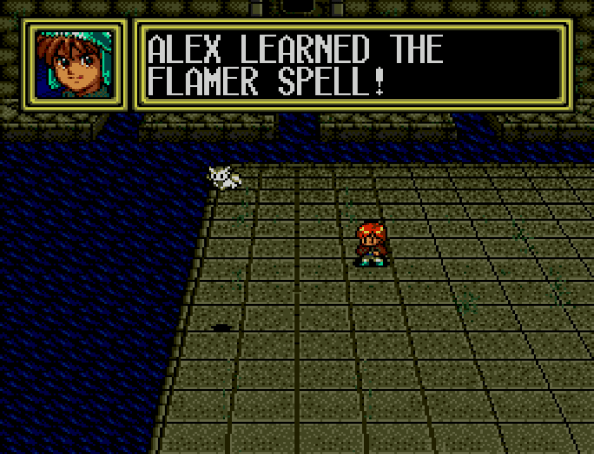
Too bad the only practical use for this spell is pissing off rednecks in diners and republican politicians.
The game comes with its own cloud of early-RPG locusts. Using magic from the menu dishes out one healing spell at a time before telling you to get to the back of the line for seconds. Diverse items and spells pile up like mismatched tupperware, but have no in-game descriptions. My first inclination is to compare that to soup cans without labels, but since the only way to find out what an item or spell does is to use it and hope you notice some difference, the soup analogy only works if you shove entire cans into your mouth, chew, and swallow all at once. Spell menus reorganize themselves based on the most recent spell you cast and don’t even list MP costs, giving you literally no way to gauge how powerful any attack might be or what effect a spell might have. All in all, I can’t recommend this game for anyone with OCD.

There are like six different kinds of nightmares happening right now.
About halfway through the game, fetch quests give way to another pleasure: spending more time wandering around the same areas than the cast of Gilligan’s Island. Rather than make enticing, explorable maps filled with hidden treasures more valuable than your average rutabaga, Lunar: the Silver Star provides you with maze after maze of identical corridors with no discernible landmarks to guide your way. Add to to that an enemy encounter rate high enough that Alex should have concerns about his buoyancy in Lunar predators, and the game begins to work against itself, naturally leveling your characters to the point that they play keep-away with the final boss’s helmet.

These are the stories creationists tell around a campfire to scare their children.

Alex saves the world, rescues the girl, and cures his erectile dysfunction all in the same day.
My suggestion: play the complete version. The Sega CD edition is like the raw food diet—yeah, there are some interesting ideas behind (such as Laike squaring off against Xenobia or the back story about Dyne and Ghaleon fighting for who gets to be dragonmaster0, but in the end they’re not good enough to justify the fact that you’re dining on something that isn’t done yet. But if you’re curious like me, go ahead and play the Sega version. I can say at least with near certainty that it probably did not give me salmonella.
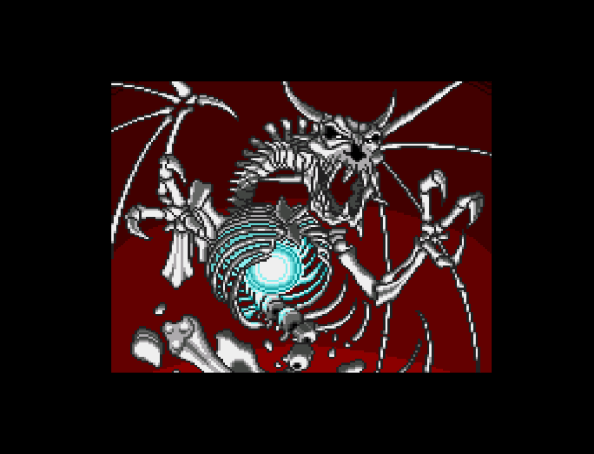
Okay, so the insane dragon skeleton is actually a pretty cool element that didn’t make it into the remake.
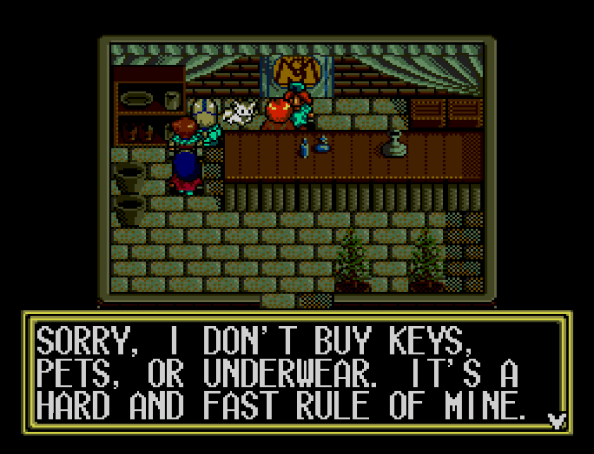
That’s funny, I have the same policy for traveler’s insurance, roadkill and Microsoft products.
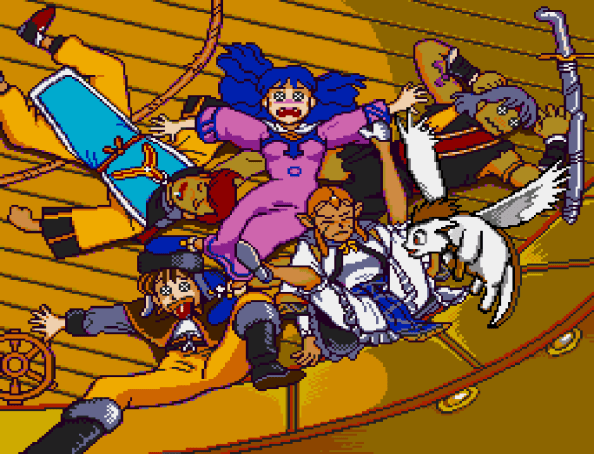
I want to say something I’m sure is inappropriate, but I’m not sure if it’s because they’re underage or because they’re cartoons.
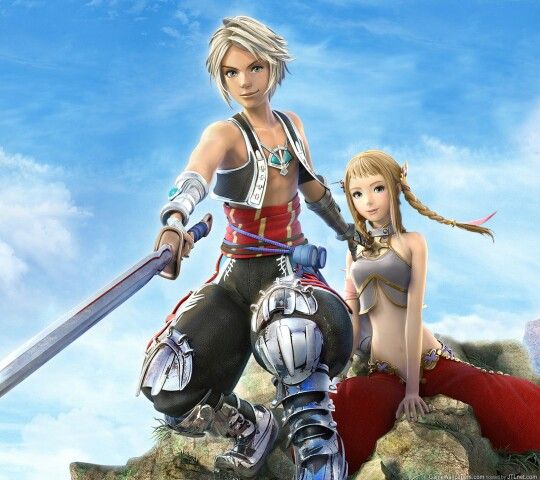
 Moving down the line, we have Penelo, sporting what appears to be a rubber onesie with built in panties—on the outside, in true superhero fashion. Naturally, everyone in the desert wears dark, form-fitting bodysuits because heat stroke is pretty much the only entertainment they have. Her suit is of the high-waisted variety, as it buckles around her collar bone. That might explain the fabric stretching down to her garters. As Mitch Hedberg famously said, “My belt holds my pants up, but the belt loops hold the belt up, so who’s the real hero?” However, it seems she may not need the extra support in light of the sea horses she murdered hollowed out to use as knee socks like an adolescent female Buffalo Bill.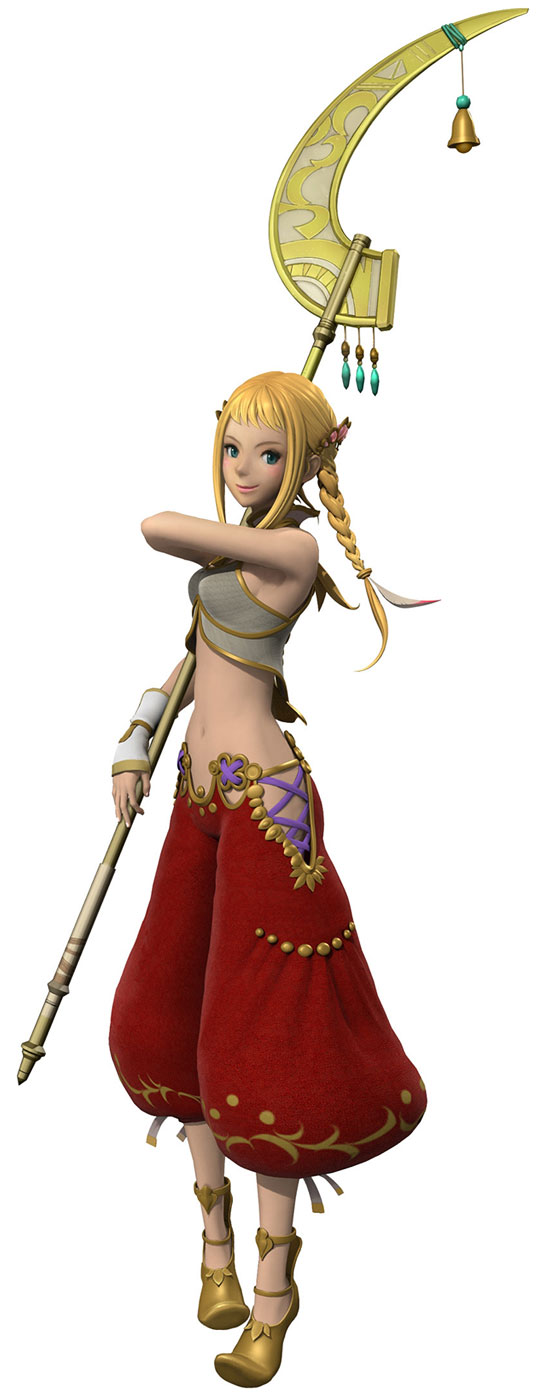
 Of all the characters in the game, Fran is likely the most ready for action, as evident by her countless straps, high heels, and corset that if fully tightened would make her look like a botched attempt at a balloon rabbit. Sadly, I think only Balthier might see the kind of action she’s dressed for. I especially love the loin cloth, draping down with all the opaqueness of a freshly Windexed camera lens. That garment is what even lingerie looks at and calls, “skank,” under their breath.
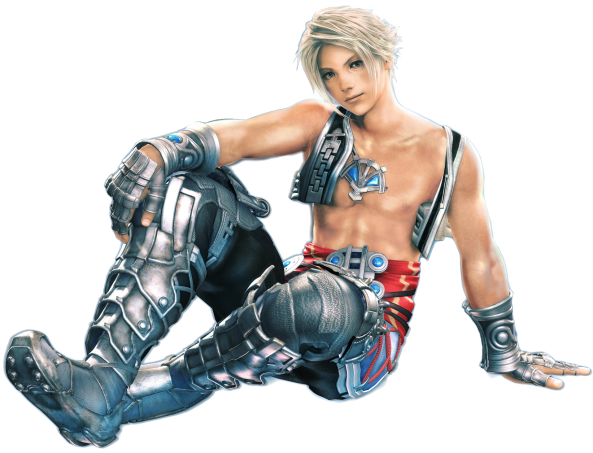
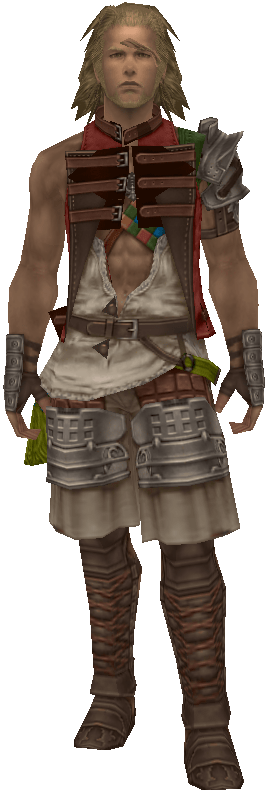 Basch is one of my favorites. The stoic knight, honorable even in disgrace, who speaks with poise and propriety, looks as though he literally ripped his shirt off of the drum major of a marching band. Together with his hair, which looks like he stepped out into a Minnesota winter after a long shower, Basch appears as though he ended up in Final Fantasy XII after getting lost on his way to a Billy Idol concert. While traditionally, knights would ride into tournaments wearing the favor of their courtly loves (like a girlfriend who won’t take her clothes off), this hero seems to be wearing his lady’s entire slip, belted tight around his waist lest it fall to the ground and reveal his knightly nethers. And yet, what’s more, he appears to be wearing his grandma’s favor as well, in the form of a miniature patchwork quilt tucked ever so carefully beside his heart—unless, of course, I am mistaken and he is actually a member of the Ivalice Rubik’s Cube Guild.
 As I breeze by Balthier, who doesn’t merit a picture on account of wearing very little of any note save for an unwound spool of embroidery thread wrapped around him like a shirt, I’ll slide on in to Ashe, an action no doubt made easier by the pink napkin she’s trying to pass off as hot pants. Because, honestly, could we ever take a stern, iron-willed warrior hellbent on power and revenge seriously if we couldn’t also imagine her as a demure sex-kitten ready to fulfill our every desire? Personally, while penetration is definitely on her mind, more likely you’ll wind up impaled upon her blade rather than the other way around, but I guess that’s why they call it final fantasy. Still, the princess here looks as though she assembled her clothing from scraps she salvaged from the floor of the costume shop. Case-in-point: her top appears to be little more than a bikini with a veil and tuxedo tails. Perfect for lounging on the beach with a 120-piece orchestra at your beck-and-call. But one can’t blame a girl rendered completely from computer graphics for being beautiful (despite the fact we can blame the artists for giving her legs so long it looks like she mugged a giraffe for its prosthesis). A real girl might have to worry about her weight and the problems associated with wearing a spare tire around the gut. Ashe, on the other hand, appears to be wearing a literal spare tire around her gut, presumably one she found shredded on the side of the road. That’ll keep you cool in the hot, Dalmascan desert!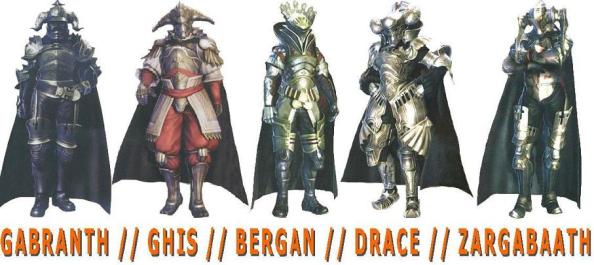
 Utah. America’s El Dorado. Not, of course, in the sense that there’s anything valuable there. It’s more of a matter of no one really knows if it exists or not, and no one ever goes there. Tis a barren, inhospitable landscape with few resources save for dirt, salt, wives, fake moon landing studios, and jokes about Utah. Oh, and Brandon Sanderson novels. For those of you unfamiliar with the name, Sanderson made his fame by taking over the Wheel of Time series after Robert Jordan made everyone worry about George R.R. Martin’s health. Since then, his name has appeared on top-100 fantasy lists with such a high frequency that he violates FCC regulations. So I thought I’d read Mistborn: The Final Empire to see what all the fuss is about. In short, the book was good enough that I had to resort to jokes about Utah to fill out this review.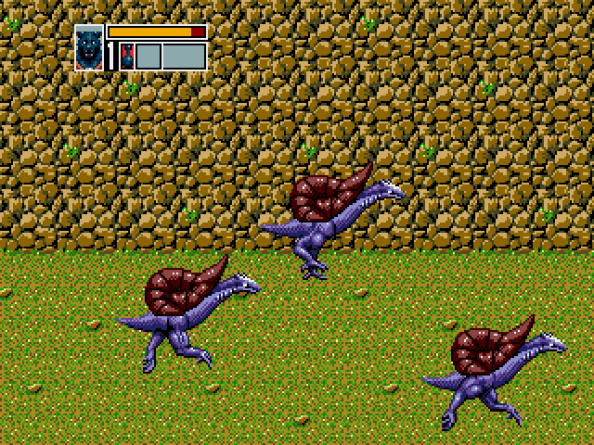


 It’s been rather crazy over here, what with making my novel sound more fantasy-ish by revising every “I don’t know” into “I know not,” reading 50 pages into Brandon Sanderson’s Mistborn to finally have my kindle tell me I’m 2% finished with it, and tweaking my resume to describe my duties as a CPR instructor as “Bring people back from the dead, as necessary.” Since my list of readers is already shorter than the guest registry at Disneyland: North Korea, I’ll have to do some MAME Roulette’s to avoid spacing out my posts.
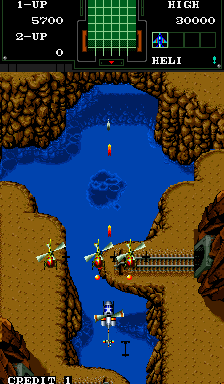
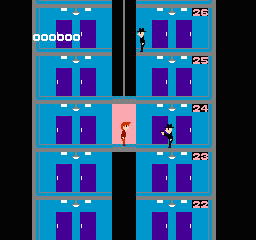
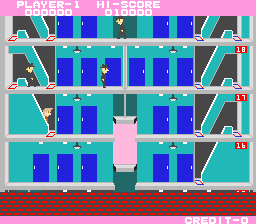
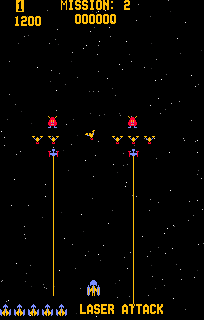
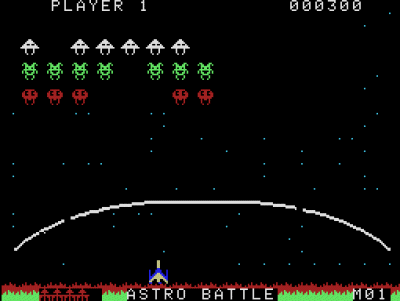 I swear my Retro Pie likes to mess with me, because it gave me another space shooter. This one actually takes place in space and pits the Starship Enterprise against an evil gumdrop monster, the apparent love child of McDonald’s Grimace and Groucho Marx. While the first level appears nothing more than a Space Invaders clone, subsequent levels evolve, fighting with different weapons, attack patterns, and strategies, marking the last time in video game history that such thought was put into a cloned game to make it fun to play. Apparently, Gorf was supposed to be a tie in with Star Trek, the Motion Picture, until the developers read the film’s script and decided it wouldn’t work as a game concept. And thus passed the last bit of integrity concerning licensed games.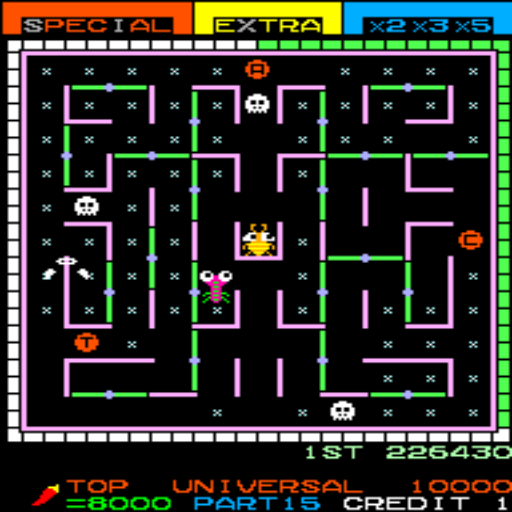
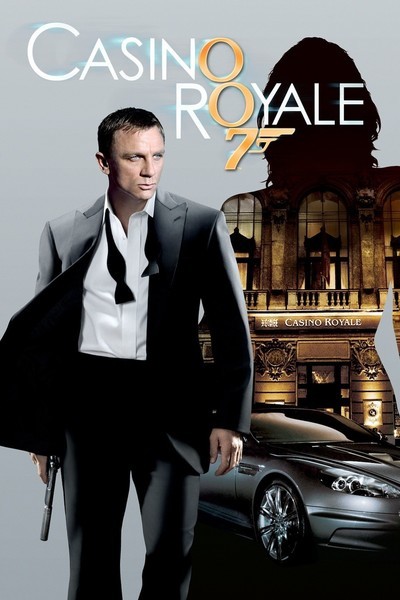 Between my recent attempt to finish FFXII fast enough to merit a felony-level speeding ticket and late night news coverage and my exploits as a CPR instructor, breathing into plastic dummies and explaining to people that, “No, these people won’t have the decency to crawl up on a table before the pass out just to accommodate the fact that you weigh six hundred pounds and your knees hurt on the ground,” I’ve gotten a bit behind on my entries. To add to that, living in 1938 Nazi Germany with a leader who is constantly both on the brink of war and looking at his own people like he’s trying to decide how much zyklon b he’ll need to get has somewhat dulled my capacity for humor. So I might as well try to distract myself from the next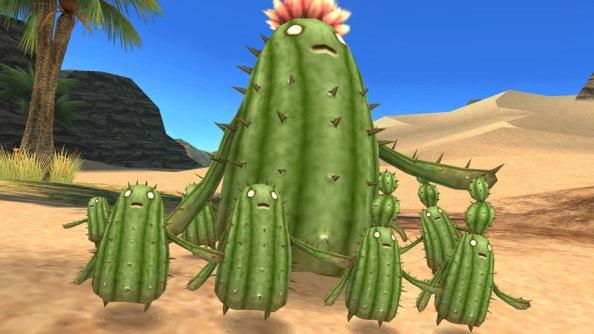


 I might as well sacrifice one more day of applying for jobs or revising my novel in order to do something that really matters, like telling you what Jedi knights drink. It’s hot chocolate. Apparently the Jedi drink hot chocolate. The early scene in Timothy Zahn’s Thrawn trilogy where Luke tells C-3PO about the amazing drink Lando told him about pretty much encapsulates the uncanny valley of any Star Wars story not directly influenced by George Lucas. There’s just something off about this series, like when someone tells you, “I am just an average earth human
 I actually tried reading this series twice when I was younger, and both times I lost interest around the beginning of the third book. I finished this time around, but I know why the series struggles—the villains and the heroes interact about as much as I do with large sums of cash. The original movies were entirely about interaction between heroes and villains. Vader captured and tortured Leia in a way that would make Ned Stark proud. The second act of a New Hope put the heroes directly into the enemy lair, proving my mom wrong, that you can mix your lights and your darks and expect them to come out just as clean as before. Obi-Wan confronts Vader about his regrets over being a lousy teacher (trust me…any teacher who looks back at their first few years understands the urge to let your students have a free swipe at you), and Vader personally hops in a tie fighter—a ship that has the same safety rating as a bottle rocket—to take on Luke at the end. And that’s just the first movie! The Empire Strikes Back continues that trend of interaction, but changes the dynamic into that crushing disappointment you feel when you finally look up your biological father only to find out he’s waaaaay more right-wing than you’re comfortable with.
 If anyone has a conflict comparable to Luke’s do-I-kill-my-dad problem from the original trilogy, it’s Mara Jade. For that alone, Zahn should have written the entire book to focus on her. She’s Force-sensitive, but carries a mysterious vendetta against Luke, and while she has good reasons for it, she’s never quite clear if she wants him dead, or if she’s being manipulated by voices and dreams sent to her through the Force. Unfortunately, lacking any clear protagonist, Jade gets far too little screen time, as Zahn has clearly favored scenes of the original heroes having conversations in bars, so the one character who could give the Star Wars books an actual Star Wars feel is rarely present. But if you liked the cantina scene in A New Hope, boy are you in luck! Unless you liked it for Obi-wan’s spontaneous dismembering of the other patrons, or for the clever character development where Han Shoots Greedo in Cold Blood, thereby introducing us to the fact that Luke might be heading into deep space with a potentially crazed murderer. But if it was the dialogue and the setting you liked…good news.
 Video Game Underworld