Trauma Center: Second Opinion – Wii

banner

For years I’ve harbored a secret Snakes-on-a-Plane fantasy.  In it, I board a flight across the Pacific Ocean with Samuel L. Jackson, when bio-terrorists release a deadly toxin.  After hours of struggling with it, Jackson stands up and declares, “I’ve had it with these mother fuckin’ tumors on this mother fuckin’ plane! Is anyone here a doctor?”  At that point, like the guy from Goodburger, I timidly raise my hand. “I’ve logged ten thousand hours worth of Trauma Center games. I can operate.”  Then I break out my scalpel, laser, forceps, and my deus-ex-machina antibiotic goo, the timer starts, and I rescue four patients in ten minutes, saving the day.

Long before Phoenix Wright brought the legal world into the living room, I’ve enjoyed the melodramatic misrepresentation of the surgical profession.  It begs the question, which high-profile profession will they malign next?  I can already envision a Wii U game about an up-and-coming Irish Catholic Priest, charged with missions where he has to hold the baby under long enough to wash away its sins, but not enough to cause brain damage.  Or perhaps a text-adventure version where he has to select just the right advice to give during pre-marital counseling. Whatever they do, as long as they pump up the drama to a steroidal level and make the characters adopt kabuki poses, I’ll buy it.

Like other Trauma Center games, you play as Dr. Derek Stiles, fresh out of med school.  An awkward and bumbling person, he nevertheless has a great skill as a surgeon, mostly due to the magical power he discovers in himself that allows him to slow down time once during every surgery.  You know, like a real doctor.  After dealing with the usual tumors, polyps, and shards of glass to the lungs, a medical terrorist organization releases a series of diseases called GUILT on the population.  GUILT acts mainly through a combination of tumors and creepy crawly things skittering about your innards, making it fall under the jurisdiction of a surgeon for treatment.

Then you operate.  A lot.  Until the game ends.

Trauma Center technically falls under the classification of puzzle games, which brings up mixed feelings.  First, I usually don’t care for puzzle games, so the fact that I didn’t realize the genre until someone pointed it out speaks for the ingenuity of the concept.  However, I haven’t ruled out the fact that it may not seem like a puzzle because in every operation, they give you an assistant who constantly feeds instructions to you.  In an attempt to make each surgery unique, GUILT mutates, so each new strain has a slightly different treatment, but in order to actually complete the game, it has to give you constant tutorials on how to destroy each mutation.  I don’t think it makes the game less fun to play.  They find other ways to crank up the difficulty, and I suppose it eliminates the need to look up a walkthrough (which earns it a gold star in my book), but it makes me wonder why they insist on Derek operating, rather than his nurse who seems to know her way around entrails better than any of the surgeons in the game.

I'm the map! The triangle icon moves in true Indiana Jones style

I’m the map! The triangle icon moves in true Indiana Jones style

Second Opinion attempts to remake the original DS game, Trauma Center: Under the Knife, in the way that Renaissance fairs recreate the 1600s; they took what they liked, got rid of the dysentery, influenza, inbreeding, and rivers flowing with human excrement, added a few characters you suspect weren’t actually there before, and they slapped a happy, colorful new ending.  While I had a lot of fun with the DS version, some of the controls handled as well as a farming combine in a drag race through Tokyo. In fact, the in-game instructions to use the magnifying tool by drawing circles on the touch screen won’t actually work, and only through my faithful internet access did I discover you actually had to draw a C-shape. Second Opinion fixes nearly all those problems; the minimally-used magnification tool only requires point-and-click controls, you no longer has to manually slide fluids up the drain, and use of the nunchuck lets you flip between tools much faster than in the DS version.

You know, you're angry when you're beautiful.

You know, you’re angry when you’re beautiful.

Still, the Wii doesn’t have a reputation for perfection in controls, and the game does have some issues of its own.  Sometimes the nunchuck makes changing instruments easy to the point of accidental, and on several occasions I found myself trying to drain blood from a wound using thread or the laser.  The forceps don’t always activate, giving the impression that Derek believes he’s using them, but forgot to actually pick them up. I also found it more difficult to perform certain tasks, like suturing wounds or activating the Healing Touch, with the Wiimote as opposed to the DS touch screen.  However, I consider these fair trade-offs that make the game easier to play, and don’t hinder my efforts nearly as much as the problems on the handheld version.

Atlus cleared up some of the language issues for this release, so the game doesn’t ramble quite as much as before–it still yammers on from time-to-time, just not all the time.  They introduce a side character, Naomi Kimishima.  For every chapter you complete as Derek, one operation–usually lifted from Trauma Center 2 for the DS–opens up for Naomi.  It adds a few extra operations to the game, including some of the more interesting techniques they hadn’t included in the original, such as working with a pen light or piecing together bone fragments. While the game could use a few more operations, it didn’t fully make sense to add another surgeon, and to merge her story with Derek’s, they erased the entire final chapter from the DS game and replaced with a new one.

…You couldn’t have just added a seventh chapter? Really? The game doesn’t really take that much time to play, and we’d appreciate if you gave us back those final surgeries from the DS.

Before I go stamping this with my seal of approval, though, I ought to mention one serious flaw in the game that makes me hang my head in shame that any respectable developer could let this slip into a game.

Unskippable Cut Scenes.

Melodrama at its finest. But you're not on the DS now...how about a little more effort in the animation?

Melodrama at its finest. But you’re not on the DS now…how about a little more effort in the animation?

Capital letters.  As I mentioned, the Trauma Center series has a reputation for getting a little rambly.  While I’d disapprove of a story that didn’t try to put together a story at all, a lot of their rambling happens right before operations, and since the game does throw some hefty challenges your way, I found myself spending more time mashing the A button to get to the operation than I actually did operating.  Yes, sometimes I had a tendency to miss vital clues in the pre-op briefing, but once I pick those up, I’d appreciate it if I could go straight to the part of the game that wants me to, you know, play it.

Mostly, though, it does get my seal of approval.  The remake does improve on the flaws of the original game, and while they don’t throw many extra operations at you, they do give you at least a few.  If you haven’t played the Trauma Center series before, you actually may want to start with Second Opinion.

Stay tuned! Playing Koudelka inspired me to dig out a Shadow Hearts game, so expect that in about a week or two.  Since school has started, gaming has slowed down, but sign up to get email notification of my posts so you don’t miss any!

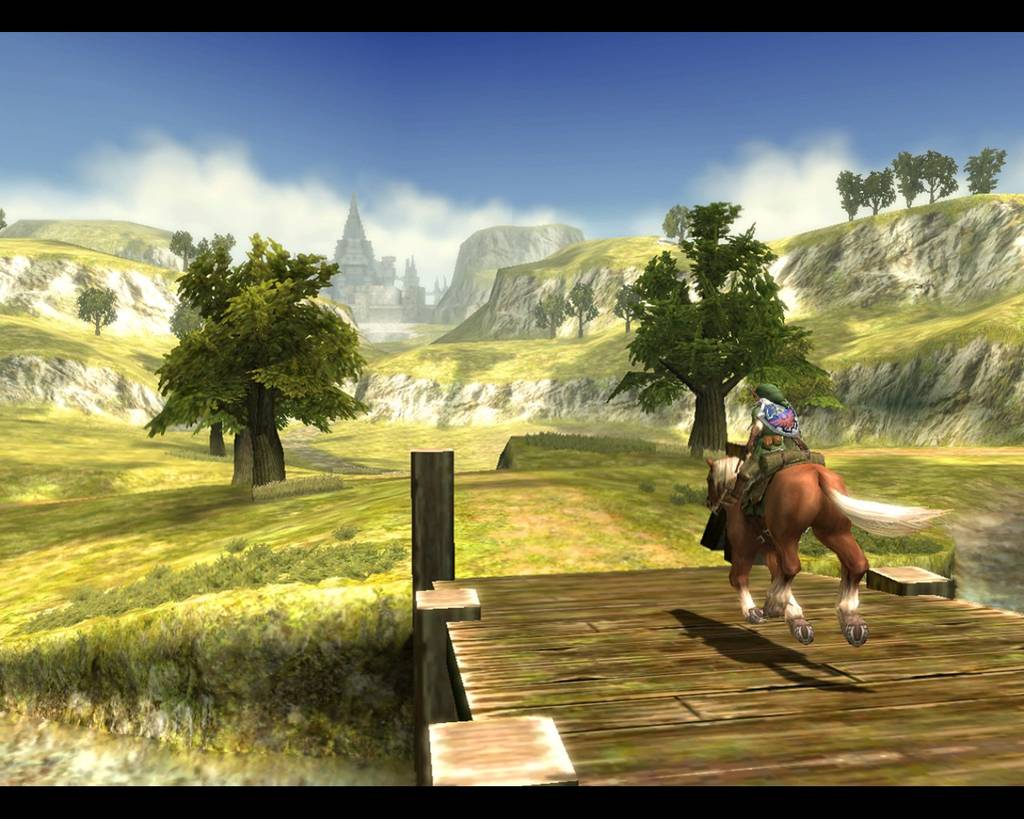
Twilight Princess – Game Cube, Wii

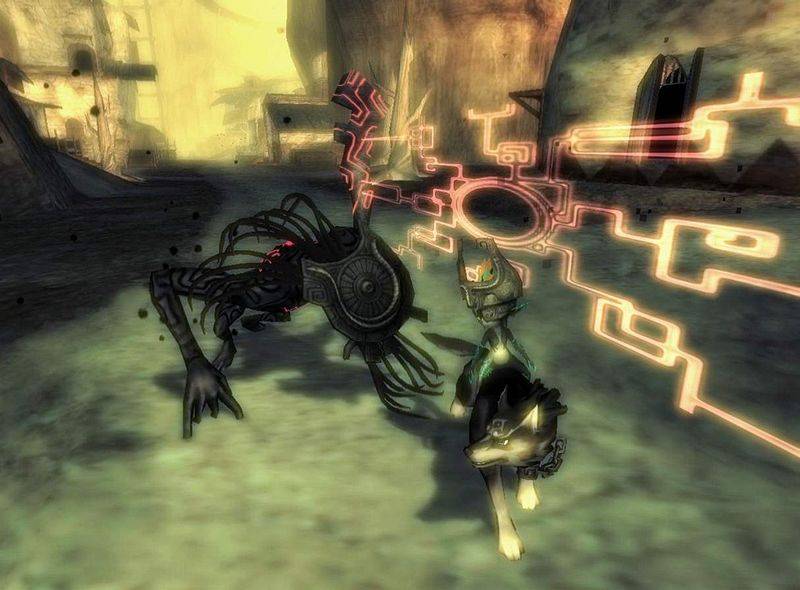
Me and My Scary, Impish Shadow

I’ve already established here that I enjoy longer games, so most of the time I don’t bat an eye at a game being 37 hours long; after all, I played through Fallout, Skyrim, FFXII, Xenogears and Xenosaga.  However, games that pad themselves out to fill a mandatory game-length limit have a tendency to turn my eye-batting into baseball-batting.  I tried to like Twilight Princess, I really did.  I thought I may have scathed it a little too much in my Oracle of Ages/Seasons article, so I flushed away five years of good sense and went back to it.

You know what I’ve never thought when playing a Zelda game?  “This sure is great, but it would be much better if the world were bigger and had less stuff in it.  Some endless tedium would give me a nice chance to look at the scenery some more!”  I don’t quite understand what Nintendo felt would be so appealing about magnifying the size of Hyrule to an area roughly the size of the moon, then filling it with absolutely nothing.

But I could compare Twilight Princesses lack of tasty filling to the lack of dust mites on your pillow; you can find shit if you know where to find it, and you probably stick your head in it all the time, but you’ll never see it on your own.  Whereas previous games like to taunt the player, dangling heart pieces just out of reach of the player to watch us rear up on our hind legs, dance a little, then plummet hundreds of meters off a cliff because don’t have hover boots, Twilight Princess hides its items, making you stare at them like a magic eye painting, trying to make sense of the image everyone else claims they can see.  Quite honestly, unless you play the game with a walkthrough in your lap, you’ll struggle just to complete the main story.

And this is about it...for thirty six hours...that's over a day, you realize.

And this is about it…for thirty six hours…that’s over a day, you realize.

See, Twilight Princess doesn’t limit its convoluted searches to bonus items; seemingly everything requires a drawn-out examination of a large area until you find one hidden path that you can jump to in wolf form after you’ve received the item to move a statue and done so while singing Carmina Burana in the nude with octoroks pelting you in the head.  Puzzles don’t have clear solutions either.  For example, at the beginning of the game they run you through a tutorial to show you how to wrestle a charging goat.  Therefore, it would make perfect sense when trying to get past the goron sentry who likewise charges at you, you’d know the procedure.  Right? Wrong.  Turns out you have to intuitively figure out to backtrack to the forest village and talk to the mayor so you can learn the ways of sumo.  And just for good measure, he tells you that it’s impossible to stop a charging goron without iron boots.

Simple.

The entire game does this to you.  Nothing turns a fast-paced game into a slow-paced movie faster than trotting around in circles like an idiot or diving for a walkthrough every time you get stuck.  I like challenge, but not insurmountable challenge.  (I’ve long hated games that require walkthroughs–I see them as an insidious plot to require people to drop $100 instead of $50, buying the “strategy” guide along with the game.)  For the amount of frustration put into adventuring, the in-game rewards usually feel like let-downs, especially after your 35th hour of finding small-value rupees in every chest, with cash being about as useful as a backpack full of Chuck-E-Cheese game tokens.

And the tedium doesn’t end with the adventuring–the items in the game show a truly bewildering lack of inspiration.  Most are useless after the dungeon you receive them.  Early in the game, you go through a lengthy fetch-quest to obtain a slingshot, only to receive the bow in the second dungeon.  If Link had tossed the slingshot into the lava at that point, I wouldn’t have noticed it missing.  Previous instalments of the series asked you to find clever uses for dungeon items, or to use them to reach the aforementioned dangling goodies.  These items often have one use only–the ball and chain breaks ice. Just ice–and you rarely use them at all until the obligatory use-every-weapon segment in the final dungeon, when you suddenly have to remember, “Hey, didn’t I get a boomerang in this game?” and to figure out that you can use it to put out fires. Likewise, bosses feel simple and uninspired, and I even beat one without taking any damage as he just swam around in circles, kindly offering me his weak point to latch onto and stab until he died.

Unless you're the lead dog.

Unless you’re the lead dog.

Link and Shadow Link, ready to serve you with fava beans and a nice chianti

Link and Shadow Link, ready to serve you with fava beans and a nice chianti

The game simply drags on too long to keep my interest.  I finished in thirty-six hours.  Do you remember my Radiant Historia time?  Also thirty-six.  Game designers tweak games to provide a precise length of play time.  Adventure/RPGs currently run about 35 hours, while action games run between 8 to 10.  SNES-era RPGs often wrapped up in 24 hours.  (Or perhaps I just have a very consistent way of tackling similar games…I can’t be sure) This practice leads to padding, and Twilight Princess pads itself more than a menstruating hockey player pulling a hot pan out of the oven.  Dungeons typically require two hours to finish instead of one hour (as in Ocarina of Time and Wind Waker), and in between you occasionally have to rescue the Spirits of the Macguffins by dealing with their cockroach problem using your wolfish powers of Raid, and there will be no side-questing until you finish.

For all I disliked it, Twilight Princess did some things right.  The ability to transform into a werewolf that I previously descried as “gimmicky” actually adds an interesting element to the game, and plays off the familiar idea of Link traveling between parallel worlds.  Midna proves herself as a companion perhaps not quite as knowledgeable as Navi, but darkly intriguing and vital to the story.  But the game truly excels at setting tone.  The themes of twilight and shadow cast this game in a different light than others.  Atmosphere and mood usually stay consistent throughout the game. Nintendo even designed the light-hearted race of sentient chickens to look creepy as hell. If you have a flair for gothic overtones, I suggest playing through Twilight Princess at least once.

With Skyward Sword disappointing so far, I don’t think we have to wait long before even Gannon gets tired of coming back to Hyrule.  He’s used all his brief stints of freedom to conquer the kingdom, but he knows they never last long.  Pretty soon he’ll break free of his prison and find greener pastures, and then we won’t have to worry about hunting the eight legendary whatevers for a princess who doesn’t show the slightest interest in the hero.

It's not me, it's you...okay, it's you.

It’s not me, it’s you…okay, it’s you.

Sorry for the long delay in posting, but as I mentioned, I go for longer games.  The semester starts in three weeks, so at that point look forward to probably no more than one entry per week. Coming up soon, though, I’ll have Phoenix Wright: Ace Attorney, or possibly Teenage Mutant Ninja Turtles.

And if you’re fans of the classics, take comfort in knowing that for part of the boss battle, Gannon takes the form of a pig.

And hey, I made it through the entire post without a single Alpo joke!

Skyward Sword – Wii – Initial reactions

This isn't combat.  You realize he's just using "the all-powerful sword forged by the goddesses" to mow the lawn, right?

This isn’t combat. You realize he’s just using “the all-powerful sword forged by the goddesses” to mow the lawn, right?

Link deserves a lot of credit for what he does.  In Ocarina of time, he rolled out of bed to slog through spider-infested lumber after only a short search for a sword and shield.  In Link to the Past, he wakes up and immediately saves the princess in his pajamas. In the Wind Waker, not only does he get jostled from a sound sleep at the start of the game, but he does so without killing the obnoxious little sister who wakes him up; then he gets dressed, has a quick lesson with a sword, and starts his first monster safari, one can only imagine to use their hides for sheets and blankets for his next big fit of narcolepsy.

I guess Nintendo wanted to build the impression that Hyrule’s archetypal hero must be someone who can accomplish herculean tasks with little or no preparation.  I like this. It gives me a unique way to bond with Link.  Sometime in college I started to realize that normal people couldn’t do this, that it took them hours before they can muster enough brainpower to stumble to the toilet and figure out how to flush.  One of my roommates even once challenged his alarm clock to a snooze-marathon; he managed to sleep for two hours straight, five minutes at a time.

A wooden sword? Did you whittle this yourself while sitting out in front of your cave yelling at the hoodlum octoroks to stop tearing up your yard?

A wooden sword? Did you whittle this yourself while sitting out in front of your cave yelling at the hoodlum octoroks to stop tearing up your yard?

Of course, this holds bigger implications for the Zelda series.  Beyond the simple metaphor of beginning of a journey, giving the hero a call to action and all that literary blatherskite, it demonstrates an expectation of pacing for each individual game.  The original dropped Link into Hyrule so desperate for action that he grabs the first sharpened stick he sees and starts stabbing monsters right away. The Adventure of Link doesn’t even ask him to find a sword!

I got Anne a Wii and Skyward Sword for her birthday.  Since I’m droning my way through Twilight Princess, I’ve noticed a few things.  One, I can only take so many large-scale Zelda games at a time before I go batty and try creative feng shui to open my front door.  And two, newer Zelda games pace themselves in such a way that watching sap leak from a tree reaches a thrilling conclusion before Link does.  In Twilight Princess, I didn’t get a sword for an hour and a half, and when I did I couldn’t quite hold it between my paws.  Skyward Sword tops this, with nearly two hours of initial hellos, heys, and re-teaching fans of the series that Link holds a grudge against all things terra cotta.  Three hours into the game, Anne has barely reached the “hero’s call” moment to initiate the plot, and has dicked around in the woods, warming up to the weird new race of the game, wining and dining them before they feel comfortable enough with Link to go out with him on a big date to the first dungeon.

Furthermore, even though Navi ticked off fans with her constant cries for attention, and Midna never offered any useful suggestions for advancing the quest, the new companion has the personality and emotional range of a sack of flour.  Honestly, I almost compared her to an anthropomorphic instruction manual, but I used to enjoy reading through instruction manuals.  She comes off like a placeholder that developers forgot to replace with a real person before they released the game.

I do find the sky setting intriguing, though.  Not so much for the unique ideas it brings to the series to make it unfold like a new story rather than a further re-hash of Ocarina of Time, but rather for the trend that Nintendo seems to have established.  The Wind Waker gave us a water-themed world, and Skyward Sword boast an air theme.  I half-expect the next big Zelda release to take place entirely underground, followed by, I don’t know, a game where Hyrule has inexplicably relocated into a volcano.

While I haven’t played through the entire game yet and therefore can’t officially submit a review, my initial impression of the game leaves a bland taste in my mouth–the kind of taste you only get when you’ve eaten an entire bag of Doritos and the salt has temporarily burned your taste buds into numbness.  I do enjoy games with well-developed, complex plot, but Nintendo needs to learn that long tutorials, useless fetch quests, and a speed-dating approach to learning the characters in the game isn’t the same as useful exposition.  Link traditionally begins each game by waking up, not by putting the player to sleep.  It reminds me that players can’t assume a game will be good just because the series on the whole has kept up a good name in the past.

Advice for future releases.

Advice for future releases.

Just Dance 2 – Wii

Just_Dance_2_Coverart

If you’ve developed some small inkling of my taste in games, you might realize I enjoy clever concepts, well-written stories and thoughtful gameplay that evokes appropriate tone and an immersive experience.  Well, go grab a welding mask and all the bottles under your sink because I’m going to blow that image to kingdom come. At this point, imagine me standing up from my folding chair, facing the other shy, timid members of my support group and admitting to myself and the world, “My name is Jake, and I’ve played dance games.”

This really shouldn’t shock anyone.  If you’ve found your way to this blog, I’d wager my last three paychecks on “You Being a Couch Potato” to win, place, and show.  I’d even throw in a side bet that, like me, you spent most of high school wondering why the idiots catch all the breaks.  Put quite simply, the academic lifestyle doesn’t suit us as human beings.  Despite what we tell ourselves, even being an intelligent species doesn’t count for much in this world. Don’t believe me?  Why don’t we compare human population and evolutionary history to that of the cockroach and then come back to the question, “Who is mother nature’s pet?”

No, ours is a peaceful, sedentary life.  We move on a geological scale, and then usually for no reason other than to pee or change the game.  Think I’m exaggerating?  When I lived in Korea, I found that once every few years or so, some poor overworked Asian kid will play Starcraft for three days straight with no food, drink, or sleep and drop down stiffer than Rick Santorum at a Fire Island rave.  As gamers of the fantastical rather than the athletic, we sometimes have to put in extra effort in order to…you know…stay alive.

As such, Anne has for years tried to get me to play Dance Dance Revolution.  After all, it’s a game, right?  It shouldn’t bore me like regular exercise does.  Still, I can’t stick with it for more than a few days.  DDR has serious problems.  First of all, the hardware sucks.  Despite my overly large feet, I hit the target buttons on the pad with the accuracy of someone trying to hit a mosquito with a water pistol in a football stadium while blindfolded and getting assaulted by angry badgers.  Furthermore, to get the cords to run from the TV to the console to the pads, I have to completely rearrange my living room.  And yes, I’m well aware of the absurdity of descrying physical labor in preparation for exercise, but I get the right to complain because, bottom line, it makes me not want to play the game.

However, Just Dance, Ubisoft’s answer to the music/rhythm/dance genre, makes wonderful use of the gimmicky Wii controls in order to solve pretty much all of these issues.  You just strap the Wii remote to your wrist, find a spot with a little bit of space where you won’t put your fist through a lamp shade or trip over the coffee table and give yourself a concussion, and get your proverbial groove on.  After selecting your song, a radioactive neon humanoid avatar appears and starts dancing.  The player simply mirrors the actions they see.  Periodically, like the arrows in DDR, a pictorial description of the next move will slide onto the screen which make as much sense as translating Egyptian hieroglyphs, but with practice and repetition they give the player a better idea of the dance moves.

The glowing, indistinct faces ensure that Ubisoft doesn't have to pay anyone likeness rights.

The glowing, indistinct faces ensure that Ubisoft doesn’t have to pay anyone likeness rights.

While DDR focuses entirely on the lower body like some sort of post-modern Riverdance, the Wii remote emphasizes the upper body.  Quite frequently this made me neglect the footwork, but often I found that getting the lower-body moves right actually made the upper body moves easier.  Never involving myself much in the clubbing scene, modern dancing always makes me feel awkward and dorkish.  Just Dance doesn’t solve that problem completely, but forcing me into a complete dance routine feels much more natural than clomping around a square-meter size pad, an activity much better suited to popping mass quantities of bubble wrap.
Just Dance grinds DDR into pulp on one other feature–the music.  While DDR seemed to operate under the suspicion that contemporary night clubs invented the concept of “dance,” Just Dance appears to understand that physical expression of music can span beyond the trite, vapid beats of techno.  We bought Just Dance 2 specifically for the song list it offered, which contained Hot Stuff (Donna Summers), Jump in the Line (Harry Belafonte), Soul Bossa Nova (Quincy Jones, but you’d recognize the song as the theme to Austin Powers), and other genres, such as a song by Elvis and even a Bollywood dance number.  It’s as though the designers wanted to give you a selection of experiences, rather than just “Select song. Listen to the beat. Step on arrows.”  As a caveat, yes I should admit that most of the time you’ll be shaking your ‘mote to techno dance music, but I appreciate the alternatives, and may even spring to buy Just Dance 4, which would be the first game to ever Rickroll me, and also includes the Time Warp, a song I already basically know the moves for (Just a jump to the left, right?)  As an added bonus that will benefit both the music lover and the fat, lazy slob who needs to exercise alike, Just Dance plays the entire song for you, rather than just the 90 to 120 second bastardization you get from DDR.

One side of me wants to mock modern game designers–Nintendo most of all–for trying to develop video games for people who don’t really want to play video games.  Yet the other side of me realizes that in this mad dash to increase their profits (which may end up alienating traditional players like myself), they’ve actually made the practice more mainstream.  At thirty years old, I can whip out my Nintendo DS in public and not be shunned and avoided for the sociopathic freak that everyone used to think I was.  So while Just Dance or DDR may target the ditzy sorority/fraternity crowd looking for party games, I have to tip my hat and offer a certain amount of respect to them.  Furthermore, whether they intended to or not, these games promote public health.  They’ve found a way to let me exercise by disguising it as something I find interesting, so I might just have to recommend the game to anyone who spends a large chunk of their life glued to a screen.  And also I’d recommend an industrial strength solvent. You shouldn’t glue yourself to anything.  That’s unhealthy.